Showing posts with label Pixies. Show all posts

05 August 2022

Week commencing 5 August 1991

This week in 1991's debuts peaking outside the top 100 are about as diverse a bunch of songs as you could get, with everything from hair metal, new jack swing, electronic, alternative, soul-pop, downtempo, and... er, an Australian football song sung by a 68 year-old.  Shall we take a look?
 
Nelson: L-R Kim Carnes & Fabio.
 
Top 150 debuts:
 
Number 114 "Up There Cazaly '91" by Louie the Lip
Peak: number 105
Peak date: 19 August 1991
Weeks in top 150: 5 weeks 
Top 150 chart run: 114-111-105-121-126
 
If you live in Victoria, or have the slightest interest in Australian Football League, you will know the Mike Brady song "Up There Cazaly".  This track, which does not appear to be available anywhere online to listen to and I have not heard before, is a cover version of that track, performed by former Victorian Football League (as it was then known) player Lou Richards.  Lou died in 2017, aged 94.
 
Short of paying $34 for the CD single on eBay (which I am not prepared to do for this track), we are probably not going to hear this one.  I even messaged someone who owns the CD on discogs to see if I could get a rip of the track, but have not yet heard back.  I will embed the song here if I can manage to get my hands on a copy.  In the meantime, I have posted the single sleeve below.


Number 138 "Playground" by Another Bad Creation
Peak: number 138
Peak date: 5 August 1991
Weeks in top 150: 1 week
Top 150 chart run: 138
 
American teen (and tween?) new jack swing/r&b vocal sextet Another Bad Creation landed a number 17 hit in Australia in June 1991 with their debut single "Iesha", which is probably the first song to chart in Australia that name-checks the gaming console Nintendo.  "Iesha" is notable for also featuring backing vocals from Boyz II Men, before they had released their first single.
 
"Playground", the second single from Another Bad Creation's debut album Coolin' at the Playground Ya Know! (number 80, July 1991), did not perform nearly as well as "Iesha" in Australia, missing the top 100.
 
In the US, it was a different story, as "Playground" gave the group their second top 10 hit, peaking at number 10 in June 1991.  It was, however, to be Another Bad Creation's last single to register on the Billboard Hot 100.  Boyz II Men again provided backing vocals on "Playground".

There are two different music videos for "Playround"; I have embedded the one uploaded on the band's Vevo YouTube channel below.  Another video, labelled the original version, has been uploaded on an unofficial YouTube channel here.

I can see why "Playground" was not the hit that "Iesha" was in Australia, as it lacks the latter's melodic hooks.  A third Another Bad Creation single, "My World", was released in Australia in April 1992, but missed the ARIA top 150.


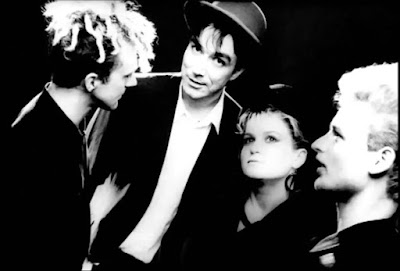
Number 146 "Planet of Sound" by Pixies
Peak: number 128
Peak date: 12 August 1991
Weeks in top 150: 3 weeks
Top 150 chart run: 146-128-142
Weeks on chart: 9 weeks
 
We last saw American band Pixies in November 1990.  "Planet of Sound", the band's fourth single to chart in Australia, was their biggest 'hit' locally, peaking at number 128.  "Planet of Sound" was the lead single from the band's fourth studio album Trompe Le Monde (number 61, October 1991).
 
Internationally, "Planet of Sound" peaked at number 27 in the UK in June 1991, and number 35 in New Zealand in August 1991.
 
Within Australia, "Planet of Sound" performed strongest in New South Wales/Australian Capital Territory, where it reached number 93.

A music video does not appear to have been filmed for "Planet of Sound", but a lyric video, embedded below, appears on the band's official YouTube channel.

I hadn't heard this one before.  I can't say I enjoyed it; it just sounds like noise to me.

Given my interest in charts and new music falls off a cliff in the very late 90s/early 2000s, it is unlikely I will be writing these chart recaps when it comes Pixies' next charting single in Australia, in 2016.


Bubbling WAY down under:
 
Number 159 "Everyday People" by Aretha Franklin
Peak: number 159
Peak date: 5 August 1991
Weeks on chart: 2 weeks 

Aretha Franklin hardly needs an introduction, as the queen of soul.  Her last major chart hit in Australia, however, was her duet with George Michael, "I Knew You Were Waiting (For Me)", which spent four weeks at number 1 in March and April of 1987.  Until her death from neuroendocrine pancreatic cancer at age 76 in 2018, Aretha's last top 100 single in Australia was "Through the Storm" (number 60, June 1989), a duet with Elton John.  Aretha's voice was prominently sampled, however, on 49ers' "Touch Me" (number 18, July 1990), though she was not credited.
 
"Everyday People", a cover version of the 1968 Sly and the Family Stone song, was the lead single from Aretha's thirty-third studio album What You See Is What You Sweat, which missed the ARIA top 150 albums chart.
 
Internationally, Aretha's version of "Everyday People" peaked at number 69 in the UK in July 1991.  I don't count them as 'real' charts, but "Everyday People" also made number 13 on the US Billboard Hot R&B/Hip-Hop Songs chart in August 1991, and number 33 on the US Billboard Dance Club Songs chart during the same month.

Domestically, "Everyday People" was most popular in New South Wales/Australian Capital Territory, where it reached number 151.

Aretha will join us next in 1994.


Number 171 "The Robots" by Kraftwerk (1991 version)
Peak: number 161
Peak date: 12 August 1991
Weeks on chart: 5 weeks

We saw German electronic music pioneers Kraftwerk in 1981The original version of "The Robots", which I prefer to this 1991 re-recording, appeared on Kraftwerk's seventh studio album The Man Machine (number 56, September 1978).
 
Kraftwerk released an album containing re-arranged and re-recorded versions of some of their older songs, The Mix (number 132, September 1991).  The 1991 version of "The Robots" was released as a single to promote it, along with a new music video depicting a robotic version of the band.

The 1991 recording of "The Robots" peaked at number 20 in the UK in June 1991, number 26 in Ireland in June 1991, and number 18 in Germany in July 1991.

In Australia, "The Robots" performed strongest in Queensland, where it reached number 145.

A 1991 version of "Radioactivity" was released as a second single from The Mix in Europe, but not in Australia.  I much prefer this to the 1991 version of "The Robots".

We shall next see Kraftwerk in 2000.


Number 174 "Winter in July" by Bomb the Bass
Peak: number 174
Peak date: 5 August 1991
Weeks on chart: 3 weeks
 
Although sounding like a group name, Bomb the Bass is actually just English producer and musician Tim Simenon, with different featured vocalists.  Bomb the Bass had placed one single in the ARIA top 100 at this point in 1991, with "Say a Little Prayer" peaking at number 54 in April 1989.  The first Bomb the Bass album Into the Dragon (number 100, April 1989) also crept into the ARIA top 100.
 
"Winter in July" was the second single from the second Bomb the Bass album Unknown Territory (number 172, September 1991).  It followed "Love So True", released locally in March 1991, which failed to chart in Australia.
 
"Winter in July" peaked at number 7 in the UK in August 1991, number 21 in Ireland in August 1991, number 6 in the Netherlands in September 1991, number 37 in the Flanders region of Belgium in September 1991, number 21 in Switzerland in October 1991, number 39 in Germany in October 1991, and number 32 in Sweden in October 1991.

Within Australia, "Winter in July" was most successful in Victoria/Tasmania, where it reached  number 154.
 
I remember catching the video for "Winter in July" on the SBS music video programs M.C. TeeVee and The Noise in 1991, but, despite liking the song, forgot how it went.  "Winter in July" is quite a good song that deserved to do much better in Australia.  I love this kind of 'downtempo' stuff.

Bomb the Bass will next join us in 1992.


Number 177 Australian Tour Souvenir EP by PIL
Peak: number 177 
Peak date: 5 August 1991
Weeks on chart: 1 week
 
We last saw PIL/PiL/P.I.L./Public Image Ltd/Public Image Limited (take your pick!) in 1990.  This EP, which obviously was an exclusive Australian release, contains four of the band's previously-recorded songs: "Bad Life" (released as a single in Australia in June 1984, did not chart), "The Order of Death" (from their 1984 album This Is What You Want... This Is What You Get), "This Is Not a Love Song" (number 17, January 1984), and "Public Image" (their debut single from 1978).
 
On the state charts, the Australian Tour Souvenir EP performed strongest in New South Wales/Australian Capital Territory, where it reached number 167.
 
PIL would have one further charting single in Australia, with "Cruel" (number 87, March 1992).  PIL vocalist John Lydon would go on to feature on Leftfield's "Open Up" (number 39, February 1994), and his previous band, Sex Pistols, will bubble under in 1992.


Number 191 "More Than Ever" by Nelson
Peak: number 191
Peak date: 5 August 1991
Weeks on chart: 1 week

Along with Warrant, Nelson would have to have been one of the last 'hair metal' acts to score a decent-sized hit in Australia, with "(Can't Live without Your) Love and Affection" (number 20, November 1990).

American Twins Matthew and Gunnar Nelson, who look like they go to same hairdresser as Kim Carnes, topped the US Billboard Hot 100 for one week in September 1990 with "...Love and Affection".  The follow up single "After the Rain" also made its way into the top 10 in the US, peaking at number 6 in February 1991.  In Australia, however, "After the Rain" only reached number 75 in January 1991.

"More Than Ever" was the third single lifted from Nelson's debut album After the Rain (number 100, October 1990).  The single peaked at number 14 in the US in May 1991, and number 30 in Canada.

Within Australia, "More Than Ever" performed strongest in New South Wales/Australian Capital Territory, where it reached number 178.

I wasn't expecting to know "More Than Ever", but the chorus rang several bells... I could sing along to it (if I wanted) on first (re-)listen, even.  Damn, now I'm going to have this song in my head all day, if not the coming week - it's such an earworm!  I guess I must have heard "More Than Ever" on the American Top 40 radio show in 1991.
 
We will next see Nelson in September 1991.


Next week (12 August): Seven new top 150 debuts, including another Australian sport-related song that I probably won't be able to source a copy of (it has been on my eBay watch list for months, to no avail).  There are also two bubbling WAY down under entries.

< Previous week: 29 July 1991                                            Next week: 12 August 1991 >

26 November 2021

Week commencing 26 November 1990

All of this week in 1990's top 150-peaking debuts spent at least 7 weeks on the chart, so it's another week where all of the new entries had above average chart longevity for singles peaking outside the top 100.  Let's take a look at them.
 
Billy Idol: sitting idly outside the top 100
 
Top 150 debuts:
 
Number 106 "Give It Up" by ZZ Top
Peak: number 106
Peak date: 26 November 1990
Weeks in top 150: 9 weeks
Chart run: 106-115-112-119-(chart repeated for 2 week Xmas break)-112-123-127
Weeks on chart: 9 weeks
 
Formed in Texas in 1969, up until this point in 1990, ZZ Top had placed ten singles on the Australian chart since 1974.  Their biggest hit in Australia was "Legs" (number 6, October 1984), the only one to make the top ten.

"Give It Up" was issued as the second single in Australia from ZZ Top's tenth studio album Recycler (number 27, November 1990).  It followed "Doubleback" (number 41, July 1990), which was also featured in the film Back to the Future Part III.

Internationally, "Give It Up" peaked at number 69 in Germany in December 1990, and number 79 on the US Billboard Hot 100 in February 1991.
 
On the ARIA state charts, "Give It Up" performed strongest in Western Australia, where it reached number 65.
 
"Give It Up" peaked higher on the Australian Music Report singles chart, reaching number 94.
 
We shall next see ZZ top in April 1991.


Number 108 "Three Babies" by Sinéad O'Connor
Peak: number 108
Peak date: 26 November 1990
Weeks in top 150: 7 weeks
Chart run: 108-116-114-110-(chart repeated for 2 week Xmas break)-116
Weeks on chart: 7 weeks
 
Sinéad O'Connor first paid us a visit in February 1989, with her second single to register on the Australian chart.  Since then, she scored a massive hit with "Nothing Compares 2 U" (number 1, February 1990), which was the highest-selling single of 1990 in Australia.

"Three Babies" was issued as the fourth and final single from Sinéad's second album I Do Not Want What I Haven't Got (number 1, March 1990), counting the earlier release of "Jump in the River" (number 134, April 1989).  It followed "The Emperor's New Clothes" (number 20, September 1990).
 
Internationally, "Three Babies" peaked at number 19 in Sinéad's native Ireland in October 1990, number 42 in the UK in October 1990, and reached the top 30 in the Netherlands and Switzerland, and the top 40 in the Flanders region of Belgium.

On the ARIA state charts, "Three Babies" performed strongest in South Australia/Northern Territory, where it reached number 65.
 
On the Australian Music Report singles chart, "Three Babies" peaked at number 89.
 
I've heard "Three Babies" a couple of times before, but can never remember how it goes.  I think it's a nice song, but it just doesn't stand out as hit single material.

We shall next see Sinéad in 1992.


Number 114 "Can't Help Falling in Love" by Julio Iglesias
Peak: number 106
Peak date: 17 December 1990 (chart repeated 24 December 1990 and 31 December 1990)
Weeks in top 150: 9 weeks 
Top 150 chart run: 114-121-116-106-(chart repeated for 2 week Xmas break)-107-118-118
 
Julio Iglesias made an appearance as a featured artist on my first chart recap, in January 1989.  Up until this point in 1990, Julio had placed seven singles on the Australian chart, with four of those being duets.  Julio's biggest single in Australia was "To All the Girls I've Loved Before" (number 4, May 1984), a duet with Willie Nelson.

"Can't Help Falling in Love", as you might have guessed from the title, is a cover version of the Elvis Presley song that UB40 took to number 1 in Australia in July 1993.  It was the first single released from Julio's covers album Starry Night (number 13, February 1991).

Julio's rendition of "Can't Help Falling in Love" does not appear to have charted anywhere else, rather interestingly.
 
The video embedded below is taken from a live show from 1991, where you can see Julio performing the song.  You can listen to the studio recording of "Can't Help Falling in Love", which doesn't sound a whole lot different, here.

Julio will join us again, with another duet, in 1994.


Number 129 "Heaven" by The Chimes (re-release)
Peak: number 103 (original release: number 62)
Peak date: 10 December 1990 (original release: 19 March 1990 and 2 April 1990)
Weeks in top 150: 7 weeks (original release: 14 weeks); 21 weeks total
Chart run: debuted 5 February 1990: 135-72-77-73-64-82-62-76-62-77-71-79-99-117. Re-entered 26 November 1990: 129-104-103-120-(chart repeated for 2 week Xmas break)-115
Weeks on chart: 21 weeks

We first saw The Chimes bubble under back in September 1990.  "Heaven", issued as the second single from The Chimes (number 16, August 1990), originally peaked at number 62 in Australia in March 1990, bettering its peak of number 66 in the band's native UK in December 1989.

"Heaven" was re-released in the UK in September 1990, reaching a new peak of number 24 the following month.  It seems the Australian record company followed suit in giving the single another go; but, sadly, this time "Heaven" stalled just outside the top 100, peaking 41 places lower than it did initially.

One country "Heaven" was a hit in was New Zealand, where it reached number 5 in May 1990.

The late 1990 re-issue of "Heaven" peaked at number 25 in Ireland in October 1990, and number 40 in the Netherlands in November 1990 (after originally peaking at number 34 there in February 1990).

"Heaven" peaked on all five ARIA state charts with its January 1990 release, performing strongest in New South Wales/Australian Capital Territory, where it reached number 39.

The Chimes will join us for one last time in January 1991.


Number 144 "The Blue Heeler" by James Blundell
Peak: number 127
Peak date: 3 December 1990
Weeks in top 150: 7 weeks
Top 150 chart run: 144-127-141-143-(chart repeated for 2 week Xmas break)-133

Australian country singer James Blundell's debut album James Blundell (number 68, April 1989) made an appearance in the ARIA top 100, but "The Blue Heeler", the second single issued from his second album Hand It Down (number 50, September 1990), was James' first single to register in the top 150.  It followed "Age of Grace", released in July 1990.

A third single from Hand It Down, "Time on His Hands", was belatedly released in September 1991, but missed the top 150.

James would eventually land a major hit in Australia with "Way Out West" (number 2, April 1992), a duet with James Reyne.

James will join us again in 1995.


Number 148 "Prodigal Blues" by Billy Idol
Peak: number 109
Peak date: 7 January 1991
Weeks in top 150: 8 weeks
Chart run: 148-139-110-112-(chart repeated for 2 week Xmas break)-109-110
Weeks on chart: 8 weeks
 
Up until this point in 1990, English singer Billy Idol had placed 15 singles on the Australian top 100, with six of those reaching the top 10.  His biggest hit in Australia, surprisingly, was "To Be a Lover" (number 3, December 1986).  Interestingly, Billy landed a top 40 hit in Australia (and the US), with "Hot in the City" (number 18, December 1982), nearly two years before his first UK top 40 hit.

"Prodigal Blues" was the third and final single from Billy's fourth studio album Charmed Life (number 11, May 1990).  It followed "Cradle of Love" (number 10, May 1990) and "L.A. Woman" (number 34, September 1990).
 
Elsewhere, "Prodigal Blues" peaked at number 47 in the UK in December 1990.
 
Within Australia, "Prodigal Blues" was most successful in South Australia/Northern Territory, where it reached number 71 on the state charts.  On the Australian Music Report singles chart, "Prodigal Blues" peaked at number 92.
 
Billy survived a major motorcycle accident in February 1990, which temporarily rendered him unable to walk.  All scenes of him in the "Cradle of Love" music video, subsequently, were shot from the waist up.

I remember seeing the "Prodigal Blues" single in the shops, but don't think I heard the song until catching the video on rage in October 1991.
 
While we won't see Billy again, he scored another (very) low-charting single in Australia with The Roadside EP (number 2566, September 2021).  Billy also had albums peaking outside the top 100 in Australia with Greatest Hits (number 237, June 2001), Classic Albums: Billy Idol/Rebel Yell (number 401, August 2011), and Happy Holidays (number 931, December 2021).


Bubbling WAY down under:
 
Number 156 "Lies" by En Vogue
Peak: number 156
Peak date: 26 November 1990
Weeks on chart: 2 weeks
 
American vocal quartet En Vogue landed a top 5 hit in the US, the UK and New Zealand with their debut single "Hold On".  In contrast, "Hold On" only reached number 64 in Australia in October 1990.  Interestingly, "Hold On" performed much better on the New South Wales/Australian Capital Territory state chart than in other states, where it reached number 31 (vs. no higher than 78 on any of the other four state charts).

"Lies" was the second single lifted from En Vogue's debut album Born to Sing (number 146, November 1990).  Surprisingly, "Lies" was a relative flop in the US, reaching a peak of number 38 there in October 1990.  "Lies" also underperformed in the UK, peaking at number 44 in July 1990, and in the Netherlands, where it reached number 42 in November 1990.

On the ARIA state charts, "Lies" performed strongest in New South Wales/Australian Capital Territory, where it reached number 146.
 
A third and final single from Born to Sing, "Don't Go", was released in Australia in April 1991, but failed to chart.  The group's third single in the US and UK, "You Don't Have to Worry", was not released in Australia.

En Vogue would score a couple of minor top 40 hits in Australia with "My Lovin' (You're Never Gonna Get It)" (number 36, August 1992) and "Free Your Mind" (number 39, January 1993), from their second album Funky Divas (number 66, March 1993).
 
Ignoring Salt 'N' Pepa's "Whatta Man" (number 2, March 1994), on which they sing the chorus, En Vogue would have to wait until 1997 to land their first, and only, major hit in Australia in their own right, with "Don't Let Go (Love)" (number 3, March 1997).

We will next see En Vogue in 1997.


Number 157 "Dig for Fire" by Pixies
Peak: number 157
Peak date: 26 November 1990
Weeks on chart: 1 week 
 
Pixes have joined us on two prior occasions to date, in October 1989 and August 1990.

"Dig for Fire" was the second and final single released from Pixies' third studio album Bossanova (number 68, September 1990).

"Dig for Fire" peaked at number 62 in the UK in November 1990, number 27 in Ireland in November 1990, and at number 11 on the US Billboard Alternative Songs chart.

On the ARIA state charts, "Dig for Fire" performed equal-strongest in New South Wales/Australian Capital Territory and Victoria/Tasmania, where it reached number 150.

The music video for "Dig for Fire", embedded below, segues into another track from Bossanova, "Allison".

Pixies will next grace our presence in August 1991.


Next week (3 December): Six new top 150 debuts and three bubbling WAY down under entries.
 
< Previous week: 19 November 1990                             Next week: 3 December 1990 >

06 August 2021

Week commencing 6 August 1990

Unusually, there are only ten new top 150 entries for the entire month of August 1990, and five of those debut this week!  Luckily, there are also eight debuts from August 1990 peaking outside the top 150 I am aware of, to help flesh this month's posts out a little bit.
 
Before delving into this week's new entries, I must point out that I somehow overlooked a single that bubbled under in 1989!  I have now added it (a song by Steve Earle) to the relevant weekly chart recap post, and also to the 1989 chart year in review post.
 
Let's take a look at this week's batch of new entries.

The Cockroaches: If at first you don't succeed... reinvent yourself as the most-successful children's band.


Top 150 debuts:

Number 118 "Too Tough" by Ten Wedge
Peak: number 118
Peak date: 6 August 1990
Weeks in top 150: 6 weeks
Top 150 chart run: 118-122-126-129-130-130
 
In a Bubbling Down Under first, I went to the effort of tracking down and speaking to the lead singer of Australian band Ten Wedge, Pat Powell, to gather some information about the group, as there wasn't much I could find online.  Pat Powell (lead vocals), Mike Scott (rapper) and Nick Ferris (bass, backing vocals and involved with the band's live production) formed Ten Wedge in late 1988.
 
Nick had previously been part of the band Flotsam Jetsam, who placed two singles within the Australian top 100: "Distraction" (number 90, August 1986) and "Power" (number 76, August 1987).  Additionally, Flotsam Jetsam's "100% One Second Love" reached second place on the Kent Music Report's list of singles receiving significant sales reports beyond the top 100 in November 1985.
 
Pat emigrated to Australia from West Germany in 1981, and soon found work as a backing vocalist, working with artists such as INXS, Jenny Morris, v. Spy v. Spy, and Michael Hutchence's side project Max Q.  Pat was hired as a backing vocalist for Kylie Minogue's first live concerts in Australia in 1990 as part of the Enjoy Yourself Tour, and accompanied Kylie on the tour's European and Asian legs.
 
Ten Wedge performed at Adelaide's first major dance party, Warehouse One.  During their tenure, the band supported acts such as Redhead Kingpin and Technotronic on tour.  We saw Ten Wedge bubble under previously in May 1989 with their only other commercial release.  One thing I didn't notice until now is that "Too Tough" originally appeared as the B-side of that single, "Me and Mrs Jones".  Ten Wedge did not record an album.

Those of you who were around and old enough to remember the late 80s/early 90s in Australia will recall that radio at the time would not touch anything dance, rap or r&b with a barge pole.  Had Ten Wedge received radio support, their releases no doubt would have performed better on the chart.  Pat told me that the first Ten Wedge single, "Me and Mrs Jones", received some recognition in New Zealand, where the record-buying public always seemed to be more open to 'black' music than Australia was during that era.

Ten Wedge disbanded in 1991.  Pat later went on to be part of the group Lovetown, and is in the Melbourne Ska Orchestra, who landed a top 40 album in Australia in 2016 with Sierra Kilo Alpha (number 38, May 2016).


Number 125 "The Other Kind (Back Out on the Road Again)" by Steve Earle and The Dukes
Peak: number 111
Peak date: 27 August 1990
Weeks in top 150: 6 weeks
Top 150 chart run: 125-112-117-111-127-138

American singer-songwriter Steve Earle scored a number 23 single in Australia with "Copperhead Road" in February 1989; his only single to make the ARIA top 100.  We also saw Steve bubble under with the follow-up release in April 1989.

"The Other Kind (Back Out on the Road Again)" (phew, what a title!) was the lead single from Steve's album The Hard Way (number 28, August 1990).  For this album, he was backed by the band The Dukes - not to be confused with the early 90s Australian band of the same name.
 
"The Other Kind..." peaked at number 29 in Canada, number 42 in New Zealand in August 1990, and number 88 in the UK in June 1990.  For what it's worth (not much, if you ask me), it also reached number 37 on the US Billboard Mainstream Rock Airplay chart in April 1990.

I didn't expect to know this song, but the chorus seems vaguely familiar.


Number 135 "Hope" by The Cockroaches
Peak: number 126
Peak date: 27 August 1990
Weeks in top 150: 6 weeks
Chart run: 151-135-128-132-126-135-129
Weeks on chart: 7 weeks

Founded in 1979, Australian band The Cockroaches had to wait five years before landing their first top 100 single on the Australian chart.  Between 1984 and 1989, the band placed 9 singles within the Australian top 100, with their biggest hit being "She's the One" (number 9, May 1987).
 
The Cockroaches also bubbled under twice on the Kent Music Report's list of singles receiving significant sales reports beyond the top 100, with "My Whole World's Fallin' Down" reaching fifth place on the list in August 1985, and "Another Night Alone" reaching sixth place on the list in February 1986.

The Cockroaches' second studio album Fingertips (number 32, October 1988) yielded three ARIA top 100 singles: "Hey What Now!" (number 28, August 1988), "You and Me" (number 44, October 1988), and "Permanently Single" (number 99, December 1988).  The non-album single "Another Saturday Night" reached number 83 in September 1989; the band's final top 100 entry.

"Hope" was the lead single from The Cockroaches' third studio album Positive (number 121, July 1991).  While "Hope" missed the national top 100, it peaked within the top 100 on three of the five state charts, only missing out in Victoria/Tasmania and Western Australia.  "Hope" performed strongest in Queensland, where it reached number 75.

If a music video was filmed for "Hope", it has not been uploaded to YouTube.  The clip embedded below is a performance of the song on Hey Hey It's Saturday.

We will see The Cockroaches again in 1991, but before then, they released another single in November 1990, "Here Comes That Feeling", which failed to chart.
 
Two members of The Cockroaches, Anthony Field and Jeff Fatt, formed the children's music group The Wiggles in 1991.  Other members of the band provided musical support for The Wiggles, and some Cockroaches songs were re-written to suit the children's music genre.  The Wiggles were rated Australia's top-earning entertainers in Australia for four consecutive years during the mid-late 2000s decade.


Number 147 "Heaven Give Me Words" by Propaganda
Peak: number 105
Peak date: 10 September 1990
Weeks in top 150: 9 weeks
Top 150 chart run: 147-146-(out for 1 week)-143-112-105-110-118-130-(out for 1 week)-140

German synth-pop band Propaganda scored five top 40 singles in Germany between 1984 and 1990, with the biggest of those being "Dr. Mabuse", reaching number 7 in June 1984.  The band were signed to ZTT Records, founded by Trevor Horn, who was once in The Buggles - best known for "Video Killed the Radio Star" (number 1, December 1979), and became known for his intricate production of tracks such as ABC's "The Look of Love" (number 7, October 1982) and Frankie Goes to Hollywood's "Relax" (number 5, March 1984).
 
Trevor Horn also produced "Dr. Mabuse", which was the group's only previous single to register on the Australian chart; albeit on the Kent Music Report's list of singles receiving significant sales reports beyond the top 100, where it reached fifth place in September 1984.
 
Propaganda's biggest hit in the UK, "Duel" (number 21, June 1985), was covered by Mandy Smith on her only album Mandy (number 144, December 1988).
 
"Heaven Give Me Words" was the lead single from Propaganda's belated second studio album 1234 (number 114, September 1990).  The single reached number 36 in the UK in May 1990, number 40 in Germany in June 1990, number 43 in the Netherlands in June 1990, and number 13 in Sweden in June 1990.
 
"Heaven Give Me Words" performed stronger on the Australian Music Report singles chart, where it reached number 97.

Propaganda split in 1990, but reformed in 2005.


Number 150 "Hard Luck Story" by 21 Guns
Peak: number 129
Peak date: 13 August 1990
Weeks in top 150: 2 weeks
Top 150 chart run: 150-129

Australian band 21 Guns bubbled under in March 1990 with a single that, coincidentally, peaked at number 129, matching the peak of this follow-up.  As with the last single, this one was sung by one-time Countdown Revolution co-host Andy McLean.

I actually remember this track, as it spent some time on the aimed-at-teenagers, listener-voted radio countdown show Top 8 at 8, which aired in my state (Victoria) on Triple M - not that it helped "Hard Luck Story"'s chart fortunes; a 'hard luck story' indeed!
 
Listening to this now, I can't help but think that the verses are slightly reminiscent of Bon Jovi's "Livin' on a Prayer" (number 3, May 1987), starting with the same name of teenager/young adult followed by the troubles they are facing formula.

The band released one further single, "I Believe", which missed the top 150.  An album, 21 Guns (number 140, August 1990), was also released.  The group then presumably split.  Interestingly, the album fetches upwards of $200 on discogs.com now!


Bubbling WAY down under:

Number 153 "Velouria" by Pixies
Peak: number 153
Peak date: 6 August 1990
Weeks on chart: 1 week
 
We first saw Pixies last October.  "Velouria" was the lead single from the band's third album Bossanova (number 68, September 1990).

Elsewhere, "Velouria" peaked at number 28 in the UK in July 1990, number 17 in Ireland in August 1990, and number 29 in New Zealand in August 1990.  "Velouria" also reached number 4 on the US Billboard Alternative Songs chart.

On the ARIA state charts, "Velouria" performed strongest in New South Wales/Australian Capital Territory, where it reached number 144.

As with the music video for their previous chart entry, the video for "Velouria" is another notable one - this time for consisting solely of 23 seconds of footage of the band in a quarry, slowed down to last for the duration of the song.  The reason this video happened at all was due to UK TV program Top of the Pops only airing songs in the top 40 that have music videos (if the band cannot appear live on the show).  However, Top of the Pops did not end up airing the video embedded below.

We will see Pixies again in November 1990.


Number 167 "What Ya Wanna Do?" by Ice-T
Peak: number 167
Peak date: 6 August 1990
Weeks on chart: 1 week

We saw Ice-T in November 1989 with his first single to chart in Australia, and here he is with the second, although it was the third single released in Australia from The Iceberg/Freedom of Speech... Just Watch What You Say! (number 81, February 1990).  In between, "You Played Yourself" was issued locally in April 1990, but failed to chart.

Interestingly, "What Ya Wanna Do?" does not appear to have charted anywhere else.

Ice-T will next join us in 1991.


Number 169 "Reputation" by Dusty Springfield
Peak: number 164
Peak date: 13 August 1990
Weeks on chart: 3 weeks
 
"Reputation" was the third single lifted from Dusty's Reputation (number 144, September 1990) album, following "Nothing Has Been Proved" and "In Private", which we have seen previously.   Unlike those two singles, "Reputation" was produced by Andy Richards, rather than the Pet Shop Boys.
 
"Reputation" peaked at number 38 in the UK in June 1990, number 29 in Germany in June 1990, number 44 in the Netherlands in July 1990, and number 33 in the Flanders region of Belgium in June 1990.
 
On the ARIA state charts, "Reputation" performed strongest in Western Australia, where it reached number 128.

A fourth single from the Reputation album, "Arrested by You", was released in Australia in October 1990 - oddly, three weeks before its UK release - but failed to chart.  "Arrested by You" peaked at number 70 in the UK in December 1990.

We will see Dusty again in 1995.


Number 170 "Pineapple Face" by Revenge
Peak: number 170
Peak date: 6 August 1990
Weeks on chart: 1 week
 
I remember reading an article on New Order in UK pop magazine Number One in 1990, following the release of "World in Motion..." (number 21, August 1990) - which became their only UK number one single.  In the article, they asked the band what their future plans were, and if my memory is correct, they didn't really have a clear answer, other than they would probably be taking a break for a while.  That turned out to be true, with New Order only releasing one studio album during the 1990s - 1993's Republic (number 5, May 1993), on which there is speculation that it was largely a solo project of lead singer Bernard ("Barney") Sumner, with the other band members having minimal input, after Barney became 'difficult' to work with, and tension between Barney and the band's bassist, Peter Hook.
 
Revenge was a side project of Peter Hook's, collaborating with Davyth Hicks, also known as Dave Hicks and Chris Jones.  Future Peter Hook project band Monaco member David Potts would joined the group for live performances.
 
"Pineapple Face" was the lead single from the album One True Passion, which was released locally in August 1990 but did not chart.  Internationally, "Pineapple Face" peaked at number 155 (number 109 on the compressed chart with exclusions below number 75) in the UK in May 1990.  If Wikipedia is correct, the single also made the top 10 on the meaningless US Billboard Dance Club Songs chart, and the Modern Rock Tracks chart, but I am unable to verify this due to the Billboard site being difficult to navigate (and they also seem to change the URL's for specific pages every couple of years).

On the ARIA state charts, "Pineapple Face" performed strongest in New South Wales/Australian Capital Territory, where it reached number 161.

While this would be the only Revenge release to chart in Australia, we will see Peter Hook again as part of New Order in 1991, and in another side project of his in 1997.


Next week (13 August): Unusually, there is only one new top 150 debut next week.  There are, however, four bubbling WAY down under entries to help flesh things out.

< Previous week: 30 July 1990                                      Next week: 13 August 1990 >

02 October 2020

Week commencing 2 October 1989

Although we only have four new entries this week, three of them have somewhat interesting music videos, involving X-ray specs, video game animation, a band deliberately making it obvious they are miming, and... Maggie Thatcher being dunked into a tank of water.  Shall we take a look?
 
Fischer-Z: so long to the top 100!
 
Top 150 debuts:
 
Number 129 "The Invisible Man" by Queen
Peak: number 118 
Peak date: 16 October 1989
Weeks in top 150: 7 weeks
Chart run: 129-132-118-125-125-134-141
Weeks on chart: 7 weeks

As I write this, I am listening to - and viewing the video for - "The Invisible Man" for the very first time.  I was aware of the single's existence, though, at the time, as my local K-Mart's music department seemed to have bulk-ordered copies of it in, which was always a bad omen.  Other releases my local K-Mart seemed to stock by the truckload included Kim Wilde's Close and Love Moves albums, which peaked at numbers 82 and 126 on the ARIA albums chart, respectively.

The third single released from The Miracle (number 4, June 1989), "The Invisible Man" followed "I Want It All" (number 10, June 1989) and "Breakthru" (number 45, August 1989).  The video for "The Invisible Man" incorporates video game animation and Freddie wears a nifty set of X-ray vision specs.  The single peaked at number 12 in the UK in August 1989, and within Australia performed strongest on the Western Australia state chart, where it peaked at number 79.  Queen will pay us another visit before the year is out.


Number 146 "God Is a Bullet" by Concrete Blonde
Peak: number 146
Peak date: 2 October 1989
Weeks in top 150: 1 week
Top 150 chart run: 146
Weeks on chart: 5 weeks

Concrete Blonde first registered on the Australian singles chart in 1987 with "True", which peaked at number 91 in June of that year.  They wouldn't get their big break until 1990, when "Joey" reached number 2 in August.  "God Is a Bullet" was the lead single from the group's second album Free (number 90, March 1990).  Interestingly, the ARIA chart is the only 'real' (i.e. sales-based) chart that "God Is a Bullet" registered on.  The single performed the strongest on the South Australia/Northern Territory state chart, where it reached number 86.  Concrete Blonde will bubble under again in 1992.


Bubbling WAY down under:

Number 156 "Here Comes Your Man" by Pixies
Peak: number 156
Peak date: 2 October 1989
Weeks on chart: 1 week

American alternative rock band Pixies (no 'The') formed in 1986, and are still going today, although the band split for 11 years in 1993.

"Here Comes Your Man" was the band's first single released in Australia, and is lifted from their second album Doolittle (number 104, August 1989).  In North America and Europe, "Monkey Gone to Heaven" was issued as the first single from Doolittle, but it does not appear to have been released in Australia.

Internationally, "Here Comes Your Man" peaked at number 54 in the UK in July 1989.  It also reached number 3 on the US Billboard Alternative Songs chart, for what that is worth (not a lot in my book).

On the ARIA state charts, "Here Comes Your Man" performed strongest in Queensland, where it reached number 128.

The "Here Comes Your Man" music video is notable for featuring the band's singer, Black Francis (also known as Frank Black - real name Charles Thompson IV), and bassist/singer Kim Deal opening their mouths but not enunciating any of the lyrics when their vocal lines appear.

While Pixies landed seven top 100 albums on the ARIA albums chart to date, with the most recent of those being in 2019, the band never scored a top 100 single on the ARIA chart.

We shall next see Pixies in 1990.


Number 168 "Say No" by Fischer-Z
Peak: number 168
Peak date: 2 October 1989
Weeks on chart: 2 weeks

Fischer-Z, hailing from the UK, were another act having more commercial success in Australia than in their homeland, where their best-charting single, "The Worker", peaked at just number 53 in June 1979.  In Australia, the band were essentially two-hit wonders, eight years apart, with "So Long" (number 15, December 1980) and "The Perfect Day" (number 12, August 1988).  In the time between their two hits, the line-up of Fischer-Z had completely changed, with lead singer John Watts being the only constant.

"Say No" was the first single lifted from the band's Fish's Head (there's a clue on what the band's name means) album, which peaked at number 139 on the ARIA albums chart in October 1989.  While the album reached number 56 in Germany in June 1989, the single failed to chart anywhere else.
 
In Australia, "Say No" was most successful in Western Australia, where it reached number 134.  Interestingly, "The Perfect Day" topped the Western Australian state chart in June 1988.

The music video for "Say No" is worth noting for the Margaret Thatcher, Ronald Reagan and Colonel Gadaffi real-face look-a-likes being prodded into a tank of water from around 2:50 in, and then having their heads submerged.  Ooh-er!  Fischer-Z will, surprisingly, pay us another visit in 1993.


Next week (9 October): four new top 150 entries, and two bubbling WAY down under debuts.  Among them we have a version of... 'Chopsticks'.  Yes, you read that correctly.
 
< Previous week: 25 September 1989                                Next week: 9 October 1989 >