Netflix and Warner Bros struggle to defend merger

 Bloomberg via Getty Images
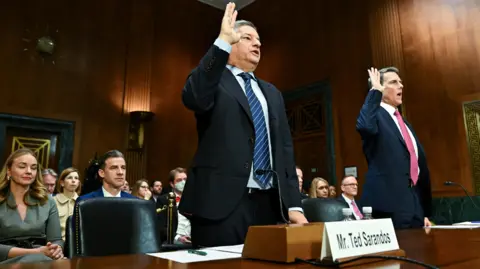
Netflix struggled to reassure sceptical lawmakers that its proposed $82bn (£61bn) takeover of Warner Bros Discovery would benefit consumers, workers and the broader entertainment industry.
On Tuesday, members of the US Senate antitrust subcommittee, which includes both Democrats and Republicans, raised concerns about reduced competition, potential price rises and the future of cinemas if the merger goes ahead.
The deal, which is currently under review by the Department of Justice (DoJ), would give Netflix control of Warner Bros' film and television studios as well as the HBO Max streaming service.
Rival bidder Paramount Skydance continues to push a competing offer to buy the company.
The Senators' questioning highlighted bipartisan opposition to the merger. But DoJ regulators have the authority to decide whether to approve or block the deal.
During the hearing, senators quizzed Netflix co‑chief executive Ted Sarandos on the fate of theatres if the deal were to be approved, the effects of the merger on subscription prices and on the entertainment workforce.
Sarandos said his company would commit to releasing Warner Bros films for a 45‑day theatrical period - the current industry standard - and pledged to run the studio "largely as it is today".
He argued that combining the two companies would "give consumers more content for less", noting that 80% of those who subscribe to HBO Max - a streaming service that is part of Warner Bros' library - also pay for Netflix.
He also insisted the merger would create more American jobs.
But Republican Senator Mike Lee warned that "consolidating two major employers within the same market inevitably has an impact on, and can significantly weaken, competition for that labour".
Although several Republican Senators expressed concern about competition issues, some also focused on the ongoing culture‑war debate.
Senator Eric Schmitt, a Republican, accused Netflix content programming of being "overwhelmingly woke".
One party notably absent from the hearing was David Ellison, the chief executive of Paramount, which is still vying to acquire Warner Bros despite being repeatedly rebuffed.
Paramount, which is backed by the billionaire Ellison family, has argued that the company's $108bn deal for the company is superior.
Critics have condemned both merger proposals, saying either deal would consolidate too much power in the hands of one company.
Senator Cory Booker, a Democrat, called Paramount's absence from the hearing "frustrating", and said David Ellison had declined his invitation to testify.
"With either merger, another corporation will have that increased control over what we see, what we hear and what news we consume," Booker said.
Netflix, which is seeking to fend off rival Paramount in its bid for the Hollywood studio, last month updated its offer and said it would pay entirely in cash after suggesting it would fund the transaction through a mix of cash and shares.
The subcommittee hearing also considered whether Alphabet's YouTube is a key competitor to Netflix.
Sarandos argued that "we are competing for the same content, we are competing for the same viewers, we are competing often for the same ad dollars".
"YouTube is not just cat videos anymore. YouTube is TV," he added.
But some lawmakers, including Lee, remained sceptical of those claims, arguing that YouTube should not be considered a rival. Paramount has also pushed back against those arguments.