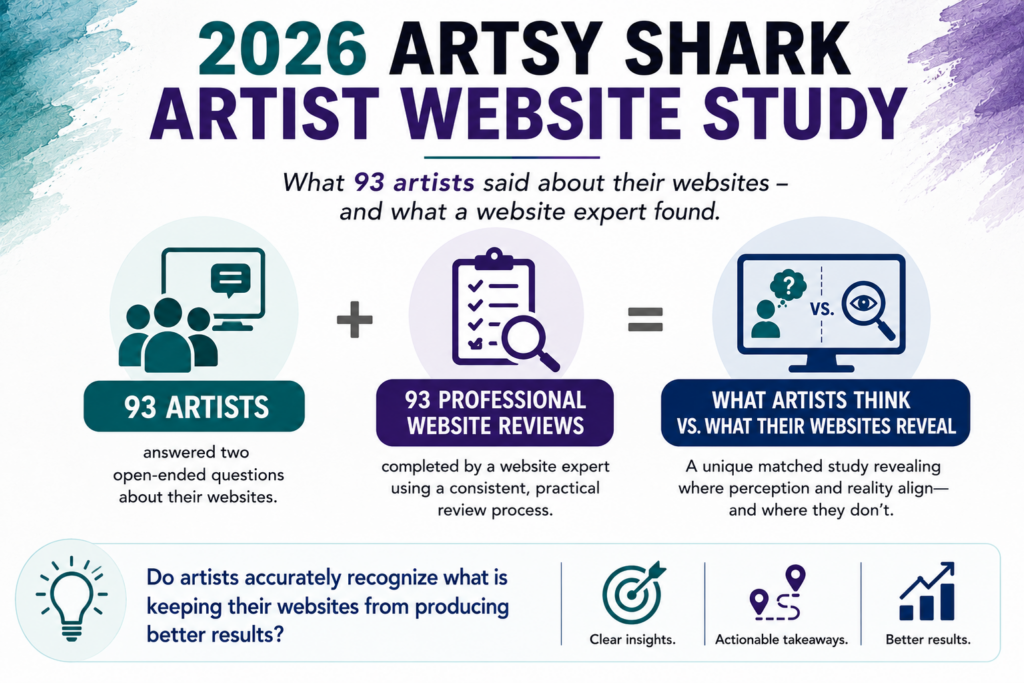
About the Study
What do artists want their websites to accomplish? And do they accurately recognize what is keeping those sites from producing better results?
We asked 93 artists two open-ended questions about their websites. Each of those artists then received a professional website review from Artsy Shark. That allowed us to compare what artists thought about their websites with what the review actually found.
What Artists Want Their Website To Achieve
One objective stood well above the others: artists want their websites to help generate sales. 71% of the artists said they want their website to generate sales or facilitate purchases.
Other goals included attracting collectors and buyers, creating professional opportunities, increasing visibility, generating inquiries and presenting their work professionally.
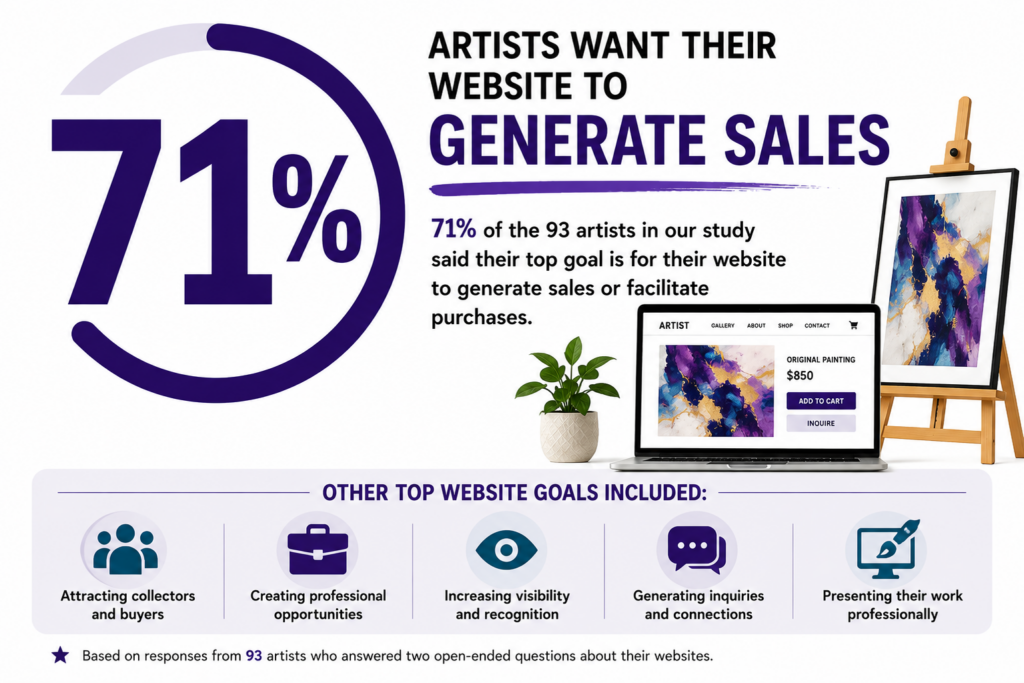
Artists Want Business Results
That doesn’t mean every artist needs an ecommerce website. Some want direct purchases. Others want a collector to inquire, a designer to discover their work, a gallery to consider representation or a prospective client to request a commission.
The important question is: What do you want an interested visitor to do next? Your website should make that action clear and easy.
What Artists Thought Was Holding Them Back
When artists described their own website challenges, one issue came up most frequently. 43% identified traffic and discoverability as a major challenge.
They wanted more visitors, better search visibility and more of the right people discovering their work. Sales and conversion problems were also a major concern, identified by 40%. But the professional reviews revealed a different picture.
What the Professional Reviews Found
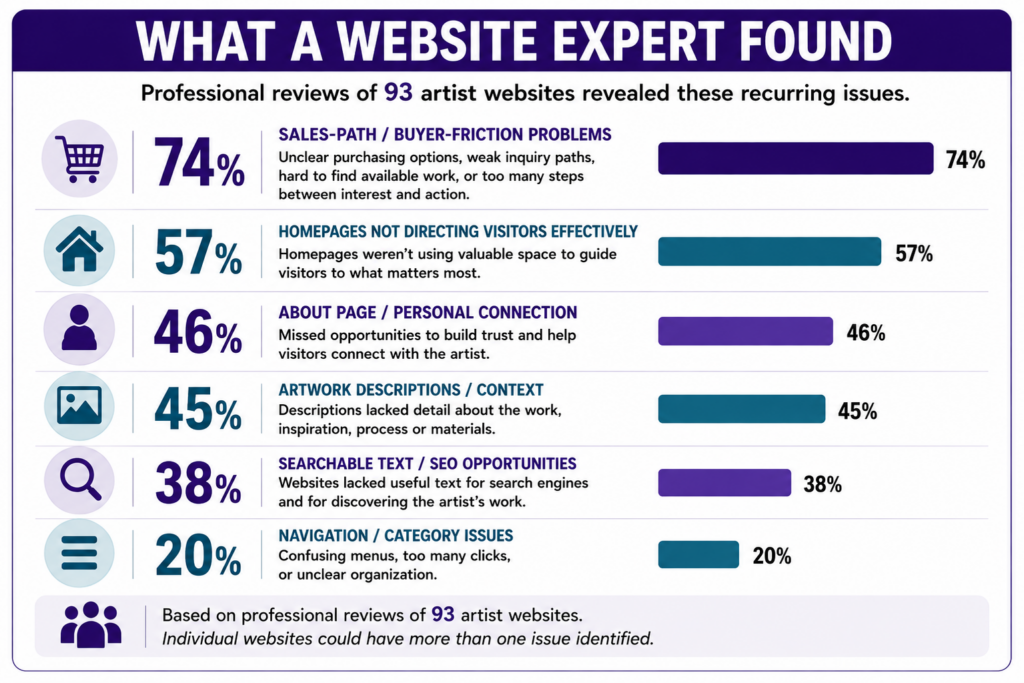
Artsy Shark reviewed the websites of those same 93 artists. The most widespread issue wasn’t attracting visitors. It was what happened after visitors arrived.
74% of the websites had problems with the path to buying or inquiring.
Those problems included unclear purchasing options, weak inquiry paths, difficulty finding available work, too many steps between viewing artwork and taking action, or insufficient information to help a potential buyer move forward.
What Artists Thought vs. What the Reviews Found
This may be the most useful finding in the entire study. The questionnaire and professional reviews gave us two different ways to look at the same websites.
Artists naturally described the problems they could see or experience themselves. A professional review could examine the site from a visitor’s point of view, including what happens when someone becomes interested in the artwork and considers taking the next step.
Comparing those two perspectives revealed an important gap.
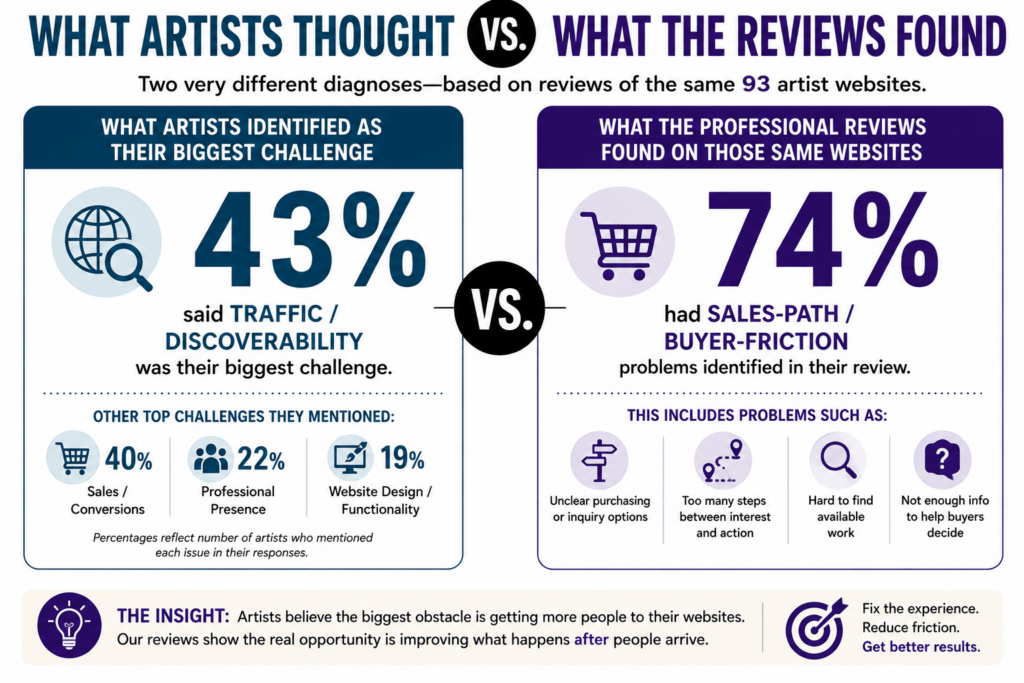
Artists weren’t necessarily wrong to want more traffic. More qualified visitors can certainly help. But additional traffic alone won’t solve a website that makes it difficult for interested people to determine what is available, understand the work, find purchasing information or know what to do next.
More Traffic May Not be the First Priority
Suppose your website receives 500 visitors and very few take action. Sending another 500 people to exactly the same experience may not change much. But before concentrating entirely on attracting more visitors, look at what happens when someone is already interested enough to visit your site.
Evaluate:
- Can they quickly tell what you offer?
- Can they find available work?
- Is it clear how to buy or inquire?
- Can they learn something meaningful about individual pieces?
- Do they know how to stay connected if they aren’t ready to purchase today?
Those questions move the focus from simply generating more traffic into making better use of the traffic you already have.
The Art Wasn’t the Problem
One of the most encouraging patterns in the reviews was that the artwork itself was frequently strong. Many artists had compelling work, professional presentation, impressive credentials or substantial bodies of work.
The website was often the part that needed adjustment. That is also good news. Many artists don’t need to start over with an entirely new site. They need to make the website they already have clearer, easier to use and more closely aligned with their business goals.
What Can You Do About It?
Several recommendations appeared repeatedly across the professional reviews:
Make the next step obvious. Give interested visitors a clear way to buy, inquire, request a price or contact you about a particular piece.
Make available work easy to find. Don’t make potential buyers sort through sold work, archives and unrelated collections to determine what they can purchase.
Give artwork more context. When appropriate, add information about inspiration, process, materials, place, subject or the story behind the work.
Put your homepage to work. Use it to direct visitors toward available art, important collections, commissions, your email list or other areas that support your goals.
Make your website searchable. Images alone give search engines very little information. Useful written content about your medium, subject matter, location and individual works can help people discover you.
Remove unnecessary friction. Simplify navigation, repair broken links, update outdated information and make important information easy to locate.
Small changes can make a substantial difference in what happens after someone discovers your art.
Need Help With Your Own Art Website?
If some of the challenges in this study sound familiar, Artsy Shark’s website expert Hallie Edlund works one-on-one with artists on professional websites and practical art marketing strategies.
Whether you need a new website or want to improve the way your existing site supports your business, she can help you clarify what the site needs to accomplish, present your work effectively and develop a marketing strategy for reaching the right audience.

What the Study Tells Us
Artists know what they want from their websites. Most want business results, particularly sales. Where the disconnect appears is in diagnosing what is preventing those results.
Traffic and visibility certainly matter. But our professional reviews found that many artist websites also need to do a better job serving visitors who have already arrived. A productive artist website doesn’t need to be complicated. It needs to help people understand what you offer, why they should care, what is available and what they should do next.
About the Research
The 2026 Artsy Shark Artist Website Study is based on 93 artists who answered two open-ended questions and subsequently received a professional website review from Artsy Shark website expert Hallie Edlund.
Artists were asked:
- What are your biggest art website challenges?
- What do you most want your website to accomplish?
We categorized their responses according to recurring themes. We then separately analyzed the professional reviews of those same 93 websites to identify recurring problems observed during the reviews.
An artist’s response or website could fall into more than one category. For this reason, percentages within each group do not total 100%.
Source: Artsy Shark, 2026 Artist Website Study