Polymerization of acrylic acid (AA) with native and hydrolyzed maize starches was carried out via a potassium bromate-thiourea dioxide redox initiation system. The factors affecting the efficiency of the redox system and, in turn, the...
morePolymerization of acrylic acid (AA) with native and hydrolyzed maize starches was carried out via a potassium bromate-thiourea dioxide redox initiation system. The factors affecting the efficiency of the redox system and, in turn, the polymerization process were studied. These factors included the concentrations of AA, KBrO3, thiourea dioxide (TUD) (and equimolar ratio of the latter two), polymerization temperature and the extent of starch hydrolysis. The behaviour of the apparent viscosity of the cooked poly(AA)-starch composite paste, obtained under different polymerization conditions, was also studied. The polymerization reaction was monitored via the determination of the total percentage conversion (% TC) of AA. The poly(AA)-starch composite was evaluated by calculating the polymer yield, namely the graft yield (% GY), the grafting efficiency (% GE), the percentage homopolymer (% HP) and the total conversion. Results obtained indicated that the optimum conditions, expressed as percent of total conversion are: (a) with native starch (NS): (KBrO3), 6 mmol/l00 g NS; (TUD), 7.4 mmol/lOO g NS; (AA), 30% ofweight of starch; polymerizationtemperature, 50°C; and polymerization time 30 min. (b) With hydrolyzed starch (HS): (KBrO3), 4 mmol/l00 g HS; (TUD), 4 mmol/l00 g HS; (AA), 30%; polymerization temperature, 40°C; and polymerization time, 30 min. The results also indicated that, for a given rate of shear, while the apparent paste viscosity of the poly(AA)-NS decreases with increasing concentration of KBrO3, TUD, and AA (within the studied range), it increases with increasing polymerization temperature from 30 to 50°C. Regardless of the polymerization conditions used, the apparent viscosity of NS is higher than that of the poly(AA)-NS composite. On the other hand, the apparent viscosity of the poly(AA)-HS (hydrolyzed starch) composite dependsupon the extent of hydrolysis of the starch used as well as the polymerization conditions.


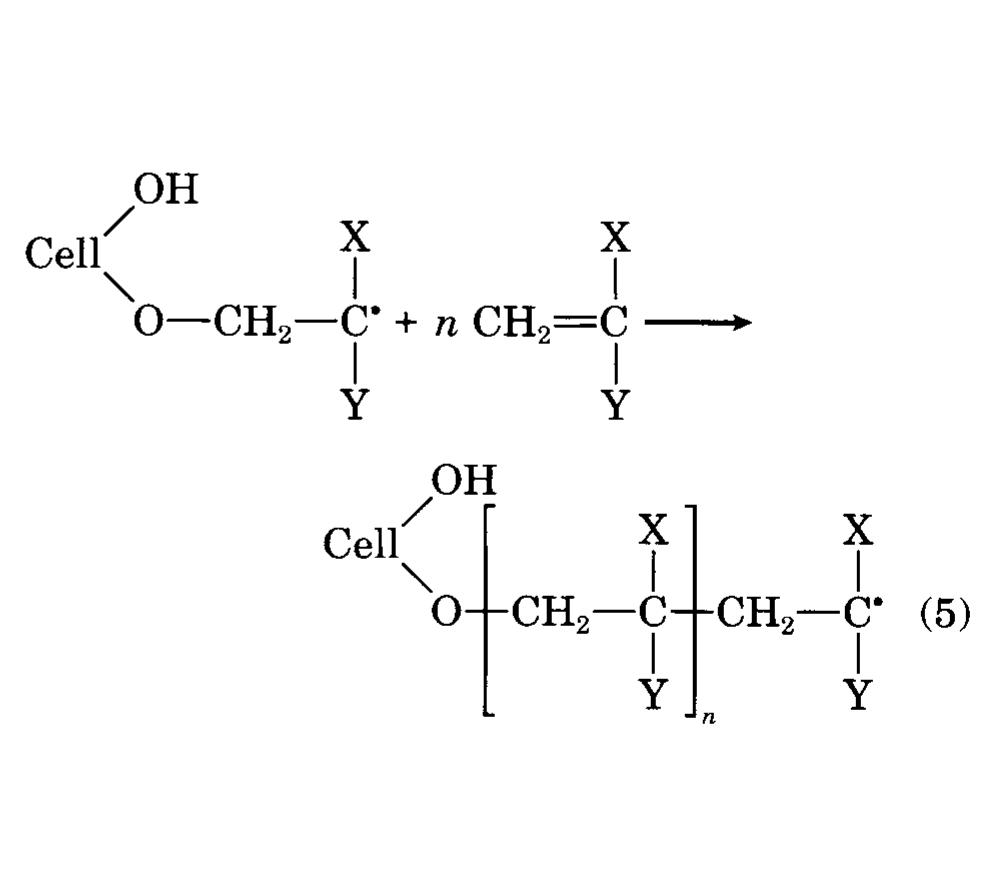
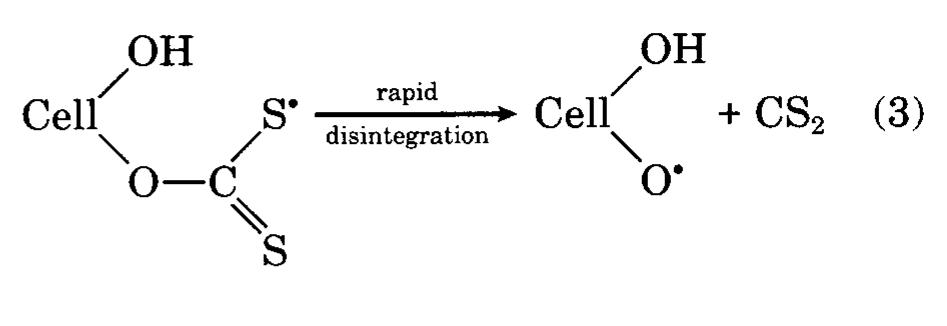
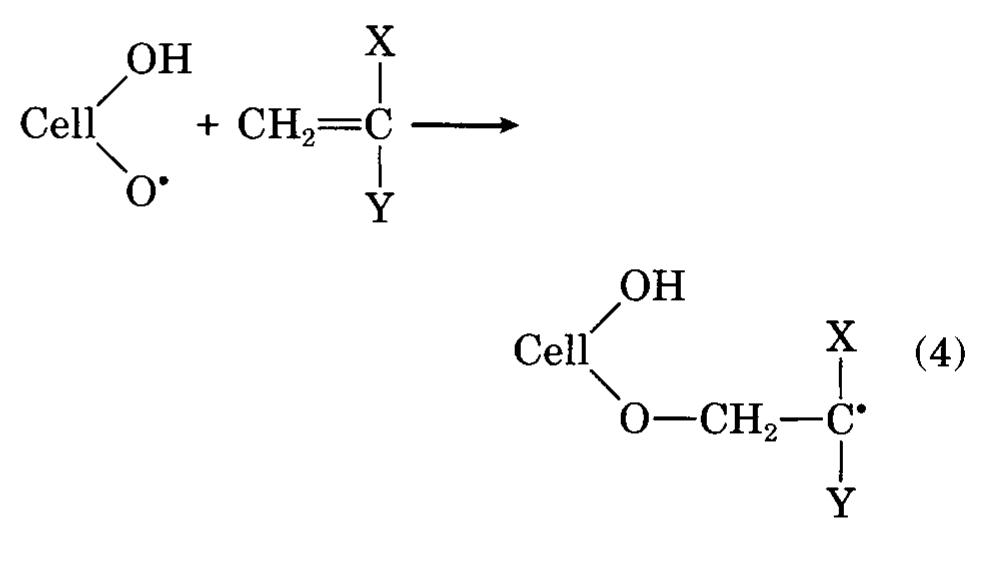
![The initially formed thiocarbonate radicals are very unstable; therefore, they will speedy disinte- grate to form the most stable cellulose macroradicals (IV) and CS,.!” The rate of initial radical decom- Generation of the N-succinimidy] radicals (J) is greatly accelerated in strongly acidic medium. These radicals have no ability to abstract H-atoms from the cellulose hydroxyls; disinclination of the cellu- ose itself to be grafted with MMA using NBS alone or in coupling with Fe** ions proves this. Neverthe- ess, the N-succinimidyl radicals (I), in addition to their ability to initiate homopolymerization of MMA, are capable of abstracting the more mobile H-atoms from the cellulose thiocarbonate (II) to form primary cellulose thiocarbonate radicals (III) and succinimide molecules:](https://figures.academia-assets.com/40416065/figure_001.jpg)
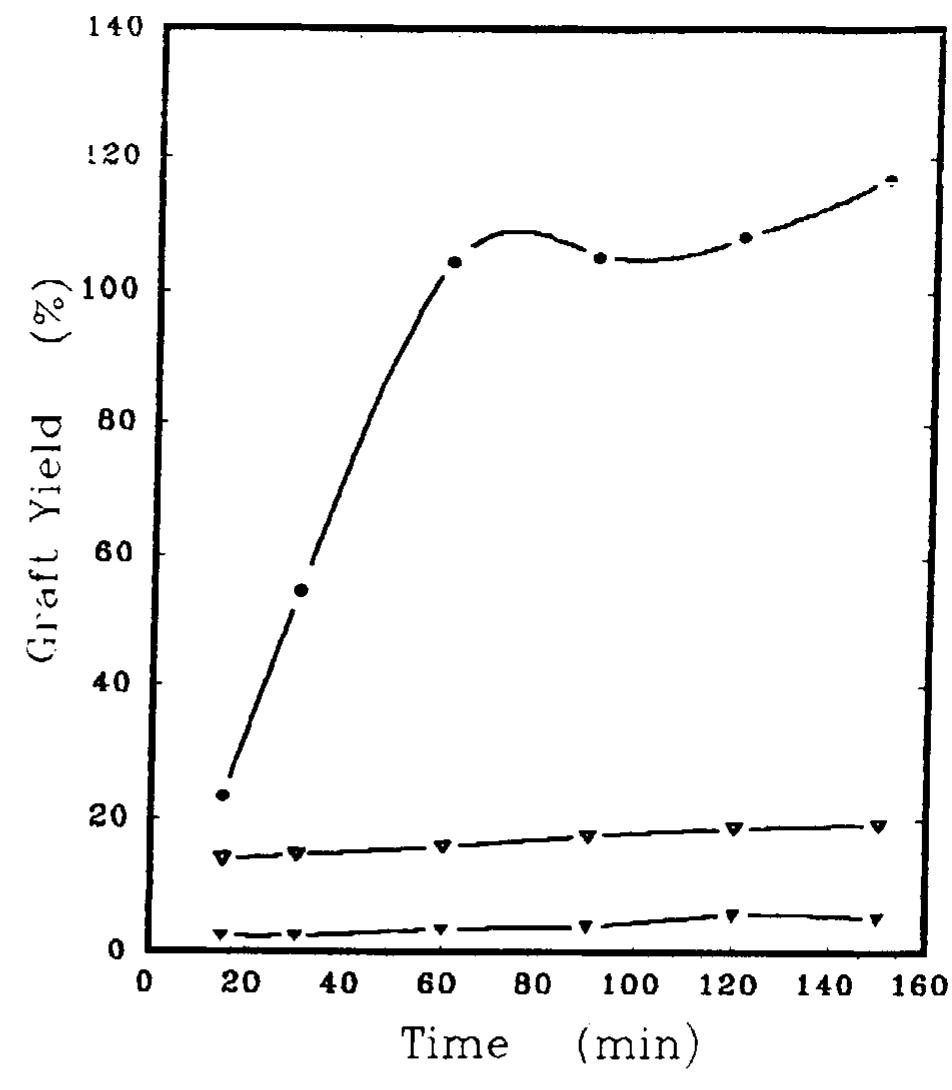
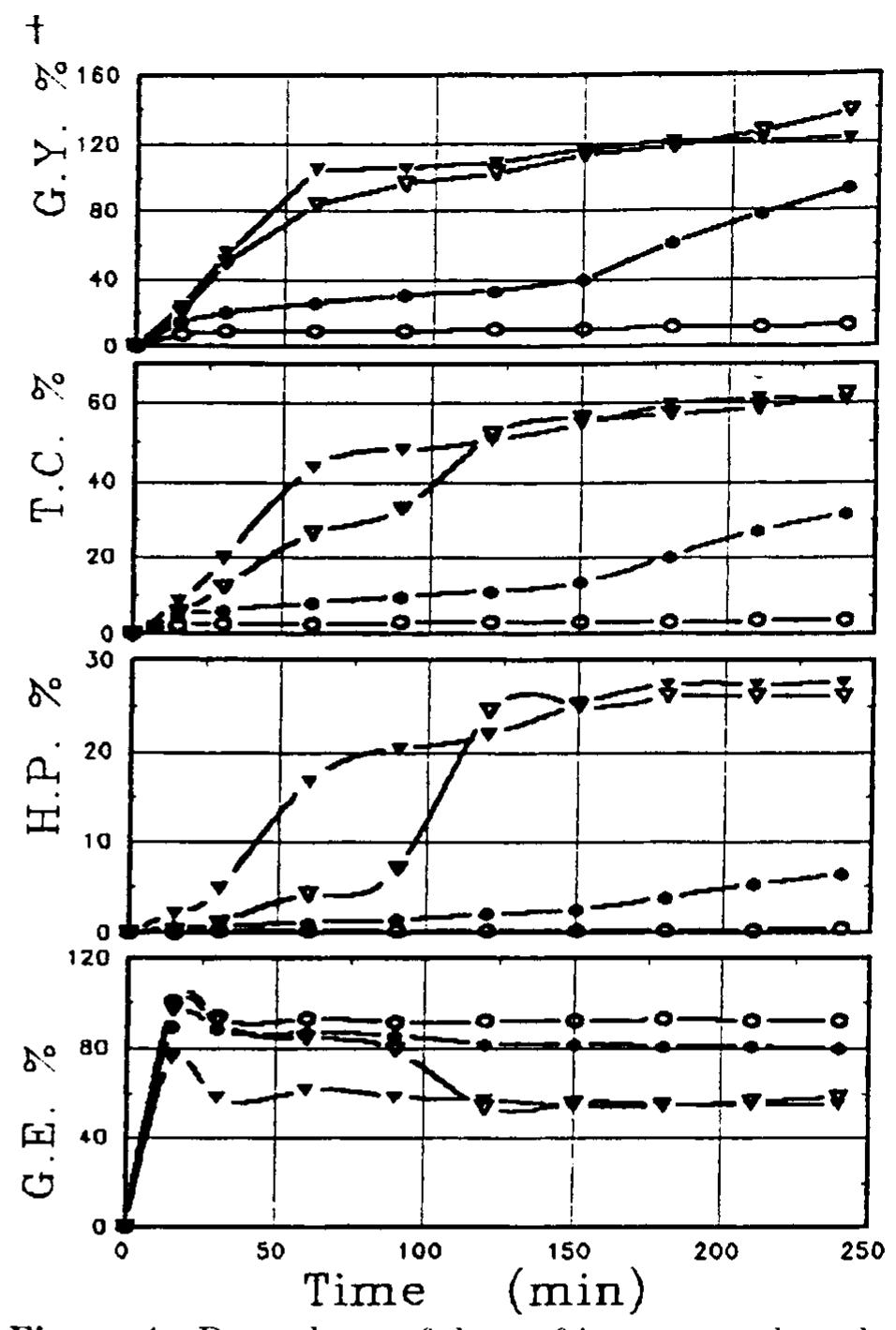
![Figure 3. Effect of the polymerization medium on the rate of the grafting reaction: (O) %GY; (V) %HP; (@) %TC; (¥) %GE. NBS, 1 X 10°? mol/L; Fe?*, 1 X 10⁷% mol/ L; MMA, 4%; temperature, 50°C; time, 120 min; material : liquor ratio, 1 : 100. On the other hand, failure of the ferrous cellulose thiocarbonate-NBS redox system to initiate poly- merization of MMA onto cellulose at pH = 3 would be expected to result from the conflicting effects [listed above in (1)-(4)] in the grafting medium. Furthermore, at pH = 3, the Fe®* ions outcome dur- ing the redox reaction (1) forms a reddish-brown ferric hydroxide (water-insoluble) on fabric surface. The complete precipitation of Fe(OH)s;, which occurs at pH = 3.5, will result in impeding the diffusion of the active species as well as the monomer molecules from the aqueous phase to the cellulose backbone."*](https://figures.academia-assets.com/40416065/figure_011.jpg)
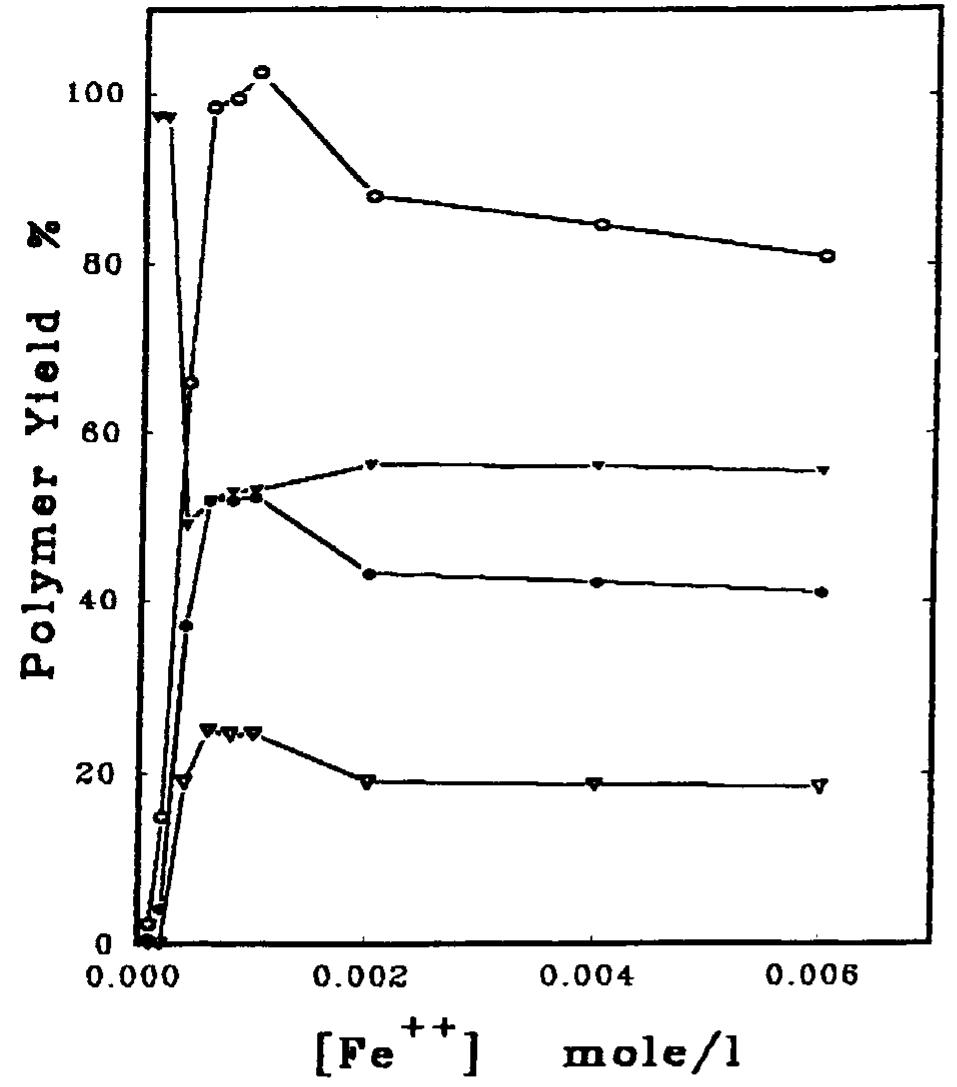
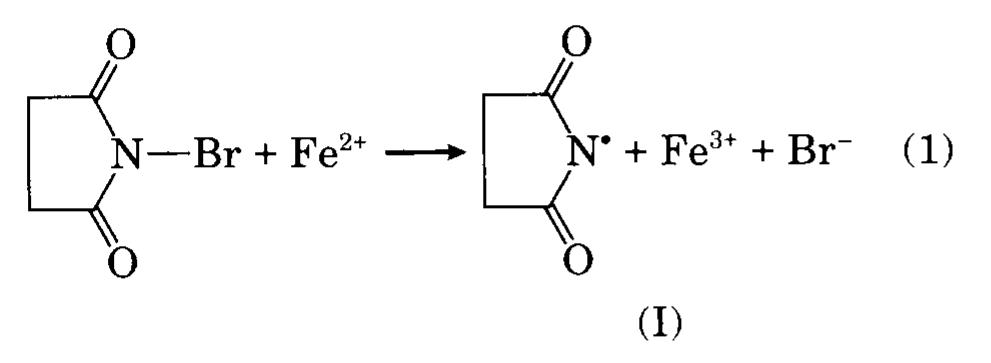
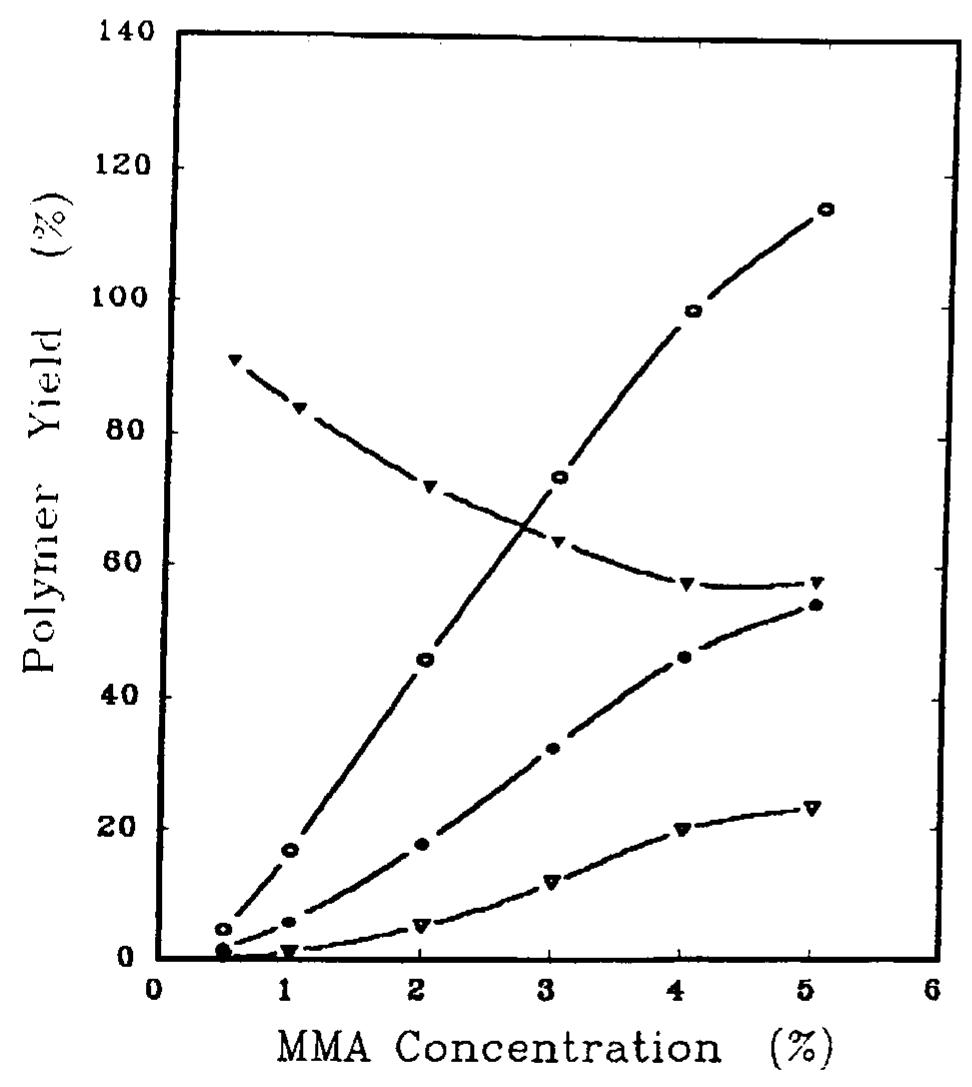
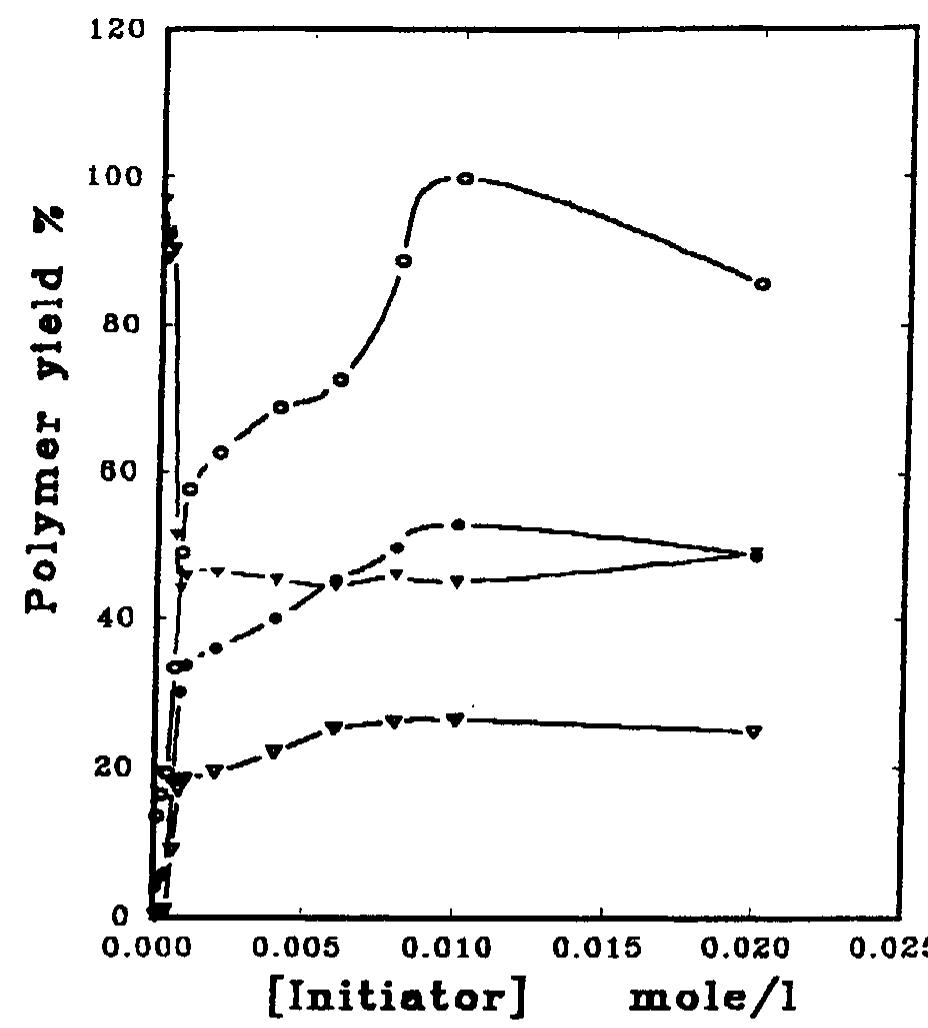
![The behaviour of the polymer criteria within the concentration range 1 X 10°4-1 X 10⁷? mol/L could be interpreted in terms of the oxidation-reduction- decomposition reaction. The latter is greatly accel- erated as FAS concentration increases up to 1 X 10°? mol/L, with the formation of abundant amounts of N-succinimidyl radicals and Fe** ions (1). As already mentioned, the N-succinimidy] rad- icals are responsible for generating of cellulose ma- croradicals as well as monomer radicals. Moreover, the Fe** ion, depending on its concentration in the grafting medium, may act as an initiator as well as a terminator.!* Stated in other words, the Fe** ion, in a certain range of its lower concentration, is con- sidered to coordinate to the oxygen of the carbonyl group of MMA to form a complex.””-”” This complex may produce a primary radical capable to initiate the polymerization reactions.”**4 The synergistic ef- fects of both N-succinimidy] radicals and Fe** ions for initiating grafting and homopolymerization re- actions of MMA may account for the increments in the yields of GY, HP, and TC. In addition to the disproportionation reaction (10), the N-succinimidyl radicals may participate in the termination reaction of the growing chains. Consumption of N-succinimidy] radicals in such a reaction is, of course, responsible for the decrements in the GY, TC, and HP when the highest NBS con- centration (2 X 10~? mol/L) was used. The increments in the GY, HP, and TC as the NBS concentration increases up to 1 X 10⁷? mol/L could be associated with the successive generation of the N-succinimidy! radicals (Scheme 1) and, in turn, the cellulose macroradicals capable of initiating grafting reaction (Schemes 2-4). Number of these active species reaches a maximum with 1 X 10° mol/L of NBS. Nevertheless, above this concentra- tion, the grafting solution would be repleted greatly by the N-succinimidyl radicals. Thereupon, they tend to interact with each other to produce not the coupling products, bis-N-succinimidy! (V), but in- stead, other stable products, possibly succinimide and acry! isocyanate (VI) (10)!*"":](https://figures.academia-assets.com/40416065/figure_009.jpg)