In the modern healthcare landscape, understanding and leveraging customer insights has become critical for enhancing patient care, optimizing healthcare delivery, and improving organizational performance. This paper explores the...
moreIn the modern healthcare landscape, understanding and leveraging customer insights has become critical for enhancing patient care, optimizing healthcare delivery, and improving organizational performance. This paper explores the development and application of AI-driven models designed to generate actionable customer insights within healthcare contexts. By focusing on customer insights, which encompass a deep understanding of patients' preferences, behaviors, and experiences, healthcare providers can move toward more patient-centered approaches, leading to enhanced outcomes and increased satisfaction. Despite the significance of these insights, the healthcare industry has faced challenges in effectively capturing and analyzing patient data due to its complexity and the stringent privacy and security regulations surrounding it. Our study addresses this gap by proposing an AIbased framework that integrates multiple data sources, including electronic health records (EHR), patient feedback, and other healthcare interactions, to extract meaningful insights. The framework leverages advanced machine learning techniques, including natural language processing (NLP) and predictive modeling, to interpret patient feedback and predict individual patient needs and preferences. Through this approach, the model is capable of identifying trends and predicting outcomes that can support decision-making at both the clinical and administrative levels. For instance, by analyzing historical data, the model can identify patterns indicating patient dissatisfaction or disengagement, allowing healthcare providers to proactively address these issues and improve the overall patient experience. The research utilizes both real-world healthcare data and simulated data to test the model’s performance across diverse scenarios, such as patient retention, satisfaction prediction, and engagement analysis. The simulated data environment allows for a controlled exploration of various patient interaction scenarios without compromising patient confidentiality, while real world data provides insights grounded in actual patient behaviors and outcomes. Key findings from these experiments demonstrate that the AI-driven model achieves high accuracy in predicting patient satisfaction and identifying patients at risk of noncompliance or disengagement. These insights enable healthcare providers to implement personalized interventions that can lead to better patient engagement, improved health outcomes, and optimized resource allocation. Moreover, the paper discusses the implications of using AI for customer insights in healthcare, particularly regarding ethical considerations, data privacy, and patient autonomy. Given the sensitive nature of healthcare data, our framework incorporates privacy-preserving techniques such as data anonymization and secure data handling protocols, ensuring compliance with regulations like HIPAA (Health Insurance Portability and Accountability Act). The study also highlights potential limitations, including biases that can arise from data sources and challenges associated with integrating insights into existing healthcare workflows. In conclusion, this research presents a novel approach to generating actionable customer insights in healthcare through AI-driven models. By effectively combining patient feedback, EHR, and predictive analytics, our model demonstrates significant potential for supporting healthcare providers in making more informed, patientcentered decisions. The model's success in a simulated environment suggests its potential applicability across various healthcare settings, from hospitals to outpatient clinics, and underscores the transformative role AI can play in enhancing patient experience and operational efficiency in healthcare. Future research will focus on refining these models, expanding the data sources, and exploring real-time implementation to further improve predictive accuracy and ensure broad applicability across diverse healthcare systems.


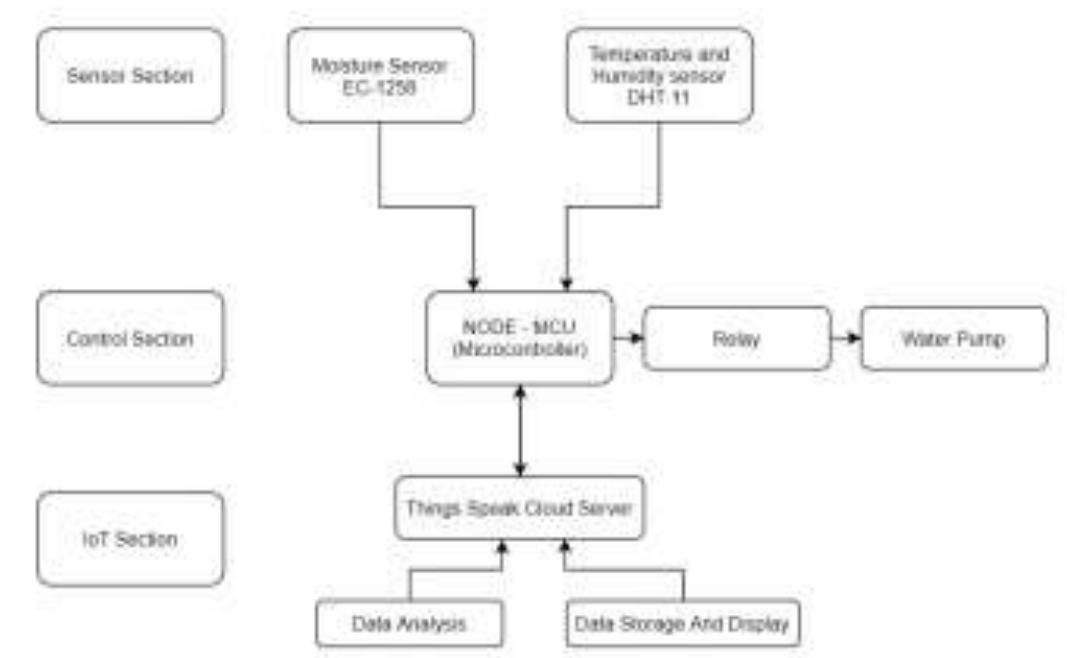
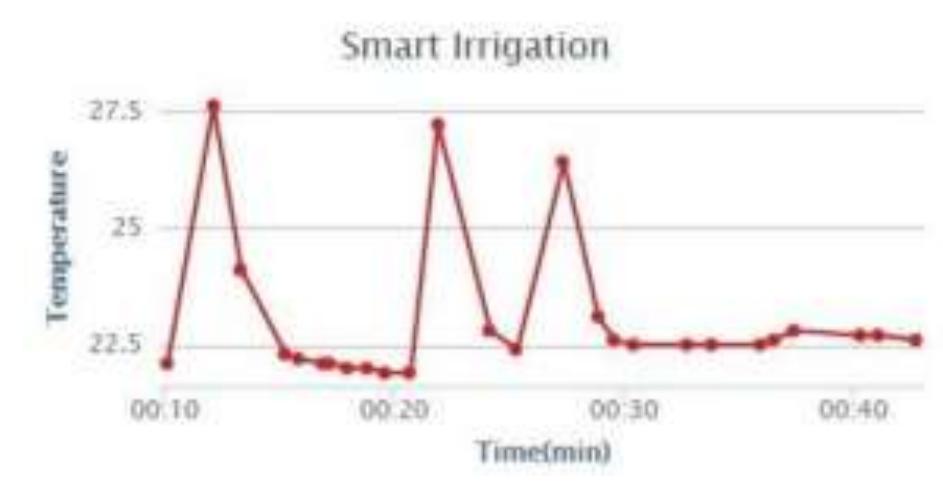
![At the heart of ThingSpeak is a time-series database. ThingSpeak provides users with free time-series data storage in channels. Each channel can include up to eight data fields. This tutorial provides an introduction to some of the applications of ThingSpeak, a conceptual overview of how ThingSpeak stores time-series data, and how MATLAB analysis is incorporated in ThingSpeak. ThingSpeak is an open data platform for the Internet of Things. The device or application can communicate with ThingSpeak using a RESTful API, and can either keep the data private, or make it public. In addition, ThingSpeak is used to analyse and act on the data. ThingSpeak provides an online text editor to perform data analysis and visualization using MATLAB [8]. Fig. 5(c): Temperature vs Time Graph The graph shows the temperature variation in the environmen in a certain time period which can tell the necessary factors fot the better yield.](https://figures.academia-assets.com/119780039/figure_002.jpg)