Academia.eduAcademia.edu

Music Neurotechnology

description38 papers
group12 followers
lightbulbAbout this topic
Music Neurotechnology is an interdisciplinary field that explores the intersection of music and neuroscience, focusing on how musical experiences influence brain function, cognitive processes, and emotional responses. It encompasses the development and application of technologies that enhance musical engagement, therapy, and understanding of neural mechanisms underlying music perception and production.
lightbulbAbout this topic
Music Neurotechnology is an interdisciplinary field that explores the intersection of music and neuroscience, focusing on how musical experiences influence brain function, cognitive processes, and emotional responses. It encompasses the development and application of technologies that enhance musical engagement, therapy, and understanding of neural mechanisms underlying music perception and production.
BeliefRecode AI™ introduces an emotion-adaptive artificial intelligence framework designed to detect, analyze, and therapeutically respond to human belief patterns in real time. Rooted in affective computing, cognitive psychology, and... more
Musicians and composers have been using brainwaves as generative sources in music for at least 40 years and the possibility of a brain-computer interface for direct communication and control was first seriously investigated in the early... more
This paper reports on the development of a proof-of-concept brain-computer music interfacing system (BCMI), which we built to be tested with a patient with Locked-in Syndrome at the Royal Hospital for Neuro-disability, in London. The... more
This paper reports the current level of development achieved by our research into brain-computer music interfacing (BCMI), which is aimed at special needs and Music Therapy, in addition to the entertainment industry. It surveys the... more
We are interested in exploring ways in which unconventional modes of computation may provide new directions for future developments in Computer Music. Research into Unconventional Computing (Calude et al. 1998) is aimed at computational... more
The study of neural responses to musical stimuli offers valuable insights into how the brain encodes complex auditory information. This paper compares spectral amplitude modulations from various EEG electrodes, time-locked to attended... more
In this paper I propose an approach to the development of technology for the analysis of electroacoustic music, which is referred to as the neurotechnology approach. I propose the unprecedented possibility of developing tools for the... more
Can we hear the sound of our brain? Is there any technique which can enable us to hear the neuro-electrical impulses originating from the different lobes of brain? The answer to all these questions is YES. In this paper we present a novel... more
Three complementary methods are used to analyze the dynamics of multivariate EEG data obtained from a human listening to a piece of music. The analysis yields parameters for a data sonification that conserves temporal and frequency... more
Working memory is the system that underlies the temporary storage and manipulation of information. However, the exact biological basis and neural mechanisms of cognitive function and working memory has yet to be fully uncovered. The... more
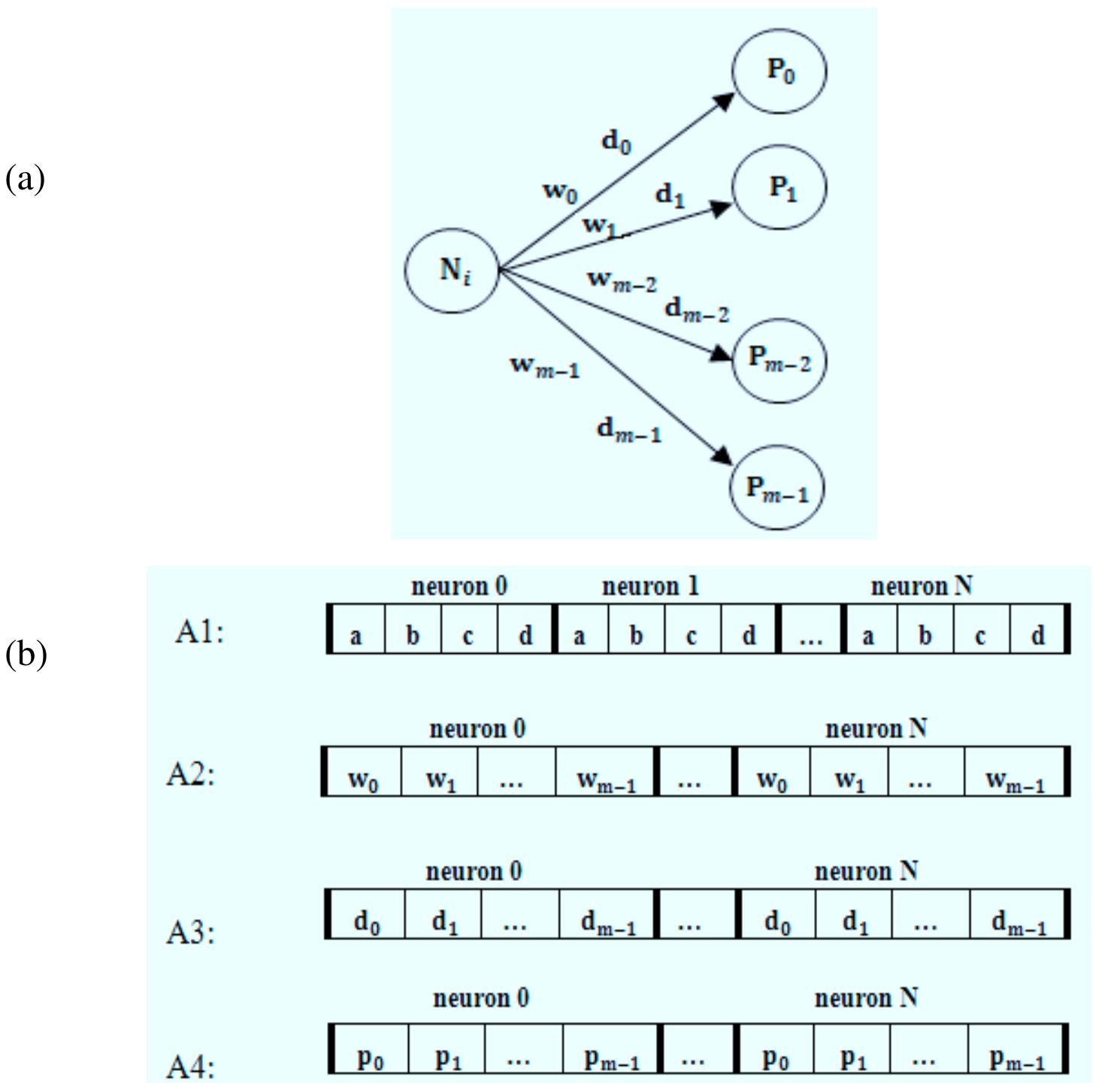
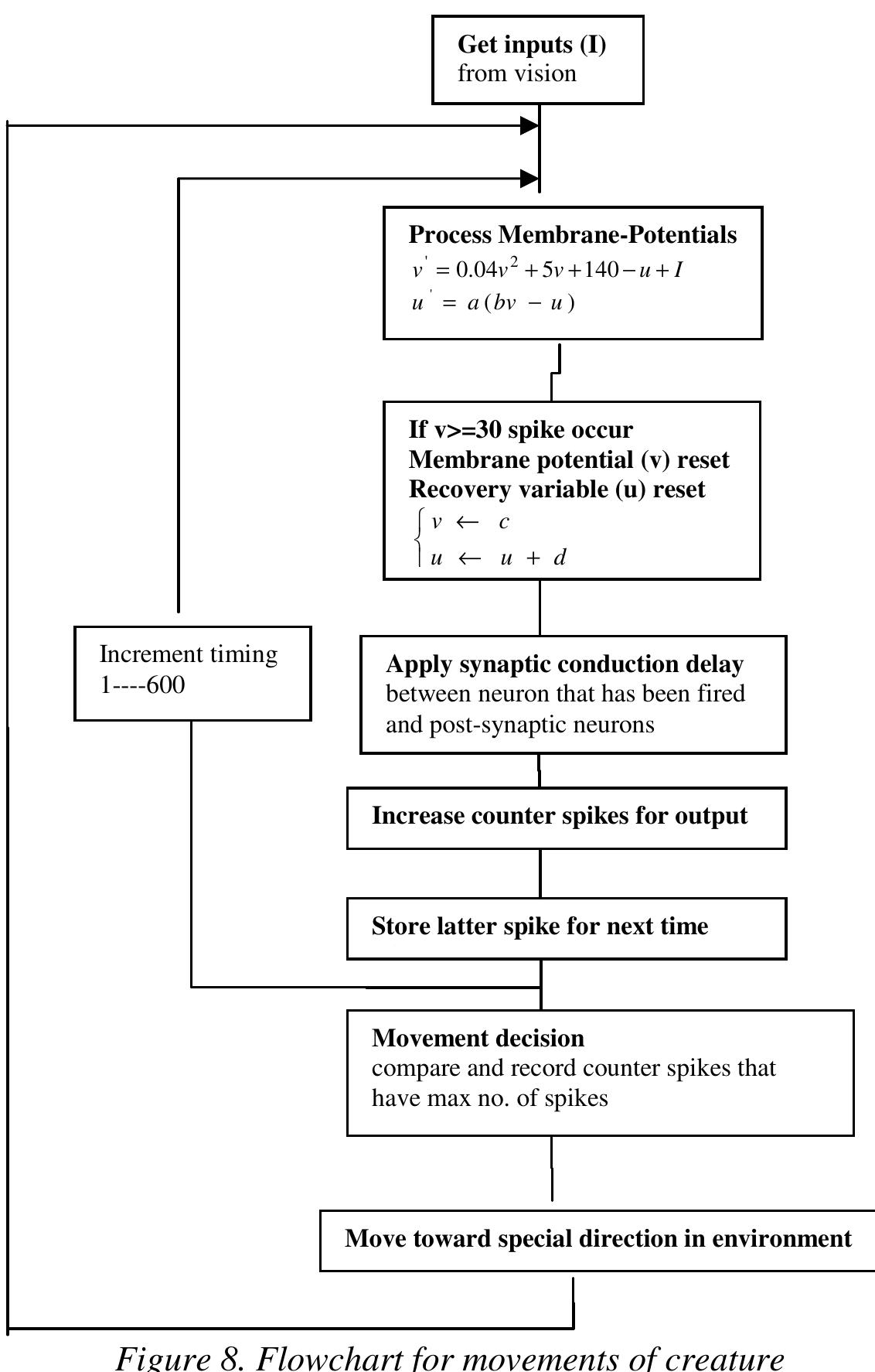
Spiking neural networks (SNNs) are considered to be more biologically realistic compared to typical rate-coded networks as they can model closely different types of neurons and their temporal dynamics. Typical spiking models use a number... more
The Fragmented Orchestra is a distributed musical instru-ment which combines live audio streams from geographi-cally disparate sites, and granulates each according to the spike timings of an artificial spiking neural network. This paper... more
This paper reports on the development of a proof-of-concept brain-computer music interfacing system (BCMI), which we built to be tested with a patient with Locked-in Syndrome at the Royal Hospital for Neuro-disability, in London. The... more
This paper presents a musical instrument, which uses in vitro neuronal networks to synthesise sounds. Cultures of dissociated neurons are grown on a dish with an embedded rectangular array of electrodes (MEA). Isolated neurons reconnect... more
The Fragmented Orchestra is a distributed musical instru- ment which combines live audio streams from geographi- cally disparate sites, and granulates each according to the spike timings of an artificial spiking neural network. This paper... more
This paper reports on the development of a proof-of-concept brain-computer music interfacing system (BCMI), which we built to be tested with a patient with Locked-in Syndrome at the Royal Hospital for Neuro-disability, in London. The... more
This paper describes early experiments, which attempt to reconfigure the sound of a breath using a network of artificial spiking cortical neurons. The connectivity of the network evolves according to a spike timing dependent plasticity... more
The Fragmented Orchestra is a distributed musical instru-ment which combines live audio streams from geographi-cally disparate sites, and granulates each according to the spike timings of an artificial spiking neural network. This paper... more
The human brain is a remarkable computing machine, i.e. vastly parallel, self-organizing, robust, and energy efficient. To gain a better understanding into how the brain works, a cyborg (cybernetic organism, a combination of machine and... more
We present a new technique for granular sampling using a pulsecoupled network of spiking artificial neurons to generate grain events. The system plays randomly selected sound grains from a given sound sample when any one of a weakly... more
Can we hear the sound of our brain? Is there any technique which can enable us to hear the neuro-electrical impulses originating from the different lobes of brain? The answer to all these questions is YES. In this paper we present a novel... more
Despite of the simplicity of their construction, cellular automata are capable of very complicated behavior with very little specification. The present paper introduces an algorithmic music system incorporating a voting rule type... more
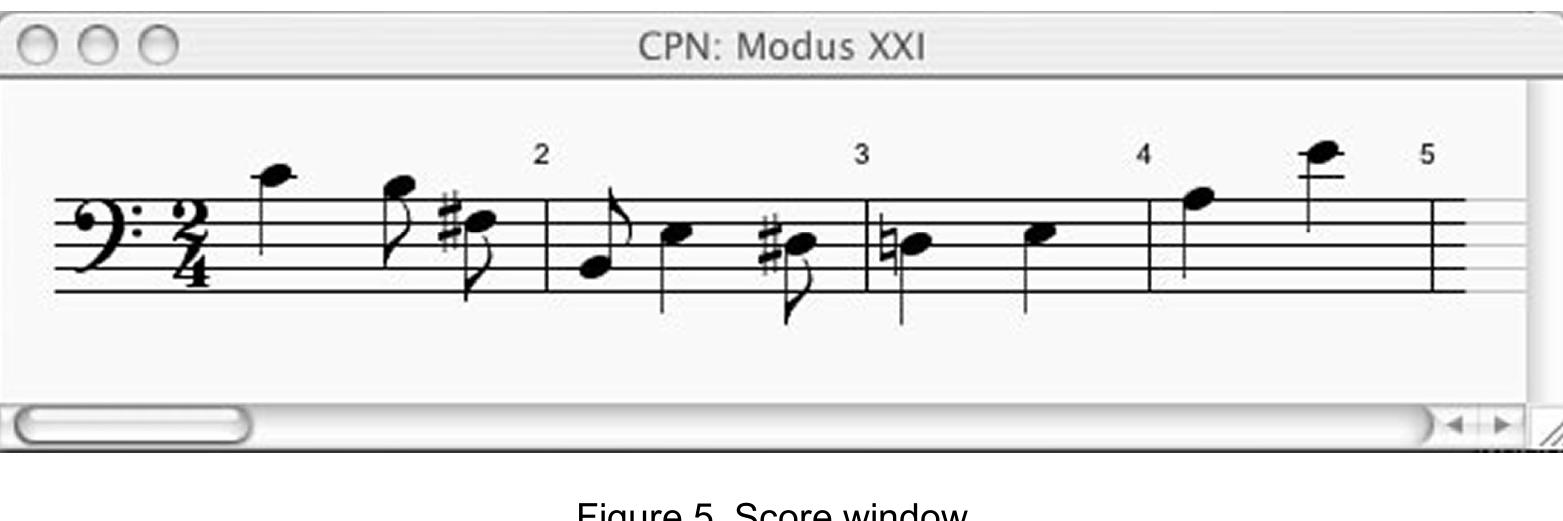
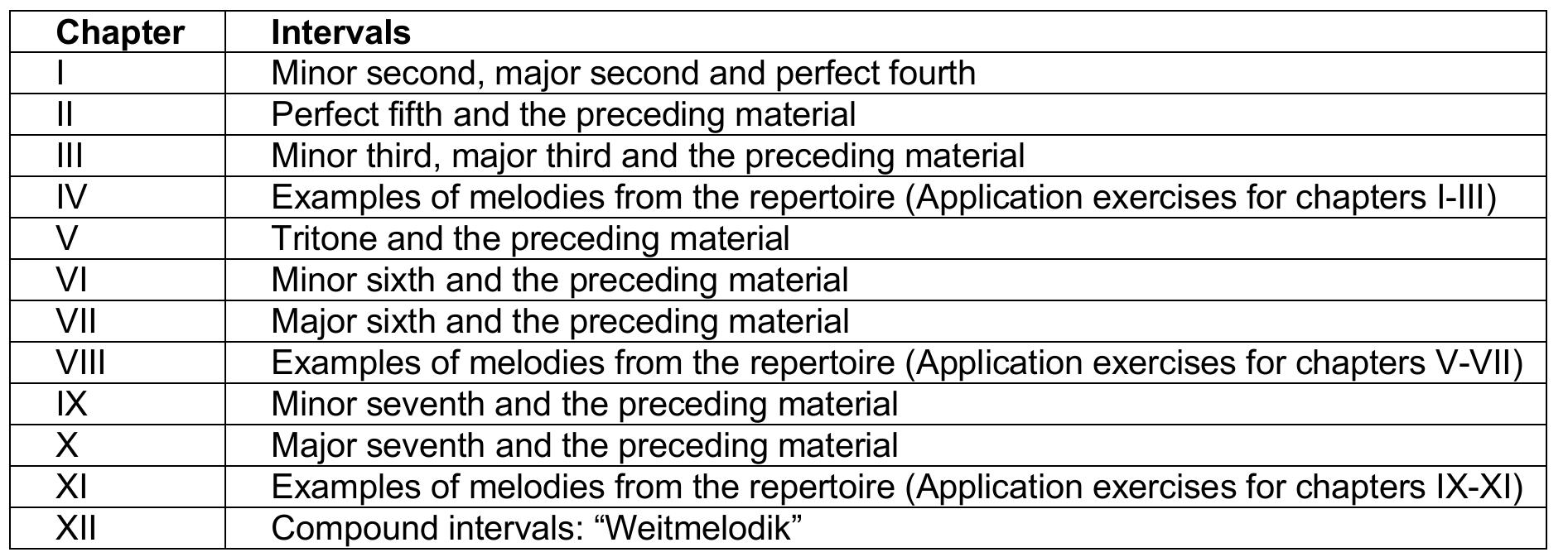
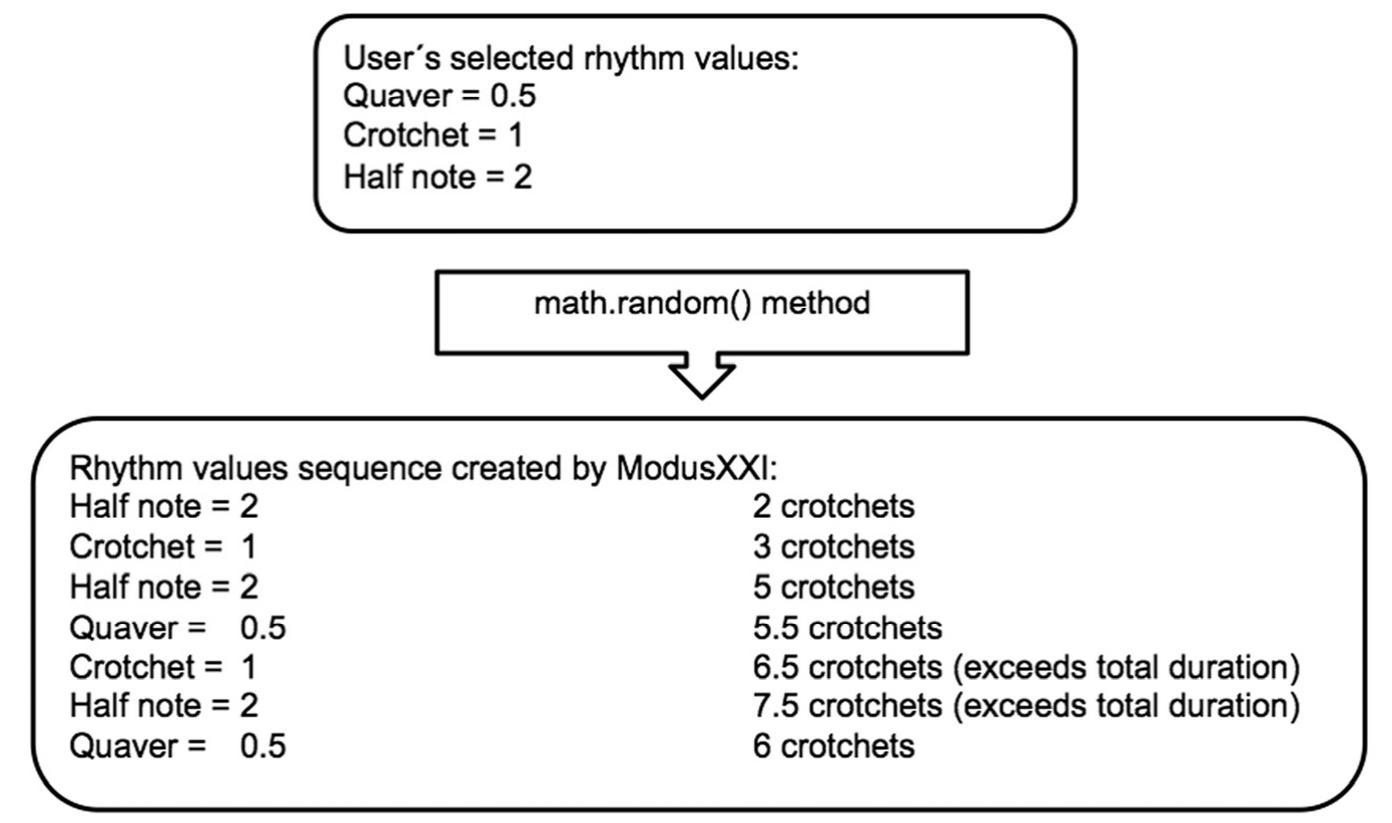
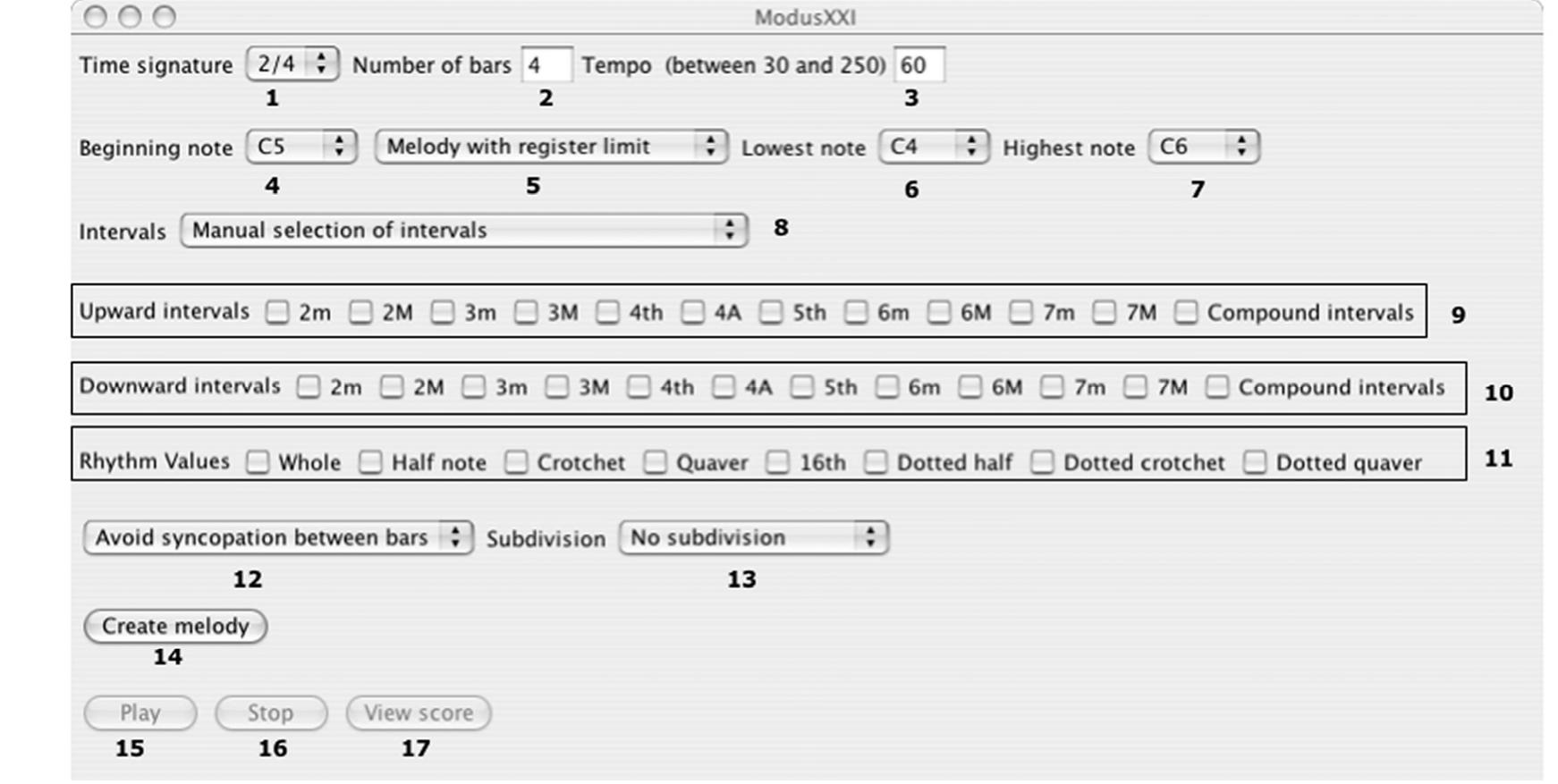
This paper describes the development, evaluation and use of the computer program ModusXXI, a music generator that can create a practically unlimited number of atonal melodic dictations, or melodic material for sight-reading, based on the... more
This paper introduces the interactive and performative installation artwork, Plasticity (Jane Grant, John Matthias, Nick Ryan and Kin) and its software engine the Neurogranular Sampler via a journey through the synchronized pendulum... more
Since the turn of this century, a substantial body of research has been published on the neuroscience of creativity. Now, it is necessary to study the neurophysiological correlates in true-to-life, professionally specific situations. The... more
This paper brings together perspectives of the ICMC 2007 ArtAbilitation Panel on non-formal rehabilitation via immersive interactive music environments. Issues covered are sound therapy and music therapy, musical topologies, brainwave... more
The study investigated the relative effectiveness of different proportions of time spent on physical and mental practice, in the context of a music performance of a tonal pattern over harmonic progressions of two difficulty levels. Using... more
Dan, The effects of practice procedure and task difficulty on tonal pattern
One of the challenges of researching spiking neural networks (SNN) is translation from temporal spiking behavior to classic controller output. While many encoding schemes exist to facilitate this translation, there are few benchmarks for... more
This paper presents a musical instrument, which uses in vitro neuronal networks to synthesise sounds. Cultures of dissociated neurons are grown on a dish with an embedded rectangular array of electrodes (MEA). Isolated neurons reconnect... more
The Fragmented Orchestra is a distributed musical instru-ment which combines live audio streams from geographi-cally disparate sites, and granulates each according to the spike timings of an artificial spiking neural network. This paper... more
In this paper we investigate the effect of biasing the axonal connection delay values in the number of polychronous groups produced for a spiking neuron network model. We use an estimation of distribution algorithm (EDA) that learns tree... more
This paper presents a musical instrument, which uses in vitro neuronal networks to synthesise sounds. Cultures of dissociated neurons are grown on a dish with an embedded rectangular array of electrodes (MEA). Isolated neurons reconnect... more
This chapter elaborates on sonification as an experimental method. It is based on the premise that there is no such thing as unconditional insight, no isolated discovery or invention; all research depends on methods. The understanding of... more
Musicians and composers have been using brainwaves as generative sources in music for at least 40 years and the possibility of a brain-computer interface for direct communication and control was first seriously investigated in the early... more
This paper describes early experiments, which attempt to reconfigure the sound of a breath using a network of artificial spiking cortical neurons. The connectivity of the network evolves according to a spike timing dependent plasticity... more
The Fragmented Orchestra is a distributed musical instrument which combines live audio streams from geographically disparate sites, and granulates each according to thespike timings of an artificial spiking neural network. Thispaper... more
We introduce a method of generating grain parameters of a granular synthesiser in real-time by using a network of artificial spiking neurons, the behaviour of which is determined by user-control of a small number of network parameters;... more
Music Neurotechnology is a new research area that is emerging at the crossroads of Neurobiology, Engineering Sciences and Music. Examples of ongoing research into this new area include the development of brain-computer interfaces to... more
We present a new technique for granular sampling using a pulsecoupled network of spiking artificial neurons to generate grain events. The system plays randomly selected sound grains from a given sound sample when any one of a weakly... more
In this paper, a new decisively important factor in both the perceptual and the automated piano-guitar identification process is introduced. This factor is determined by the nontonal spectral content of a note, while it is, in practice,... more
Methods for spectral analysis of audio signals and their graphical display are widespread. However, assessing mu- sic and audio in the visual domain involves a number of challenges in the translation between auditory images into mental or... more
Methods for spectral analysis of audio signals and their graphical display are widespread. However, assessing music and audio in the visual domain involves a number of challenges in the translation between auditory images into mental or... more
To understand and analysis behavior of complicated and intelligent organisms, scientists apply bio-inspired concepts including evolution and learning to mathematical models and analyses. Researchers utilize these perceptions in different... more
Neurons in central nervous system process information in networks formed by collection of neurons. Such networks perform computations in the brain resulting in decision making and other controlling signals to be generated by brain. Multi... more
The use of hybrid technologies creates the opportunity to combine nano-scale technologies, microelectronics and neuroscience in order to build devices for non-invasive stimulation and recording of cultured neural cells at nano-level. A... more
Download research papers for free!