Les haches à douilles de type armoricain: une production strictement de l'âge du Fer. Critique des sources documentaires afférant à leur chronologie Armorican type socketed axes: apurelyIron Age production. Critical analysis of the...
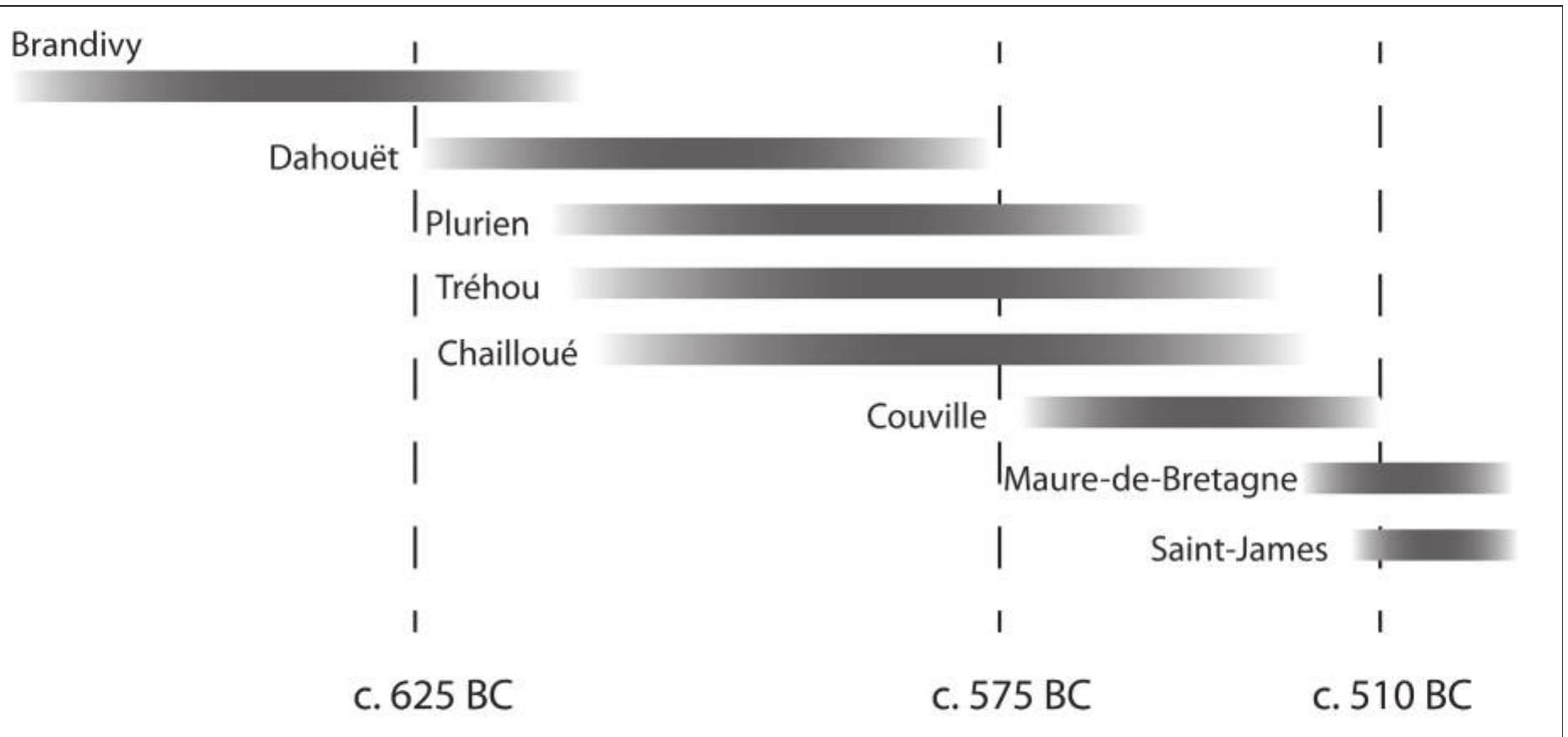
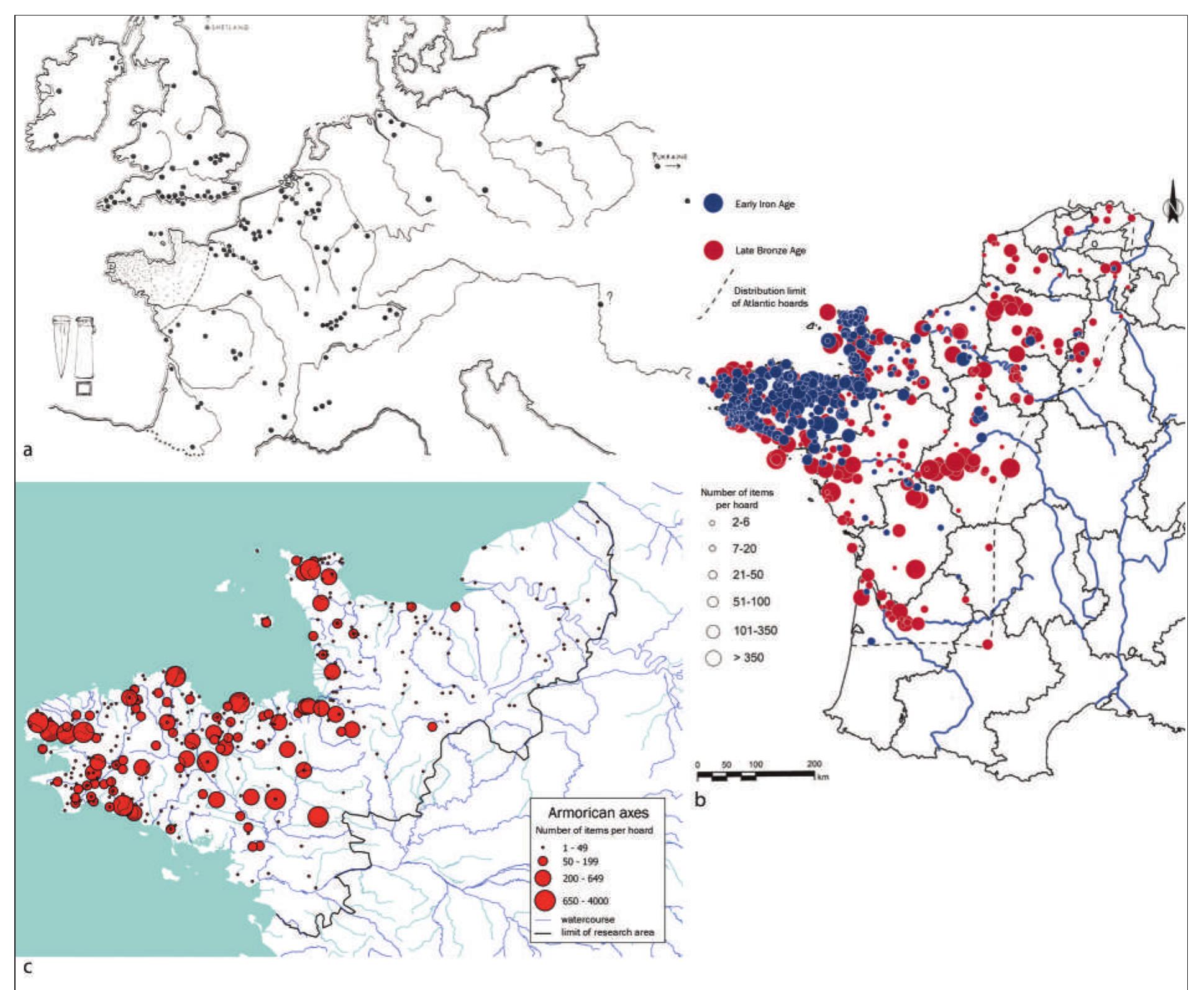
moreLes haches à douilles de type armoricain: une production strictement de l'âge du Fer. Critique des sources documentaires afférant à leur chronologie Armorican type socketed axes: apurelyIron Age production. Critical analysis of the documentation on their chronology José GOMEZ de SOTO À la mémoire de Jacques Briard _______________________ Résumé Dès le XVIII e siècle, les haches à douille en bronze dites de type armoricain, particulièrement abondantes en Bretagne et en Normandie, ont fait l'objet de débats, tant quant à leur finalité qu'à leur datation. À la fin du XIX e siècle G. et A. de Mortillet affirmaient une datation à l'âge du Fer des modèles non fonctionnels de taille moyenne et miniature, les haches fonctionnelles du type de Brandivy restant attribuées au Bronze final. Mais c'est le point de vue de J. Déchelette qui l'emporta jusqu'à la fin du XX e siècle : ces haches étaient attribuée à l'horizon de l'épée en langue de carpe du Bronze final atlantique 3 (BF IIIb = LBA 3 britannique = Ha B2-3, env. 950 à 800 av. J.-C.), avec une perduration au cours du premier âge du Ferreconnue par J. Briard.Bien qu'il commençât à être remis en cause à la fin du XX e siècle, ce point de vue traditionnel persiste chez certains auteurs. Aussi, le présent article se propose-t-il de produire un dossier aussi complet que possible de la question. Les éléments démontrant une production de ces hachesau premier âge du Ferseulementsont indiscutables : sur le continent, aucune ne peut être datée antérieurement à la phase récente du premier âge du Fer(Ha D). L'actuelle « présence » de rares haches dans certains dépôts du BFa 3s'explique parleur pollution par des objets d'autres provenances, conséquences des aléas de leur conservation dans les collections et/ou les musées (ex., Plounéour-Lanvern, l'Île Verte, Aurigny). Parfois, quelques rassemblements d'objets aux provenances mal ou pas documentées réunis artificiellement ont été présentés commedesdépôts, lesquels n'avaient jamais existés (ex., Césarin). Dans d'autres cas, il s'agit d'une mélecture des sources documentaires (ex., Louvigné-du-Désert).Fait acquis essentiel, aucun dépôt de l'horizon de l'épée en langue de carpe, même parmi les plus volumineux (ex., Vénat, Jardin des Plantes, Prairie de Mauve, Belle Île), lorsqu'il est documenté de façon indiscutable, ne contient de hache à douille de type armoricain, aucune découverte récente non plus. Des prototypes des haches à douille de type armoricain abondaient dans les dépôts du Bronze final atlantique 3, dont quelques haches ornées de nervures verticales d'origine britannique ouapparentées pouvant annoncer celles du type de Brandivy et plus généralement, avec leurs décors de baguettes verticales, les autres modèles de haches à douille de type armoricain. Surtout, les haches du type du Plainseau préfigureraient celles dutype duTréhou et des types proches de Dahouët et de Plurien. Au début du premier âge du Fer, des haches font effectivement figures d'intermédiaires entre celles du type du Plainseau et celles de la famille Tréhou/Dahouët/Plurien(dépôt du Fossé Creuzette à Verberie). Les haches de petite taille des types de Maure, Saint-James et Couville, en revanche, ne possèdent pas de prototypes dans les dépôts de la fin de l'âge du Bronze. Il pourrait s'agir d'une production récente, la fin d'un processus d'évolution conduisant aux formes les moins fonctionnelles, que ne pas connaître leur finalité exacte peut nous faire considérer, au même titre que celles en plomb presque pur, comme les plus aberrantes de toutes. S'il estdésormais acquis que la production des haches à douille de type armoricain n'avait pas encore commencé pendant le Bronze final,la question du début de leur fabrication reste incertaine : leurvisibilité en Gaule se limite au Ha D.Que cette production ait pu débuter dès l'étape ancienne du premier âge du Fer(Ha C)ne demeure, en l'état actuel de l'information, qu'hypothèse, comme aussi d'ailleursune fin de production ou du moins de dépôt au début du second.La multiplication des dépôts de ces haches est surtout une des manifestations du phénomène général de reprise en Gaule des enfouissements de dépôts de métalau cours du Ha D, au même titre que, par exemple, les dépôts launaciens du Midi ou ceux de parures du Centre-Ouest et de la Loire moyenne. Mots clés Haches à douille de type armoricain, dépôts de bronze, parures, Bronze final atlantique 3, premier âge du Fer, Bretagne, Normandie Abstract (translated by E. Thauvin-Boulestin) The Armorican type socketed axes, particularly abounding in Brittany and Normandy, have been the subject of debates on both their purpose and their dating since the 18th century. At the end of the 19th century, G. and A. de Mortillet claimed an Iron Age attribution for some medium and miniature non-functional versions, whereas the Brandivy type functional axes were still dated to Late Bronze Age. Yet, this is J. Déchelette's point of view, confirmed by J. Briard in his famous book "Les dépôtsbretons et l'âge du Bronze atlantique" published in Rennes in 1965, which prevailed until the end of the 20th century: these axes were attributed to the carp's tongue sword horizon from Late Atlantic Bronze Age 3 (i.e. BFIIIb = British LBA 3 = HaB2-3, around 950-800 BC). Even though J. Briard favoured a production of theses axes mostly during the end of the Bronze Age, he also demonstrated that this production continued during the Early Iron Age. This traditional point of view of a mostly Late Bronze Age production began to be questioned at the end of the 20th century, even by J. Briard himself, nevertheless it still persists among some authors. The purpose of this article is thus to produce as comprehensive a file as possible on this issue. The elements testifying to a production of these axes exclusively during Early Iron Age are indisputable: on mainland Europe, no axe can today be dated for certain prior to HaD. The rare axes currently appearing in some Late Bronze Age 3 hoards can be explained by the "pollution" of these hoards with objects from other origins, as a consequence of hazardous conservation conditions in collections and/or museums (for instance Plounéour-Lanvern and l'ÎleVerte, Finistère; Durtal, Maine-et-Loire; Longy-Common, Aurigny). Sometimes, objects from non-or poorly documented origins have been artificially brought together and presented as hoards, although the latter never existed (for instance Césarin, Corrèze). In other cases, it comes from a misinterpretation of the documentary sources (e.g.Louvigné-du-Désert, Ille-et-Vilaine). It is a crucial established fact that no hoard from the carp's tongue sword horizon among those formerly discovered and indisputably documented, even the largest ones (for instance Vénat, Jardin des Plantes, Prairie de Mauve), has ever yielded an Armorican type socketed axe. The same applies to all the hoards discovered during the second half of the 20th century and the beginning of the 21th (for instance Gouesnac'h,


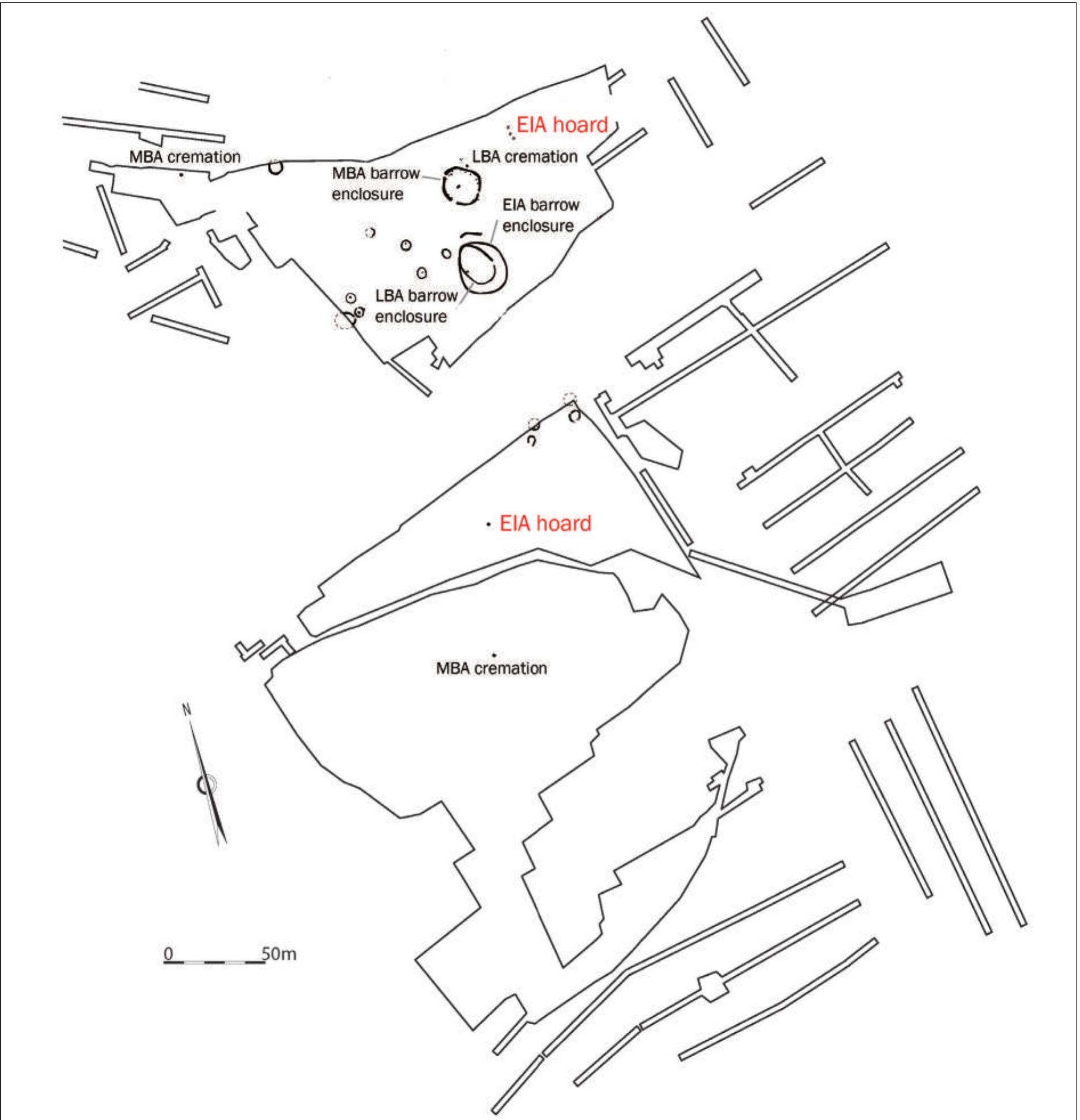
![Fig. 9. Bronze Age landscapes around “Hague Dike” according to C. Marcigny (graphics: G. Cabanillas de la Torre after Marcigny 2012, 609 fig. 11). 7 = Gabrovec 1966, Taf. 1,9-12.14-16 [o. M.]; 8 = Verf.).](https://figures.academia-assets.com/83804307/figure_009.jpg)


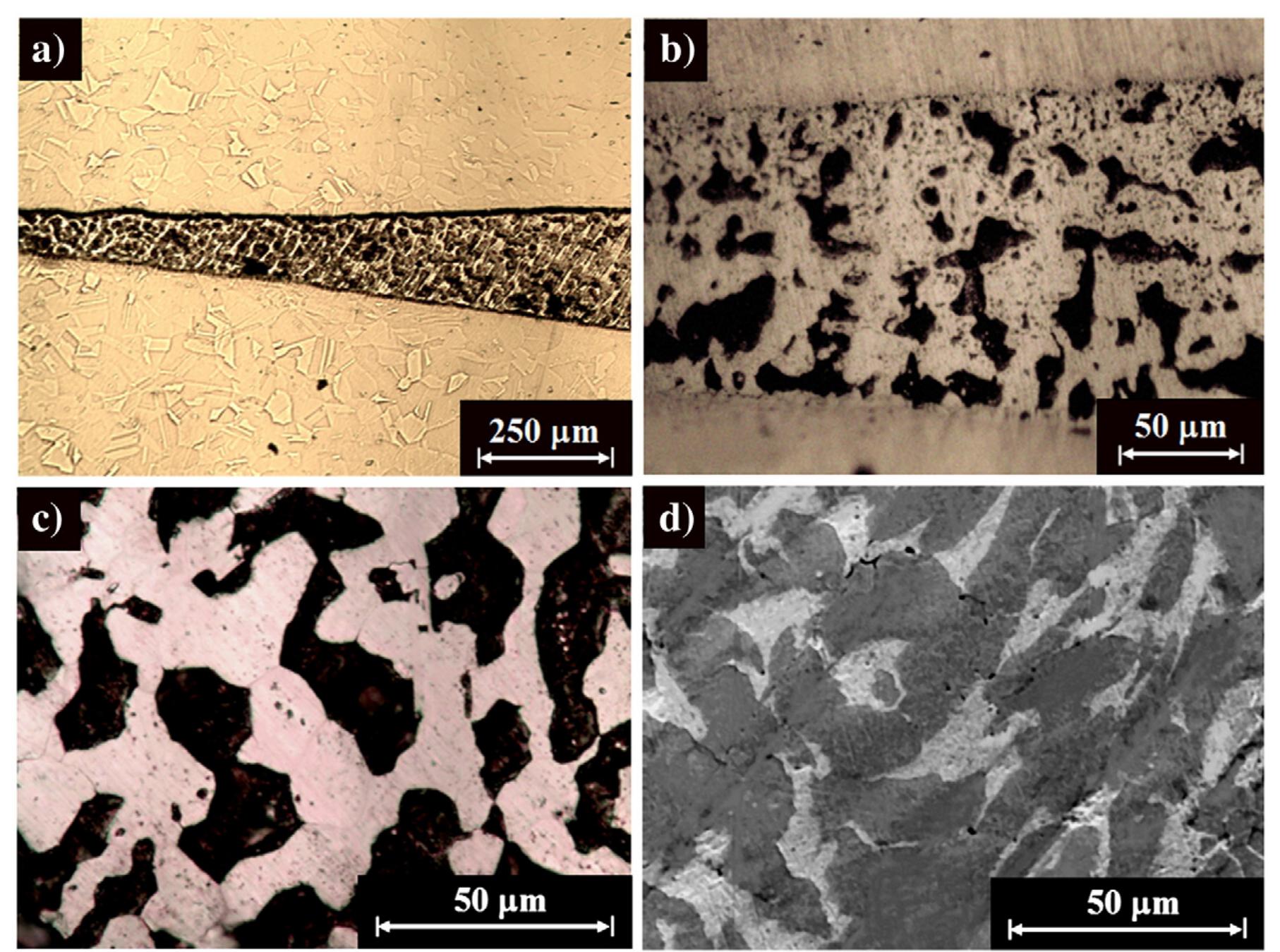

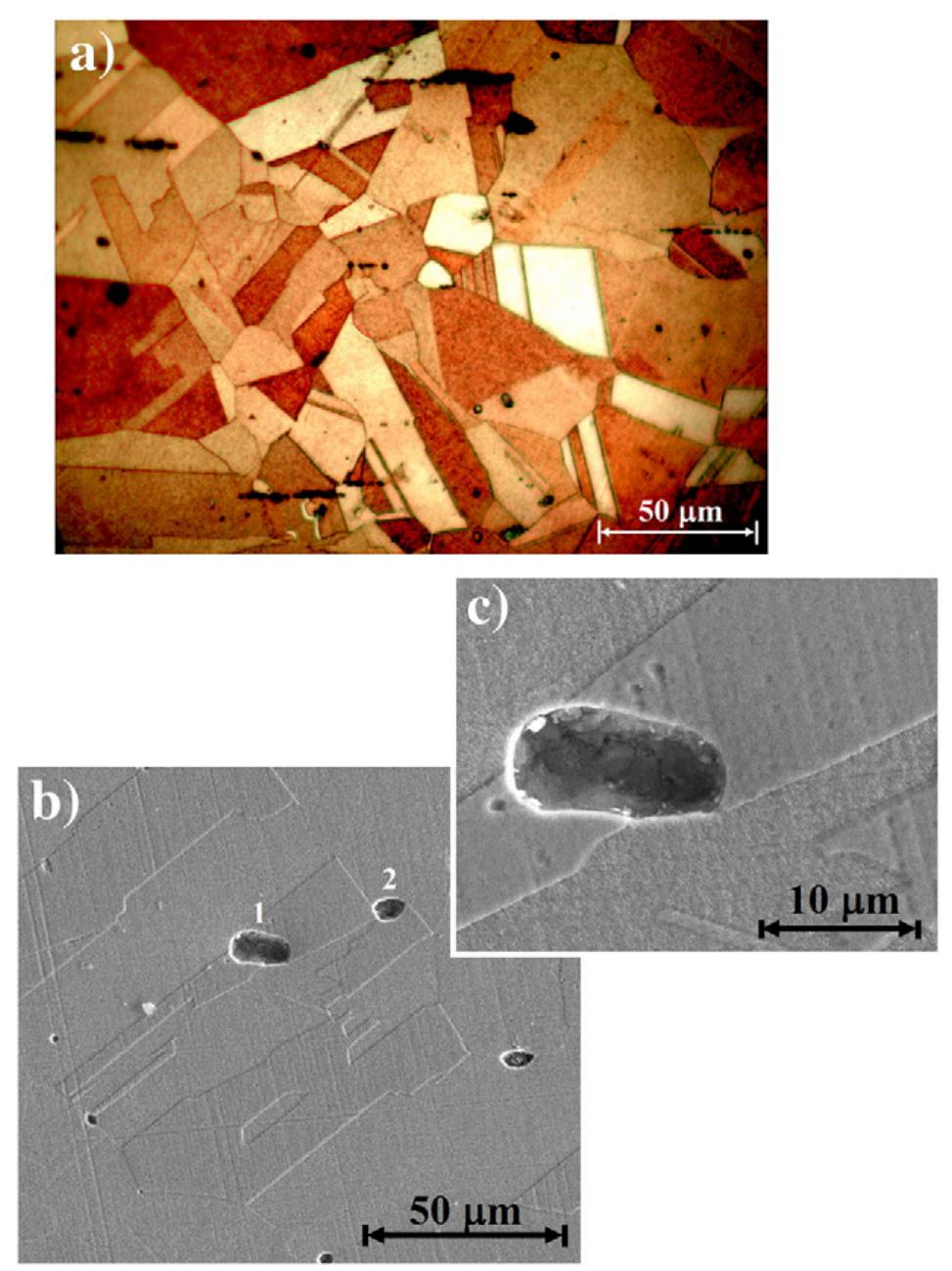
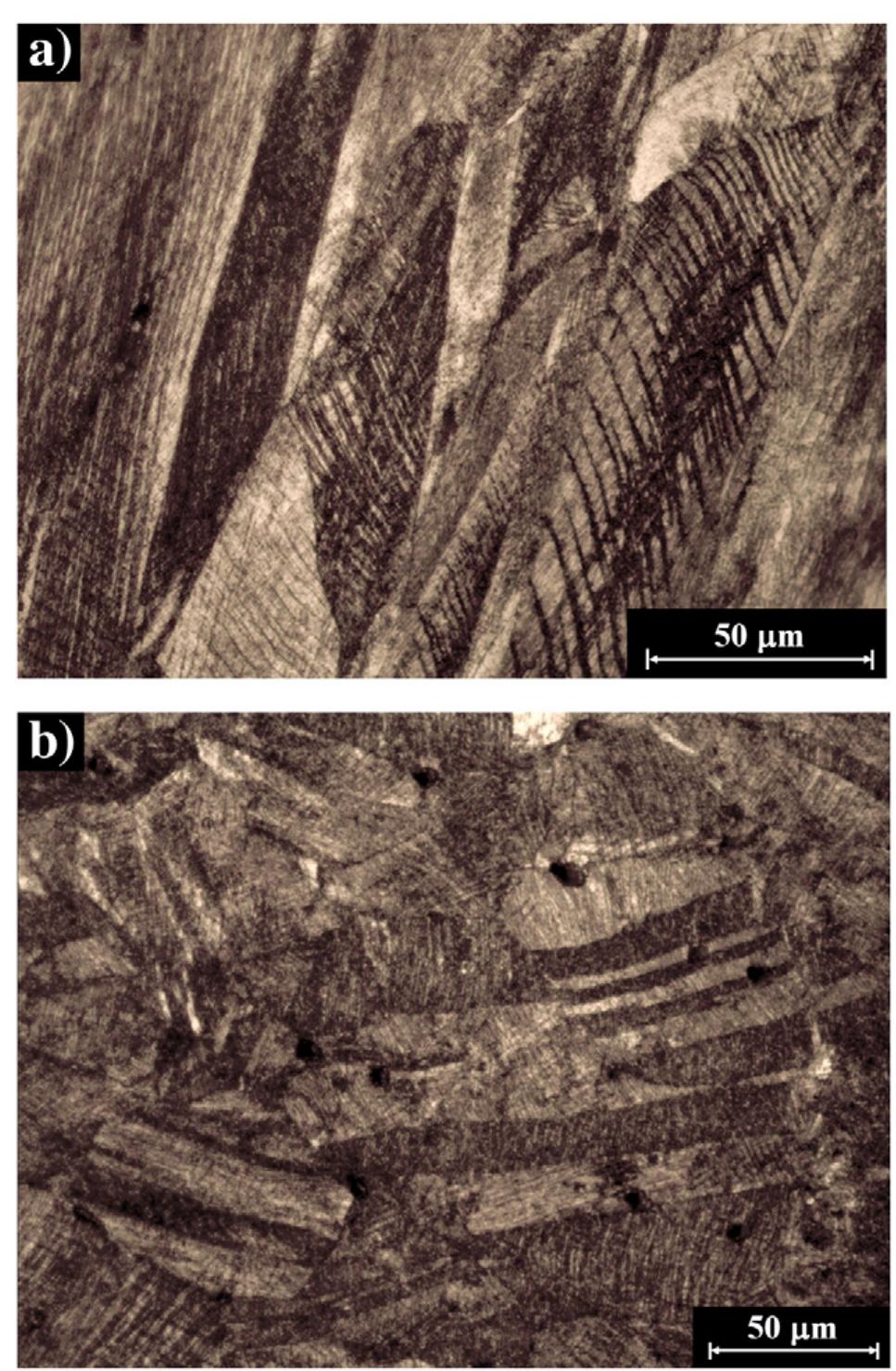
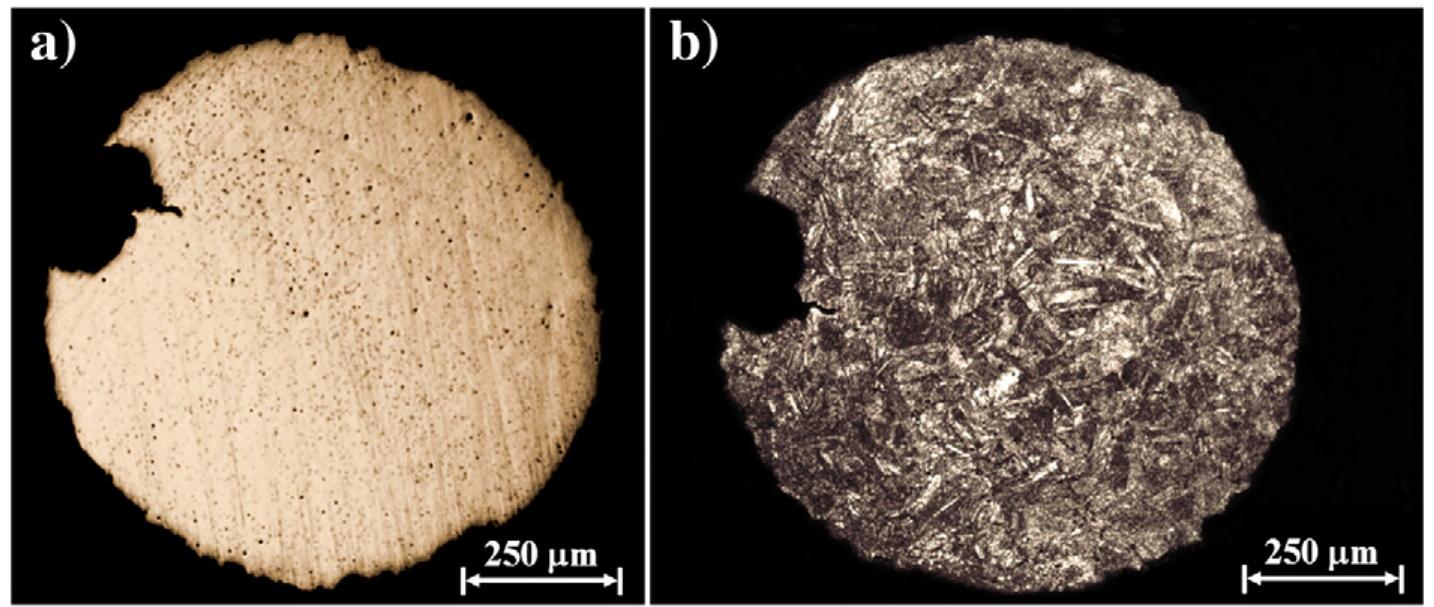
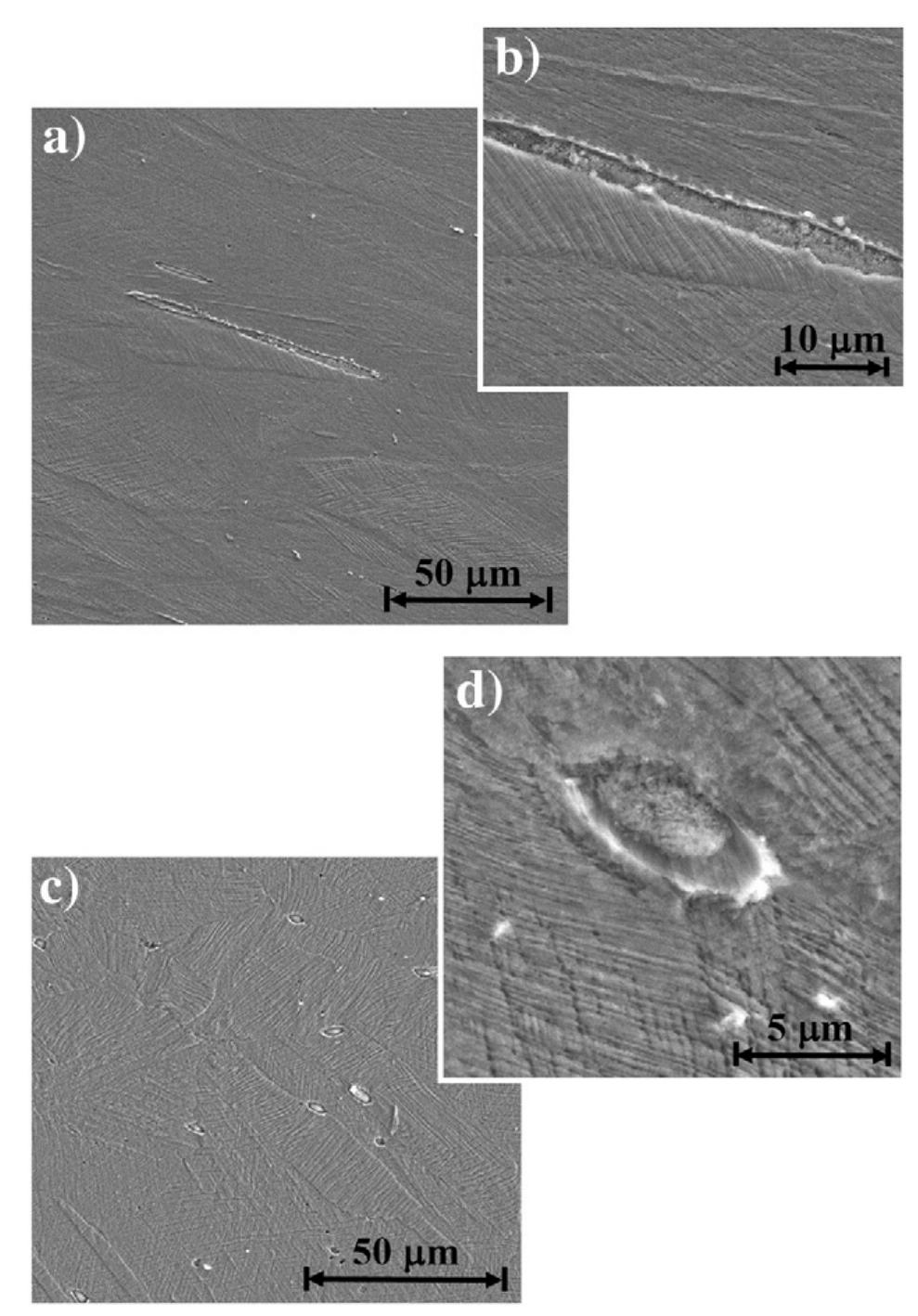
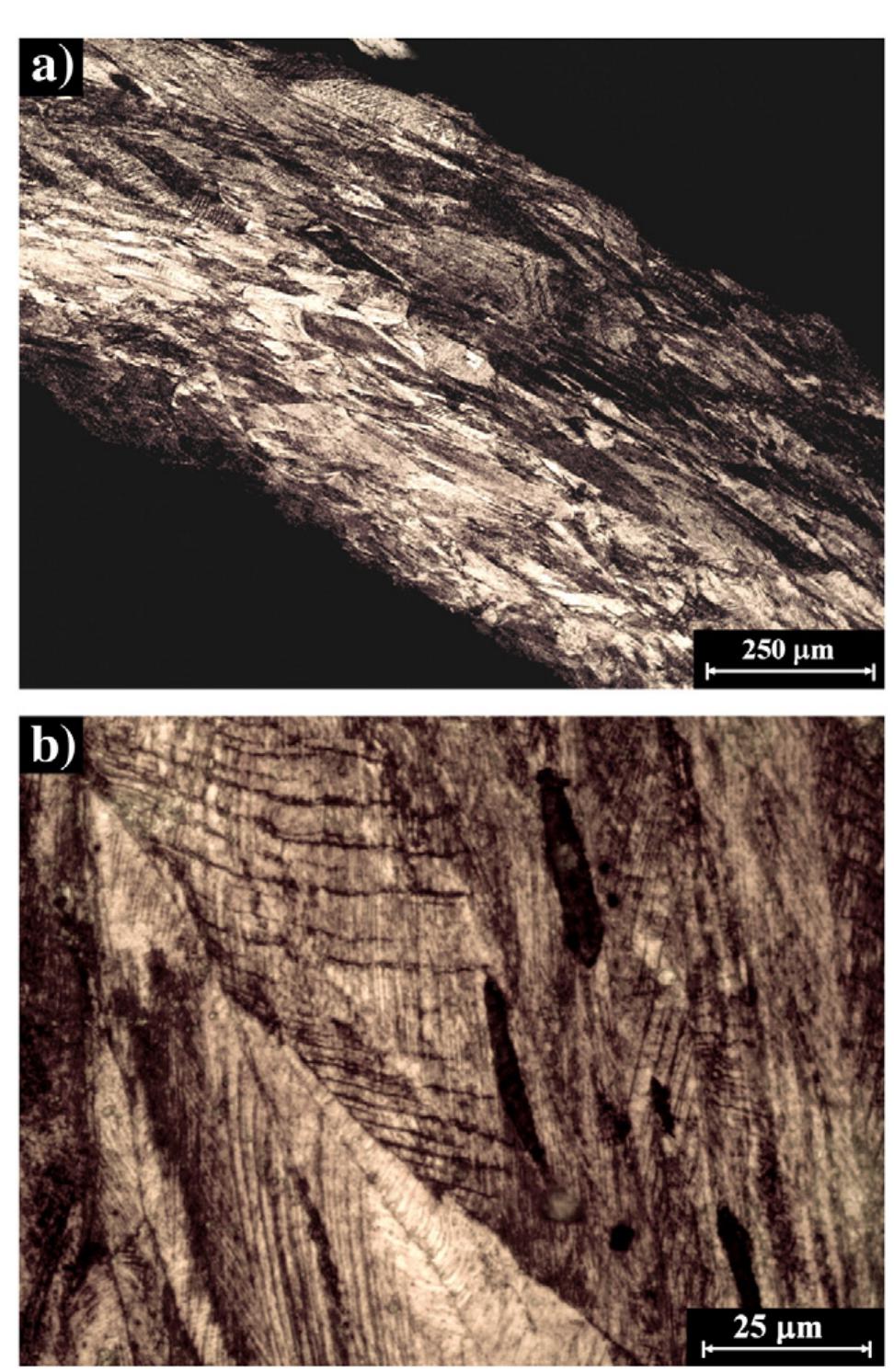
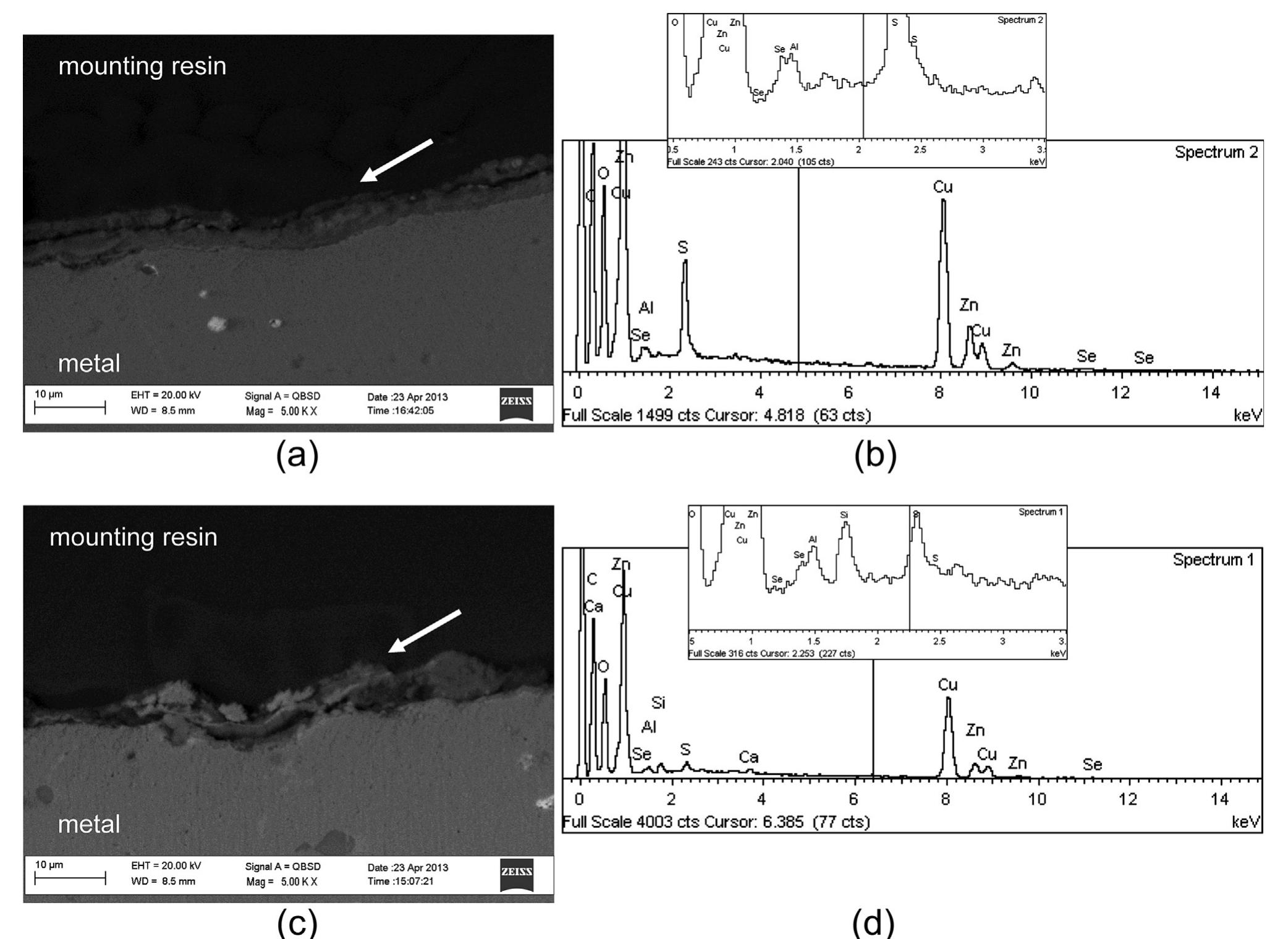
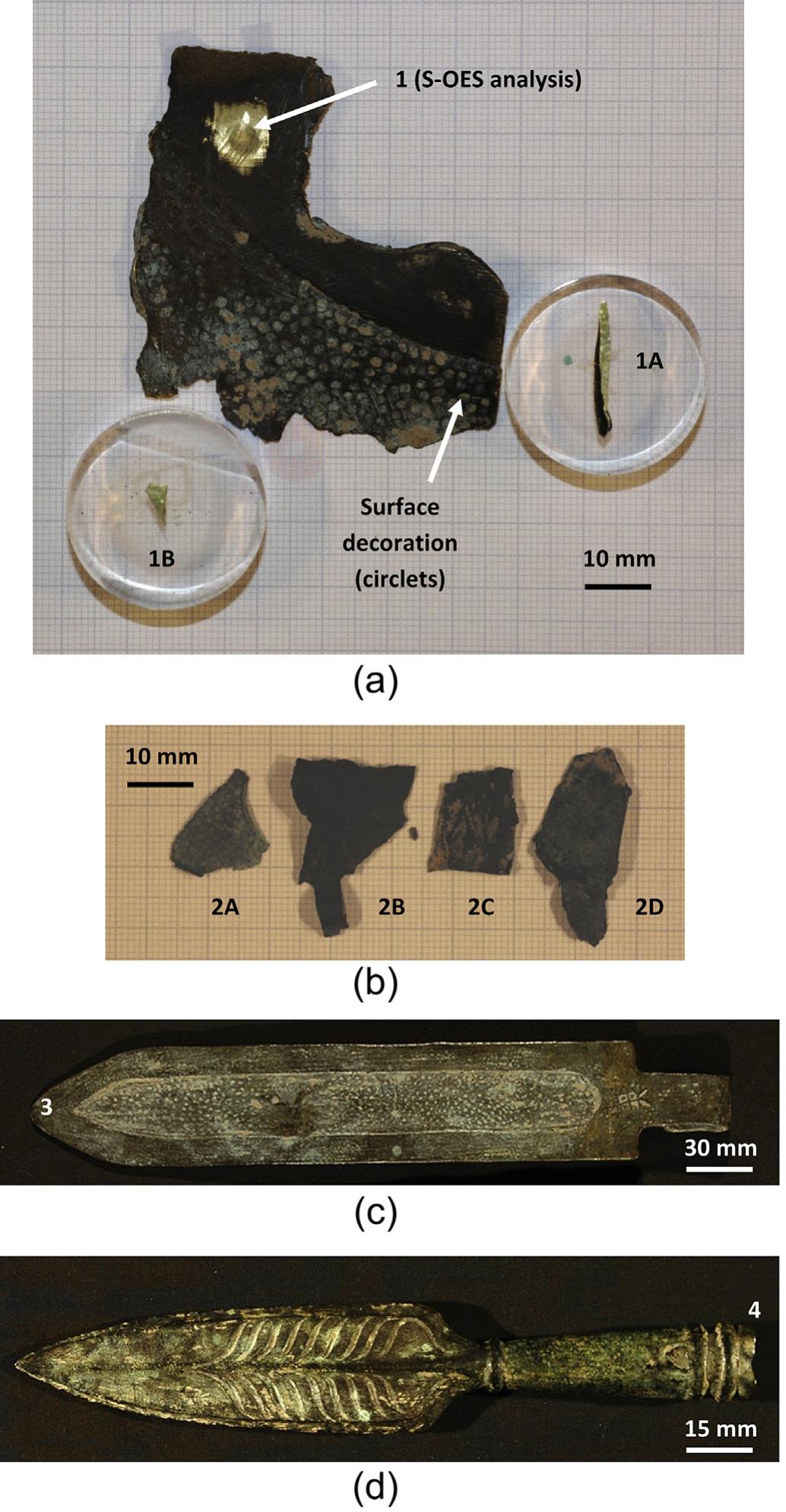
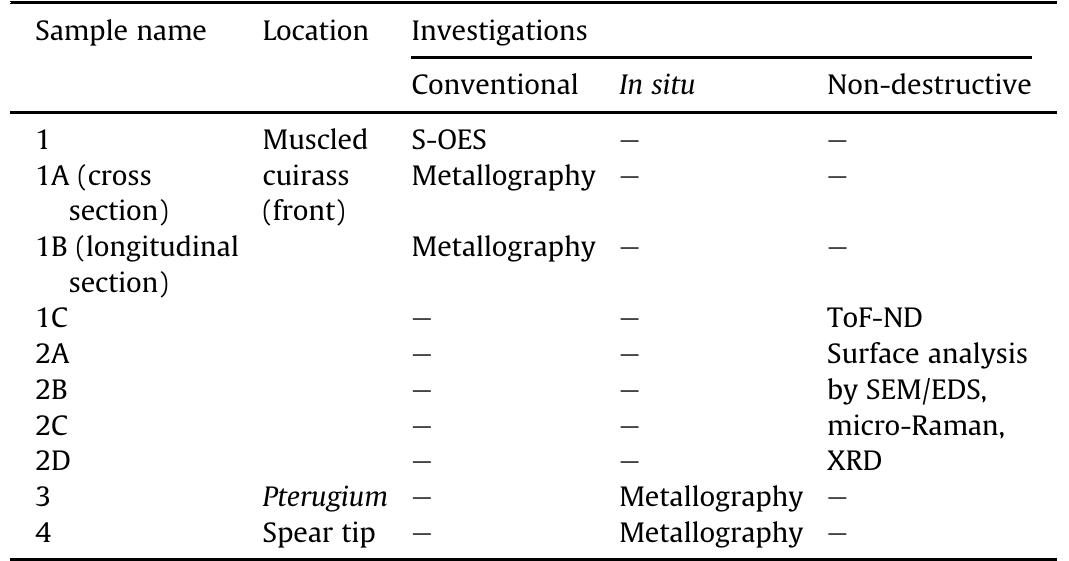
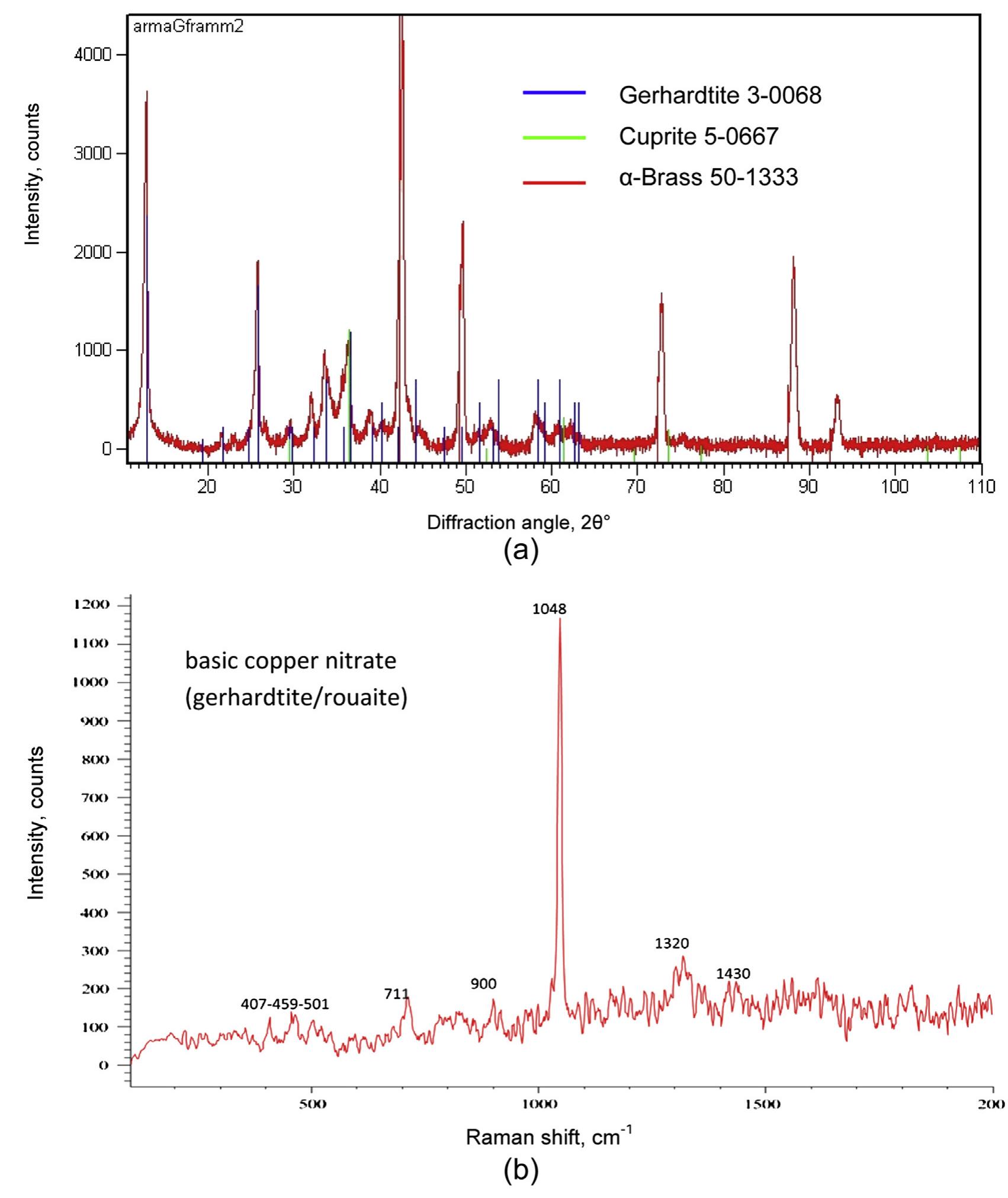
![Fig. 2. Optical images of etched surfaces from: (a, b) sample 1A (cross section of the cuirass); (c,d) sample 1B (longitudinal section of the cuirass), (e) sample 3 (pterugium, « + | brass), (f) sample 4 (socketed end of the spear tip, single-phase alloy). See Fig. 1 for sampling areas. according to procedures as those described in Refs. [3,4]). Sample 1A represents the cross section of the cuirass (sample observed across the thickness of the metal), whilst sample 1B is the longi- tudinal section (sample observed in the direction of the metal surface). In situ metallography by RL-OM was carried out on a pterugium (3) and on the spear tip (4), in areas indicated by numbers in Fig. 1. When necessary, polished surfaces were etched by FeCl3/HCI, diluted in ethanol. Microstructure of sample 1C was determined in an indirect way through diffraction peak shape analysis by exploiting the ToF-ND data. Samples 1A and 1B (in the unetched condition) were also used for investigating the thickness of the patina and the corrosion morphologies in cross section, whilst the identification of the corrosion products was carried out also by non-destructive surface analysis (SEM/EDS, micro-Raman, XRD) of samples 2A—D. The Raman spectra were collected with the Ar* laser (A = 514.5 nm), employing low laser powers (Poutput < 5 mW) to avoid sample degradation. XRD spectra were acquired performing 0—20 scans from 10° to 100° with a 0.01° step size and a 2 s dwell time. A Cu Ka radiation source was used, with a The alloy composition was determined both by large-area (0.5 x 0.2 mm?) EDS analysis on unetched polished cross sections (samples 1A and 1B, Fig. 1(a)) and by Spark Optical Emission Spectroscopy (S-OES), in the latter case after removing the patina from a portion of the surface (about 10 x 10 mm?), as shown in Fig. 1(a). The composition was also determined through ToF-ND on large portions of the volume of sample 1C as described in the following. The alloy microstructure was determined on samples 1A and 1B, which were mounted in resin, polished and submitted to conventional metallographic observation (by RL-OM and SEM/EDS](https://figures.academia-assets.com/91892484/figure_002.jpg)
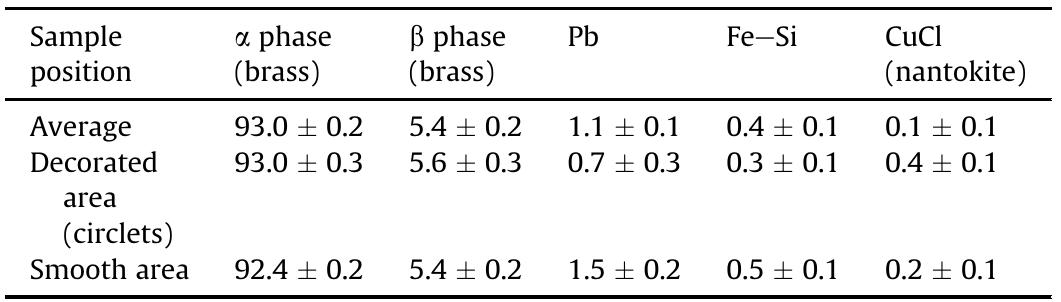
![Quantification of phase components by ToF-ND (analysis of lattice parameters), in different positions of a fragment from the muscled cuirass [24,25].](https://figures.academia-assets.com/91892484/table_006.jpg)
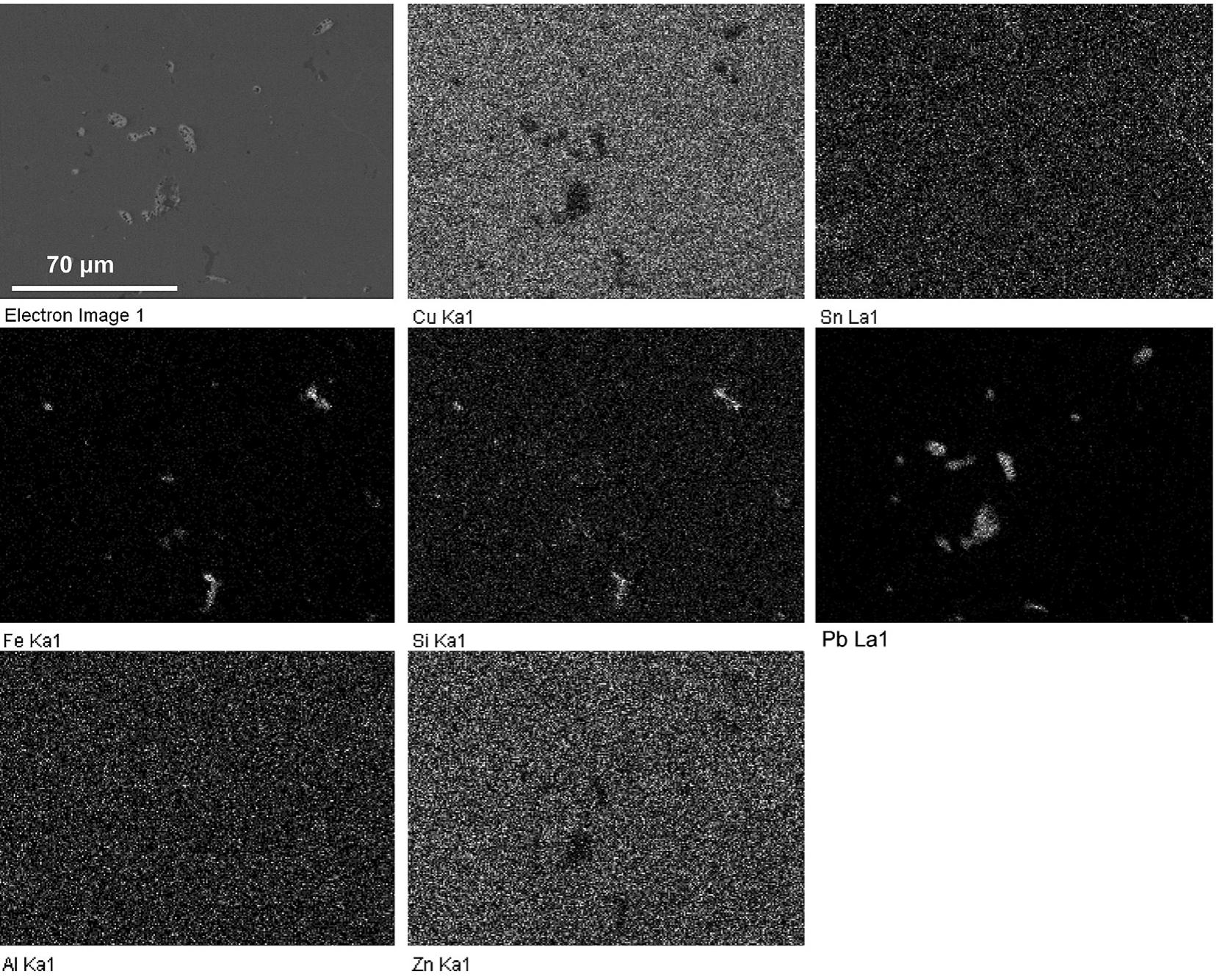

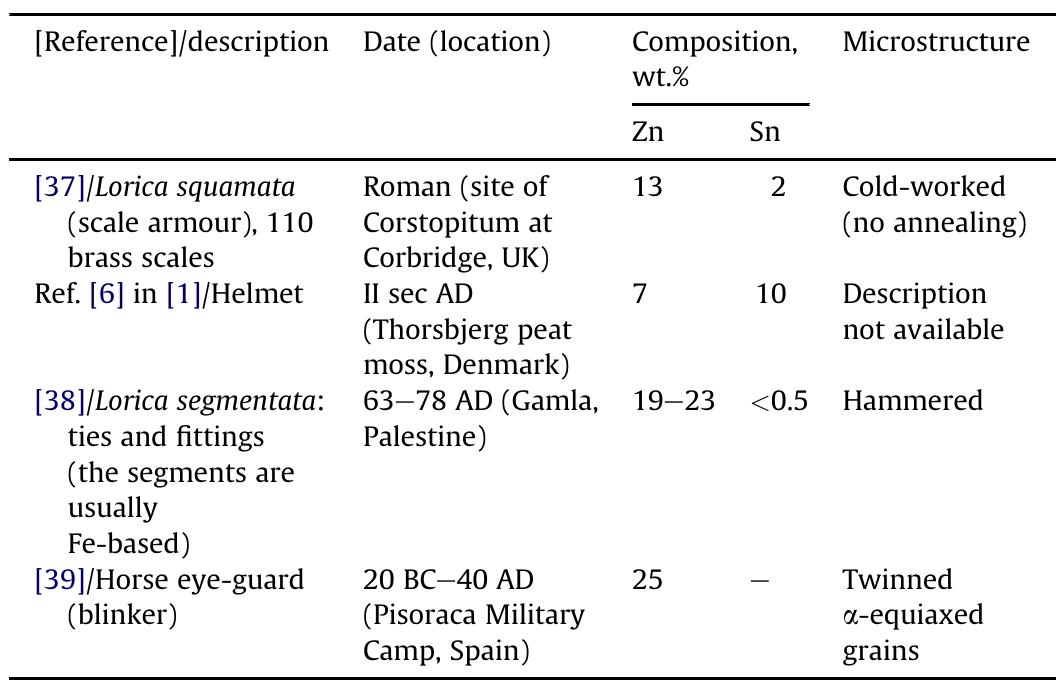
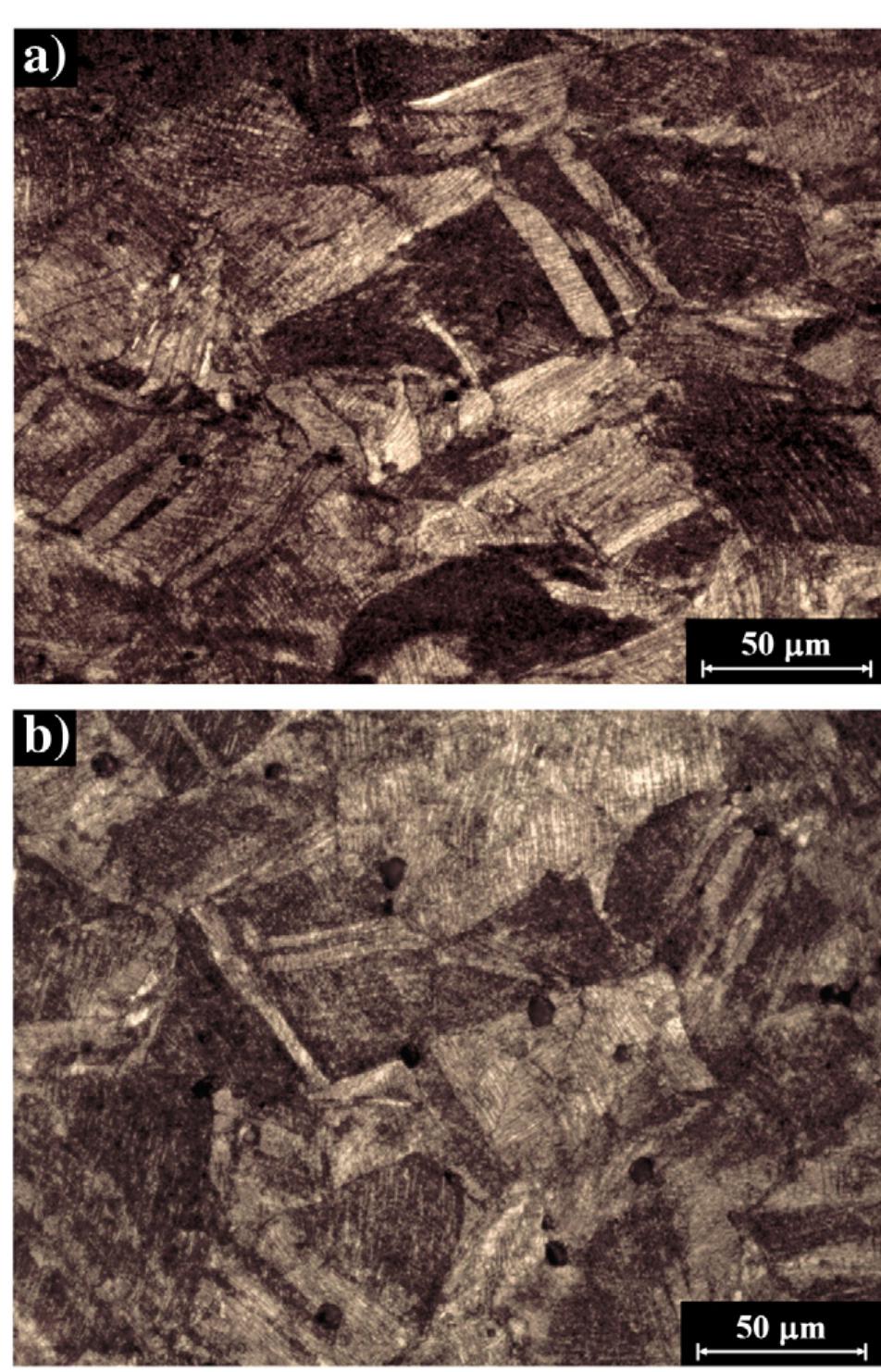
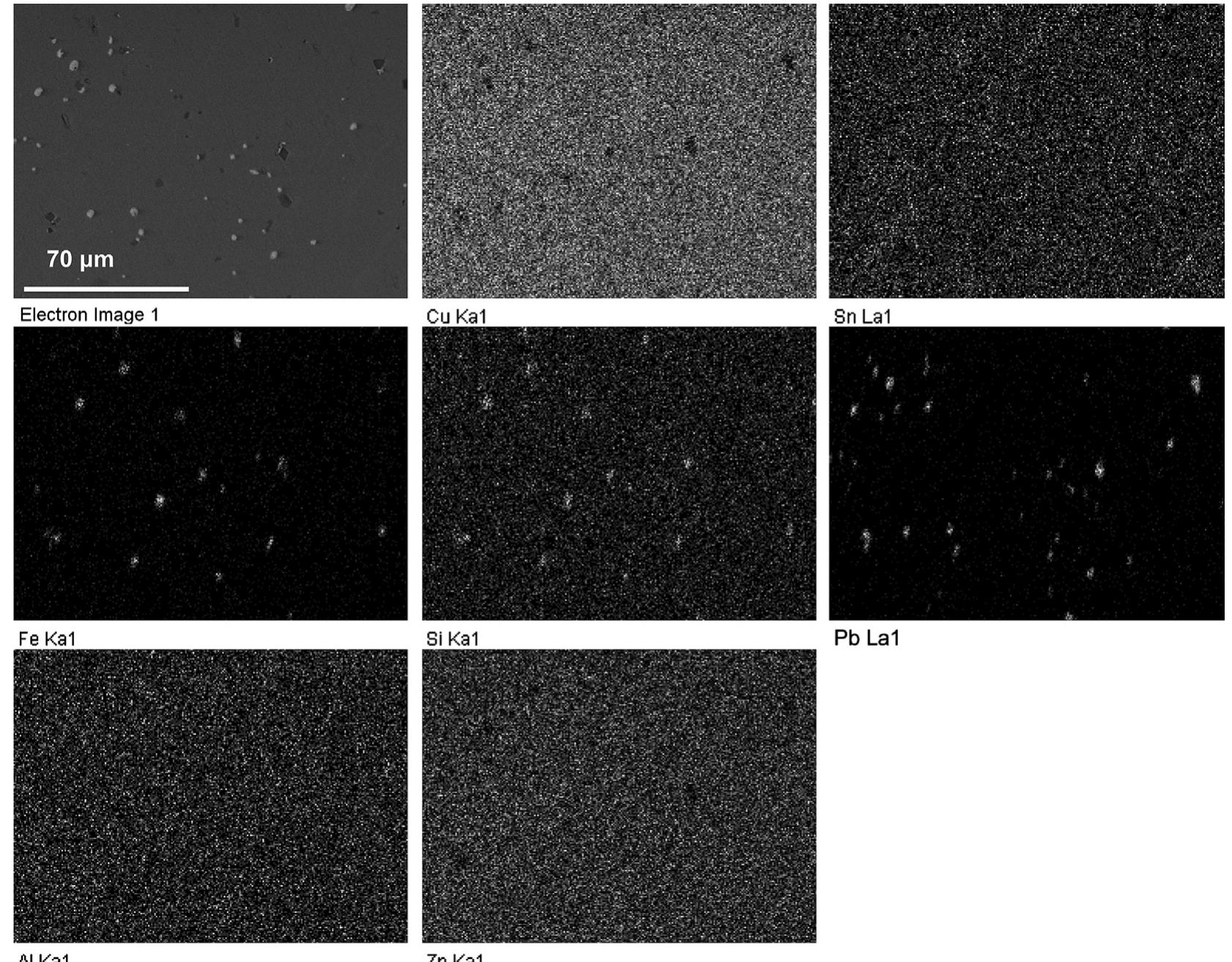
![Fig. 5. SEM backscattered electron image showing typical microstructural features of the alloy (fragments from the muscled cuirass). As regards the Zn concentration, the measured value is relatively high by comparison to other reference objects of comparable date, typology and cultural affiliation (i.e. Cu-based Roman military metalwork, Table 4). However, the Zn content is not higher than the conventional limit of 28 wt.%, above which brass should be regar- ded with suspicion [11], even though Zn content alone is not enough to authenticate brasses. As a matter of fact, Zn has been widely used as a chronological indicator for brass [12,13] because, before the production of Zn as a single metal (i.e. in the ancient and Mediaeval age), brass was produced by the so-called “cementation” process, i.e. by the reaction (in a reducing environment) of Zn ore with metallic Cu. By this process, the maximum Zn content in brass depends on temperature [14] and, notwithstanding differences in](https://figures.academia-assets.com/91892484/figure_005.jpg)