Academia.eduAcademia.edu

False Belief Reasoning

description6 papers
group3 followers
lightbulbAbout this topic
False belief reasoning is the cognitive ability to understand that others can hold beliefs that differ from one's own and may be incorrect. It is a key aspect of theory of mind, reflecting the capacity to attribute mental states to oneself and others, crucial for social interactions and understanding perspectives.
lightbulbAbout this topic
False belief reasoning is the cognitive ability to understand that others can hold beliefs that differ from one's own and may be incorrect. It is a key aspect of theory of mind, reflecting the capacity to attribute mental states to oneself and others, crucial for social interactions and understanding perspectives.

Key research themes

1. How can developmental transitions in false belief understanding be explained and modeled computationally?

This research theme investigates the developmental progression in children's Theory of Mind (ToM), particularly the transition from zero-order to first-order and higher-order false belief reasoning. It focuses on explaining why children typically pass implicit false belief tasks early but only succeed in explicit ones around age four, and how cognitive control and representational processes contribute to this development. Computational cognitive models and agent-based approaches are employed to clarify the cognitive mechanisms and simulate empirical findings, including mutual transfer effects between cognitive control and false belief understanding.

Key finding: This paper introduces a situational mental file framework integrating situational and internal cognitive factors to explain how infants can pass implicit false belief tasks early on but fail explicit tasks until age four. It... Read more
Key finding: Using computational models, the study demonstrates that the mutual transfer between cognitive control tasks (like dimensional change card sorting) and false belief tasks is best explained by training children to adopt... Read more
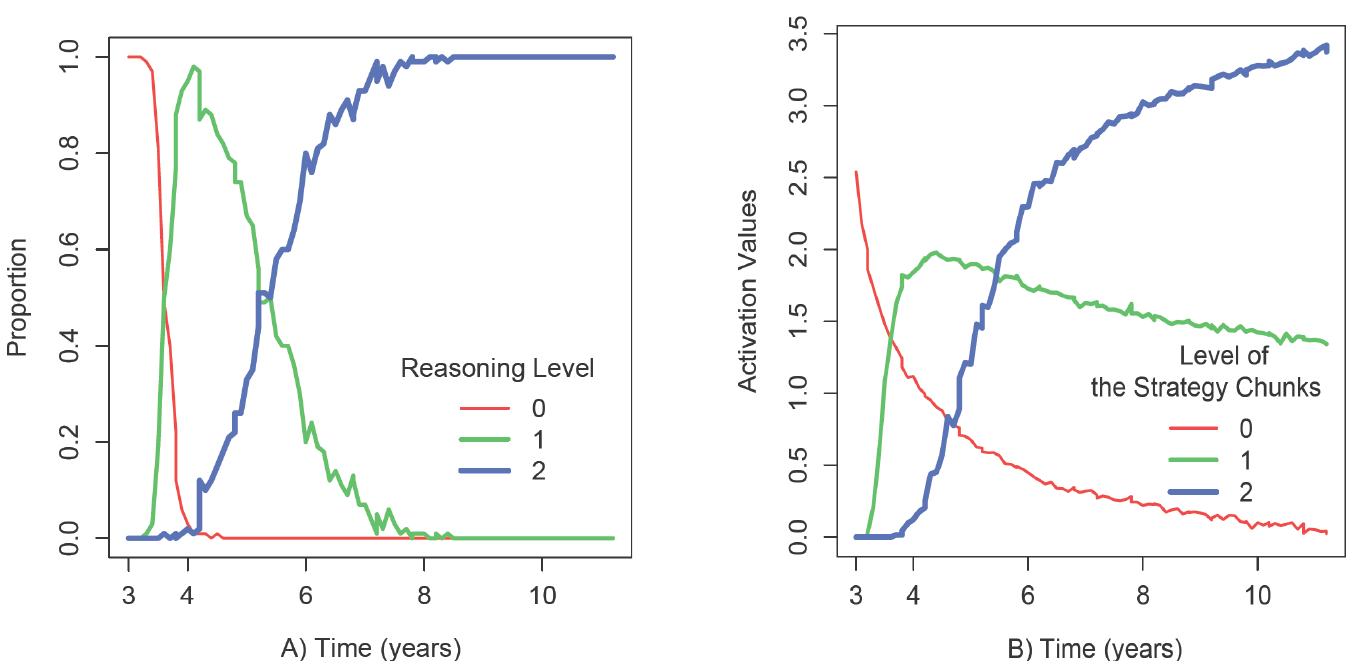
Key finding: The ACT-R based computational model simulates children's progression from zero-order reasoning (own perspective) to first- and second-order false belief reasoning by gradual strengthening and retrieval of increasingly complex... Read more
Key finding: Experimental training with Dutch children aged 5-6 demonstrates that feedback on second-order false belief tasks facilitates performance improvements and supports transfer to related domains requiring recursive reasoning,... Read more
Key finding: By extending hybrid-logical formal analyses from first to second-order false belief tasks, this study supports the conceptual change position, arguing that mastering second-order false beliefs involves more than increased... Read more

2. What are the epistemological and philosophical challenges regarding false belief, knowledge, and belief formation in reasoning and skepticism?

This theme centers on the conceptual analysis of belief, the possibility of knowledge derived from falsehoods, the nature of normative reasons to believe, and the role of unconceived alternatives in reasonable doubt. It examines philosophical dilemmas arising from cases where false beliefs appear to contribute to knowledge and disputes over the nature and structure of rational belief formation and justification, with implications for legal epistemology and skepticism.

Key finding: The paper argues that in criminal trials, judges or jurors should not consider a defendant's guilt proven beyond a reasonable doubt if there are good reasons to believe plausible, unconceived alternative scenarios exist... Read more
Key finding: The author defends a normative epistemological thesis stating that there cannot be non-disabled (non-weightless) normative reasons both to believe a proposition p and to believe something incompatible with p, including false... Read more
Key finding: This paper critically examines the strategy that knowledge obtained via inference relying on false beliefs ('knowledge despite falsehood') is not genuine knowledge from falsehood by arguing that such knowledge must instead... Read more
Key finding: By introducing novel counterexamples, this paper challenges the prevailing view that knowledge cannot be inferentially obtained from false beliefs when the falsehood is essential to the inference. It presents cases where... Read more
Key finding: Arguing against the common 'false belief' account, this paper defends the 'ignorance' account that effective skeptical scenarios undermine a subject’s knowledge claim by showing that their belief falls short of knowledge... Read more

3. How can formal and agent-based models advance understanding of belief representation, revision, and decision-making under uncertainty related to false belief reasoning?

This theme emphasizes the methodological contributions of agent-based and formal logical models to dissect and simulate the cognitive mechanisms underlying false belief reasoning, belief revision dynamics among agents, and rational decision-making informed by epistemic probabilities. It includes computational approaches for modeling belief representation phases, belief update strategies in social networks, as well as decision frameworks incorporating imprecise probabilities and calibration, contributing to more precise conceptualization and empirical testing of cognitive and epistemic processes.
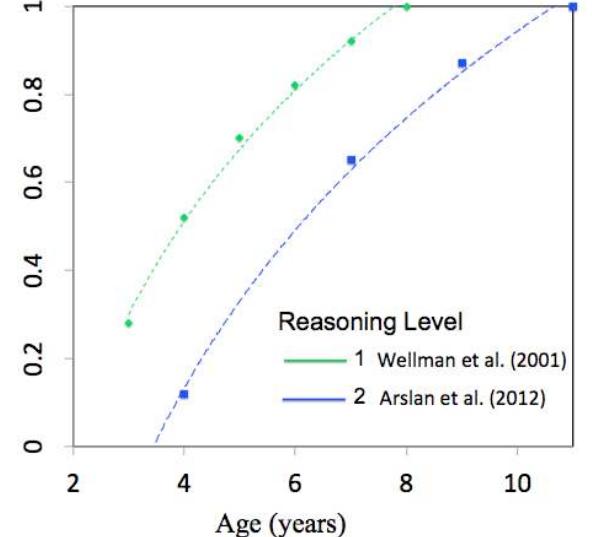
Key finding: This research develops the Belief Representation Systematic Approach (BRSA), an agent-based computational model that decomposes false belief tasks into four fundamental cognitive phases (Perception, Memory, Reasoning,... Read more
Key finding: Belief Revision Games (BRGs) are formal zero-player agent-based models where agents iteratively revise beliefs based on acquaintances' beliefs following individualized revision policies derived from belief merging operators.... Read more
Key finding: Proposing a novel correctness framework for beliefs within dynamic test semantics, the paper differentiates locative correctness (applying to contents that locate agents in possibility space) and informational correctness... Read more
Key finding: Advocating a pluralistic and multidimensional property space approach, this paper reframes belief as a heterogeneous, empirically tractable cluster of psychological kinds rather than a monolithic entity. It argues that... Read more

All papers in False Belief Reasoning

While most 3-year-olds fail both in the false belief task of theory of mind and Dimensional Change Card Sorting task of cognitive control, most 4-year-olds are able to pass these tasks. Different theories have been constructed to explain... more
The focus of studies on second-order false belief reasoning generally was on investigating the roles of executive functions and language with correlational studies. Different from those studies, we focus on the question how 5-year-olds... more
The relation between the prediction and explanation of the false belief task (FBT) with counterfactual reasoning (CFR) was explored. Fifty eight 3-5 year-olds received a prediction or an explanation FBT, a belief attribution task and some... more
How can we solve the paradox of false-belief understanding: if infants pass the implicit false belief task (FBT) by nonverbal behavioural responses why do they nonetheless typically fail the explicit FBT till they are 4 years old?... more
We can understand and act upon the beliefs of other people, even when these conflict with our own beliefs. Children's development of this ability, known as Theory of Mind, typically happens around age 4. Research using a looking-time... more
In their fourth year, most children start to understand that someone else might have a false belief, which is different from the reality that the children know. The most studied experimental task to test this development is called the... more
Take-down policy If you believe that this document breaches copyright please contact us providing details, and we will remove access to the work immediately and investigate your claim.
The focus of studies on second-order false belief reasoning generally was on investigating the roles of executive functions and language with correlational studies. Different from those studies, we focus on the question how 5-year-olds... more
Keywords: Theory of Mind · ACT-R · ACTransfer · False-belief task · Strategic turn-based games · Cognitive Modelling
Reasoning about false beliefs of others develops with age. We present here an ACT-R model in order to show the developmental transitions. These start from a child's reasoning from his/her own point of view (zero-order) to taking into... more
As humans, we live in a remarkably complex social environment. One cognitive tool which helps us manage all this complexity is our theory of mind, the ability to reason about the mental states of others. By deducing what other people... more
Reasoning about false beliefs of others develops with age. We present here an ACT-R model in order to show the developmental transitions. These start from a child's reasoning from his/her own point of view (zero-order) to taking into... more
This paper presents the first computational cognitive model of second-order social reasoning. The model uses a decision tree strategy to reason about the opponent's behavior. We hypothesize that a decision tree strategy requires (1)... more
In their fourth year, most children start to understand that someone else might have a false belief, which is different from the reality that the children know. The most studied experimental task to test this development is called the... more
Reasoning about false beliefs of others develops with age. We present here an ACT-R model in order to show the developmental transitions. These start from a child's reasoning from his/her own point of view (zero-order) to taking into... more
We can understand and act upon the beliefs of other people, even when these conflict with our own beliefs. Children's development of this ability, known as Theory of Mind, typically happens around age 4. Research using a looking-time... more
Download research papers for free!