

 Azzam Mustafa
580 California St., Suite 400
San Francisco, CA, 94104
2022, Azzam A. M. NOURI
https://doi.org/10.5281/ZENODO.6774875…
11 pages

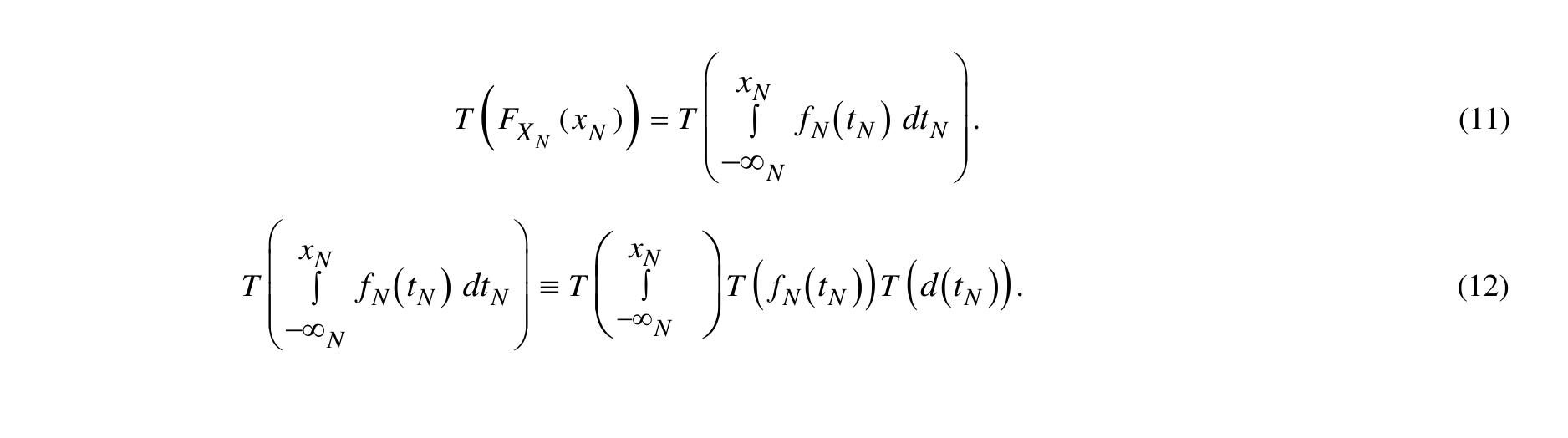
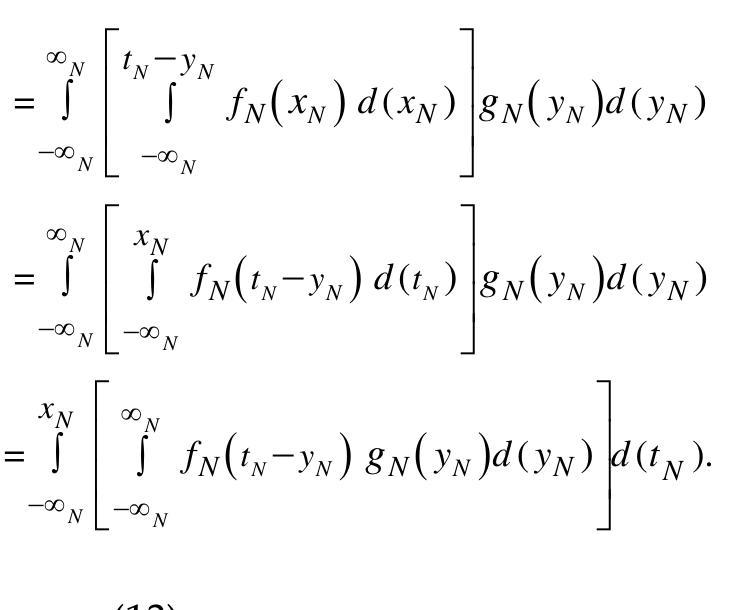
In this paper, the concept of a neutrosophic stable random variable is introduced. Two definitions of a neutrosophic random variable are presented. We introduced both the neutrosophic probability distribution function and the neutrosophic probability density function, and the convolution with the neutrosophic concept. In addition, we proved some properties of a neutrosophic stable random variable, and three examples are discussed.

AI
2021
This research is an extension of classical statistics distribution theory as the theory did not deal with the problems having ambiguity, impreciseness, or indeterminacy. An important life-time distribution called Beta distribution from classical statistics is proposed by considering the indeterminate environment and named the new proposed distribution as neutrosophic beta distribution. Various distributional properties like mean, variance, moment generating function, r-th moment order statistics that includes smallest order statistics, largest order statistics, joint order statistics, and median order statistics are derived. The parameters of the proposed distribution are estimated via maximum likelihood method. Proposed distribution is applied on two real data sets and goodness of fit is assessed through AIC and BIC criteria’s. The estimates of the proposed distribution suggested a better fit than the classical form of Beta distribution and recommended to use when the data in the i...
viXra, 2018
This paper deals with the application of Neutrosophic Crisp sets (which is a generalization of Crisp sets) on the classical probability, from the construction of the Neutrosophic sample space to the Neutrosophic crisp events reaching the definition of Neutrosophic classical probability for these events. Then we offer some of the properties of this probability, in addition to some important theories related to it. We also come into the definition of conditional probability and Bayes theory according to the Neutrosophic Crisp sets, and eventually offer some important illustrative examples. This is the link between the concept of Neutrosophic for classical events and the neutrosophic concept of fuzzy events. These concepts can be applied in computer translators and decision-making theory.
Since the world is full of indeterminacy, the neutrosophics found their place into contemporary research. In neutrosophic set, indeterminacy is quantified explicitly and truth-membership, indeterminacy-membership and falsity-membership are independent. For that purpose, it is natural to adopt the value from the selected set with highest degree of truth-membership, indeterminacy membership and least degree of falsity-membership on the decision set. These factors indicate that a decision making process takes place in neutrosophic environment. In this paper, we introduce and study the probability of neutrosophic crisp sets. After giving the fundamental definitions and operations, we obtain several properties and discuss the relationship between them. These notions can help researchers and make great use in the future in making algorithms to solve problems and manage between these notions to produce a new application or new algorithm of solving decision support problems. Possible applications to mathematical computer sciences are touched upon.
2017
The notion of entropy of single valued neutrosophic sets (SVNS) was first introduced by Majumdar and Samanta in [10]. In this paper some problems with the earlier definition of entropy has been pointed out and a new modified definition of entropy for SVNS has been proposed. Next four new types of entropy functions were defined with examples. Superiority of this new definition over the earlier definition of entropy has been discussed with proper examples.
Zenodo (CERN European Organization for Nuclear Research), 2023
The objective of this article is to create a Neutrosophic Generalized Exponential (NGE) distribution in the presence of uncertainty. It is possible to calculate the mean, variance, moments, and reliability expression of the NGE distribution. With the help of graphs, the nature of the distribution and the reliability and hazard functions are studied. To determine the NGE distribution's parameters, a maximum likelihood estimation technique is used. The performance of estimated parameters is further tested using simulations. Finally, an actual data set is examined to show how the NGE distribution works. According to a model validity test, the NGE distribution is superior to the existing neutrosophic distributions that can be found in the literature.
This Special Issue presents state-of-the-art papers on new topics related to neutrosophic theories, such as neutrosophic algebraic structures, neutrosophic triplet algebraic structures, neutrosophic extended triplet algebraic structures, neutrosophic algebraic hyperstructures, neutrosophic triplet algebraic hyperstructures, neutrosophic n-ary algebraic structures, neutrosophic n-ary algebraic hyperstructures, refined neutrosophic algebraic structures, refined neutrosophic algebraic hyperstructures, quadruple neutrosophic algebraic structures, refined quadruple neutrosophic algebraic structures, neutrosophic image processing, neutrosophic image classification, neutrosophic computer vision, neutrosophic machine learning, neutrosophic artificial intelligence, neutrosophic data analytics, neutrosophic deep learning, and neutrosophic symmetry, as well as their applications in the real world.
Many problems in life are filled with ambiguity, uncertainty, impreciseness …etc., therefore we need to interpret these phenomena. In this paper, we will focus on studying neutrosophic Weibull distribution and its family, through explaining its special cases , and the functions' relationship with neutrosophic Weibull such as Neutrosophic Inverse Weibull, Neutrosophic Rayleigh, Neutrosophic three parameter Weibull, Neutrosophic Beta Weibull, Neutrosophic five Weibull, Neutrosophic six Weibull distributions (various parameters).This study will enable us to deal with indeterminate or inaccurate problems in a flexible manner. These problems will follow this family of distributions.
Complexity
The exponential distribution has always been prominent in various disciplines because of its wide range of applications. In this work, a generalization of the classical exponential distribution under a neutrosophic environment is scarcely presented. The mathematical properties of the neutrosophic exponential model are described in detail. The estimation of a neutrosophic parameter by the method of maximum likelihood is discussed and illustrated with examples. The suggested neutrosophic exponential distribution (NED) model involves the interval time it takes for certain particular events to occur. Thus, the proposed model may be the most widely used statistical distribution for the reliability problems. For conceptual understanding, a wide range of applications of the NED in reliability engineering is given, which indicates the circumstances under which the distribution is suitable. Furthermore, a simulation study has been conducted to assess the performance of the estimated neutroso...
Zenodo (CERN European Organization for Nuclear Research), 2023
When performing the simulation process, we encounter many systems that do not follow by their nature the uniform distribution adopted in the process of generating the random numbers necessary for the simulation process. Therefore, it was necessary to find a mechanism to convert the random numbers that follow the regular distribution over the period [0, 1] to random variables that follow the probability distribution that works on the system to be simulated. In classical logic, we use many techniques in the transformation process that results in random variables that follow irregular probability distributions. In this research, we used the inverse transformation technique, which is one of the most widely used techniques, especially for the probability distributions for which the inverse function of the cumulative distribution function can found. We applied this technique to generate neutrosophic random variables that follow an exponential distribution or a neutrosophic exponential distribution. This based on classical or neutrosophic random numbers that follow a regular distribution. We distinguished three cases according to the logic that each of the random numbers or the exponential distribution follows. We arrived at neutrosophic random variables that, when we use them in systems that operate according to an exponential distribution, such as queues and others, will provide us with a high degree of accuracy of results, and the reason for this is due to the indeterminacy provided by neutrosophic logic.

Neutrosophic Sets and Systems, 2021
In this paper, general definition of neutrosophic random variables is introduced and its properties are presented. Concepts of probability distribution function, cumulative distribution function, expected value, variance, standard deviation, mean deviation, r th quartiles, moments generating function and characteristic function in crisp logic are generalized to neutrosophic logic. Many solved problems and applications are presented which show the power of the study and show the ability of applying the results in various domains including quality control, stochastic modeling, reliability theory, queueing theory, decision making, electrical engineering, … etc.
Zenodo (CERN European Organization for Nuclear Research), 2018
In this paper, we introduce and study some neutrosophic probability distributions, The study is done through generalization of some classical probability distributions as Poisson distribution, Exponential distribution and Uniform distribution, this study opens the way for dealing with issues that follow the classical distributions and at the same time contain data not specified accurately.
مجلة جامعة البعث, 2018
This chapter presents the neutrosophic variables, which are a generalization of the classical random variables obtained from the application of the neutrosophic logic on classical random variables. The neutrosophic variable have change because of randomize and indeterminacy, and the values it have represent are the possible results and the possible indeterminacy. Then the neutrosophic-randomized variables are classified into two types of discrete and continuous neutrosophic random variables, and we define the expected value and variance of the neutrosophic random variable then offer some illustrative examples. (Neutrosophic logic a new non-classical logic that was founded by the American philosopher and mathematical Florentin Smarandache, which he introduced as a generalization of fuzzy logic especially the intuitionistic fuzzy logic).
In this paper , the authors explore neutrosophic statistics, that was initiated by Florentin Smarandache in 1998 and developed in 2014, by presenting various examples of several statistical distributions, from the work [1]. The paper is presented with more case studies, by means of which this neutrosophic version of statistical distribution becomes more pronounced.
