Books by Gonzalo Aranda Jimenez
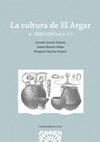
El Argar es la cultura arqueológica más importante de la Prehistoria española. Su descubrimiento ... more El Argar es la cultura arqueológica más importante de la Prehistoria española. Su descubrimiento a finales del siglo xix rápidamente despertó el interés internacional. Se trataba de unos restos arqueológicos pertenecientes a una sociedad «muy avanzada para su tiempo» que no tenían referente en la Europa occidental. Tras casi 140 años de
investigaciones, decenas de yacimientos excavados y más de 800 publicaciones científicas, El Argar mantiene plenamente su vigencia internacional y su capacidad de liderazgo e influencia en la arqueología española. El presente libro supone una síntesis actualizada del conocimiento sobre las sociedades argáricas, de forma que se puedan
entender los diferentes aspectos que han sido objeto de estudio, la información generada y los debates científicos actuales. En este sentido, se aborda el origen de estas comunidades, su marco territorial y temporal, sus prácticas agrícolas y ganaderas o las características del medioambiente al que tuvieron que enfrentarse. Varias innovaciones
culturales son objeto de especial atención. Los nuevos poblados argáricos situados en escarpados cerros es una de ellas. Sus cimas y laderas fueron ocupadas por un denso caserío de viviendas y edificios monumentales que evidencian una nueva concepción social y urbanística. Los enterramientos dejaron de ser colectivos y pasaron a ser individuales
y a localizarse en el interior de los poblados, habitualmente bajo el suelo de las viviendas. Por primera vez, la producción de objetos metálicos especialmente adornos, herramientas y en menor medida armas adquirió un desarrollo previamente desconocido. A través de los diferentes capítulos, se podrá conocer a unos grupos sociales que vivieron en el sureste peninsular hace 4000 años y que desarrollaron unas formas de
vida originales e innovadoras que invitan a la reflexión sobre la variabilidad cultural humana y sus complejas manifestaciones.
Andalucía en la Historia, 2019
After more than a century of research, an enormous body of scientific literature in the field of ... more After more than a century of research, an enormous body of scientific literature in the field of El Argar studies has been generated, comprising some 700 bibliographic items. No fully-updated synthesis of the literature is available at the moment; recent works deal only with specific characteristics of Argaric societies or some of the regions where their influence spread. The Archaeology of Bronze Age Iberia offers a much-needed, comprehensive overview of Argaric Bronze Age societies, based on state-of-the-art research.
In addition to expounding on recent insights in such areas as Argaric origin and expansion, social practices, and socio-politics, the book offers reflections on current issues in the field, from questions concerning the genealogy of discourses on the subject, to matters related to professional practices. The book discusses the values and interests guiding the evolution of El Argar studies, while critically reexamining its history. Scholars and researchers in the fields of Prehistory and Archaeology will find this volume highly useful.

Children, Spaces and Identity
How do children construct, negotiate and organize space? The study of social space in any human g... more How do children construct, negotiate and organize space? The study of social space in any human group is fraught with limitations, and to these we must add the further limits involved in the study of childhood. Here specialists from archaeology, history, literature, architecture, didactics, museology and anthropology build a body of theoretical and methodological approaches about how space is articulated and organised around children and how this disposition affects the creation and maintenance of social identities. Children are considered as the main actors in historic dynamics of social change, from prehistory to the present day. Notions on space, childhood and the construction of both the individual and the group identity of children are considered as a prelude to papers that focus on analysing and identifying the spaces which contribute to the construction of children’s identity during their lives: the places they live, learn, socialize and play. A final section deals with these same aspects, but focuses on funerary contexts, in which children may lose their capacity to influence events, as it is adults who establish burial strategies and practices. In each case authors ask questions such as: how do adults construct spaces for children? How do children manage their own spaces? How do people (adults and children) build (invisible and/or physical) boundaries and spaces?
Guess Who's Coming to Dinner examines how specific types of food were prepared and eaten during f... more Guess Who's Coming to Dinner examines how specific types of food were prepared and eaten during feasting rituals in prehistoric Europe and the Near East. Such rituals allowed people to build and maintain their power and prestige and to maintain or contest the status quo. At the same time, they also contributed to the inner cohesion and sense of community of a group. When eating and drinking together, people share thoughts and beliefs and perceive the world and human relationships in a certain way. The twelve contributions to this book reflect the main theoretical and methodological issues related to the study of food and feasting in prehistoric Europe and the Near East.
El análisis de la relación forma-contenido de los conjuntos cerámicos del yacimiento arqueológico del Cerro de la Encina (Granada, España)
Papers by Gonzalo Aranda Jimenez
Archaeological and Anthropological Sciences, 2026
In southeastern Iberia use-wear analyses have not been explored as a proxy for a better understan... more In southeastern Iberia use-wear analyses have not been explored as a proxy for a better understanding of the social, economic
and cultural meanings of prehistoric lithic tools. The recent excavation of nine dolmens in the Panoría cemetery
(3600 − 2100 cal BC), four of them largely undisturbed, offers an excellent opportunity for a fine-grained study of lithic
grave goods. Blades, arrowheads and geometric microliths were the types of objects selected to be deposited at the Panoría
dolmens. Use-wear analysis shows the deposition of blades previously used in farming and textile activities or with no
evidence of use but in optimal working conditions. Arrowheads and microliths use-wear indicate their use as projectiles.
However, some arrowheads are also found without use-wear, probably having been specifically crafted for ritual purposes,
especially those with extremely developed barbs. Cross-referencing lithic typology, frequency and use-wear from each
tomb with the osteological analysis reveals a positive correlation between the activities identified by the blade use-wear
analysis and the intense physical effort evidenced by musculoskeletal stress markers. In contrast, there is a negative correlation
between the projectiles and traumatic injuries. Lithic tools found at Panoría can be linked to different social realms,
from daily activities to more restricted ritual purposes.
Trabajos de Prehistoria, 2025
Archaeological surveys and the excavation of three tombs have been undertaken during the field se... more Archaeological surveys and the excavation of three tombs have been undertaken during the field seasons carried out in 2023 and 2024 at the Chalcolithic settlement of Peñón de las Juntas and at Los Milanes cemetery. The 2-hectare settlement, situated on a spur at the confluence of the Nacimiento River and Los Santos Gully, is planned into three stone concentric enclosures associated with rectangular and solid towers. A total of 18 tombs have been discovered, aligned at the summit of the Los Milanes hill, which is located in front of the settlement. These tombs exhibit the distinctive architectural features of tholos-type megalithic monuments. Especially noticeable is the use of a dry-stone technique to covering burial chambers, which are accessed through passages divided into equal segments by perforated slabs. A radiocarbon series of nine dates was obtained based on human bone remains. The resulting chronology indicates that funerary rituals occurred throughout the 3rd millennium cal BC, with two peaks of mortuary intensity around 28th and 22nd centuries cal BC.
Archaeological and Anthropological Sciences
Our ability to build precise narratives regarding megalithic funerary rituals largely depends on ... more Our ability to build precise narratives regarding megalithic funerary rituals largely depends on an accurate understanding of bone assemblage formation. The cemetery of Panoría offers an excellent opportunity for exploring the ritual variability through the study of funerary taphonomy, as four of the nine recently excavated dolmens are remarkably well-preserved. Based on a multi-proxy approach that includes the contextual archaeological features, skeletal preservation and representation indexes, taphonomic processes, and radiocarbon chronology, three main ritual practices can be outlined: (i) primary sequential inhumations followed by the differential in situ decomposition of skeletal remains; (ii) the selective removal of crania and long bones; and (iii) the curation of subadult crania and probably long bones. The use-life of tombs, the intensity of mortuary depositions, and the intentional protection of specific bones appear as key aspects for understanding the variability in bone...
PLoS One, 2025
The archaeological excavations undertaken at the Chalcolithic necropolis of Los
Milanes have rev... more The archaeological excavations undertaken at the Chalcolithic necropolis of Los
Milanes have revealed a previously unknown variability in funerary practices in the
south-eastern Iberia. For the first time, a megalithic tomb housed a large funerary
deposit (28,740 bone fragments) of exclusively cremated human bone remains. For
a comprehensive characterization of the funerary ritual, a cutting-edge multi-proxy
approach has been undertaken including the osteological study of cremated bone
remains, radiocarbon chronology, Fourier-Transform Infrared spectroscopy in Attenuated
Total Reflectance mode (FTIR-ATR), and carbon, oxygen and strontium isotope
analyses. As a result, the cremation ritual consisted of multi-depositional events of
at least 21 individuals chronologically concentrated in the first quarter of the third
millennium, principally in the 28th century cal BC. The absence of charcoal/ashes
in the funerary chamber and the underrepresentation of anatomical regions such as
lower limb and trunk suggest that the cremation took place elsewhere and the bone
remains were carefully collected and placed as secondary burial depositions. Different
proxies including colour patterns, heat‐induced fractures, the presence of cyanamide
in calcined bones would also suggest the cremation of principally complete
corpses, burnt soon after death. The ritual of cremation coexisted with inhumations
during the third millennium cal BC, suggesting a variability in the body manipulation
that previously went unnoticed. Unlike inhumations, through cremation, bodies would
have been reduced until being indistinguishable, transforming radically the nature of
human beings and their ontological status.
Scientific Reports, 2024
Uncertainties regarding traditional osteological methods in biological sex estimation can often b... more Uncertainties regarding traditional osteological methods in biological sex estimation can often be overcome with genomic and proteomic analyses. The combination of the three methodologies has been used for a better understanding of the gender-related funerary rituals at the Iberian megalithic cemetery of Panoría. As a result, 44 individuals have been sexed including, for the first time, nonadults. Contrary to the male bias found in many Iberian and European megalithic monuments, the Panoría population shows a clear sex ratio imbalance in favour of females, with twice as many females as males. Furthermore, this imbalance is found regardless of the criterion considered: sex ratio by tomb, chronological period, method of sex estimation, or age group. Biological relatedness was considered as possible sociocultural explanations for this female-related bias. However, the current results obtained for Panoría are indicative of a female-centred social structure potentially influencing rites and cultural traditions.
Arturo C. Ruiz Rodríguez y la arqueología ibera en Jaén. Homenaje a 50 años de trayectoria
Un homenaje a cincuenta años de trayectoria. caPÍTUloS 1 Manuel Molinos Molinos. Viajes con Artur... more Un homenaje a cincuenta años de trayectoria. caPÍTUloS 1 Manuel Molinos Molinos. Viajes con Arturo Ruiz: del espacio y el tiempo al territorio astral.
Las tumbas y los muertos. Los muertos entre las tumbas, 2023
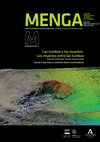
Megalithic Art in the Iberian Southeast began to
be known with the first works at the Millares si... more Megalithic Art in the Iberian Southeast began to
be known with the first works at the Millares site
published by Siret. Since then, there has been no
systematic studies of these decorations, except for
some works on singular stelae.
Panoria 17 is the first documented decorated
megalith in the Southeast. It also includes a
closing piece directly in front of a stele placed an
altar or podium. This changes the functionality of
the tomb, transforming it into a memorial sector
or sorts within the context of the necropolis.
Both contributions are unique in the context of
southeastern Iberian Megalitism.
This data supports the extension of the appropriation
of ancestral stones for the construction of burials
that, until now, had only been documented along
the Atlantic façade. Its novelty opens relevant
expectations for studies oriented to the analysis of
decorations of uprigths and statuary pieces, as a
neaded strategy to obtain data on the role of these
elements in funeral settings.
Las tumbas y los muertos. Los muertos entre las tumbas, 2023
The human and animal remains found at the
megalithic necropolis of Panoría
(Darro, Granada) are d... more The human and animal remains found at the
megalithic necropolis of Panoría
(Darro, Granada) are discussed in this paper. The
results stress different conclusions related to
the funerary ritual and the features of the buried
population. The anthropological characterization
shows a population without biases of sex and
age, although with a clear under-representation
of subadult individuals as result of probably
taphonomic processes. The health conditions
are dominated by degenerative joint diseases,
followed by infectious disease and trauma. The
oral pathologies are consistent with a diet low in
carbohydrates. Particularly noteworthy are the
marks such as grooves and notches found in three
teeth probably related to thread and cordages
preparation. Marine shells, sometimes modified to
be used as necklace beads, and animal phalanges
also were found as grave goods.
Las tumbas y los muertos. Los muertos entre las tumbas, 2023
The chronology and temporality of the different
ritual and funerary practices is a key aspect in
... more The chronology and temporality of the different
ritual and funerary practices is a key aspect in
the study of megalithic societies. The cemetery of
Panoría offers an excellent opportunity for exploring
ritual complexity in Iberia through radiocarbon
chronology. For this purpose, seventy-three
radiocarbon dates were obtained and analysed
within a statistical framework. The resulting refined
chronology has led us to three main conclusions: i)
in all tombs, the second half of the 4th millennium
cal BC was an intensive but brief period of funerary
depositions, probably over three to six generations;
ii) after a long hiatus, most of the dolmens were
reused in the 25th and 21st centuries cal BC during
even shorter periods, spanning just a few decades
and approximately one to four generations; and
(iii) long after the funerary rituals had ended in the
21st century, the necropolis was reused in the 5th
century AD, during the Late Antiquity.
Journal of Archaeological Science: Reports, 2023
The transition between the Copper Age and the Argaric Bronze Age in southeastern Iberia has tradi... more The transition between the Copper Age and the Argaric Bronze Age in southeastern Iberia has traditionally been understood in an evolutionary framework that would have involved the replacement of some cultural forms by others. The chronology of megalithic societies has changed this assumption, revealing that the continuity of ancestral funerary practices is also a key feature of the Bronze Age. In this context, the new radiocarbon series from Los Eriales discussed in this paper can be considered a key contribution. Three main aspects stand out according to their statistical analysis: i) Los Eriales should be considered the most recent Iberian megalithic cemetery, as ritual activity began in the last centuries of the third millennium cal BC; ii) funerary activity took place during short events of intensive ritual depositions spanning a few decades, mainly in the 21st and 18th centuries; and iii) Los Eriales cemetery was mainly used during the Argaric period, which means the coexistence of two very different funerary practices: collective megalithic rituals and individual intramural inhumations. The continuity of megalithic rituals can be explained in terms of resilience to the social fragmentation that characterised Argaric societies.
Archaeological and Anthropological Sciences, 2023
Our ability to build precise narratives regarding megalithic funerary rituals largely depends on ... more Our ability to build precise narratives regarding megalithic funerary rituals largely depends on an accurate understanding of bone assemblage formation. The cemetery of Panoría offers an excellent opportunity for exploring the ritual variability through the study of funerary taphonomy, as four of the nine recently excavated dolmens are remarkably well-preserved. Based on a multi-proxy approach that includes the contextual archaeological features, skeletal preservation and representation indexes, taphonomic processes, and radiocarbon chronology, three main ritual practices can be outlined: (i) primary sequential inhumations followed by the differential in situ decomposition of skeletal remains; (ii) the selective removal of crania and long bones; and (iii) the curation of subadult crania and probably long bones. The use-life of tombs, the intensity of mortuary depositions, and the intentional protection of specific bones appear as key aspects for understanding the variability in bone assemblage formation.
REAL, Revista de Estudios Almerienses, 2022
En el año 2012, iniciamos un programa de dataciones radiocarbónicas con el objetivo de estudiar
l... more En el año 2012, iniciamos un programa de dataciones radiocarbónicas con el objetivo de estudiar
la cronología y temporalidad del megalitismo en el sureste peninsular. Como parte de este programa se han
estudiado diferentes necrópolis almerienses como El Barranquete en Níjar, Las Churuletas, Llanos del Jautón
y La Atalaya, todas ellas en Purchena, o Loma Belmonte y Loma del Campo en Mojácar. En este contexto, en
el año 2018 centramos nuestra atención en la necrópolis de Los Millares consiguiendo una amplia serie de
dataciones que ha permitido establecer dos conclusiones principales: i) la actividad funeraria se inició en los
últimos siglos del IV milenio cal a.C., aproximadamente unos 200 años antes que la fundación del poblado; y ii)
la importante innovación que supuso la aparición de un nuevo tipo de monumento megalítico como los tholoi
se produjo por primera vez en Los Millares desde donde se extendieron de forma progresiva a otras comarcas
peninsulares hasta alcanzar la península de Lisboa.
Landscapes and Resources in the Bronze Age of Southern Spain, 2022
Cultural diversity does not only occur in the longterm but also among social groups that coexiste... more Cultural diversity does not only occur in the longterm but also among social groups that coexisted chronologically and spatially. This is the case of the megalithic societies that coexisted from approximately
2200 calBC onwards with the Argaric Bronze Age communities in southeastern Iberia. These groups differ markedly in their mortuary
rituals. In addition to the continuity and reuse of earlier collective megalithic cemeteries, there were individual inhumations inside settlements. Palaeodietary analyses offer an excellent opportunity for
a better understanding of this cultural diversity. The carbon (δ13C) and nitrogen (δ15N) composition of a sample of 194 individuals belonging to three megalithic cemeteries (Los Millares, El Barranquete and Panoría) and to four Argaric settlements (Cerro de la Virgen and Cuesta del Negro, Gatas and La Bastida) are analysed and compared. The
results led to four main conclusions:
(i) subsistence strategies in both megalithic and Argaric populations were based on a mixed economy of herding and farming without any
relevant consumption of aquatic resources (marine and freshwater);
(ii) megalithic societies evidence a rather homogeneous dietary pattern in contrast to the greater inter-individual variability found among
Argaric peoples;
(iii) the consumption of domesticated animals and dairy products has increased during the El Argar period, although access to such
high-quality foodstuffs would have been rather asymmetrical;
(iv) in contrast to the Argaric societies, the contemporary megalithic Bronze Age communities had a more conservative dietary pattern,
emphasising the continuity of traditional consumption habits.


Uploads
Books by Gonzalo Aranda Jimenez
investigaciones, decenas de yacimientos excavados y más de 800 publicaciones científicas, El Argar mantiene plenamente su vigencia internacional y su capacidad de liderazgo e influencia en la arqueología española. El presente libro supone una síntesis actualizada del conocimiento sobre las sociedades argáricas, de forma que se puedan
entender los diferentes aspectos que han sido objeto de estudio, la información generada y los debates científicos actuales. En este sentido, se aborda el origen de estas comunidades, su marco territorial y temporal, sus prácticas agrícolas y ganaderas o las características del medioambiente al que tuvieron que enfrentarse. Varias innovaciones
culturales son objeto de especial atención. Los nuevos poblados argáricos situados en escarpados cerros es una de ellas. Sus cimas y laderas fueron ocupadas por un denso caserío de viviendas y edificios monumentales que evidencian una nueva concepción social y urbanística. Los enterramientos dejaron de ser colectivos y pasaron a ser individuales
y a localizarse en el interior de los poblados, habitualmente bajo el suelo de las viviendas. Por primera vez, la producción de objetos metálicos especialmente adornos, herramientas y en menor medida armas adquirió un desarrollo previamente desconocido. A través de los diferentes capítulos, se podrá conocer a unos grupos sociales que vivieron en el sureste peninsular hace 4000 años y que desarrollaron unas formas de
vida originales e innovadoras que invitan a la reflexión sobre la variabilidad cultural humana y sus complejas manifestaciones.
In addition to expounding on recent insights in such areas as Argaric origin and expansion, social practices, and socio-politics, the book offers reflections on current issues in the field, from questions concerning the genealogy of discourses on the subject, to matters related to professional practices. The book discusses the values and interests guiding the evolution of El Argar studies, while critically reexamining its history. Scholars and researchers in the fields of Prehistory and Archaeology will find this volume highly useful.
Papers by Gonzalo Aranda Jimenez
and cultural meanings of prehistoric lithic tools. The recent excavation of nine dolmens in the Panoría cemetery
(3600 − 2100 cal BC), four of them largely undisturbed, offers an excellent opportunity for a fine-grained study of lithic
grave goods. Blades, arrowheads and geometric microliths were the types of objects selected to be deposited at the Panoría
dolmens. Use-wear analysis shows the deposition of blades previously used in farming and textile activities or with no
evidence of use but in optimal working conditions. Arrowheads and microliths use-wear indicate their use as projectiles.
However, some arrowheads are also found without use-wear, probably having been specifically crafted for ritual purposes,
especially those with extremely developed barbs. Cross-referencing lithic typology, frequency and use-wear from each
tomb with the osteological analysis reveals a positive correlation between the activities identified by the blade use-wear
analysis and the intense physical effort evidenced by musculoskeletal stress markers. In contrast, there is a negative correlation
between the projectiles and traumatic injuries. Lithic tools found at Panoría can be linked to different social realms,
from daily activities to more restricted ritual purposes.
Milanes have revealed a previously unknown variability in funerary practices in the
south-eastern Iberia. For the first time, a megalithic tomb housed a large funerary
deposit (28,740 bone fragments) of exclusively cremated human bone remains. For
a comprehensive characterization of the funerary ritual, a cutting-edge multi-proxy
approach has been undertaken including the osteological study of cremated bone
remains, radiocarbon chronology, Fourier-Transform Infrared spectroscopy in Attenuated
Total Reflectance mode (FTIR-ATR), and carbon, oxygen and strontium isotope
analyses. As a result, the cremation ritual consisted of multi-depositional events of
at least 21 individuals chronologically concentrated in the first quarter of the third
millennium, principally in the 28th century cal BC. The absence of charcoal/ashes
in the funerary chamber and the underrepresentation of anatomical regions such as
lower limb and trunk suggest that the cremation took place elsewhere and the bone
remains were carefully collected and placed as secondary burial depositions. Different
proxies including colour patterns, heat‐induced fractures, the presence of cyanamide
in calcined bones would also suggest the cremation of principally complete
corpses, burnt soon after death. The ritual of cremation coexisted with inhumations
during the third millennium cal BC, suggesting a variability in the body manipulation
that previously went unnoticed. Unlike inhumations, through cremation, bodies would
have been reduced until being indistinguishable, transforming radically the nature of
human beings and their ontological status.
be known with the first works at the Millares site
published by Siret. Since then, there has been no
systematic studies of these decorations, except for
some works on singular stelae.
Panoria 17 is the first documented decorated
megalith in the Southeast. It also includes a
closing piece directly in front of a stele placed an
altar or podium. This changes the functionality of
the tomb, transforming it into a memorial sector
or sorts within the context of the necropolis.
Both contributions are unique in the context of
southeastern Iberian Megalitism.
This data supports the extension of the appropriation
of ancestral stones for the construction of burials
that, until now, had only been documented along
the Atlantic façade. Its novelty opens relevant
expectations for studies oriented to the analysis of
decorations of uprigths and statuary pieces, as a
neaded strategy to obtain data on the role of these
elements in funeral settings.
megalithic necropolis of Panoría
(Darro, Granada) are discussed in this paper. The
results stress different conclusions related to
the funerary ritual and the features of the buried
population. The anthropological characterization
shows a population without biases of sex and
age, although with a clear under-representation
of subadult individuals as result of probably
taphonomic processes. The health conditions
are dominated by degenerative joint diseases,
followed by infectious disease and trauma. The
oral pathologies are consistent with a diet low in
carbohydrates. Particularly noteworthy are the
marks such as grooves and notches found in three
teeth probably related to thread and cordages
preparation. Marine shells, sometimes modified to
be used as necklace beads, and animal phalanges
also were found as grave goods.
ritual and funerary practices is a key aspect in
the study of megalithic societies. The cemetery of
Panoría offers an excellent opportunity for exploring
ritual complexity in Iberia through radiocarbon
chronology. For this purpose, seventy-three
radiocarbon dates were obtained and analysed
within a statistical framework. The resulting refined
chronology has led us to three main conclusions: i)
in all tombs, the second half of the 4th millennium
cal BC was an intensive but brief period of funerary
depositions, probably over three to six generations;
ii) after a long hiatus, most of the dolmens were
reused in the 25th and 21st centuries cal BC during
even shorter periods, spanning just a few decades
and approximately one to four generations; and
(iii) long after the funerary rituals had ended in the
21st century, the necropolis was reused in the 5th
century AD, during the Late Antiquity.
la cronología y temporalidad del megalitismo en el sureste peninsular. Como parte de este programa se han
estudiado diferentes necrópolis almerienses como El Barranquete en Níjar, Las Churuletas, Llanos del Jautón
y La Atalaya, todas ellas en Purchena, o Loma Belmonte y Loma del Campo en Mojácar. En este contexto, en
el año 2018 centramos nuestra atención en la necrópolis de Los Millares consiguiendo una amplia serie de
dataciones que ha permitido establecer dos conclusiones principales: i) la actividad funeraria se inició en los
últimos siglos del IV milenio cal a.C., aproximadamente unos 200 años antes que la fundación del poblado; y ii)
la importante innovación que supuso la aparición de un nuevo tipo de monumento megalítico como los tholoi
se produjo por primera vez en Los Millares desde donde se extendieron de forma progresiva a otras comarcas
peninsulares hasta alcanzar la península de Lisboa.
2200 calBC onwards with the Argaric Bronze Age communities in southeastern Iberia. These groups differ markedly in their mortuary
rituals. In addition to the continuity and reuse of earlier collective megalithic cemeteries, there were individual inhumations inside settlements. Palaeodietary analyses offer an excellent opportunity for
a better understanding of this cultural diversity. The carbon (δ13C) and nitrogen (δ15N) composition of a sample of 194 individuals belonging to three megalithic cemeteries (Los Millares, El Barranquete and Panoría) and to four Argaric settlements (Cerro de la Virgen and Cuesta del Negro, Gatas and La Bastida) are analysed and compared. The
results led to four main conclusions:
(i) subsistence strategies in both megalithic and Argaric populations were based on a mixed economy of herding and farming without any
relevant consumption of aquatic resources (marine and freshwater);
(ii) megalithic societies evidence a rather homogeneous dietary pattern in contrast to the greater inter-individual variability found among
Argaric peoples;
(iii) the consumption of domesticated animals and dairy products has increased during the El Argar period, although access to such
high-quality foodstuffs would have been rather asymmetrical;
(iv) in contrast to the Argaric societies, the contemporary megalithic Bronze Age communities had a more conservative dietary pattern,
emphasising the continuity of traditional consumption habits.