Books by Frank Vermeulen
Academia Belgica. Studia Archaeologica 1, 2017
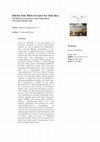
In this volume, prepared by a full team of researchers of Ghent University involved in the PVS pr... more In this volume, prepared by a full team of researchers of Ghent University involved in the PVS project, a first synthesis is presented of the results from geo-archaeological surveys undertaken in a valley of central Marche
between 2000 and 2016. In full understanding of the explanatory power of large windows in time for identifying regional patterns of settlement dynamics the publication team focuses on the results of more
than 15 years of fieldwork, desktop analysis and material studies, concerning the period from the early first millennium before our era (c. 900 BC) to the end of Antiquity (c. AD 600).
The book From the Mountains to the Sea proposes an innovative synthesis of recent archaeological ... more The book From the Mountains to the Sea proposes an innovative synthesis of recent archaeological research on town formation and urbanisation, and connected Roman colonisation, of the central part of Adriatic Italy. Frank Vermeulen analyses the formation and character of Roman towns in this still somewhat understudied area of central Italy, thus contributing to a better understanding of the lasting Roman impact on conquered societies in Italy as a whole. During the past decade much archaeological fieldwork has been conducted on urban sites in this area, including exciting field surveys, and it is now high time for a geographical and historical contextualisation of the more than 40 Roman urban sites known in this area, based on a careful review of the scholarly tradition and the bringing together of much new, often unpublished or preliminary published, field data. The result is the first comprehensive synthesis of the urban phenomenon in a region characterized by one of the most dense town networks of the Roman Empire. Some of the main sub-themes to discuss when dealing with Roman-inspired urbanism are present in this book, including: town formation, town planning, the structural relationship town-territory, religious aspects and urban sanctuaries, public buildings (fora, basilicae, baths, porticoes, theatres, amphitheatres, macella, etc.) and domestic architecture. But beyond the mostly archaeologically-driven investigation of architectural features of the colonies and all other towns in the study region, there is an attempt to understand the disposition and functioning of all the individual town centres in their wider context of territory, region and state. An additional important feature of the book is the gazetteer of urban sites which forms a starting point for all those working in Roman Italy.
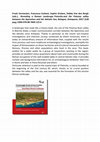
A landscape that reads like a history book, the one of the Potenza River valley in Marche (Italy)... more A landscape that reads like a history book, the one of the Potenza River valley in Marche (Italy), a major communication corridor between the Apennines and the Adriatic since Antiquity. Thanks in particular to the recent non-invasive investigations and intensive surveys conducted by Ghent University, there is today an extraordinary amount of information that, coupled with the results from previous and more traditional archaeological investigations, exemplify the impact of Romanization on these territories and of cultural interaction between Romans, Picenes and other populations who lived in the area. This book, written for a wider public by a group of researchers working in the region, provides an excellent status quaestionis about town and countryside during the Roman occupation of this well studied valley in central Adriatic Italy. It provides context and background information for an archaeological exhibition held First in Rome and later in Porto Recanati and Ghent. Particular attention is paid to the coastal town of Potentia, a colony founded at the beginning of the 2nd century BC which, thanks to its crucial position between the valley and the sea, was essential for the formation of this ancient Roman landscape.

This first volume in a new series about Belgian archaeological research in Italy brings all relev... more This first volume in a new series about Belgian archaeological research in Italy brings all relevant data together about the newly discovered and systematically surveyed sites in the Potenza Valley Survey project (2000-2017). The well-illustrated book presents the wide array of new archaeological finds and topographic and chronological data about sites, assembled via systematic prospections by a team of Ghent University in a valley of central Adriatic Italy. The many spectacular survey data from a series of now abandoned ancient urban centres and protohistoric agglomerations, are combined here with non-invasive prospection results from sites found in their rural hinterlands. The analysis and documentation of all these discoveries, and of their relation with environmental change in the past, now provide a crucial understanding of an ideal section through the diversified central Italian landscape, linking the Apennine Mountains with the Adriatic coastal plain. In this way the survey project reveals a spectrum of settlement situations, ranging from a Roman colony on the coast and a series of pre-Roman Iron Age inland centres, to the smallest dwelling places of indigenous and immigrant communities living in this specific settlement chamber of the Mediterranean between the early Iron Age (circa 900 BC) and the end of Antiquity (circa AD 600). The intensive use of landscape survey archaeology and remote sensing approaches, of which this book is a reflection, has enabled the scholars involved in this team effort to study diachronic patterns of urban and rural habitation and land use with much greater precision than before, thus contributing to the "longue durée" landscape and settlement dynamics in this part of the ancient world.
The book "Ammaia I: The Survey. A Romano-Lusitanian townscape revealed" is the first substantia... more The book "Ammaia I: The Survey. A Romano-Lusitanian townscape revealed" is the first substantial output from a collaborative project initiated in 2001 and particularly of the EU-funded phase of the work begun in 2009. In the EU Radio-Past project, Ammaia provided a field laboratory for interdisciplinary work on non-destructive approaches to complex archaeological sites. Given the near absence of large scale past excavation the results from this new intensive field effort at the Roman Imperial city site of Ammaia are spectacular and provide a whole series of new perspectives both on the site and on Roman urbanism in Iberia more broadly. The volume presents the results from the remote sensing work and as well as a discussion of their implication and is divided into three parts, the first setting the context for the work, the second detailing the survey results, and the final one offering broader interpretations as well as explaining the continuing work on visualization of the town. The book provides a very useful medium for drawing together the spectacular non-invasive work in a systematic manner. It does this in a beautifully produced volume with excellent illustrations.
This is a collective publication (bilingual English-Portuguese) of the Radio-Past team directed a... more This is a collective publication (bilingual English-Portuguese) of the Radio-Past team directed at a wider public, presenting the main results of archaeological survey and excavations at the abandoned Roman town site of Ammaia. It includes many images, such as 3D visualisations.
This volume represents the most important “deliverable” of the European-funded project
Radio-Pas... more This volume represents the most important “deliverable” of the European-funded project
Radio-Past (www.radiopast.eu). It is intended to disseminate the key results achieved
in the form of methodological guidelines for the application of non-destructive
approaches in order to understand, visualize and manage complex archaeological sites,
in particular large multi-period settlements whose remains are still mostly buried. The
authors were selected from among the project research “staff” but also from among
leading international specialists who served as speakers at the two international events
organized as part of the project (the Valle Giulia Colloquium of Rome – 2009 and the
Colloquium of Ghent – 2013) and at the three Specialization Fora, the high formation
training activities organized in 2010, 2011 and 2012.
As such, the book offers contributions on diverse aspects of the research process (data
capture, data management, data elaboration, data visualization and site management),
presenting the state of the art and drafting guidelines for good practice in each field.
Non-destructive approaches to complex archaeological sites in Europe: a round-up
In recent years archaeological research has begun to reveal the advantages of integrating a range... more In recent years archaeological research has begun to reveal the advantages of integrating a range of different non-destructive techniques on (partly abandoned) urban sites, choosing those suites that are most appropriate for the nature of the ancient town in question. In combination with exciting new computer-based means of data visualization, all of this work means that it is now possible to map and virtually reconstruct a buried town within a relatively short space of time, as opposed to the old and destructive excavation-centered approach that could take generations. Unsurprisingly these advances are starting to make a very important understanding to urbanism in general and the Roman Empire in particular.
This volume builds upon all these new developments and is indeed one of the first to focus exclusively upon the contribution of survey techniques to our understanding of ancient towns. It arises from two international workshops held in Rome at the British, Belgian and Dutch Schools in 2007 and 2009, whose focus was a methodology led enquiry into the nature of urban settlements primarily in Italy, but also in Greece, Turkey, Croatia, Portugal and Spain. The volume contains some 22 papers from leading specialists in the field, which focus upon two underlying themes. The first deals with the characterization of urban sites and draws upon a wide range of case studies. These range from key protohistoric centres in central and south Italy, to towns that epitomise the contradictions of cultural change under Rome, such as Paestum, Aquinum and Sagalassos, to Roman centers such as Teano, Suasa and Ammaia. The second theme focuses upon inter-urban relationships, focusing in particular upon wider urbanized landscapes in Italy.
Changing Landscapes. The impact of Roman towns in the Western Mediterranean
Ol’Man River. Geoarchaeology of Rivers and River Plains

by Ana Konestra, Trade 2016, Ivana Ožanić Roguljić, Igor Borzić, Enrico Cirelli, Kristina Jelinčić Vučković, Ina Miloglav, Frank Vermeulen, Dominik Heher, Dimitri Van Limbergen, marzia giuliodori, Francesca Carboni, zrinka Šimić-Kanaet, and Devi Taelman In the years following the death of Commodus, a long period of transformation began that undermin... more In the years following the death of Commodus, a long period of transformation began that undermined the structure of the Roman Empire. These changes initially affected only aspects of succession to the Princedom, especially involving the military sphere, but they also modified the social and structural organization of the Roman State.
After this period of military anarchy, interrupted by a brief phase of prosperity with the accession to the imperial throne of Septimius Severus and his successors, there followed a period of economic stability that determined a new political and institutional empire. The time of Diocletian’s reforms, however, culminated in a serious crisis after the death of Constantine the Great (337 AD). The lands bordering the Adriatic were disputed by the heirs of the Emperor, starting a period of economic and cultural changes that manifested themselves initially as a diffuse form of recession in the dynamics of occupation of the territory. Urban and rural settlements show signs of abandonment and crisis. In the following decades, waves of peoples from northern and eastern Europe disrupted the political unity of the Empire even more. The Empire was only partially rebalanced after the Gothic War, due to the devastation of many urban centers and a drop in the number of sites in the area caused by continuing military clashes.
As was demonstrated at the last conference in Ravenna (Economia e Territorio, 28 February-1 March 2014), now being published, in recent years field research has revealed new evidence that allows us to draw a more complete picture of this important historical period which has been the focus of debate in recent decades. The research area discussed in Ravenna was mainly restricted to the central Adriatic, although there was communication with some eastern Adriatic areas.
This time the focus will extend to the basin defined as Adriatic Europe, according to geographical and cultural rather than political patterns, thus considering all territories facing the Adriatic Sea. These areas are affected by similar phenomena of transformations (barbarian conquest (crossings of the territory), the formation of barbaric countries, Justinian's Reconquest), at least until the Lombard invasion of Italy and Istria in the second half of the 6th century. After this point, they follow different trajectories that are still poorly understood. Such close relations between the two sides have always suggested direct cultural influences. The handicraft productions and forms of settlement in many ways tend to follow 2 common lines, but the progress of field investigations have not been sufficiently compared, especially with regard to the Early Middle Ages.
This new meeting will analyze these transformative phenomena in the areas research has neglected, including the time span between the 2nd and 8th centuries, especially on the Eastern Adriatic coast, from the short period before the establishment of the Severan dynasty up to the end of the Carolingian period.
We thank all participants for the interest shown for Trade conference and the numerous and very compelling themes proposed. Also, we wish everyone a fruitful conference and a pleasant stay in Zadar,
the Organizing commitee
Thinking about space. The potential of surface survey and contextual analysis in the definition of space in Roman times
I siti archeologici della Vallata del Potenza
Archaeology in Confrontation
Ancient Lines in the Landscape. A Geo-archaeological Study of Protohistoric and Roman Roads and Field Systems in Northwestern Gaul
Geo-archaeology of the Landscapes of Classical Antiquity
Excavations in Pessinus: the so-called Acropolis. From Hellenistic and Roman cemetery to Byzantine castle
Papers by Frank Vermeulen
The suburban area and the aqueducts


Uploads
Books by Frank Vermeulen
between 2000 and 2016. In full understanding of the explanatory power of large windows in time for identifying regional patterns of settlement dynamics the publication team focuses on the results of more
than 15 years of fieldwork, desktop analysis and material studies, concerning the period from the early first millennium before our era (c. 900 BC) to the end of Antiquity (c. AD 600).
Radio-Past (www.radiopast.eu). It is intended to disseminate the key results achieved
in the form of methodological guidelines for the application of non-destructive
approaches in order to understand, visualize and manage complex archaeological sites,
in particular large multi-period settlements whose remains are still mostly buried. The
authors were selected from among the project research “staff” but also from among
leading international specialists who served as speakers at the two international events
organized as part of the project (the Valle Giulia Colloquium of Rome – 2009 and the
Colloquium of Ghent – 2013) and at the three Specialization Fora, the high formation
training activities organized in 2010, 2011 and 2012.
As such, the book offers contributions on diverse aspects of the research process (data
capture, data management, data elaboration, data visualization and site management),
presenting the state of the art and drafting guidelines for good practice in each field.
This volume builds upon all these new developments and is indeed one of the first to focus exclusively upon the contribution of survey techniques to our understanding of ancient towns. It arises from two international workshops held in Rome at the British, Belgian and Dutch Schools in 2007 and 2009, whose focus was a methodology led enquiry into the nature of urban settlements primarily in Italy, but also in Greece, Turkey, Croatia, Portugal and Spain. The volume contains some 22 papers from leading specialists in the field, which focus upon two underlying themes. The first deals with the characterization of urban sites and draws upon a wide range of case studies. These range from key protohistoric centres in central and south Italy, to towns that epitomise the contradictions of cultural change under Rome, such as Paestum, Aquinum and Sagalassos, to Roman centers such as Teano, Suasa and Ammaia. The second theme focuses upon inter-urban relationships, focusing in particular upon wider urbanized landscapes in Italy.
After this period of military anarchy, interrupted by a brief phase of prosperity with the accession to the imperial throne of Septimius Severus and his successors, there followed a period of economic stability that determined a new political and institutional empire. The time of Diocletian’s reforms, however, culminated in a serious crisis after the death of Constantine the Great (337 AD). The lands bordering the Adriatic were disputed by the heirs of the Emperor, starting a period of economic and cultural changes that manifested themselves initially as a diffuse form of recession in the dynamics of occupation of the territory. Urban and rural settlements show signs of abandonment and crisis. In the following decades, waves of peoples from northern and eastern Europe disrupted the political unity of the Empire even more. The Empire was only partially rebalanced after the Gothic War, due to the devastation of many urban centers and a drop in the number of sites in the area caused by continuing military clashes.
As was demonstrated at the last conference in Ravenna (Economia e Territorio, 28 February-1 March 2014), now being published, in recent years field research has revealed new evidence that allows us to draw a more complete picture of this important historical period which has been the focus of debate in recent decades. The research area discussed in Ravenna was mainly restricted to the central Adriatic, although there was communication with some eastern Adriatic areas.
This time the focus will extend to the basin defined as Adriatic Europe, according to geographical and cultural rather than political patterns, thus considering all territories facing the Adriatic Sea. These areas are affected by similar phenomena of transformations (barbarian conquest (crossings of the territory), the formation of barbaric countries, Justinian's Reconquest), at least until the Lombard invasion of Italy and Istria in the second half of the 6th century. After this point, they follow different trajectories that are still poorly understood. Such close relations between the two sides have always suggested direct cultural influences. The handicraft productions and forms of settlement in many ways tend to follow 2 common lines, but the progress of field investigations have not been sufficiently compared, especially with regard to the Early Middle Ages.
This new meeting will analyze these transformative phenomena in the areas research has neglected, including the time span between the 2nd and 8th centuries, especially on the Eastern Adriatic coast, from the short period before the establishment of the Severan dynasty up to the end of the Carolingian period.
We thank all participants for the interest shown for Trade conference and the numerous and very compelling themes proposed. Also, we wish everyone a fruitful conference and a pleasant stay in Zadar,
the Organizing commitee
Papers by Frank Vermeulen