Search

Mountain Journal

Environment, news, culture from the Australian Alps

Tag

environment

End of Financial Year appeal for mountain environments

As we get to the end of the financial year, every not for profit group in the universe is asking for donations. This might be of interest if you are interested in funding advocacy for mountain environments.

Continue reading “End of Financial Year appeal for mountain environments”

Managing the grief

For the last few years, Friends of the Earth has been hosting guided walks in the high country to show people areas at risk from logging. These have included Mt Stirling, the upper Little Dargo River, and the stronghold of older snow gums that exists at Mt Wills and which would have been put at risk by logging that had been planned for Alpine Ash forests on the mountain.

With the government announcing an end to logging on public lands in the east of the state in early 2024, we shifted the focus of our walks onto snow gum woodlands, which are increasingly being impacted by climate change driven fire regimes and dieback caused by a native beetle.

In early 2024 we led a walk to visit what we called the ‘ghost forests’ of the high ridge between the Tawonga huts and Mt Fainter on the north western edge of the Bogong High Plains.

Continue reading “Managing the grief”

The first Snow Gum Summit

Announcement of conference: February 14 – 16, 2025

Snow Gums (Eucalyptus pauciflora) are the classic tree of the Australian High Country. They are profoundly different to the trees found in mountain areas in other parts of the world, and give a uniquely Australian sense to our high country. However, they are facing a double threat to their survival: from fire and dieback.

We are hosting a ‘snow gum summit’ which will bring together land managers and academics and anyone interested in the future of this iconic species to explore what needs to be done to ensure the survival of snow gum woodlands, and put the issue firmly on the state governments agenda.

We will be inviting First Nations people, local and state wide environmental organisations, local communities and businesses, groups active in outdoors recreation, and enthusiasts of high-elevation, forest ecosystems.  There will be presentations, workshops and field trips.

This event will happen at Dinner Plain, on GunaiKurnai Country in north eastern Victoria.

Continue reading “The first Snow Gum Summit”

Celebrating the survivors

Across the mountains of south eastern Australia, climate change is already driving profound change. In many places in the high country, snow gum forests are facing a double threat: dieback, caused by a native beetle is killing individual trees, and climate change driven fire regimes are devastating vast areas of forest.

Recent research by John Morgan, Michael Shackleton and Zac Walker from the Research Centre for Applied Alpine Ecology at La Trobe University highlights that ‘Long-unburnt snow gum forests (now) comprise less than 1% of snow gum forests in the Victorian Alps’.

We know that snow gums can survive fire. We also know that across the Alps snow gum woodlands are starting to collapse from too frequent fire. That’s why we have to appreciate and protect the old forests that remain.

Continue reading “Celebrating the survivors”

‘Save the Trees. March with us in the Autumn Festival Parade’

There has been a long and spirited community campaign to stop the removal of significant trees on the edge of Bright in Victoria’s north east.
.
Now, Bright’s Gateway Protection Group have announced that they will be marching in the Autumn Parade this year (May 4), and are inviting members of the community to join them.

Continue reading “‘Save the Trees. March with us in the Autumn Festival Parade’”

Mountain Icons: the majesty of Mt Buffalo

Mountain Journal has slowly been compiling a collection of stories of ‘mountain icons’. In this contribution, Anna Langford reflects on her long connection to the Buffalo plateau.

How instinctively we reach for the superlatives – the oldest, fastest, biggest – when we want to distinguish something above its peers.

Mount Buffalo has no such claims on its fellow mountains: it is not the tallest, steepest, or remotest… and say nothing of its dismal snowpack that frays year by year.

There is only one superlative I insist on assigning it. To me, Buffalo has always been the grandest of our peaks.

Continue reading “Mountain Icons: the majesty of Mt Buffalo”

Mountain Journal magazine #4 now online

Once a year we produce the Mountain Journal magazine. It is distributed through mountain and valley towns from Melbourne to Canberra each autumn. 2024 is the fourth print edition, and the magazine is being distributed at present.

You can also enjoy this PDF of the magazine MJ4.

Continue reading “Mountain Journal magazine #4 now online”

An important meeting about the future of kunanyi/ Mt Wellington

There has been a long and spirited campaign against the proposal from The Mt Wellington Cableway Company (MWCC) to build a commercial centre on the summit of kunanyi/Mt Wellington, an aerial tramway up the face of the mountain, and associated infrastructure and works (background information available here). Now, with a state election coming up soon, Residents Opposed to the Cable Car are urging locals in nipaluna/ Hobart to attend an important public meeting.

Continue reading “An important meeting about the future of kunanyi/ Mt Wellington”

‘Long-unburnt snow gum forests are now exceedingly rare’.

Across the mountains of south eastern Australia, climate change is already driving profound change. In many places in the high country of NSW and Victoria, snow gum forests are facing a double sided threat: dieback, caused by a native beetle is killing individual trees, and climate change driven fire regimes are devastating vast areas of forest. Climate change, drought, insects and soil microbes are all thought to contribute to dieback. The spread and impacts of the beetle appear to be super charged by climate change (more beetles are surviving because of milder winters and more mortality of water stressed trees in summer).

More frequent and intense wild fire also poses an existential threat to the survival of snow gum woodlands and forests. A new report reveals the scale of the fire impact on these forests in the Victorian high country.

In the paper ‘Long-unburnt stands of snow gum (Eucalyptus pauciflora Sieber ex Spreng) are exceedingly rare in the Victorian Alps: implications for their conservation and management’, John Morgan, Michael Shackleton and Zac Walker from the Research Centre for Applied Alpine Ecology at La Trobe University highlight that ‘Long-unburnt snow gum forests (now) comprise less than 1% of snow gum forests in the Victorian Alps. We identify where long-unburnt snow gum stands persist in the Victorian Alps and outline why management intervention is necessary to protect unburnt refuges and, more broadly, to allow mature/adult stands (such as occur on the Baw Baw Plateau) to develop into future old forests’.

Continue reading “‘Long-unburnt snow gum forests are now exceedingly rare’.”

Profile: Hilary McAllister from For Wild Places

Hilary McAllister describes the development and role of the trail running group For Wild Places.

Activism and the outdoors are two pursuits that, in recent years, have evolved into a symbiotic relationship.  As history would have us believe, activism is a pursuit of the immensely passionate. Dedicated souls who shun societal expectations, choosing to reside in remote, sometimes damp, forest camps, utilising our scarcest resource – time – to protect wild places under threat.

Growing up in an average, rural family, this path to activism felt out of reach to me, too extreme for my somewhat beige sensibility. But along with descriptors such as accident-prone, nomad and feminist, activist has made its way onto my bio and into my way of life.

Continue reading “Profile: Hilary McAllister from For Wild Places”

Logging impacts mountain areas in southern lutruwita/ Tasmania

Liam Oakwood reports on the scale of logging in areas next to mountain ranges in southern lutruwita/ Tasmania. As he notes: ‘In the shadow of the mountain ranges of the deep South a steady defence of life on Earth is being mounted’.

Continue reading “Logging impacts mountain areas in southern lutruwita/ Tasmania”

Now is the time to speak up against commercial development in the Alpine national park

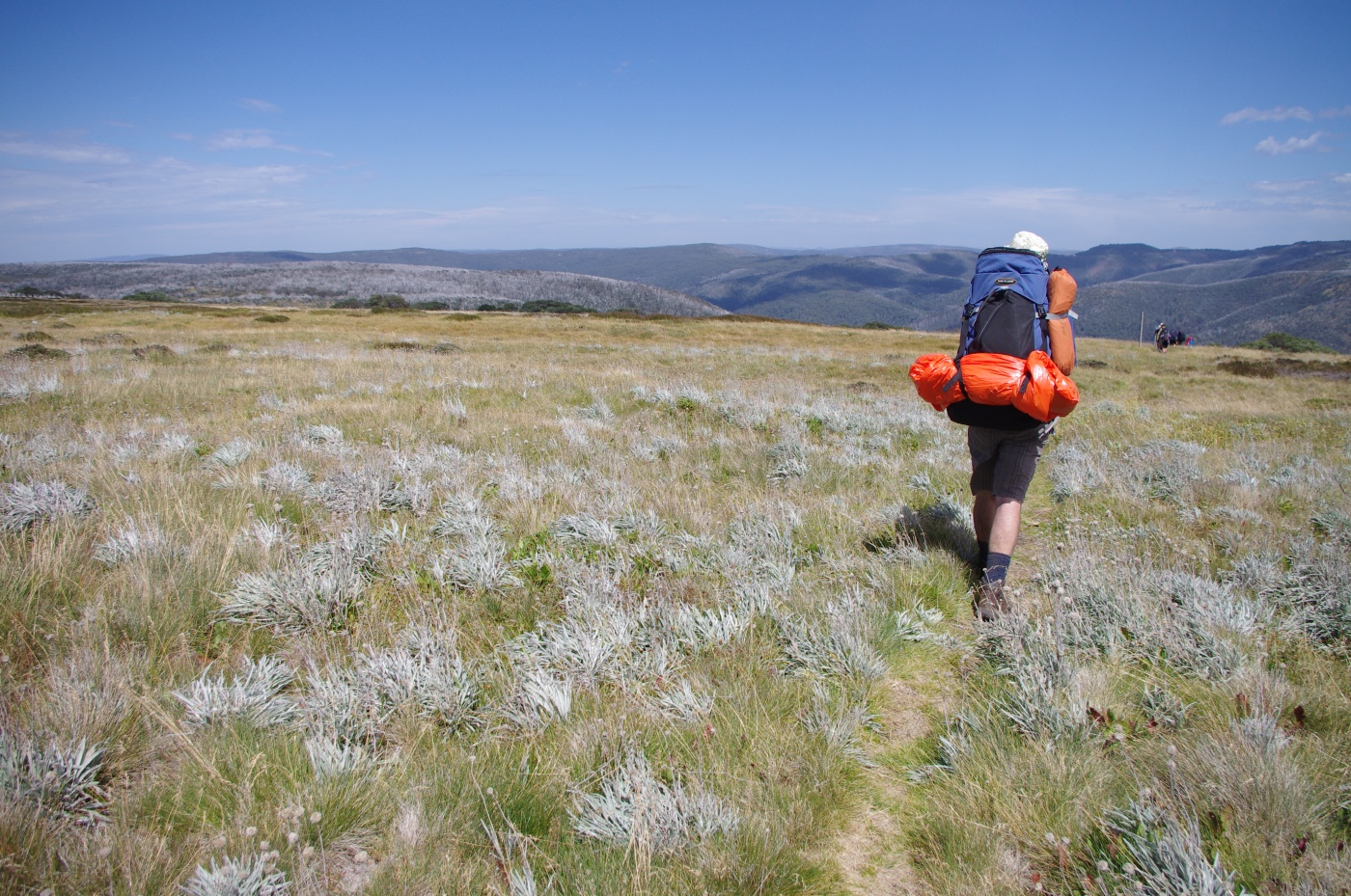
The Falls to Hotham Alpine Crossing (FHAC) is a 37km hike located in the Alpine National Park in north eastern Victoria. The hike generally is done as a 3 day trip, and links the resort towns of Falls Creek and Mt Hotham (starting and finishing slightly outside each town). It is hugely popular.

The creation of the walk, which simply connected existing tracks was a smart way to create an ‘iconic’ walk without much in the way of infrastructure (there are camping platforms at the two suggested overnight sites).

However, like other state governments, the Victorian government has been focused on encouraging private commercial development within national parks, including within the Alpine National Park. The Falls to Hotham Alpine Crossing Master Plan proposes an ‘improved’ option for the FHAC which would make it a 57-kilometre, multi-day route which will take in the Diamantina Spur and Razorback as well as the Bogong High Plains.

Continue reading “Now is the time to speak up against commercial development in the Alpine national park”

Blog at WordPress.com.

Up ↑