
 A product of three separate transit systems that joined forces in the early 1990s, Tompkins Consolidated Area Transit, Inc. (TCAT), Ithaca, NY, remains dedicated to improving service, safety practices, workforce training, community outreach, and environmental sustainability.
TCAT’s service area covers a semi‑rural, albeit, cosmopolitan and culturally diverse population of 104,000 in Tompkins County. TCAT’s 25 urban, campus, and rural bus routes provide service to both county and out-of-county riders heading to Cornell University, Ithaca College, Tompkins Cortland Community College, as well as to many retail, entertainment, commercial, residential and professional centers.
TCAT operates seven days a week and 359 days a year, only shutting down service six days a year to allow all of TCAT’s employees to observe major holidays: New Year’s Day, Memorial Day, Juneteenth, Independence Day, Thanksgiving Day and Christmas Day.
TCAT’s 2024 annual ridership was 2.85 million about 70 percent of what it was in 2019 before the coronavirus pandemic hit in early 2020. Ridership has gradually edged up but work force shortages, exacerbated by the pandemic, coupled with bus shortages have forced TCAT to curtail service since. TCAT is making every effort to restore service to meet the demands of the community with continuing emphasis on improving maintenance processes, and recruiting and improvements with its training program,.
At present, TCAT has a fleet of about 55 buses and includes the recent addition of five new full-sized Gillig diesel buses, six new full-sized Gillig electric buses. Two Gillig hybrid buses are on order and are expected to be delived in the first quarter of 2026.
TCAT’s Governance and History
TCAT is governed by a nine‑member Board of Directors comprised of three individuals recommended by each of its three main local funding partners: the City of Ithaca, Tompkins County, and Cornell University. Nominees, in turn, are elected by the TCAT board and, in that capacity, serve TCAT solely and independently of their respective recommending bodies.
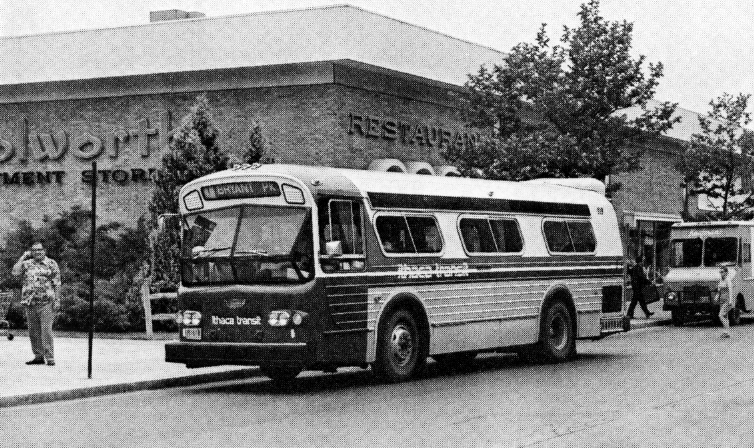 Though TCAT is an independent organization, the City, County and Cornell are at the very root of its dynamic history as TCAT was created from a consolidation of the three transit agencies:
- Ithaca Transit (Originally Community Transit System), which was started by the City in 1962 as a municipal bus system;
- CU Transit, which was started by Cornell in 1966 as a campus shuttle bus system.
- TOMTRAN, which was started by the County in 1981 as a rural transit system to maintain access to rural-based labor forces in Tompkins and, via a contract with Tioga Transport, Tioga County.
Long-time and former Tompkins County Senior Transportation Planner Dwight Mengel, who previously headed TOMTRAN, commissioned this study with a Cornell scholar in 1993 that shows a fascinating start to local transit mass transit. Essentially, history shows that city, county and Cornell leaders wisely recognized the inherent financial and overall operational inefficiencies of three different services serving one small county.
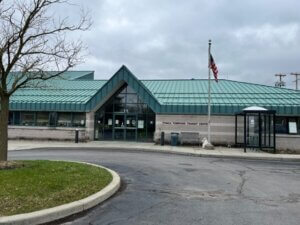 In 1991, these leaders established what was named an “Operating Committee” to begin the long and complex process of consolidating all three operations, personnel, bargaining units, and fares into a single system. This committee also oversaw the construction of a new facility to house all three.
The three transit agencies moved into their brand new $5 million transit facility, 737 Willow Ave., Ithaca, along with Gadabout Transportation Services, Inc upon its completion in 1992. That same year, the three transit systems began offering paratransit services, as mandated by the Americans with Disabilities Act, through a contract with Gadabout, now led by Executive Director Kristen Wells. Ever since its founding, Gadabout has hired volunteer drivers who must go through rigorous training and licensing procedures to augment its staff of paid drivers to curb the relatively high cost of paratransit.
After the move, the city, county and Cornell transit systems operated separately under one roof while sharing administrative staff, as well as the cost of utilities and maintenance. In 1996, the consolidation process moved forward when the New York State Legislature adopted a law authorizing the creation of TCAT. That year, the Operating Committee hired the merging organization’s first‑ever general manager, Rod Ghearing, an important step that was followed by the adoption of the TCAT name and logo. TCAT also started installing bike racks on all of its buses beginning in 1996, making it the first New York transit system to do adopt this bike-friendly amenity.
Yet another important milestone was reached in April 1998 when the city, county and Cornell adopted a consolidation agreement to become a joint venture. Following a study of all routes and fares, TCAT implemented a unified route system and fare structure that became effective in August 1999. Finally, TCAT was incorporated and began operations Jan. 1, 2005, as a private, not‑for‑profit corporation and a single employer providing public transportation services to Tompkins County, and for a time, to surrounding counties.

TCAT GM Matthew Rosenbloom-Jones
That same year, TCAT hired its second general manager, Joe Turcotte, who was credited for the agency being named the best transportation system of its size in 2011 by the American Public Transportation Association. Sadly, following a lengthy illness, the 51-year-old Turcotte passed away in May 2016, after which time Assistant General Manager Alice Eccleston assumed the role of acting general manager while a TCAT board committee launched a nationwide search to replace Turcotte. The committee selected operations manager Scot Vanderpool, who had several years of transportation experience at CENTRO and Syracuse University, to become TCAT’s third general manager, effective August 2017, through March 1, 2024. Matthew Rosenbloom-Jones, who joined TCAT as the agency’s service development manager in January 2024, was hired as TCAT’s fourth general manager, effective March 2024.
TCAT’s employees are at the heart of the agency’s successes so fostering labor‑management harmony is a top priority.
 In 2004, the United Auto Workers was recognized by TCAT as the collective bargaining unit to represent bus operators and TCAT’s maintenance team. The first three-year contract with the UAW went into effect October 2005. The most recent contract was ratified by union-represented employees and adopted by the TCAT Board of Directors in May 2025.
TCAT is a responsible employer paying competitive wages and provides a generous benefits package to its union and non‑union employees. In addition, TCAT places a heavy emphasis on safety and workforce training covering all aspects of its operations.TCAT’s Human Resources Department pro‑actively seeks to build and retain a diverse workforce.
In addition to building and retaining a talented staff, TCAT strongly believes that excellent customer service is the underpinning of its success. TCAT aims to respond swiftly, fairly and courteously to all feedback and passenger inquiries, and to transparent about its operations and business practices.
To bolster its customer service efforts, TCAT in 2007 established what is now called the Riders’ Advisory and Accessibility Committee, a group of interested riders, who once a month bring to the table suggestions, observations and constructive criticism to the attention of TCAT management. This committee and the community as a whole support TCAT’s mission “to contribute to the overall social, environmental, and economic health in our service area by delivering safe, reliable and affordable transportation and, at the same time, being a responsive, responsible employer.”