0 to 100

Ray Atkinson started this blog in 2014 when he moved from his childhood home in Kannapolis, North Carolina, USA (Walk Score of 0) to get his Master of Urban and Regional Planning degree from Portland State University (Walk Score of 100). He has a sustainable transportation lifestyle in Key West, Florida, USA. His email is gismap1@gmail.com. The postings on this site are of my own and don't reflect or represent the opinions of the City of Key West, for which I work. https://www.linkedin.com/in/rayplans

Widgets

Search

Skip to content
Follow 0 to 100 on WordPress.com

Recent Posts

  • Key West at Eye Level: Part 3
  • Key West at Eye Level: Part 2
  • A Clean Slate for Key West PAC
  • Katie Halloran’s Quiet Revolution
  • Florida’s DOGE audit and Trump Administration’s Project 2025

Top Posts & Pages

  • Record-Breaking Heatwave For My First Solo Multi-Day, Multi-City, Car-Free Vacation
  • Attempted to Use Tucson's The Loop For Transportation During My Vacation
  • COVID-19 Restaurant Restrictions Creates Challenge for Bike Touring
  • Remembering Legendary Kannapolis Historian Norris Dearmon and Happy 10th Anniversary to My Blog!
  • Struggling to Plan Car-Free Vacation to Celebrate Passing The AICP Certification Exam
  • Cabo San Lucas at Eye Level
  • Ray's Halloween Costume
  • The Power of Slowing Down
  • Bend at Eye Level
  • Ray’s Birthday Wish Is Continued Self-Improvement: Mindfulness

Recent Comments

Ray Atkinson, AICP (he/him)'s avatarRay Atkinson, AICP (… on Key West at Eye Level: Part…
Kathy Fitzpatrick's avatarKathy Fitzpatrick on Key West at Eye Level: Part…
Kathy Fitzpatrick's avatarKathy Fitzpatrick on Katie Halloran’s Quiet Re…
Unknown's avatarNational E-Bike Day… on 44″ Wheelbase

Categories

Category Cloud

Alexandria Arlington California Canada Charlotte Cleveland Columbia River Gorge Florida Kannapolis Key West Maryland Memphis Milwaukie Netherlands North America North Carolina Ohio Oregon Oregon City Pennsylvania Petaluma Philadelphia Portland San Francisco Silver Spring Tennessee Tigard United States of America Virginia Washington, DC

Tag Cloud

Automobile dependence Automobile Parking Behavior Change Bicycle Bicycle Planning Bicycling Bike Bike Parking Bikeshare Biking Blog Blogging California Car dependent car free Car Parking Clackamas Clackamas Community College Connectivity COVID COVID-19 DC Dockless Bikeshare Education Florida Health History Kannapolis Key West Law Learning Legal Map Mapping Memphis Mental Health Moving North Carolina Northern California Oregon Oregon City Parking PDX Pedestrian Petaluma Planning Politics Portland Public Engagement Public Health Reflection Regional Planning Safety Suburb Suburbia TDM Tennessee Trail Trail Planning transit Transit Planning Transportation Transportation Behavior Transportation Demand Management Transportation History Transportation Planner Transportation Planning Urban Design Urban Planning Vacation Vision Zero Walkability Walking Washington Work

Blog Stats

  • 21,397 hits

Meta

  • Create account
  • Log in
  • Entries feed
  • Comments feed
  • WordPress.com

Public Engagement

Memphis at Eye Level: Part 2

November 12, 2023Ray Atkinson, AICP (he/him) 1 Comment

“Memphis at Eye Level: Part 2” is a reference to “The City at Eye Level”. I finally volunteered with the bike riding portion of the Urban Bicycle Food Ministry‘s program, which happens on Wednesday evening and Saturday morning. Since I am not an early bird, I was struggling for weeks to motivate myself to wake up early enough to volunteer with the Urban Bicycle Food Ministry. The Saturday morning program starts with cooking at 7am and delivers the food at 7:30am. I previously helped to cook for the Wednesday evening program. I wanted to deliver the food, but I needed to prioritize eating my own dinner. The program is during dinner time on Wednesday evening. The program celebrated eleven years this weekend.

As someone who was raised (felt forced to attend) in Bethpage Presbyterian Church, which is located in North Carolina, and now attends the Unitarian Universalists church called Church of the River in Memphis as I continue to evaluate my religious beliefs as an agnostic in the South’s Bible Belt, I actually find the video below to capture my viewpoint on religion more accurately than any traditional church video. I prefer to be outside the church walls helping my community rather than stuck inside the church walls just talking about how I could help my community. I also love how the organizer accepts anyone from any religion to volunteer. This is what a welcoming church environment should mean. I get frustrated when I see churches say that they are welcoming to only find out that they are only welcoming to people who agree with their viewpoint. I strongly believe churches should be a place where people can discuss and argue about controversial topics. Unfortunately, churches are all too often places for groupthink. I believe groupthink is how some wars were started and why some current wars have no end in sight. I hate groupthink!

Source: Urban Bicycle Food Ministry

Ray’s Experience Volunteering

While I wish it did not take a special day to motivate me to get up early to volunteer with the Urban Bicycle Food Ministry, I finally motivated myself to wake up early when I felt the need to help veterans on Veterans Day. Unfortunately, veterans are more likely to be homeless than other Americans. I was impressed by the program’s operation. The homeless people and other struggling people that we encountered on Main Street were very aware of the program’s existence. They lined up to get a meal from me and the other volunteers. Since I was busy giving out the meals, I did not have time to get their permission to take photos. The organizers said I could take photos if I got permission from the people we were helping.

I may have broken this rule when taking the photo below. The kid got on the adult bike, and I did not have enough time to ask their parent for permission to take the photo before their kid got off the bike.

View this post on Instagram

A post shared by Ray Atkinson (@rayplans)

Involving Homeless People in Public Outreach Process

As I was volunteering, I kept thinking about how I rarely see homeless people in public outreach processes. While I will admit that I want biking and walking to be viewed as something that everyone does and not just low-income people, I realize that currently biking and walking for transportation in Memphis appears to be mostly done by low-income people. I should clarify that I specifically included “for transportation” because I have mostly seen wealthier people in Memphis bike and walk only for exercise. I usually see these people drive for transportation. I hope my work encourages these people to also bike and walk for transportation and view biking and walking as normal modes of transportation. I enjoyed seeing this when I studied abroad in Denmark and the Netherlands. Most people in these countries viewed biking and walking for transportation as normal parts of their culture.

As I try to change the walking and biking cultures in Memphis, I am concerned about how to get homeless people and others struggling on the street involved in my public outreach processes. Since they likely do not have computer or internet access, they likely are not aware of public outreach meetings. I likely will have to go to them instead of expecting them to come to a usual meeting room. Due to my limited budget, I am not suggesting that my program will always be able to do special engagement activities for people living on the street. I mostly wanted to share how this population is often excluded by typical public outreach approaches. Do you think that my program could partner with the Urban Bicycle Food Ministry to organize mobile public outreach activities?

Future Blog Post

I think a great opportunity to experiment with innovative public outreach approaches will be during the City of Memphis’ Safe Streets and Roads for All (SS4A) Action Plan creation process, which kicks off this month. Since the USDOT website publicly shares the grant amount, I can share that this action plan has $800,000 worth of federal and local funds. I view the homeless population and other vulnerable low-income street users as critical people to be involved in this planning process. I doubt the typical email and snail mail notification approaches and public outreach strategies will be effective at involving this population, especially due to the fact that they do not have an email address or physical mail address. Have you seen innovative approaches to notify and engage homeless people in your planning process?

BicycleBicycle PlanningBikeCityDowntownFundingGroupthinkHomelessHouselessHumanMain StreetMemphisOutreachPeoplePlannerPlanningPublicPublic EngagementPublic OutreachReligionSS4ATennesseeTransportationTransportation PlannerTransportation PlanningUBFMUrbanUrban Bicycle Food MinistryUrban PlanningVolunteerVolunteeringVulnerable

Meaningful Change Moves at the Speed of Trust

October 15, 2023Ray Atkinson, AICP (he/him) Leave a comment

I have been debating for a few weeks about how to approach my next post because I do not feel knowledgeable or comfortable enough yet to share about specific projects that I am working on. While my previous posts show that I used to share thoughts on projects with limited knowledge of the place, I feel that I need to take a different approach in Memphis because I want to build trust with my community partners before sharing about their projects. Yes, the City of Memphis may own the public right-of-way (ROW) for certain projects, but the City cannot build and maintain projects alone. As I keep asking my community partners when I meet them, “Does the community feel ownership of the project?”

Does the Community Feel Ownership of the Project?

While that question may not seem significant, I have seen projects fail in other cities when the community did not feel ownership to build and maintain the project. I want my community partners to feel ownership to take care of the project, especially after the project has been constructed. In order to achieve this meaningful behavior change and build community ownership of the projects, I believe the change needs to move at the speed of trust.

Yes, the trust-building process will likely be tough work. I believe it is critical to achieve meaningful change in the community. Since community partners have asked me for my big-picture ideas, I want to encourage them to read about my dream to create neighborhoods that have robust in-person networks. Due to how many neighborhoods have speeding issues, the robust in-person networks will likely only be achieved when Memphians slow down enough to talk with their neighbors. I am assuming that you interpreted “slow down enough” to mean drive slower. This is one aspect of slowing down. Many Americans have a busy schedule, so I am also referring to slowing down our lives enough to take a deep breath. When was the last time that you took a deep breath and actually relaxed?

I wanted to share the video below because it helped me to think more critically about the important role people and their neighbors have in creating and feeling a part of their community. Do you understand what Michael Stone means by deeper materialism and the shift from vertical to horizontal transcendence?

Thank you to Will Selman for making me aware of the video through his blog post. I wish Michael Stone was still alive.

Another big-picture idea is shown in the below tweet (what are tweets called on X?). As a general statement about US cities, I found it interesting that building cities for cars fails even cars! Due to how many Dutch cities have been designed to make driving more challenging than active transportation, are you as surprised as I am that people can reach more jobs faster by car in Dutch cities than in American cities?

One of the craziest findings in urban planning is that you can reach more jobs faster by car in Dutch cities than American cities — *and* walking, cycling, and transit are faster in Dutch cities.

Building cities for cars fails even cars. @BrentToderian https://t.co/fVMNxJ3Bph pic.twitter.com/75cEOCXZU3

— Tristan Cleveland (@LUrbaniste) October 4, 2023

Importance of Moving at the Speed of Trust to Create Meaningful Change

Thank you to Cara Houser for sharing the idea for my post through the title of her most recent email newsletter. I have been meeting with a variety of community partners during my first month as the Bikeway and Pedestrian Program Manager at the City of Memphis. Since this is my personal blog, I want to clarify that I am not sharing my City employee perspective. I realize that I still have to be careful about what I share on my personal blog even after clarifying that this is my personal blog. My 2021 post about engaging historically marginalized communities in Oregon shows an example of how I prioritized moving at the speed of trust in order to create change in a community. While it may take more time to develop enough trust with community partners to create quality engagement over simply counting a critical mass of how many people are engaged in a process, I have been working towards developing trust with community partners during my meetings with them over the past month.

Source: BlackSpace Manifesto

In addition to developing trust with community partners, I have been developing trust with coworkers in City Hall and on group bike rides. Due to how there are often silos where departments only communicate with coworkers in their department, I wanted to spotlight how everyone shown in the below photo works in different departments. While I try not to discuss work too much during our post-work group rides, I believe our group rides are a great opportunity to prevent silos from forming in our work.

Biking with coworkers in Arkansas. Source: Ray Atkinson

Future Blog Post

I was originally planning to write about my experience volunteering on the Urban Bicycle Food Ministry’s weekly bike rides. Since I have not participated in the Wednesday evening or Saturday morning ride yet, I will need to postpone blogging about this experience.

Automobile dependenceBehavior ChangeChangeCommunityEngagementMeaningful ChangeMemphisOwnerOwnershipPublic EngagementSafetySpeedTennesseeTNTrust

Will The New Normal Start In 2023?

January 6, 2023Ray Atkinson, AICP (he/him) Leave a comment

I usually publish a new year’s post around New Year’s Day. I am late posting my new year’s post because I wanted to spend time with my family in the Carolinas. While my family could not stay up to celebrate the new year at midnight because we had to wake up early for my flight, which ended up getting canceled, we ended up getting to celebrate the new year together for five extra days when my flights got canceled. Since my family did not have time off during the first week of January and the Carolinas do not have frequent and reliable transit services, which would have allowed me to travel alone, I decided to work remotely last Tuesday-Thursday (Monday was my day off for New Year’s Day and I normally have Friday off) from my childhood home in Kannapolis, NC after both of my New Year’s Day flights got canceled. I am writing this post during a layover in Las Vegas on Friday, January 6. I will return to Petaluma, CA tonight.

Please do not replace in-person meetings with Zoom meetings in the new normal

In case you recognize the title of this post, it looks familiar because I copied almost the entire title from this 2022 post. I just changed the year to 2023. Since California Governor Newsom announced that California’s COVID-19 State of Emergency will end on February 28, 2023, I believe the new normal for California (other states are already in the new normal) will actually start in 2023. While I cannot share internal discussions through my blog about how the end of this state of emergency will impact meetings in Petaluma, I am hopeful that the City of Petaluma will have more in-person meetings in 2023. As the below 2020 tweet from Portland State University’s Dr. Zapata shows, in-person meetings are critical for engaging communities of color.

I am disheartened by this thread. Five student teams pushed forward on capstone plans this quarter. They had to push all engagement online. They lost almost all communities of colors. It sounds more like ppl aren’t empowered to manage public mtgs. https://t.co/QWj1vS1wz1

— Some Woke PSU Professor (@DrMarisaZapata1) June 11, 2020

Opportunity to encourage healthy travel behavior in the new normal

Since I do not expect much to change in California after the state of emergency ends beyond how meetings are organized, especially because many employees have already started their post-COVID work commute, I think California does not have much opportunity left to encourage healthy travel behavior in the new normal.

View this post on Instagram

A post shared by Brenna Quinlan (@brenna_quinlan)

Future Blog Post

I think my future housing decisions will be discussed in several future posts because I am planning to move to a new home ASAP and purchase my first home by the end of 2023 or early 2024. The main reason why I am stressed about these housing searches is that I am trying to improve my work-life balance. I feel living too close to work will make me like I am still at work. This is how I felt when I lived across the highway from my last job in Oregon. I have to balance this with living too far from work because I do not own a car and do not plan to purchase a car. I plan to keep commuting to work by biking or riding the bus. Wherever I end up renting, I hope this home will be the last time that I rent a home because I have enough savings to purchase a home. Yes, I am privileged to be able to afford to purchase an expensive California home. How far do you think I need to live from work to feel like I am no longer at work?

Automobile dependenceBicyclingBikingCaliforniaCOVIDCOVID-19HousingKannapolisMeetingNew NormalNorth CarolinaNorthern CaliforniaOregonOregon CityOutreachPetalumaPublic EngagementPublic OutreachTransportationTransportation PlanningWork-life balanceZoom

Will The New Normal Start In 2022?

December 31, 2021Ray Atkinson, AICP (he/him) 1 Comment

Today is the last day of 2021. I am trying to be hopeful about what will happen in 2022. I never thought I would experience what happened in March 2020. While some of the COVID restrictions have been lifted, I cannot believe we are still living through COVID restrictions almost two years later. Due to how political the issue of keeping or lifting the COVID restrictions has been, I need to be clear that I am focusing this post on how these restrictions are impacting my life and work. I am not advocating for the restrictions to be lifted. Yes, I would love for the restrictions to be lifted but I recognize that the pandemic is not over. I have close friends who have tested positive for COVID and they are currently fighting for their lives. I am thankful that I have not caught COVID. Hopefully, the vaccine and booster shots will prevent me from dying if I test positive someday.

Please do not replace in-person meetings with Zoom meetings in the new normal

I am disheartened by this thread. Five student teams pushed forward on capstone plans this quarter. They had to push all engagement online. They lost almost all communities of colors. It sounds more like ppl aren’t empowered to manage public mtgs. https://t.co/QWj1vS1wz1

— Some Woke PSU Professor (@DrMarisaZapata1) June 11, 2020

I wrote two blog posts (this 2020 post and this 2021 post) regarding how I am concerned about how many planning processes during COVID have depended solely on Zoom meetings to conduct public engagement. Before I share my thoughts about discussions during meetings, I want to be clear that the meetings were open to the public so I am not sharing information from sensitive internal discussions. I have been involved with many new normal planning meetings over the past several months. Despite the organizations (purposefully not naming the organizations) having an adopted Diversity, Equity, and Inclusion Strategic Plan, they have not changed their plans when I urge them to consider the harmful impact of depending solely on Zoom meetings to conduct public engagement. They keep saying that Zoom meetings will allow more people to participate, especially because people will not need to travel a far distance to participate in an in-person meeting. What about the people who do not have a reliable computer or internet access?

As an extrovert and someone who feels dehumanized by Zoom meetings and events, I miss spending time with friends and coworkers during in-person meetings and events. I also miss walking and biking to and during meetings and events. This has hurt my mental and physical health. Since I am usually in shape from walking and biking, it feels weird to create a new year’s resolution to get back in shape. The easiest way for me to achieve this is by walking and biking to and during in-person meetings and events. Will in-person meetings and events restart again in 2022?

Opportunity to encourage healthy travel behavior in the new normal

I am also thinking about big-picture changes in the new normal. I have found it fascinating how people are stumped when I ask them what they think the new normal means. The basic answer has been a hybrid work future where they can continue working from home and only commute to their office when they need to do in-person work. I have been trying to encourage people to think about big-picture changes. Pandemic-induced travel behavior may only happen one time in our lifetime. I see this as an opportunity to encourage healthy travel behavior before many in-person workers, who are currently still working from home, return to driving alone to work. What do people really mean when they get excited about the new normal?

View this post on Instagram

A post shared by Brenna Quinlan (@brenna_quinlan)

Future Blog Post

I may have finally decided how to celebrate passing the AICP exam! I learned about Tucson’s 131-mile The Loop when researching the longest urban trails in the US. I still have to decide when, how long to visit, and where to stay in Tucson. Since I have never been to Arizona before besides having a layover in Phoenix, which does not count as visiting Arizona, I have been asking friends for help with planning my vacation. While I am still nervous about whether I will enjoy biking in Tucson more than doing an international vacation, my friends are excited to help me plan my Tucson vacation. I have been texting with a University of Arizona MD-PhD student, who I met when we were both students and bike advocates at Portland State University. I have also been texting with a University of Arizona MPH alum and Tucson high school graduate, who I met when we were both students at UNC Charlotte.

Automobile dependenceBicyclingBikingCOVIDCOVID-19DEIEquityEquity LensOutreachPublic EngagementTDMTransportationTransportation PlanningVacationZoom

Engaging Historically Marginalized Communities During COVID-19

December 19, 2020Ray Atkinson, AICP (he/him) 4 Comments

I am concerned about how many planning processes during COVID-19 have depended solely on Zoom meetings to conduct public engagement. While I realize the threat of COVID-19 and the associated restrictions make conducting on-the-ground public engagement challenging, I want to encourage fellow planners to think more creatively. I will admit that I struggled to think creatively when I first heard that Clackamas Community College (CCC) would continue having mostly online classes in Spring Term 2021. CCC has had mostly online classes since the end of Winter Term 2020 when COVID-19 first started impacting Oregon. CCC’s decision about Spring Term 2021 became more stressful when Clackamas County staff told me that public outreach for their new shuttles could not be delayed until next summer.

Thankfully, I started thinking creatively about how I could conduct on-the-ground public engagement after I calmed down. Since historically marginalized communities are already being disproportionally impacted by the COVID-19 pandemic, I am frustrated to see these communities also negatively impacted by the lack of on-the-ground public engagement. While I have attended webinars and read articles about how to more effectively conduct virtual public engagement, I believe it is impossible to use Zoom to engage people who do not own a computer or have internet access.

Oregon has a huge digital divide, especially between urban and rural areas. COVID-19 has exacerbated this digital divide because people likely accessed a computer and internet access before COVID-19 at the public library. Due to computer labs in the public library being closed during COVID-19, I doubt these people can access a computer or internet access anywhere else. Yes, Clackamas County has created free public hot spots but people still need to have computer access to participate in Zoom meetings. As this below video shows, CCC has been providing students with Chromebooks so they can access their online classes.

While providing students with Chromebooks is great for accessing online classes, Clackamas County’s shuttle projects are in specific geographic areas so I would need to make sure all students in these areas have computer access. Since I believe this approach is not feasible for conducting public outreach, I am preparing to conduct on-the-ground public engagement. I hope fellow planners use the below case study to conduct on-the-ground public engagement in their historically marginalized communities during and after the COVID-19 pandemic.

Case Study: Philadelphia’s On-The-Ground Public Engagement

It was easier to find this case study because I actually worked on launching Philadelphia’s bikeshare system when I was a Transportation Planning Intern at Toole Design Group in 2014. While I did not work on public engagement for this project because I was hired to work on GIS analysis, I was aware of Philadelphia’s public engagement process. As the below photo from this article shows, Philadelphia used sidewalk decals and an embedded texting survey to engage the public about where to install 85 bikeshare stations. I plan to use similar sidewalk decals and an embedded texting survey to engage the public about where to route and add stops for new shuttles in Clackamas County. Since I believe Zoom and other online meeting formats have been overused during COVID, I am excited to try this new on-the-ground tool.

“We’re the first bike-share system in the country to take this approach to public outreach,” said Andrew Stober, chief of staff at the Mayor’s Office of Transportation and Utilities. “We really wanted to do this in a way that would be much more active in … engaging the public.”

“We really can bridge these income, age, and ethnic divides in a way that public meetings don’t currently do and even online participation struggles with,” said Textizen cofounder Michelle Lee, who will be collecting feedback over the next four weeks.

“This is a first for bike-share,” she added. “It’s a really good fit, because … so much of bike-share’s success or failure hinges on placement of stations.”

Source: The Philadelphia Inquirer
Source: West Philly Local
Source: The Philadelphia Inquirer

On-The-Ground Public Engagement for Clackamas County Shuttle Planning

Planning the route and stops for the Milwaukie Industrial Area Shuttle is my top priority because I have until next spring to decide which route and stops will benefit CCC students the most. Assuming my first attempt at using the sidewalk decals and embedded texting survey is successful, I plan to use a similar approach next summer to prioritize stops for the new Oregon City and Clackamas Industrial Area Shuttles, which are launching in early 2021. These shuttles will start service with no designated stops in residential areas, so I am partnering with Clackamas County staff to prioritize where designated stops should be created in residential areas. As the below map shows, many CCC students live in areas with limited or no transit service. The new shuttles will improve transit access for these students.

Since I am the only full-time employee in CCC’s Transportation Office, I applied to host at least one University of Oregon student through the new Student Recovery Corps program next summer to help me with the shuttle planning projects. I should find out in December 2020 or January 2021 whether I will be hosting at least one University of Oregon student next summer.

Southern Oregon City currently lacks transit access. Source: CCC and Remix

Since I cannot improve transit access for all CCC students at the same time, I am using an equity lens to prioritize where to improve transit access first. I do not have demographic data for all students (many students decline to provide this data), so Metro’s below map provides me with the most accurate approach to identifying historically marginalized communities in the Portland region. All of my shuttle planning areas have at least one census track with a historically marginalized community, which Metro defines as exceeding regional rates for low-income, people of color or limited English proficiency (LEP), or exceeding regional rates for under 18 and over 65 years of age.

Source: https://www.oregonmetro.gov/sites/default/files/2017/05/25/03a-HMC_20170421_binary.pdf

I look forward to updating you in a future post on my progress to use on-the-ground public engagement for Clackamas County shuttle planning. Hopefully, COVID-19 and the associated restrictions will be over soon so people feel safe enough to ride transit again. I miss doing in-person student engagement and talking with students on the CCC Xpress Shuttle about their transportation needs. I also miss seeing my friends in person, so I hope it is safe enough to visit friends again in 2021. The end to COVID-19 and the associated restrictions cannot come soon enough!

AccessAccessibilityClackamasClackamas Community CollegeEquityEquity LensGeographyGISOregonOutreachPublic EngagementShuttleShuttle PlanningStudentTDMtransitTransit AccessTransit PlanningTransportationTransportation Demand ManagementTransportation PlannerTransportation PlanningZoom

Using Oregon House Bill 2001 to Prioritize Missing Middle Housing Near Transit, Biking, and Walking Corridors

August 23, 2019Ray Atkinson, AICP (he/him) Leave a comment

Oregon Governor Brown signed House Bill 2001 into law on August 8, 2019. While many local, state and national news articles have falsely sensationalized that this bill bans single-family zoning, this bill actually provides cities throughout Oregon (not just Portland) with more housing flexibility because it legalizes missing middle housing. As the below diagram shows, missing middle housing is a residential typology spanning the range of densities between single-family detached homes and mid-rise to high-rise apartment buildings. Missing middle housing types were common in the US through the first half of the 20th century but have largely disappeared from development over the past 70 years.

MissingMiddleHousing_Diagram

Source: https://missingmiddlehousing.com/

Unfortunately, House Bill 2001 does not require cities to prioritize dense housing near transit, biking, and walking corridors. Due to this, I was hoping Senate Bill 10 would also pass because it would have legalized more dense housing near transit corridors and removed mandatory parking minimums within a half-mile of rail and frequent bus service statewide. The below map shows where zoning would have been impacted in the Portland region.

trimet-frequent-service-land

Source: TriMet and Sightline

While I am disappointed that this bill did not pass, my friend, Michael Andersen, reported in this Sightline Institute article that House Bill 2001 is the “first law of its kind in the United States or Canada”. Since cities like Minneapolis have legalized missing middle housing, it is important to note that Oregon is the first state to legalize it statewide in “all cities with more than 10,000 residents and all urban lots in the Portland metro area.”

Cities Need to Prioritize Missing Middle Housing in Transit, Biking, and Walking Corridors

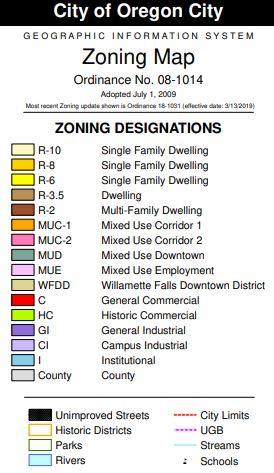
While House Bill 2001 does not require cities to prioritize dense housing near transit, biking, and walking corridors, advocates like myself are working with cities to amend land-use regulations and the comprehensive plan to prioritize dense housing near transit, biking, and walking corridors. I had a meeting yesterday with Laura Terway, who is Community Development Director for the City of Oregon City, to discuss where the City needs to prioritize dense housing in Oregon City. We reviewed the below zoning map. I only took a screenshot of the legend because the map was not legible until zooming in. We found plenty of single-family housing near TriMet’s frequent bus service. We plan to review whether to upzone this single-family housing to transit-oriented development (TOD). House Bill 2001 requires the City to allow missing middle housing in most areas that are currently zoned for single-family housing, but the Oregon Legislature decided to allow local jurisdictions to decide where and how to design the missing middle housing. Since we want the public to be educated about their housing and transportation choices, I shared this 2015 missing middle housing report that a PSU Master of Urban and Regional Planning (MURP) team created for the City of Tacoma, WA.

Oregon City Zoning Legend

Source: https://www.orcity.org/maps/zoning-map

I am a transportation planner and specialized in transportation planning at PSU, so I am out of my comfort zone advocating for housing and land-use changes. Since I consider myself a lifelong learner, I am excited to learn more about land-use planning and zoning through my new advocacy work.

Potential Political and Public Resistance to Missing Middle Housing

I am aware that I likely have a minority viewpoint in Oregon City. While most of my Portland friends are YIMBYs (Yes In My Back Yard), I have met few YIMBYs in Oregon City. I believe most Oregon City residents are NIMBYs (Not In My Back Yard). Even though HB 2001 requires Oregon City to allow missing middle housing, it does not require Oregon City to amend land-use regulations and the comprehensive plan to prioritize dense housing near transit, biking, and walking corridors. While there are many PSU MURP alumni on the planning staff for the City that agree with my YIMBY perspective, we expect to encounter political and public resistance when we try to implement amendments to land-use regulations and the comprehensive plan.

Since I know companies are biased to their viewpoint, I was hesitant to share Redfin’s June 2019 housing density survey results. Redfin commissioned a survey of 2,929 US residents who bought or sold a primary residence in the last year or plan to in the next year. 71.5% or 2,095 of the respondents identified as White or Caucasian, 345 identified as black or African American, 206 identified as East Asian or Asian American and 283 identified as Latinx or Hispanic American. According to the survey results,

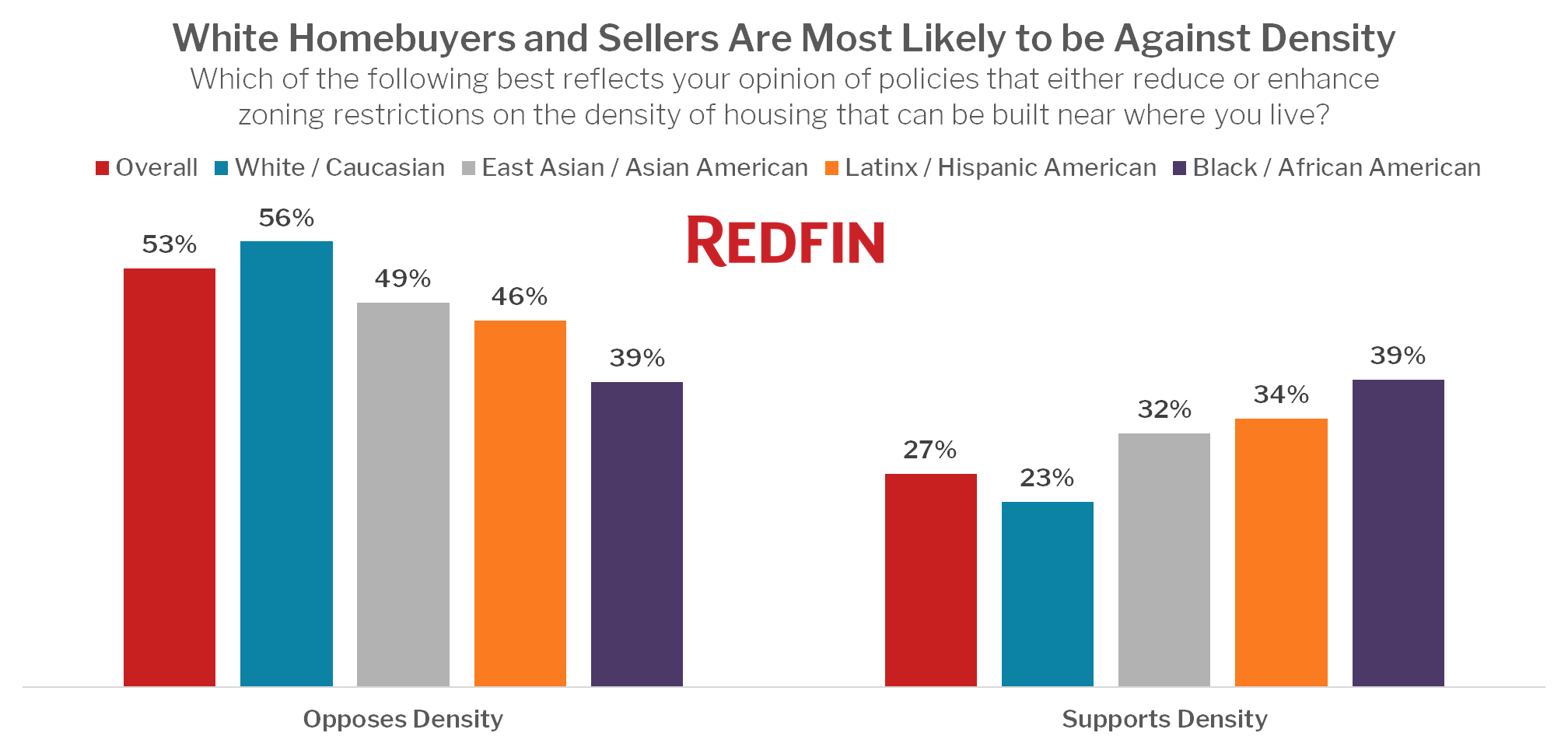
53 percent of total respondents oppose housing density near where they live; 27 percent support policies that enable it.

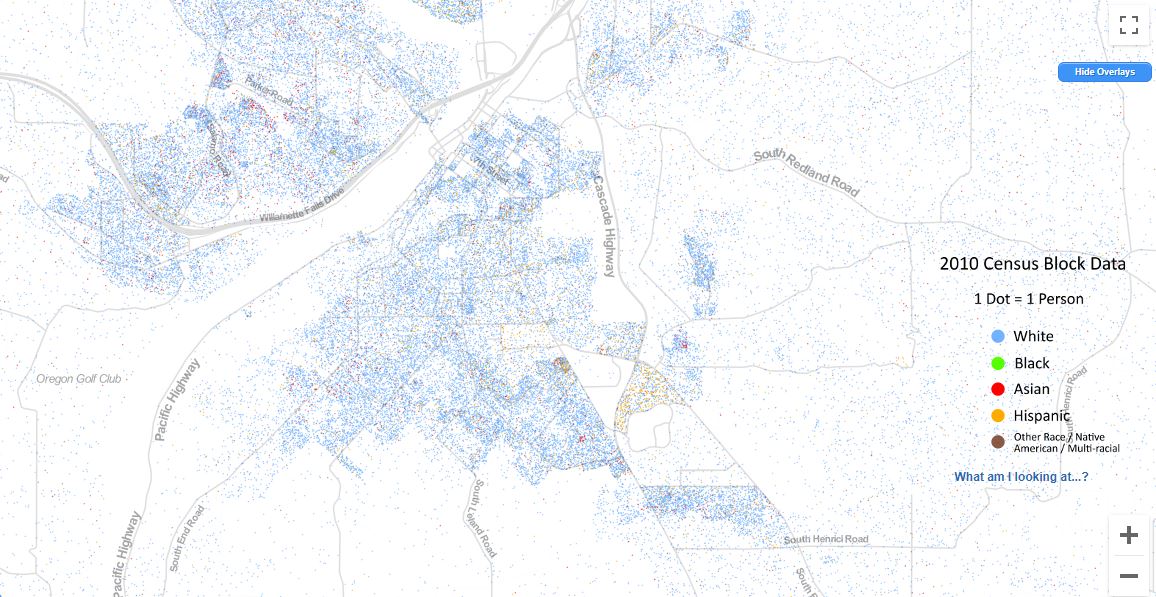
Redfin filtered the survey results by race. Before I share these results, I want you to remember that Oregon City is mostly White. As of the 2010 Census, Oregon City was 91.1% White.

Oregon City Race Map

Racial Dot Map of Oregon City. Source: https://demographics.virginia.edu/DotMap/index.html

56% of White respondents oppose housing density near where they live; 23% of White respondents support housing density near where they live.

Redfin-survey-zoning-density-by-race_2019-06

Source: https://www.redfin.com/blog/high-density-housing-sentiment-by-race/

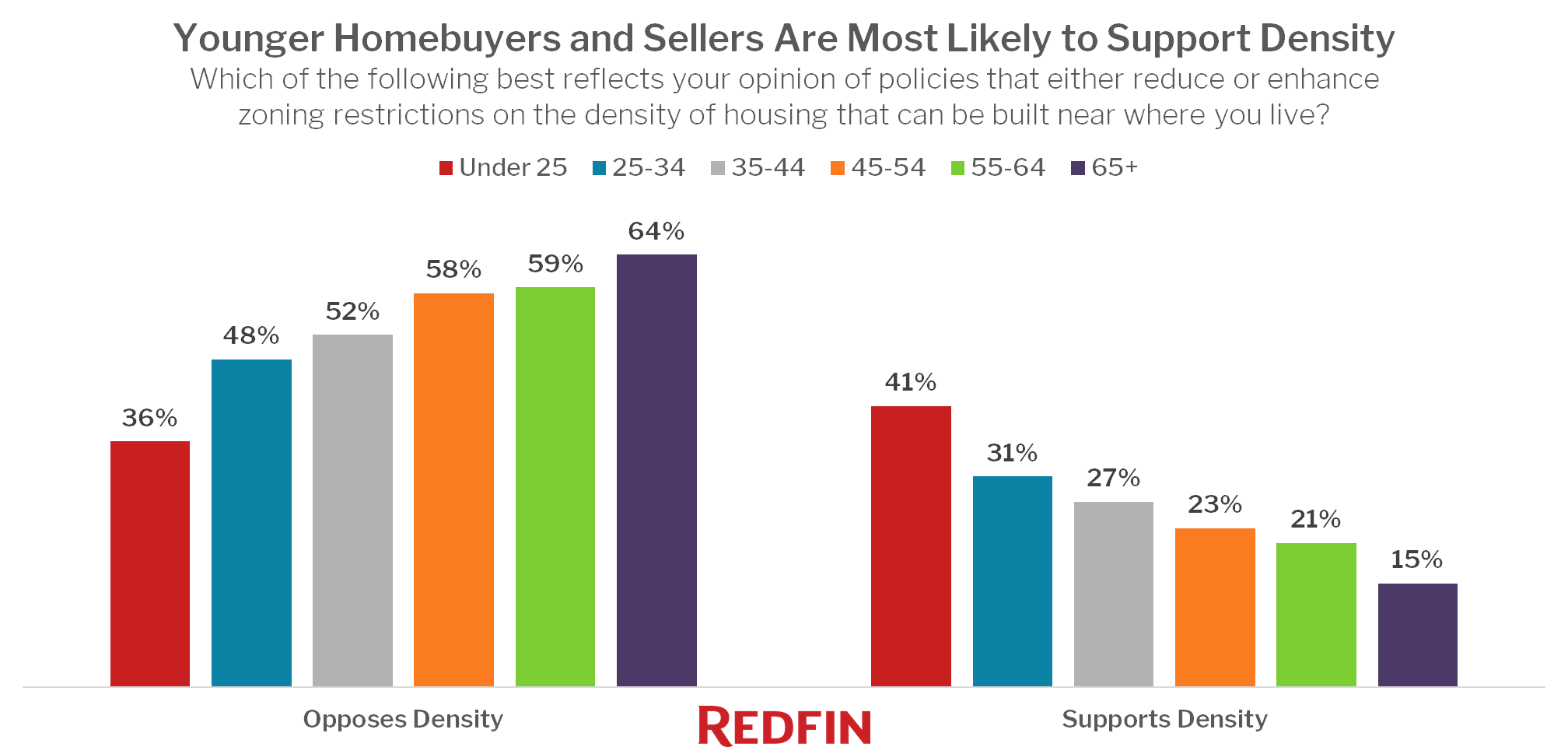
Since I am trying to connect with other YIMBYs in Oregon City, the below survey results confirm what I already expected. Younger homebuyers and sellers are more likely to support housing density near where they live than older homebuyers and sellers.

Redfin-survey-zoning-density-by-age_2019-06

Source: https://www.redfin.com/blog/high-density-housing-sentiment-by-race/

I plan to publish future blog posts to update you on my experience advocating for missing middle housing near transit, biking, and walking corridors. Is there anything specific that you would like me to blog about?

AdvocacyAdvocateAffordable HousingBikingDensityHB 2001House Bill 2001HousingHousing AffordabilityHousing DensityLand UseLand Use PlanningLegislationLifelong LearningMapMappingMissing MiddleMissing Middle HousingNIMBYOregonOregon CityPlanningPoliticsPublic EngagementSurveytransitTransit-Oriented DevelopmentTransportationTransportation PlanningWalkingYIMBYZoning

Returning to Work in the Public Sector

February 22, 2018Ray Atkinson, AICP (he/him) 1 Comment

After five intense months searching for a new job, I’m excited and nervous to share that I’m returning to work in the public sector as a full-time, temporary Urban Planner I at the City of Alexandria, VA. I previously worked in the public sector as a Parks Planning Intern at Oregon Metro (MPO for Portland region), Planning Intern at the Town of Davidson, NC, and Planning Intern at Charlotte DOT. The temporary Alexandria job starts tomorrow, February 23 and ends on June 29, 2018, so I’m still searching for a permanent job. While I’m stressed about still having to search for a permanent job, I’m excited and nervous to be working a full-time planning job again.

As an Urban Planner I at the City of Alexandria, I’ll help lead the planning, execution, and follow-up for a five-day intensive community planning charrette for the Route 1 South Housing Affordability Strategy. You can learn more about this project here. The charrette is Monday, February 26-Friday, March 2 from 7am-9pm, so I’ll be working 70 hours (includes breaks) during my first full week! The below video explains what will be discussed at the charrette.

R1SFlyer020518

While I’m aware of housing affordability issues, I didn’t take a housing policy course at UNC Charlotte or Portland State University because I was focused on transportation planning courses. I’m excited and nervous to expand my knowledge and work experience to housing policy. Since active transportation projects often cause housing to be more expensive and I still want to be an active transportation planner, I’m looking forward to learning new tools I can use as an active transportation planner to help resolve housing affordability issues.

Affordable HousingAlexandriaAutomobile dependenceCharretteEducationHousingHousing AffordabilityJobLearningPublicPublic EngagementTransportationTransportation PlanningUrban DesignUrban PlanningVirginiaWork

Vocal Advocacy to Mapping Advocacy

April 29, 2017Ray Atkinson, AICP (he/him) 1 Comment

While adjusting from being a full-time graduate student to my first full-time, permanent job over the past six months has been a learning experience, my toughest learning experience has actually been learning how to still be an advocate without risking my dream job. In a perfect world, “I’m speaking as a resident of Arlington County and not as a consultant for Arlington County” should be enough for me to keep being a vocal advocate without risking my dream job. As this post shows, my first documented time of being a vocal advocate was in January 2009, which was during my senior year of high school. Since we don’t live in a perfect world, I need to be more careful of how I approach my advocacy work.

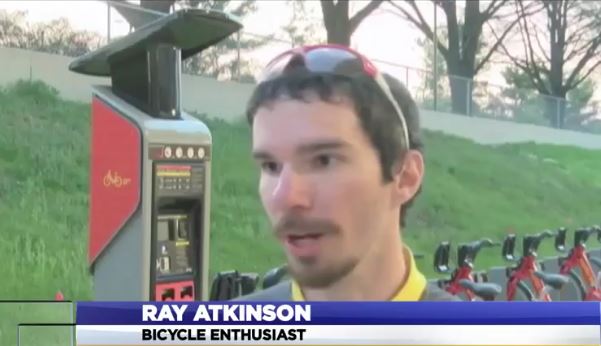
This interview with a local reporter about a new Capital Bikeshare station at the Shady Grove Metro Station is a great example. I told the reporter that I was only willing to be interviewed if he interviewed me as a cyclist and not as a consultant for Montgomery County. Even though the reporter followed through on my request, my boss asked me to not do any more interviews and to refer reporters to the County’s Public Information Officer. My boss also said I represent MetroBike, Capital Bikeshare, and our clients at all times, so it doesn’t matter whether I tell the reporter to interview me “as a cyclist and not as a consultant for Montgomery County”.

Capital Bikeshare Interview

Source: Ray’s interview with Michael Gordon

While my boss has trusted me to understand how to be a careful and aware vocal advocate at public meetings, my friends and family have suggested that being a vocal advocate isn’t worth the risk of potentially losing my dream job. Since I agree with my friends and family, I’m experimenting with another advocacy approach that I’m calling mapping advocacy.

I’m planning to silently (no risk of being interviewed or speaking at public meeting) advocate for a better regional trail system in the DC region by using my GIS knowledge, skills, and abilities and partnering with two DC-based non-profit organizations, which are the Rails-to-Trails Conservancy (RTC) and Washington Area Bicyclist Association (WABA). WABA launched the Capital Trails Coalition in 2016 and I serve on its Analytics Working Group, so this is how I learned about the project that I’m helping to complete. Full-time employees of both non-profit organizations have offered to request additional help for our project from their organization’s volunteers, so the official name for my new advocacy work may be Public Participation GIS (PPGIS).

Since I haven’t done any complex analysis in QGIS yet, I’m looking forward to learning how to use QGIS to complete the complex analysis needed for the Capital Trails Coalition’s project. As my senior honors thesis from UNC Charlotte shows, I have done this complex analysis in ArcGIS. I no longer have free (included with tuition and fees) access to ArcGIS like I did at UNC Charlotte and Portland State University, so I’ve been learning how to use QGIS.

Assessing Spatial Equity and Accessibility to the Little Sugar Creek Greenway from Ray Atkinson

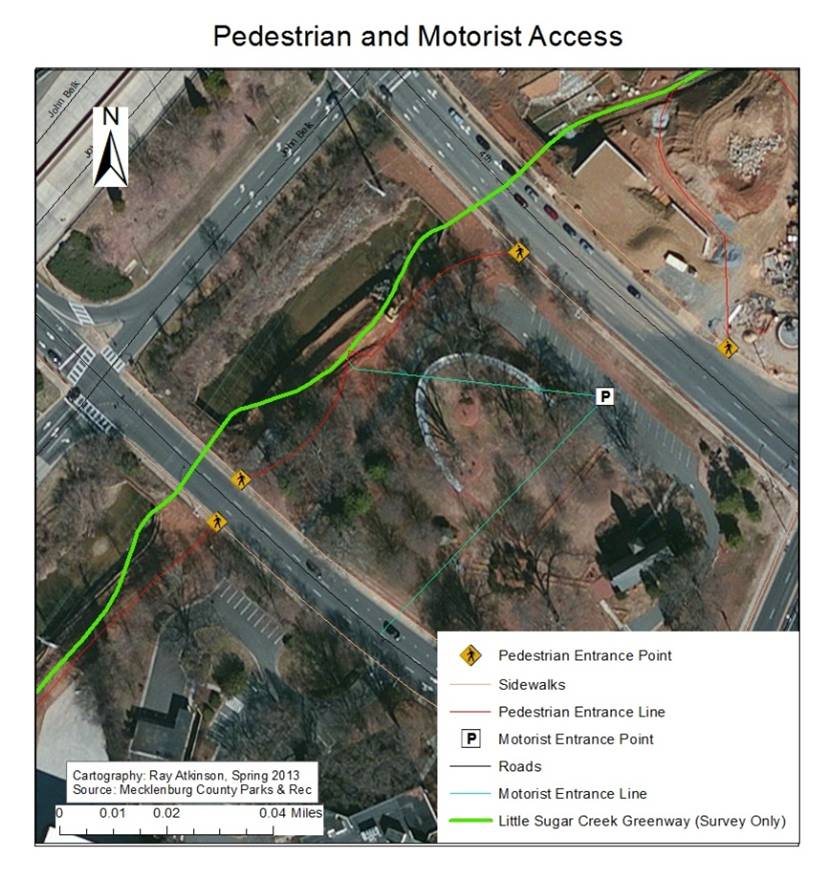
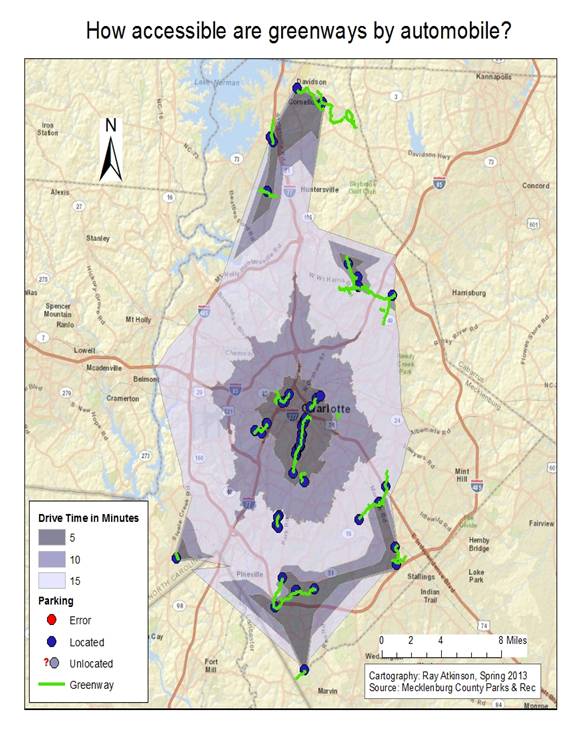
The below examples from my senior honors thesis show the analysis I plan to do for the Capital Trails Coalition. I plan to digitize all the regional trailheads and connect them to the walking, biking, and driving infrastructure networks. This will allow me to create multimodal service areas for all the regional trails in the DC region. I can use the service areas to do further analysis like overlaying the service areas with US Census data. This analysis will allow me to see socioeconomic issues that could be improved with better planning.

Ped&Mot Access (example)

Meck Greenway System_Car Access2

Meck Greenway System_Ped Access (Charlotte only)2

AccessAccessibilityAdvocacyArcGISConnectivityEquityGreenwayInterviewLearningMapMappingPlanningPoliticsPPGISPublicPublic EngagementQGISTrailTrail PlanningTransportationTransportation Planning
Blog at WordPress.com.
Privacy & Cookies: This site uses cookies. By continuing to use this website, you agree to their use.
To find out more, including how to control cookies, see here: Cookie Policy
  • Subscribe Subscribed
    • 0 to 100
    • Join 55 other subscribers
    • Already have a WordPress.com account? Log in now.
    • 0 to 100
    • Subscribe Subscribed
    • Sign up
    • Log in
    • Report this content
    • View site in Reader
    • Manage subscriptions
    • Collapse this bar
 

Loading Comments...
 

    Design a site like this with WordPress.com
    Get started