Ray Atkinson started this blog in 2014 when he moved from his childhood home in Kannapolis, North Carolina, USA (Walk Score of 0) to get his Master of Urban and Regional Planning degree from Portland State University (Walk Score of 100). He has a sustainable transportation lifestyle in Key West, Florida, USA. His email is gismap1@gmail.com. The postings on this site are of my own and don't reflect or represent the opinions of the City of Key West, for which I work. https://www.linkedin.com/in/rayplans
Biking in Memphis has given me a new appreciation for the creative sharrows that I depended on for wayfinding when biking in Portland, OR. Since I have heard many bike advocates throughout the US dismiss paint as not safe enough bike infrastructure, I wanted to share how paint can actually be used to improve the safety of bike infrastructure. I have learned during my first seven months biking in Memphis that many people, especially “interested but concerned” cyclists, are unaware of safer neighborhood routes to avoid biking on dangerous highways. I believe a simple marking like a sharrow flower could provide the crucial, life-saving wayfinding that they need to find the safer neighborhood routes. As a feminist, I also believe this design could encourage more women to bike because women usually need to feel safer than men. Do you agree?
Sharrow Flower
I am trying to find an example of a sharrow flower in Memphis. Since I have not found a location so far, I am likely working on installing Memphis’ first sharrow flower. While I can’t share the location until the project is completed, I am excited to see how this project improves bike wayfinding in Memphis. I used to depend on sharrow flowers in Portland to direct me on how to stay on safer neighborhood bike routes, which are called neighborhood greenways. I want to create a similar neighborhood greenway system in Memphis. The low-hanging fruit to create this is to install sharrow flowers at intersections to connect the existing sharrows.
Another low-hanging fruit idea to create a neighborhood greenway system in Memphis is to add way-marking sharrows. These sharrows would help direct cyclists at T-intersections and other unusual wayfinding gaps in the bike network. Memphis usually puts straight sharrows on every block, so using way-marking sharrows would be a new approach.
Future Blog Post
I need to leave for an evening event. I plan to add more to this post later. Hopefully, I will be able to start writing more soon about the Safe Streets and Roads for All Safety Action Plan that I am managing.
Due to May being National Bike Month and National Mental Health Awareness Month, I want to combine my usual “The City at Eye Level” post with advocating for breaking down the silos between National Bike Month and National Mental Health Awareness Month. While I am spotlighting these awareness months that occur in May, I honestly have difficulty supporting the effort to create awareness months because biking and mental health issues should not be focused on only in May. I also question the need for awareness months because is there a National Car Month?
The closest awareness months I could find to a National Car Month are the Car Care Council’s National Car Care Month in April and Fall Car Care Month in October. Since these car care months focus on car care and preventative maintenance, they do not focus on encouraging more people to shift from another mode of transportation to driving. Could National Bike Month and National Mental Health Awareness Month no longer be needed someday because American culture views them as normal aspects of our culture, like driving a car? I will keep dreaming and advocating for an American culture to exist like this someday!
Source: Car Car Council
Breaking down the silos between National Bike Month and National Mental Health Awareness Month
Even before American culture reaches the point where biking and helping people with mental health are normal aspects of our culture, I feel an easier and faster milestone will be breaking down the silos between National Bike Month and National Mental Health Awareness Month. As the below tweet by the League of American Bicyclists shows, National Mental Health Awareness Month is not even mentioned in their tweet. While celebrating bike joy could be interpreted as celebrating how biking improves mental health through bringing people joy, mental health is still not explicitly stated in the tweet. The promotional materials for National Bike Month on the League of American Bicyclists’ website also do not mention National Mental Health Awareness Month.
— League of American Bicyclists (@BikeLeague) May 1, 2023
In addition to understanding the need to break down these silos, I hope by the end of this post you will understand the important connection between slowing down and improved mental health. Before I share my personal experience with this connection, I want to share results from this 2017 research study (the article is from 2019 but the research study is from 2017) that support what I have been writing. As the below infographic shows, a 2017 research study on commutes and happiness in Portland, OR found that happiness goes down with the length of a person’s commute, except for cyclists. Those who bike to work were happy no matter the length of their biking commute. 828 individuals in Portland, OR were surveyed. From these surveys, researchers measured commute well-being using a composite score.
While this 2014 British research study does not have an infographic, I like how it provides longitudinal evidence from eighteen waves of the British Household Panel Survey. Since walking was excluded from the Portland research study, I wanted to share the below quote from the British research study.
Our main observation of a positive association between active commuting and wellbeing was supported by four distinct groups of analyses…Furthermore, the commuting time analyses showed a positive relationship between time spent walking and wellbeing which, together with the observed increased effect sizes as participants with shorter commutes were progressively excluded from the first group of analyses, indicate a dose–response relationship.
I realize the research study results that I shared are focused on commuting. Since the below infographic shows how stress varies depending on the type of bike, which is important for my experience biking to and from Sebastopol, I choose to ride an upright bike to reduce stress and load on my neck and lower back. Many recreational cyclists ride racing bikes, so I would be curious to see how the severe stress and load on their necks and lower back impact how they would respond to a research study on the stress of biking. Do you think recreational cyclists are as happy, relaxed, and comfortable as bike commuters?
Barriers to slowing down when accessing and enjoying Sebastopol
Well, I finally made it to discussing my April 29th Sebastopol daycation. The below map shows where Sebastopol is in relation to the rest of California. A variety of barriers prevented me from slowing down enough to enjoy my daycation.
The biggest barrier was the very limited train schedule. Since my e-bike does not fit on the bus, I had to wait until the first northbound SMART train departed Petaluma at 10:12am. I rushed on my e-bike instead of enjoying the beautiful ride on a trail from Santa Rosa to Sebastopol. I missed most of the Apple Blossom Parade because it started at 10am. While I probably should have paid for a hotel room for the night so I could enjoy dinner and the rest of the evening in Sebastopol, I decided to rush back to Santa Rosa to catch the last southbound SMART train that departed at 6:05pm. The later Saturday service started in May, so the 8:12pm trip was not available in April. Instead of feeling relaxed and enjoying a slow bike ride, I felt the need to rush to and from Sebastopol.
I have to use about 40 hours of PTO before it expires at the end of June. Since the rural areas in the Central Coast do not have connected and reliable transit services, I decided to plan a car-free vacation to Eureka with day trips to Redwood National Park. Due to Redwood National Park not having extensive public transit service, I am researching other ways to access the trailheads. Assuming the battery can last long enough, I may ride an e-bike rental from Eureka to the park, charge the battery, and then ride it back to Eureka. Hopefully, the battery does not take several hours to charge like my personal e-bike battery. I wish e-bike batteries would charge as fast as fueling a gas-powered car. While I have not refueled a car at a gas station recently, I believe cars can be refueled within a few minutes. I look forward to blogging more about this vacation.
While I debated whether to devote an entire post to how this 2012 issue at UNC Charlotte relates to my current accountability and transparency issue at Unitarian Universalists of Petaluma, I decided that sharing a brief update here is enough. This is an ongoing issue at my church, so I am not going to publicly share specifics. I feel the below quote from Stephan Hoche is powerful enough that it needs to be spotlighted in my blog. I am thankful that Stephan and I are still close friends despite no longer living in the same state. He has been supporting me through my current issue.
“It’s interesting why they have overlooked them for so long. Basically it seems like UNC Charlotte has been enabling corrupt politicians,” said Stephan Hoche, a geography major. “What they are doing is undermining the fabric of society. They have sworn to uphold the rule of law. If you don’t uphold it you should be held accountable and at the very least the SGA Executive Cabinet should give a public apology for their error. They should be made an example of.”
Stephan Hoche’s response to my UNC Charlotte issue
I am currently on the bus to a doctor’s appointment in Santa Rosa, which is located north of Petaluma. Due to this, my post is short. While the post is short, I hope having less to read will mean more readers will engage with my question this time. Since I believe the answer to my question in my last post is simple but unlikely to be achieved in automobile-dependent Petaluma unless the public is willing to change their travel behavior, I wanted to share this fascinating BikePortland article from this week. Specifically, I want your attention to focus on the thoughts below from Portland’s long-serving and leading bike planner. I have also heard “if you build it, they will come” from Petaluma bike planners. Do you think Petaluma will have the same bike commute decline after it builds more bike infrastructure as Portland is currently experiencing despite building more bike infrastructure? How do you think this question relates to my question about the power of slowing down?
Geller, who’s worked in PBOT as a bike planner since the 1990s, shared a presentation with BAC members titled, Why has bicycle commuting/bicycling been in decline in Portland (2014-2019)? (PDF)
“I’m really kind of stumped,” Geller said at the outset of his presentation, “I’ve been in this position for a long time and the general thinking has always been, ‘build it and they will come.’” Geller explained how PBOT built new bike infrastructure each year and the rise in bicycle use followed up until a peak of 7.2% of commute trips in 2014. “But then things changed and the numbers began to drop,” he said.
“The network has grown, the quality of the network has grown,” he continued. “And so this is why it’s kind of confounding because our strategy of ‘build it and they will come’ is just not working anymore.”
BikePortland
Do you see any cyclists riding in this Portland bike lane surrounded by parked and moving cars? Could Portland’s car dependency be preventing people from biking? Source: BikePortland
Future Blog Post
I have other ideas on how to continue writing about the power of slowing down and its impact on creating robust in-person social networks. Do you enjoy reading about my perspective on this topic?
I was invited to present through Zoom at the 2022 GIS for Activism Conference, which was organized by the GIS Club at Portland State University, about how I use my blog to do GIS activism. While I did not start blogging to do GIS activism, I have used my blog sometimes to do GIS activism. I chose to use this 2015 post to show how valuable Level of Traffic Stress analysis can be when creating official bike maps. You can watch a recording of my presentation from this link or the below video.
In case you are wondering how this topic relates to the Copenhagenize Index, I was asked after my presentation whether Portland is the best bike city. I may have answered “yes” if I was asked this question back when I lived in the Charlotte region and before studying abroad in Denmark and the Netherlands. I have studied international cities enough that I need to compare Portland to international cities. While the audience likely expected me to answer “yes” because Portland is frequently ranked by US-based websites as the best bike city in the US, I answered that Portland is not even ranked in the 2019 Copenhagenize Index! Zero cities in the US are ranked in the 2019 Copenhagenize Index!
Source: Copenhagenize Index
Yes, Portland was ranked in the first-ever Copenhagenize Index when it launched in 2011. This was the only time Portland made the list. Since I would not have included Portland in the first list, I hope the methodology was made more rigorous after 2011. Montréal is the only North American city to be ranked in the Copenhagenize Index every time. As these posts show, I visited Montréal in 2017. Vancouver (not Washington) joined Montréal in the Index in 2019. My Portland friends keep encouraging me to visit Vancouver. I may have to ride the bus or fly to Vancouver for the foreseeable future because Amtrak has postponed restoring its Cascades service to Vancouver until at least December.
Next Blog Post
No, presenting at the 2022 GIS for Activism Conference was not the surprise that I mentioned in my previous post. Hopefully, I will be able to share the surprise in my next post. Since I usually go on a vacation during the summer, could the surprise be about a future vacation?
I have been thinking about ways to change traffic signal timing in order to improve safety. While I see the value in making changes to traffic signal timing, I would need to work with a traffic engineer to actually implement my ideas. Due to how retiming traffic signals can produce a high return on investment, I am surprised that I have not blogged about this topic before. Since motorists almost hit me daily when I am walking through a Highway 213 intersection near my home, I should contact the Oregon Department of Transportation (ODOT) about programming Leading Pedestrian Intervals (LPI) within the signal timing of this intersection.
What is a Leading Pedestrian Interval?
The below graphics from this page in the Urban Street Design Guide, which is produced by the National Association of City Transportation Officials (NACTO), show what an LPI is and how it improves safety. Yes, I realize that motorists would be forced to wait for pedestrians to cross the intersection. Legally, motorists are already supposed to yield to pedestrians. While motorists may not support adding an LPI because many motorists are impatient, I hope they see the value of improving intersection safety.
LPIs have been shown to reduce pedestrian-vehicle collisions as much as 60% at treated intersections.
NACTO
Source: NACTO
What is Transit Signal Priority?
Due to how Transit Signal Priority (TSP) has been proven to reduce traffic congestion, I believe this is beneficial to all road users. The below graphic, which can be found here, from the Chicago region’s Regional Transportation Authority shows what TSP is and its benefits. While the Portland region does not have a cool infographic like the Chicago region, I am still excited about Portland’s Rose Lane Project. As someone who works in Clackamas County, which is south of the main area of Portland (a small section of Portland extends into Clackamas County), I wish the Rose Lane Project did not end at Portland’s city boundary. My main concern is how the jurisdictional transfer of 82nd Avenue from ODOT only includes Portland’s section of 82nd Avenue. Clackamas County’s section of 82nd Avenue is still owned by ODOT, which means that ODOT has to agree to any changes.
One element missing from the RTA graphic is a bus-only lane. Thankfully, NACTO includes bus-only lanes on this page about Active Transit Signal Priority within the Transit Street Design Guide. In case you are wondering, painted bus-only lanes are not good enough to create world-class Bus Rapid Transit (BRT). I refer to painted bus-only lanes as BRT-lite mostly because single-occupancy vehicles often end up in painted bus-only lanes. World-class BRT requires physical separation from single-occupancy vehicles. I recommend reading about world-class BRT in other countries.
Source: NACTO
Bike Signal Countdown Timer
While few people bike where I live, I still want to include my wish for bike signal countdown timers in Oregon City. As I wrote in this 2015 post, Portland has one wacht signal (wacht is Dutch for “wait”).
Next Blog Post
The topic of my next blog post is a surprise. Since I usually go on a vacation during the summer, could the surprise be about a future vacation?
I am back in Oregon City, which is a suburb south of Portland, Oregon. While I plan to write a post about what Oregon City and other suburban cities like Tigard (Oregon) and Bellevue (Washington) are and are not doing to provide pedestrians and cyclists with enough space for physical distancing, I want to write one more post about what I experienced during my 24-day workation. As a refresher, this post shows the walking and biking issues that currently prevent people from being able to do physical distancing.
Minneapolis’ Stay Healthy Streets Initiative
One of the reasons I visited Minneapolis is because I wanted to evaluate how Minneapolis planners approached their Stay Healthy Streets Initiative. Since humans make mistakes and no one could have predicted that a Stay Healthy Streets Initiative was needed in 2020, I valued learning from mistakes made in Minneapolis because this allows me to improve how I do my work. While it is difficult to see the below map (WordPress requires me to pay to install a plugin that would allow me to embed the PDF), my evaluation of the Stay Healthy Streets Initiative is focused on West River Parkway, which Stephan and I biked from Minnehaha Regional Park to Downtown Minneapolis.
Source: City of Minneapolis, MN
Confusing Public Info Signs
The below public information signs were both on West River Parkway. Since we wanted to bike on a parkway, the right sign states “Pedestrians Only” on parkways and the left sign states “Cyclists Single-File on Right” on parkways, I was confused about whether Stephan and I could bike on the parkway. We ended up seeing many people biking on West River Parkway, so we decided to bike on the parkway. I need to ask Minneapolis planners why the parkway uses are shown differently on signs along the same parkway.
Photos by Ray Atkinson
Construction Zone Has No Bike Ramp
Stephan and I encountered a construction zone on West River Parkway, which has a trail along the parkway. According to the left public information sign, Minneapolis planners knew that cyclists would be using the parkway because the trail is not wide enough to provide space for physical distancing. Due to this, I thought Minneapolis planners would have required the construction contractor to install a temporary bike ramp between the parkway and trail. While this temporary bike ramp may seem minor, it shows that planners are thinking about how cyclists will travel through a construction zone. I saw temporary bike ramps when I studied abroad in Denmark and the Netherlands.
Photo by Ray Atkinson
Dock Blocked In Minneapolis
Stephan quickly learned what happens when bikeshare users are dock blocked. While the below photo is a bad example, imagine all of the docks being full so no more bikes can be docked. This is called being dock blocked. Since Stephan and I were dock blocked several times, which resulted in us having to pay extra because we didn’t return our bike within 30 minutes, I doubt Stephan is going to use Nike Ride Minnesota (bikeshare) again anytime soon.
Photo of Nice Ride Minnesota by Ray Atkinson
Portland’s Hybrid Bikeshare Approach
While I have not used Portland Biketown (bikeshare) much because I live and work in Oregon City, I doubt it is possible to get dock blocked because Portland Biketown uses a hybrid approach. Since Stephan and I likely would use the pay-as-you-go plan when Stephan visits Portland (I invited him to visit) and this plan has an extra fee for parking at a public bike rack instead of a station, it is important to note that only the annual membership has no extra fee for parking at a public bike rack.
Source: Portland Biketown
Future Blog Post
As you may remember, I need to study for the American Institute of Certified Planners (AICP) Certification Exam. While the coronavirus could postpone my exam again, I am scheduled to take it for my second time on November 21. Lindze and Allison, who both live in North Carolina, are also taking the exam in November. Even though we are three hours apart, our first virtual study session is this Sunday. My Portland area study group has not started meeting yet, so I am thankful to have study partners in North Carolina.
Unfortunately, I will have to reduce blogging while I am studying for the exam. While I already have thoughts about how I want to evaluate Oregon City, Tigard, and Bellevue’s approaches to providing or not providing pedestrians and cyclists with enough space for physical distancing, I am not sure when I will have time to publish the post. In case you are wondering why I am focusing on suburban cities in my next post on physical distancing, I am concerned about how much focus many planners have had on large cities and how few suburban cities are providing pedestrians and cyclists with extra space for physical distancing.
I am also excited to partner with Stephan to write blog posts about the perception of a minority group like American active transportation users (the focus on “American” is important because active transportation users are not a minority in every country) not receiving similar attention as minority racial groups during diversity, equity, and inclusion discussions. I should clarify that I support the attention that racism is receiving. The US has many diversity, equity, and inclusion discussions that need to be discussed.
Stephan and I also discussed partnering on a post about the difference between a crash and accident. The reason why this post is important is because many people believe car crashes are accidents. We will explain why this distinction is important. It appears there are plenty of posts to write later this year and in 2021 when I am done with the AICP Certification Exam in November.
I did not expect to write this post when 2020 started. This shows how quickly the coronavirus has impacted our lives. I wish I knew when the new normal would start so I could create some consistency in my life. While I am not sure how many months physical distancing will last, it appears that physical distancing will shape the new normal. Since I have struggled to maintain at least six feet from other people when walking and biking, how can tactical urbanism be used to quickly and cheaply create spaces that allow people to maintain at least six feet from other people when walking and biking?
What is the issue?
Before share how my question could be answered, I want to make sure you understand the issue that I have been experiencing. Spencer Boomhower at Toole Design Group created this video that shows the issue.
Source: Spencer Boomhower at Toole Design Group
While I do not live in Portland, I have experienced similar physical distancing issues when I visit Portland. Portland’s Safe Streets Report shows some of the major challenges that the Safe Streets Initiative is trying to resolve. The below four issues match four numbers on the below photo.
a need for additional space for walking
a need for wider sidewalks
transit stops without space to safely wait for the next bus
a need to reinforce physical distancing guidance to support local businesses
Source: Portland Safe Streets Report
I believe maps are also a great way to show the issue. I found sidewalk width maps for New York City and Washington, DC. I used to live in the DC region, so I am more familiar with the DC map. As the below map shows, many sidewalks in one of the most walkable cities in the US are too narrow for physical distancing.
While I thought about using Level of Traffic Stress (LTS) maps to show whether bike lanes and trails are also too narrow for physical distancing, LTS analysis is not limited to bike lane and trail width so the LTS maps would not have been accurate for showing whether more space is needed for physical distancing. Due to this, I decided to show the below graphic from this International Transport Forum COVID-19 Transport Brief. The red lane on the left shows the pre-coronavirus existing bike lane. The red lane on the right shows how much space is needed to provide people with enough space for physical distancing.
How can tactical urbanism be used to resolve the issue?
While a long-term solution could be widening sidewalks, the coronavirus is killing people today due to the lack of space to physically distance from other people. I believe quick, inexpensive tactical urbanism projects are needed to resolve this emergency issue. As the below graphic shows, Portland’s Safe Streets Initiative shows how tactical urbanism projects can be used to resolve the emergency issue. Hopefully, some of these short-term projects are converted to permanent projects.
Since I have not seen a Safe Streets Initiative in any Oregon suburbs, I hope Portland’s initiative will encourage other cities throughout the Portland region to create safe spaces for people to do physical distancing. I have been advocating for Oregon City, which is where I live and work, to create a Safe Streets Initiative so I can safely do physical distancing when I am walking, biking, and waiting for the bus. I have learned through my advocacy work that people in suburban cities frequently say “we are not Portland” or “we do not want to become Portland”. Due to this, do you know of any suburban cities that have implemented a Safe Streets Initiative?
Future Blog Post
The coronavirus is also impacting my vacation plans. I was hoping to visit South America for the first time on this two-week Colombia trip. Since the coronavirus forced Colombia to lockdown, I have not scheduled my Colombia vacation yet. Due to being furloughed every Friday until the end of July (extended to Labor Day if the laws get extended) because of the economic crisis created by the coronavirus, I actually have no summer vacation planned because I would be ineligible to receive unemployment benefits from the CARES Act and Oregon Work Share if I took a vacation. While I am nervous about doing my first workation, I plan to continue working remotely as I visit family and friends in Colorado, North Carolina, and Minnesota from after work on July 9-August 2. What would you like to see me write about during my workation?
Is the Clackamas Regional Center ready for dockless bikeshare and scootershare? I have been asking this question ever since I moved back to Oregon last year.
Small Group Activity at APBP Conference
My fellow panelists from Chicago and Ottawa and I wanted to get help from our audience to answer the question. Before I share how we used an interactive group activity, the below photo shows my panel. While we had been emailing for months to coordinate our presentations and group activity, I met Maggie and Matt in person for the first time during the Association of Pedestrian and Bicycle Professionals Conference in Portland. I am not sure when our paths will cross again.
APBP Conference panel from left to right (Ray Atkinson, Maggie Melin from Chicago, Matt Pinder from Ottawa)
We used a small group activity during our session at the Association of Pedestrian and Bicycle Professionals Conference in Portland last Monday. Our audience was large enough to form six small groups of about eight people per group. This was a good amount of groups for my fellow panelists and me to walk around to each group to answer questions and provide guidance.
Small Group Activity at APBP Conference
All of the groups agreed that it is not safe enough to bike or scoot in the Clackamas Regional Center. Since the Clackamas Town Center parking lots should be less stressful to bike and scoot through than being on the surrounding roads, every group pitched using the parking lots to provide a safe route for biking and scooting. Yes, everyone realized that the parking lots are privately owned so the property owner would need to agree to the plan.
Map of Clackamas Regional Center. Created by Ray Atkinson using Google Maps.
Preparing the Clackamas Regional Center for dockless bikeshare and scootershare
Even though I have seen scooters from Portland’s first and second pilot programs ridden and parked in the Clackamas Regional Center, Clackamas County does not have a scooter pilot program. Yes, I already discussed this issue in this April post. While Clackamas Town Center has a Happy Valley address, it is officially in unincorporated Clackamas County so Clackamas County would need to create a scooter program.
I also want to note that I have no solid evidence about how many scooters from Portland’s pilot programs have been ridden and parked in the Clackamas Regional Center. I asked the City of Portland for this data and they would only share the below map, which only shows scooter trips inside the City of Portland. While they realize that scooters from their program have been ridden and parked outside the City of Portland, they have not shared any data to help me with planning efforts in Clackamas County. Since the scooter companies want to avoid fines, they are likely not sharing data about scooter trips outside the City of Portland so the City of Portland likely does not have this data.
As the below document shows, which I found in Ordinance 2174, the City of Milwaukie annexed Harmony Road to SE 80th Avenue and Clackamas Community College (CCC)’s Harmony campus on July 16, 2019. If the City of Milwaukie decides to continue their scooter pilot after the current pilot ends next June and expand it citywide then the newly annexed area will be included in the scooter pilot. While CCC has not taken an official stance on scooters, I have already been talking with the City of Milwaukie so we can both be ready when Milwaukie decides to include Harmony campus in their scooter pilot.
Milwaukie annexed Harmony Road to SE 80th Ave and CCC’s Harmony Campus
Since Harmony campus is adjacent to unincorporated Clackamas County, many CCC and Clackamas Middle College (high school) students, faculty, staff, and visitors travel between Harmony campus and the Clackamas Town Center MAX Station, TriMet buses and the CCC Xpress Shuttle are not reliable enough to compete with the car, and Harmony campus may have to build more car parking if enough people do not shift to other modes, I believe Clackamas County will receive pressure to allow scooters in the Clackamas Regional Center. I am vice-chair of the Clackamas County Pedestrian and Bikeway Advisory Committee (PBAC), so I am helping Clackamas County staff prepare for this pressure. I will be presenting about this potential pressure during the PBAC’s September 3 meeting.
Studying for the American Institute of Certified Planners (AICP) Certification Exam
While I appear to have an endless supply of ideas to blog about, I will need to shift my focus through November on studying for the American Institute of Certified Planners (AICP) Certification Exam. I registered to take this 3.5-hour exam on November 10. Since I did not pass the exam on November 10, I plan to keep studying and take the exam again in May. I will continue blogging after passing the exam.
While I recently returned from a ten-day family vacation, I already feel the need for another vacation because my family vacation was stressful. Exploring Philadelphia was fun but being stuck in my parents’ van for seven days and dealing with my parents’ unwillingness to effectively communicate with their in-laws was not relaxing. It felt awkward to tell my boss and others that I did not have a relaxing vacation because most people assume you return from vacation rejuvenated. The main reason I was willing to give up a relaxing vacation is that both of my grandmas are in their 90s. I am not sure how many more times I will get to share experiences with them.
Thankfully, I still have opportunities to have relaxing vacations. A cool benefit of working at Clackamas Community College is three-day weekends during the summer term, which is from the last week of June through Labor Day. In addition to getting every Friday off during summer term, I only have to work 36 hours Monday-Thursday to get paid for working 40 hours. Since not everyone gets Friday off, I have missed off-campus meetings that are scheduled on Friday. The meeting organizers update me after the meeting so I stay informed.
I found writing this post interesting because I started writing it in 2015. I have 46 draft posts that I have not published. The Willamette Week link I inserted in the 2015 draft no longer sends people to an article about taking the bus to hike in the Portland region. The below photo is from the 2015 article.
Map showing it is possible to hike by using transit
As the below map shows, transit services to the Columbia River Gorge have greatly improved in the past four years. The Columbia Gorge Car-Free website helps me plan my weekend vacations without using a car. While I visited The Dalles for a Transportation Options Group of Oregon meeting, I was not able to stay in The Dalles long enough to really explore.
Map of transit services in the Columbia River Gorge. Source: Gorge TransLink
Since I want to do more than hike in the Columbia River Gorge, I am excited to see that the Historic Columbia River Highway State Trail is almost completed! I will be able to take transit from Portland to the Columbia River Gorge to hike and bike. The below videos explain the history of the 100-year-old Historic Columbia River Highway, what is being done to convert it to a trail, and how the local communities feel this new trail will impact their communities.
Historic Columbia River Highway State Trail. Source: ODOT
I am also excited about the Salmonberry Trail, which will someday allow me to bike from the Portland region to the Oregon Coast.
I also enjoy traveling beyond Oregon. I can use Amtrak, Greyhound or BoltBus take car-free weekend vacations to places like Seattle, Vancouver (BC), and California. I will be presenting on a panel at the Association of Commuter Transportation (ACT) Transportation Demand Management (TDM) Forum in Seattle on November 12-13. This provides me a great opportunity to explore Seattle and Vancouver during the weekend before my presentation. November will be a busy month for me because I will also be taking the American Institute of Certified Planners (AICP) Exam.
Source: Association of Commuter Transportation
Since my 29th birthday is in September and my work projects should be less busy in September because there will be no CCC Xpress Shuttle service most of September, I am thinking about taking a long vacation in September. The PSU Alumni Association’s Young Alumni Travel Program has a nine-day Costa Rica Unplugged tour in September that includes exclusive discounts of up to 15% off per trip! The trip is limited to 18-35-year-olds. I prefer to avoid tourist traps so I enjoyed reading how this trip has “Local Guides who make tourist traps a thing of the past.” The tour starts on a Saturday and ends on a Sunday, so I thought I would only need to take five days off work. Since the tour does not include roundtrip San Jose flights and each flight takes a day, I would need to take seven days off work. Unfortunately, I do not have this many days saved so I will need to think about this trip next year.
I would enjoy learning about how other people plan car-free vacations. Have you tried to plan a car-free vacation? Where did you go? Did the transportation services connect smoothly or did you experience barriers? Would you do it again?
I find it interesting to think about a place before visiting it for the first time. While I had a layover in Philadelphia as I was flying to the British Isles in 2003 (yes, I was 12 years old), I did not leave the airport so this does not count as visiting Philadelphia. I flew to the British Isles through the People to People Student Ambassador Program. Even though I have not really visited Philadelphia, I feel a strong connection to it because I cannot think of a better city to celebrate Independence Day. I also helped plan where to install Indego bikeshare stations in Philadelphia during my internship at Toole Design Group. I did the planning and GIS work in Toole’s Silver Spring, MD office, so I did not visit Philadelphia during this project.
While I know where the Indego stations are, I struggled to decide where to stay in Philadelphia because I wanted to avoid staying in the tourist areas. I wanted to find a racially diverse and affordable neighborhood where I could experience being a local. I finally reserved an Airbnb in the Lower Moyamensing neighborhood in South Philadelphia because this neighborhood appears to be far from the tourist areas and near racially diverse neighborhoods.
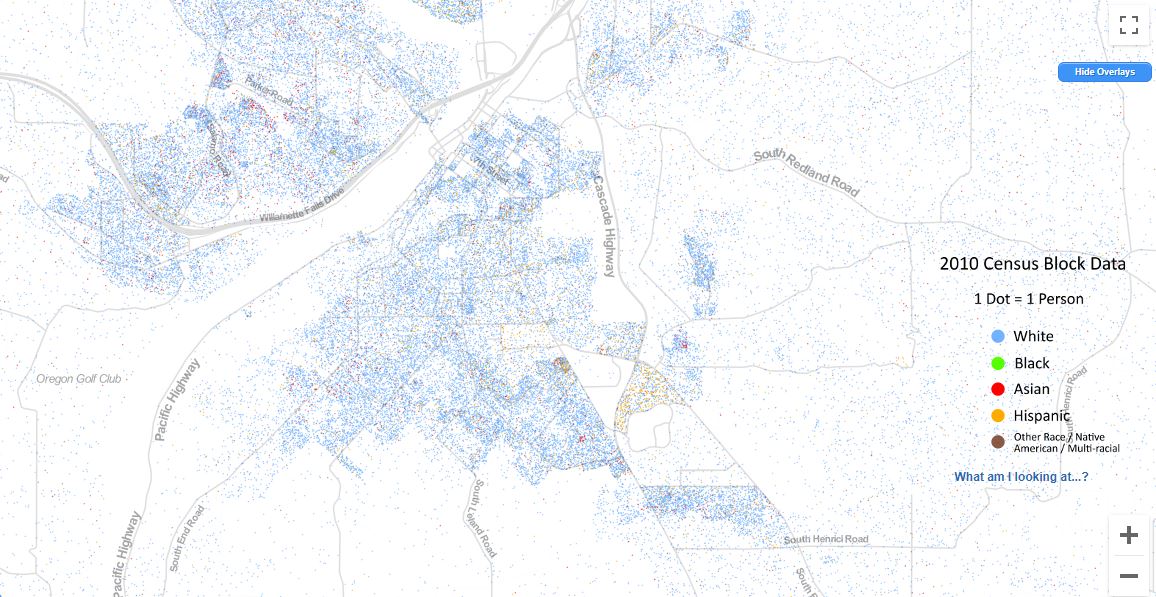
I realize I am white but being surrounded by only white people in Oregon City feels weird and gets exhausting. While I often hate on the South because of the bad political and religious decisions, I miss the South’s racial diversity. Since I have not seen many non-white people for months, I would not be surprised if I experience culture shock in Philadelphia.
I also expect to be shocked by the weather in Philadelphia because the high in Oregon City has only been in the 70s with low humidity. Philadelphia has highs in the 90s with high humidity! Since I was shivering during Portland’s World Naked Bike Ride last Saturday evening, it would have been nice to have warmer weather in Portland. Yes, I biked nude in public through Portland’s streets with 10,000 other cyclists. This was my fourth World Naked Bike Ride. While many people have told me they think it is weird to be naked in public, I enjoy seeing how people decorate their bodies to protest automobile dependency. Since many people have body image issues, it is an amazing experience to feel comfortable enough with friends to be naked together.
It’s getting late and I have to work tomorrow. While I wanted to finish this post before departing on vacation, it appears I will have to finish writing it later.


 0 to 100