


Showing posts with label querytracker. Show all posts
Showing posts with label querytracker. Show all posts
Monday, August 4, 2014
Reasons for a Quick Rejection
QueryTracker is happy to announce a new feature here on the blog. We would like to invite readers to present us with agent and query-related questions and we’ll do our best to find the answers for you. So, if you have any questions, please post them in the comments below.
The first question I’d like to address is from an anonymous QueryTracker member.
What does it mean when I receive an extremely quick rejection to a query?
That’s a good question, and you can actually learn a lot from the time it takes the agent to respond. But before I go into that, I’d like to begin by explaining what a quick response does NOT mean. I’ve heard authors complain that, because they received a rejection in just a few hours or even minutes, that there was no way the agent even read the query. Not true. Think about it. If the agent wanted to blow off queries, why would he respond at all? He wouldn’t. He would just delete the email and move on.
What that quick response is telling you is that your query was so wrong that the agent barely had to think about it. It was an easy rejection. And when I say wrong, I don’t mean there is something inherently wrong with your query. It could be something as simple as your project is not for a genre the agent represents. If that’s the case, why would the agent bother to read any further than the genre declaration? He’ll simply reject it and move on.
There are other things that can be grounds for an instant rejection besides genre. Extremely long or short manuscripts could cause instant rejections, as well as not stating your word count or genre in the query.
So, if you’re getting a lot of quick rejections, take a close look at your query and the agents. Are you sure they represent your genre? Is your word count within the norms for that genre?
If the above points seem to be okay, then you’ll have to dig a little deeper. Is your query letter too long? It should be about a single page. If it gets a lot longer than that, you could be inviting an instant rejection. Or is it too short? If your query doesn’t cover all the key points, the agent probably won’t take the time to ask for more information.
I’m not going to cover the ins and outs of writing a query letter. This is supposed to be a short post after all. But make sure your query looks professional. Odd fonts and text colors can also be grounds for instant rejection. You can learn more about query writing from past blog posts here and here.
Other things that may cause an instant rejection are addressing the query to the wrong agent, including attachments, or not following the agent’s explicit query submission rules.
Does an instant rejection always mean a problem with your query? Nope. Nothing in this business is that cut and dry. But if you seem to be receiving a lot of instant rejections, then you should take a close look at your query.
QueryTracker offers many tools to help you diagnose problems. Take a look at the “Query Response Time” reports for an agent and see if she tends to reply quickly or not. If she normally takes 30 days to respond to a query and you got your reply in 3 minutes, then your query may have one of the problems mentioned above. You can also look at the “Genre Reports” to see if the agent typically rejects projects of your genre. If she does, then that may be the issue with your query as well. You may also want to limit the report range to the last 90 days or less, since agent’s preferences can change over time.
Learn more about viewing QueryTracker Reports.


Wednesday, October 9, 2013
Where The Truths Be Told
Before you send out your query to an agent (or publisher), it’s
important to do the necessary research to reduce the risk of a rejection.
One of the first places to look is the individual’s website. If the agent
doesn’t list your genre/category, he isn’t a good match. Please don’t waste his
time (and yours) by querying him. The exception is if you’ve seen on Twitter
that the agent is suddenly falling over himself for books in your genre. Then
query away.
If you check the Querytracker database and it doesn’t list YA (for
example) as a category the agent is looking for, check the raw data for queries
sent (found with the Premium membership). If you see people have sent queries
for YA and he’s NEVER requested material from any of them, then don’t add
yourself to the list. He’s not interested. Get the hint.
The next thing querying writers tend to do is search writer forums for
information about agents. These forums are great for giving you feedback as to the
expected wait times, and can be super supportive while you wait and wait and
wait to hear back from the agent. The downside is that bitterness lingers in some
of these forums. People understandably don’t like rejections. But because of
the anonymity of these forums, some individuals enjoy spreading bitterness by
attacking agents (or publishers). And unfortunately other like-minded
individuals do the same thing and start saying things that might not
necessarily be true.
If an agent tries to defend himself, the angry folk pull out their pitch
forks and add more negative comments, thereby further besmirching the agent’s
(or publisher’s) reputation. They figure if the agent really is good, then his
clients will stand up for him.
But here’s the deal, his clients are busy with other things. They are
waiting for their books on submission. They are writing their next book. They are
editing the book sold to a publisher. They are promoting their new release. What
they aren’t doing is hanging out on the agent’s forum. They don’t need to
anymore. They have an agent. Their dream agent. The agent who is doing more for
them than is revealed on these forums. Unfortunately you won’t know this
because you only see the negative comments, or the comments that don’t really
tell you much, other than writers are still waiting to hear back on their
queries.
So what can you do when researching an agent to potentially query? You
can look up the agent or publisher on P&E (Preditors & Editors), and
you can talk to writers (offline preferably) about their agents. But not all
writers are going to be willing to talk to you, unless they know you. All you
can do is query the agents who seem like a good choice, based on the interviews
you’ve read and their blog posts and tweets. If the agent does offer
representation, make sure you ask them lots of questions and talk to some of
their clients. You’ll learn more from their clients than you will from the
poisonous grapes who leave negative comments on the forums.
And if you are rejected by an agent or publisher, please be professional
and keep your negative comments to yourself--unless you have proof that the
agent is performing unprofessionally. And in that case, you can fill a
complaint with P&E.
Where do you find your research before querying an agent?

Stina
Lindenblatt @StinaLL writes Young Adult and New Adult
novels. In her spare time, she’s a photographer and can be found at her
blog/website. She is represented by Marisa Corvisiero, and
finds it weird talking about herself in third person. Her debut New Adult contemporary romance, TELL ME
WHEN, will be released Jan. 20, 2014 (Carina Press, HQN).
Monday, July 1, 2013
Giveaways & Lessons from YA Author Elana Johnson
Update: Winners for the giveaways are posted in the 7/12/13 Publishing Pulse.
Eight hundred posts ago, on December 28, 2008, the QueryTracker Blog became a team effort for five aspiring writers. Since then, a lot has changed, both in the makeup of the QTB and in the careers of those aspiring writers. Not everyone in the original team is still writing or seeking publication, but everyone has learned from their time in the trenches. We thought it was time for a series of posts sharing where everyone started, where they are now, and what they learned along the way.
To kick things off, we asked Elana Johnson, author of the YA Possession series (Simon Pulse) to tell us about her writing and publishing journey beginning with her time with the QTB (12/2008 – 7/2010) and bringing us up to date on where she is now!
Elana has graciously agreed to do a couple of giveaways as part of her interview. There are two different prizes, which will go to two different people.
First, one of her books. If you are new to her Possession series, she will send you the first book, Possession If you are already a fan, she will send you the latest in the series, Abandon (published June 2013). If you are in the US, you will receive a hard copy of the book; if you are outside of the US, a digital copy.
Second, Elana is a query-letter expert! She teaches classes across the country and online on how to write a killer query, and she is going to critique one lucky winner's query.
Please see entry instructions at the end of this post.
Where I Started and How QT Helped Me

I spent so much time with QueryTracker, researching agents, critiquing query letters, obsessing and celebrating in the forums, and reading and writing for the QT Blog. I still refer people to QT every chance I get.
When I started writing for the QT Blog, I didn’t have a literary agent. I’d been writing seriously for about a year, and my first project had just met its death in the query trenches. I had another book I was gearing up for querying, and since I loved blogging, taking on the QT blog was something that was natural and enjoyable.
Being part of the QT team gave me the courage to step outside my comfort zone. The first thing I did was co-organize one of the first QT agent opportunities with Joanna Stampfel-Volpe. It was amazing corresponding with agents without trying to pitch them my work. This helped me realize that agents are people too.
Signing with My Agent
I blogged with QT for 11 months before I signed with my agent, Michelle Andelman. During that time, being a QT blogger helped me establish my credibility in the writing world. I’ve been asked to teach at professional conferences based on some of the posts I wrote for the QT blog, and I still have friendships and contacts that I met “way back when” I was blogging at QueryTracker.
Publication
Since then, I’ve released three books (my Possession series –3 full-length novels + 2 short stories— was just completed with the release of ABANDON this past June!), co-launched another group blog (The League of Extraordinary Writers, which is dedicated to science fiction and fantasy), and co-founded the biggest writing conference on the Internet, WriteOnCon.
My Approach to Writing: Then and Now
What has stayed the same? I still blog a couple days a week at my own blog. I’m still with Michelle, and we’re still selling books. I still teach elementary school, and I’m still squeezing writing into the 15 minutes I have before school, or my 30-minute lunch break.
The biggest difference is that now I write under a deadline. I don’t have as much time to get my work up to par—probably the most challenging thing I’ve had to endure in this publishing gig! For those who are unpublished as of yet, enjoy this time to get your craft polished. The possibilities for you are endless. Enjoy the time you have to learn, to grow, and to make mistakes. I still do all of that (it’s not like every word I write comes out golden), but I don’t have as much time to enjoy it as pre-published authors do.
I feel like I’ve come a long way in my personal confidence. When I first started at QT, I thought, “Why would anyone listen to what I have to say?” Now, I teach classes at a variety of conferences—I’ve become the expert! I’ve been working as a freelance query letter writer for a few years, and recently went out on my own in this venture. I’ve even taken my in-person-only query letter writing workshop and launched it on the Internet.
I’m also an independent publicist, something I really enjoy. I’ve always liked doing the marketing side of writing, setting up promotions and chats and giveaways for my own books. It seemed natural to take my contacts and skills and transfer them to another author’s book. I love working with authors and book bloggers in this capacity. (You can find out about my blog tours and blitzes, as well as cover reveals, here.)
Advice to Unpublished Writers
I don’t believe the unpublished should rush into publishing. Really take the time to perfect your craft, and when you do, the rewards will come. Publishing is not a race.
My best advice for those looking to promote their books is to be as active as you can in the online community. Recently, someone asked me how I met all the book bloggers I know. I honestly couldn’t answer. It’s not like there was one specific event where I met everyone. It was something that happened over the years as I read their blogs, clicked over to their cover reveals, followed them on Twitter, and emailed them about my own books. So if you’re looking to make contacts in the publishing world, you have to be willing to spend time where publishing people hang out—and the QT forum is a great place to do that!
When the original QTB team interviewed agents and authors, we often did something we called a Fast Five—five fun, quick questions. For a while the question of the day was “Courier or Times New Roman?” but we had to move on when it became clear that the industry standard had become TNR! So here is a fresh Fast Five for our alum:
Fast Five with Elana Johnson
Entering the Giveaways
 Carolyn Kaufman, PsyD's book, THE WRITER'S GUIDE TO PSYCHOLOGY: How to Write Accurately About Psychological Disorders, Clinical Treatment, and Human Behavior helps writers avoid common misconceptions and inaccuracies and "get the psych right" in their stories. You can learn more about The Writer's Guide to Psychology, check out Dr. K's blog on Psychology Today, or follow her on Facebook!
Eight hundred posts ago, on December 28, 2008, the QueryTracker Blog became a team effort for five aspiring writers. Since then, a lot has changed, both in the makeup of the QTB and in the careers of those aspiring writers. Not everyone in the original team is still writing or seeking publication, but everyone has learned from their time in the trenches. We thought it was time for a series of posts sharing where everyone started, where they are now, and what they learned along the way.
To kick things off, we asked Elana Johnson, author of the YA Possession series (Simon Pulse) to tell us about her writing and publishing journey beginning with her time with the QTB (12/2008 – 7/2010) and bringing us up to date on where she is now!
Elana has graciously agreed to do a couple of giveaways as part of her interview. There are two different prizes, which will go to two different people.
First, one of her books. If you are new to her Possession series, she will send you the first book, Possession If you are already a fan, she will send you the latest in the series, Abandon (published June 2013). If you are in the US, you will receive a hard copy of the book; if you are outside of the US, a digital copy.
Second, Elana is a query-letter expert! She teaches classes across the country and online on how to write a killer query, and she is going to critique one lucky winner's query.
Please see entry instructions at the end of this post.
Where I Started and How QT Helped Me

I spent so much time with QueryTracker, researching agents, critiquing query letters, obsessing and celebrating in the forums, and reading and writing for the QT Blog. I still refer people to QT every chance I get.
When I started writing for the QT Blog, I didn’t have a literary agent. I’d been writing seriously for about a year, and my first project had just met its death in the query trenches. I had another book I was gearing up for querying, and since I loved blogging, taking on the QT blog was something that was natural and enjoyable.
Being part of the QT team gave me the courage to step outside my comfort zone. The first thing I did was co-organize one of the first QT agent opportunities with Joanna Stampfel-Volpe. It was amazing corresponding with agents without trying to pitch them my work. This helped me realize that agents are people too.
Signing with My Agent
I blogged with QT for 11 months before I signed with my agent, Michelle Andelman. During that time, being a QT blogger helped me establish my credibility in the writing world. I’ve been asked to teach at professional conferences based on some of the posts I wrote for the QT blog, and I still have friendships and contacts that I met “way back when” I was blogging at QueryTracker.
Publication
Since then, I’ve released three books (my Possession series –3 full-length novels + 2 short stories— was just completed with the release of ABANDON this past June!), co-launched another group blog (The League of Extraordinary Writers, which is dedicated to science fiction and fantasy), and co-founded the biggest writing conference on the Internet, WriteOnCon.
My Approach to Writing: Then and Now
What has stayed the same? I still blog a couple days a week at my own blog. I’m still with Michelle, and we’re still selling books. I still teach elementary school, and I’m still squeezing writing into the 15 minutes I have before school, or my 30-minute lunch break.
The biggest difference is that now I write under a deadline. I don’t have as much time to get my work up to par—probably the most challenging thing I’ve had to endure in this publishing gig! For those who are unpublished as of yet, enjoy this time to get your craft polished. The possibilities for you are endless. Enjoy the time you have to learn, to grow, and to make mistakes. I still do all of that (it’s not like every word I write comes out golden), but I don’t have as much time to enjoy it as pre-published authors do.
I feel like I’ve come a long way in my personal confidence. When I first started at QT, I thought, “Why would anyone listen to what I have to say?” Now, I teach classes at a variety of conferences—I’ve become the expert! I’ve been working as a freelance query letter writer for a few years, and recently went out on my own in this venture. I’ve even taken my in-person-only query letter writing workshop and launched it on the Internet.
I’m also an independent publicist, something I really enjoy. I’ve always liked doing the marketing side of writing, setting up promotions and chats and giveaways for my own books. It seemed natural to take my contacts and skills and transfer them to another author’s book. I love working with authors and book bloggers in this capacity. (You can find out about my blog tours and blitzes, as well as cover reveals, here.)
Advice to Unpublished Writers
I don’t believe the unpublished should rush into publishing. Really take the time to perfect your craft, and when you do, the rewards will come. Publishing is not a race.
My best advice for those looking to promote their books is to be as active as you can in the online community. Recently, someone asked me how I met all the book bloggers I know. I honestly couldn’t answer. It’s not like there was one specific event where I met everyone. It was something that happened over the years as I read their blogs, clicked over to their cover reveals, followed them on Twitter, and emailed them about my own books. So if you’re looking to make contacts in the publishing world, you have to be willing to spend time where publishing people hang out—and the QT forum is a great place to do that!
When the original QTB team interviewed agents and authors, we often did something we called a Fast Five—five fun, quick questions. For a while the question of the day was “Courier or Times New Roman?” but we had to move on when it became clear that the industry standard had become TNR! So here is a fresh Fast Five for our alum:
Fast Five with Elana Johnson
- Mac or PC? Macs rule!
- Favorite Social Media Platform? Um, Facebook? Yeah, let’s go with Facebook.
- Writing Pet Peeve? Grammar. I always sacrifice grammar for voice and style, baby!
- Guilty Pleasure? Mini chewy sweet tarts
- Can’t Live Without? Lightning-fast Internet!
- Comment on this post and tell us something YOU have learned from being part of the QueryTracker community. This can be from the QueryTracker Blog, the main QueryTracker site, or the QueryTracker forums. By commenting, you give us permission to quote you any of the aforementioned QueryTracker sites.
- We will take comment entries through Wednesday, July 10th.
- Winners will be chosen at random and announced on Friday, July 12th in the Publishing Pulse. Please watch for this announcement, as I (Carolyn) will need the winners to contact me. I will include instructions on how to do so in that Publishing Pulse.
 Carolyn Kaufman, PsyD's book, THE WRITER'S GUIDE TO PSYCHOLOGY: How to Write Accurately About Psychological Disorders, Clinical Treatment, and Human Behavior helps writers avoid common misconceptions and inaccuracies and "get the psych right" in their stories. You can learn more about The Writer's Guide to Psychology, check out Dr. K's blog on Psychology Today, or follow her on Facebook!
 Wednesday, November 7, 2012
Learning to Love the Pitch
By Sarah Pinneo | @SarahPinneo
 I have often pondered the question of why QueryTracker is so effective at bringing writers together as a community. My favorite theory is that the querying process is a career bottleneck which forces everyone to learn a new and uncomfortable skill. When I recommend QueryTracker to people I meet, I often refer to it as a friendly "writers' ghetto." It's a place where whining about the query process is accepted, even encouraged. We encourage each other, we share information, we comfort those who hit road blocks. We gently steer first draft queries toward greatness, and we pass out tissues to those who bemoan the impossibility of compressing the nuance and greatness of their work into two solid paragraphs.
And while everyone deserves an occasional wallow, my opinion about the painfulness of query writing has evolved. A few years ago, as I strolled up a New York City avenue with my dear friend Abbey, she gave me a crumb of advice she’d once received during her formative years as an actress. And Abbey’s wisdom entirely changed my opinion about querying.
“Listen, kid,” she had been told. “If you want to be an actor, you’d better love auditioning. Because that’s what 90% of successful working actors do with most of their days—they audition. They wait in line. And then they get up in front of strangers and perform with a smile, and then they do it again the next day.”
The truth of it hit me like a wobbly stack of unsold manuscripts. Authors are in precisely the same boat. Pitching is a part of every writer’s life. And it doesn't go away once you land an agent.
Eventually I got my wish. By querying (and querying, and querying) I landed a terrific agent who sold my debut novel. Cue the champagne and streamers. But then last year we agonized together over the catalog copy. Later, the back cover copy. Then, I pitched other authors for blurbs to bedeck my shiny new cover. I pitched book bloggers who agreed to review it. And then? I wrote to every bookseller I've ever known, I pitched media outlets who might cover me.
I’m sure you've spotted the theme by now. The querying never stops. But—and it was a big surprise—I finally began to enjoy it.
Perhaps I shouldn't mention that I also enjoy preparing my own taxes. But my reasoning is the same. Who wouldn't want to devote a little extra time to really getting that right? In the same way that an accountant couldn't possibly care as much as I do about my bottom line, nobody knows my work as well as I do.
Which is just as well, because the pitching never ends. Having one success doesn't mean you’ll never write another pitch. If your agent believes your next book could be part of a two or three book deal, you’re going to have to write a few punchy paragraphs about the next books in the series.
Pitching, like taxes, is part of (the publishing) life. This is something your agent understands too. The first time your agent reads your pitch, she’s also writing her own in her head. Ditto your editor--she's going to have to sell your book to the acquisition meeting, and then later to her sales force. Agents and Editors are query writing professionals. If they can do it, so can you.
So we might as well stop hating pitching, and start to see it for the lifeblood that it is. A query, like an audition, is not an obligation, it's a chance to impress. So step up on that stage and give them your best Hamlet. To read or not to read. That is the question.
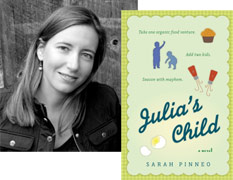
Sarah Pinneo is a novelist, food writer and book publicity specialist. Her most recent book is Julia’s Child. Follow her on twitter at @SarahPinneo.

And while everyone deserves an occasional wallow, my opinion about the painfulness of query writing has evolved. A few years ago, as I strolled up a New York City avenue with my dear friend Abbey, she gave me a crumb of advice she’d once received during her formative years as an actress. And Abbey’s wisdom entirely changed my opinion about querying.
“Listen, kid,” she had been told. “If you want to be an actor, you’d better love auditioning. Because that’s what 90% of successful working actors do with most of their days—they audition. They wait in line. And then they get up in front of strangers and perform with a smile, and then they do it again the next day.”
The truth of it hit me like a wobbly stack of unsold manuscripts. Authors are in precisely the same boat. Pitching is a part of every writer’s life. And it doesn't go away once you land an agent.
Eventually I got my wish. By querying (and querying, and querying) I landed a terrific agent who sold my debut novel. Cue the champagne and streamers. But then last year we agonized together over the catalog copy. Later, the back cover copy. Then, I pitched other authors for blurbs to bedeck my shiny new cover. I pitched book bloggers who agreed to review it. And then? I wrote to every bookseller I've ever known, I pitched media outlets who might cover me.
I’m sure you've spotted the theme by now. The querying never stops. But—and it was a big surprise—I finally began to enjoy it.
Perhaps I shouldn't mention that I also enjoy preparing my own taxes. But my reasoning is the same. Who wouldn't want to devote a little extra time to really getting that right? In the same way that an accountant couldn't possibly care as much as I do about my bottom line, nobody knows my work as well as I do.
Which is just as well, because the pitching never ends. Having one success doesn't mean you’ll never write another pitch. If your agent believes your next book could be part of a two or three book deal, you’re going to have to write a few punchy paragraphs about the next books in the series.
Pitching, like taxes, is part of (the publishing) life. This is something your agent understands too. The first time your agent reads your pitch, she’s also writing her own in her head. Ditto your editor--she's going to have to sell your book to the acquisition meeting, and then later to her sales force. Agents and Editors are query writing professionals. If they can do it, so can you.
So we might as well stop hating pitching, and start to see it for the lifeblood that it is. A query, like an audition, is not an obligation, it's a chance to impress. So step up on that stage and give them your best Hamlet. To read or not to read. That is the question.

Sarah Pinneo is a novelist, food writer and book publicity specialist. Her most recent book is Julia’s Child. Follow her on twitter at @SarahPinneo.
Monday, November 5, 2012
A New QueryTracker is Coming – Sneak Peek
Well, it's that time again. The current version of QueryTracker has been up and running for over
three years now, and that’s a long time for the technology world. Lot’s of
things have changed about the Internet since then, and it is time for
QueryTracker to adopt some of those changes.
But "change" isn't always good. And change for change's sake is never good. That's why a key requirement of the upgrade was to improve QT without
changing things too much. Sure, there's a new look, but that's just cosmetic and I don't think it will take long for you to get used to that.
In fact, most of the biggest changes are under the hood and out of site, such as improvements in speed. Some pages are loading up to ten times faster than the current version.
Another major area of focus was on convenience. Many of the operations
regularly performed by members have been streamlined, making it quicker and
easier to get things done. For instance, entering query information can now be
done with almost half the number of clicks previously required.
But, instead of telling you all about it, here is a short video
highlighting just a few of the improvements in QueryTracker version 4.
The new QueryTracker is expected to go live in late December. But
before that, we’ll need some volunteers to use it for a few weeks to see how
it goes. If you would like to sign up to be a beta tester for the new QT,
please go to QueryTracker.net/contact.php and let us know. Beta testing should
be starting near the beginning of December.
We'll be posting more updates here as we get closer to the release date.
Below are some screen captures of the new QT.
 |
| Managing multiple projects is now easier. |
 |
| The search page has been improved. |
 |
| It is now easier to use folders |
 |
| View an instant summary of any project or folder. |
 |
| Easier and faster to record your query info. |
 |
| Upgraded report charts and graphs. |
Monday, March 5, 2012
Query Letters: Constants and Not so Constants

Now, I can't possibly tell someone what will or won't work for sure because there are way too many variables involved and every project and agent is different. What I can say is some things remain the same. It's still essential to include book specifics like genre and word count, along with a synopsis and brief, relevant bio. It's still important to use the agent's name in a personalized salutation and to include your contact information in the letter.
Two primary things seemed to have shifted a bit in letter protocol: blog mentions/links and visual media comparisons. I'm not saying you should include these, I'm simply pointing out that many successful, agent-attracting letters include them. As recently as three years ago when I was querying, this was not the norm.
Blog links: One thing I have noticed changing is the "never include your blog if you are not gigantic" rule. From the agent-garnering letters I've read, it is common to mention your blog or at least put a link if it has a devoted (not necessarily huge) following, well-known blog co-authors, or is relevant to your project. Be careful, though, to analyze how you will look to an outside reader before you include a link. Poorly-written material riddled with grammatical and punctuation errors could do more harm than good.
Another element I've noticed becoming more prevalent is the "this meets that" comparison. It used to be a no-no to compare your work to a movie or TV shows (only literary comparisons were thought to be acceptable), but I'm seeing a lot of this in successful queries and even in publishers' book descriptions, like that of our own QT member, Cole Gibson, whose book, Katana, is described by her publisher as "Kill Bill meets Buffy." This doesn't work if you use little known or obscure references. If you look through the QT success story interviews, you will see a lot of these in recent letters.
So while the query letter remains pretty much the same, it might be of benefit to check out the recent success story interviews over on our main site and scroll to the bottom of each interview to see if the agented writer includes his/her query, so you can check out what is working right now.
Some of the letters are fantastic. You can find them by clicking HERE.
Have a fabulous week!
Mary

Monday, September 5, 2011
How to begin querying
You've written your book and edited it. You've got a sparkling query letter that's been critiqued to a high shine over at the QueryTracker forum. In anticipation of following the directions, you've got a synopsis at the ready. Now all you need to do is query some agents.
There are hundreds, and you know not to query-bomb. Where to start?
Well, let's run through how to do this, since I remember how daunting it was when I started. Login to your free account over at http://querytracker.net and let's see how this works.
Under the "agents" menu it says "Search for agents." Click there. Presumably you know your genre, so that's the best place to start. Select your genre from the pull-down menu and click to search.
I picked Women's Fiction for my search criteria and the database gave me 288 agents. Since you don't intend to query all of them today, this needs to be narrowed down a bit. Fortunately, you can narrow them down right off the bat: the ones who aren't open to queries have a red circle-slash in the information
visible on the search results. You can check the box to remove those from your search results ("only show agents who are accepting unsolicited queries") and now we're down to 222 agents.
The data displays for you how agents prefer to be queried: email? snail mail? both? Look through the list for names you recognize. You can save as many agents as you want to your list of agents to query by clicking the box in the first column. That way you can come back to them later, and the names will all be saved in one place.
Now go under "reports" and look at the "top 10 reports." You'll see the names of the ten most requesting agents, the ten most queried agents, and so on. Right now the idea is to familiarize yourself with the names. Pick an agent and click on her name to view her report.
On the first page of the agent's report is a link to the agent's website, if the agent has one. Click on that and read the website. Do you like the agent? Good. Keep that window open so you'll know how the agent prefers to be queried, but also go back to the agent's QT report, save the agent to your list, and then go to "reports and statistics."
The default report is "queries" and "all time." Click on "generate report" and see what comes up. This report tells you how many QT users have queried this particular agent and what sort of responses they've received: a full request, a partial request, a rejection, or no response. This information tells you how actively this agent is looking for clients. It also tells you whether you should expect a rejection from this agent or whether no response means no.
How is QT obtaining this information? Because when a QT user decides to query this agent, she clicks on the box to put the agent on her query list. She indicates when she queried the agent. When she gets a response, she marks it off.
Over time, with all your queries compiled on "My Query List," you'll be able to keep track of whom you queried, when you queried them, and how they responded. Moreover, your data will be compiled with everyone else's in order to detect trends. How quickly the agent responds, for example (another report) or how long it takes this particular agent to read a full submission (yet another report.)
Also, with the information on the agent's report all in one place, it's easy to find the agent's website, the agent's twitter account, the agent's Publisher's Marketplace page, what genres they represent, and in many cases, other writers have pasted the text of their form letter query into the comments so you can verify that the personal-seeming rejection letter is really their form.
Effective querying means knowing which agents you want to query and making sure you get to all of the ones on your list. Having all the information in one place was the best help in finding my own agent.
---

Jane Lebak is the author of The Guardian (Thomas Nelson, 1994), Seven Archangels: Annihilation (Double-Edged Publishing, 2008) and The Boys Upstairs (MuseItUp, 2010). At Seven Angels, Four Kids, One Family, she blogs about what happens when a distracted daydreamer and a gamer geek attempt to raise four children. She is represented by the riveting Roseanne Wells of the Marianne Strong Literary Agency.
Monday, August 8, 2011
Conveying Thy Characters in Queries

It is then that we open up that blank sheet of paper and our eyes fill with fear.
How am I going to condense my amazing book into 250 words?
What will I include?
I’ve read many queries (some being my own) where an important character is missing and in their place is a random grocery attendant. Maybe you’ve done the same thing in your query, and now you’re looking at it and STILL can’t figure out what it’s not working. Why someone doesn’t understand your full story.
Think about this… Just like you need to understand the plot and climax, you need to understand your characters and who moves from point A to point B.
If your main character in a paranormal universe has a ‘protector’ and that protector doesn’t make it into your query, you’ll lose the key part of the story.
Sending it out only to have the agent reject you…and you’re still not seeing the main problem.
There are moments to capture and others that can be tucked in. The key points are the ones you want to share.
Which characters carry the story structure?
If you say the secondary character can be removed then you might want to go back and rework your novel because the secondary character isn’t important enough. Even in the movie Castaway, Tom Hanks is alone but his SECONDARY character is the volleyball, Wilson. Wilson would have made the query. He’s a critical part in the story.
Does a character have a power that’s not being fully utilized?
Did you mention your character has the gift of cleaning? Or the fact that with a single touch she can kill any human, which is why she always wears gloves? What about the fact that a shape-shifter loves a vampire? We must know more about your characters; those details are what bring the story to life.
A story about a character attending high school isn’t nearly as enticing as a girl who can kill with a touch of a finger… making high school that much more difficult. When you leave out key components, you leave the agent out on the juicy news.
Is your character in a love triangle?
Mentioning all three characters in the triangle is pivotal. The agent, as well as the reader, needs to know each person is important. Do you think an agent would have known about a love triangle between Bella, Edward, and Jacob if she’d left Jacob out of the query letter? I think not. It adds depth and it’s something that should be known.
If you’re writing a YA are the parents still alive?
Mentioning that the parents have disappeared or are still alive is a great way to show what developmental stage your character is at. If your main character is about to fight crime, a normal set of parents is NOT going to allow that (if they find out, anyhow). Making a quick comment about where they’re at can be very helpful.
Friends, Frenemies, and enemies, finding out who’s important.
If there’s a villain you’ll want to mention him or her. Adding tension to your query helps not only brings out the voice but keeps the reader (or agent) intrigued to read more. Only talking about those fighting HALF the battle will leave the agent figuring you didn’t finish your novel since the other HALF of the battle isn’t explained.
I should mention you don’t want to get carried away. Agents don’t want to read about 30 guys in a 250 word query. Make sure that who you’re sharing are the MOST important characters, the ones who make the story shine. As much as you don’t want the plot to outshine the characters, you don’t want the characters to outshine the plot. Be sure to keep it equal. Just don’t forget about the key points.
Excellent Examples from the QueryTracker Success Stories Files
Leah Raeder – Full Query
Leah leaves nothing to chance with her query. Right from the beginning you learn the two important individuals in this story. If she were to remove Ben from her query the whole story wouldn’t be the same. The whole reason Rosa is infected is because of him. Don’t you think he’s pretty important? She did, so adding him into the query helped her get requests.
Rosa Farrow didn't kill Ben Waters. She moved in with her brother to get away from violence: the alcoholic father who was behind the wheel the day Mom died. But she's the last one who sees Ben alive. When his body turns up brutally mauled—with evidence of human bite marks—everyone wants to talk to her. Cops. Social workers. Even her brother seems unsure of her innocence. Rosa's starting to feel like she's in some waking Kafkaesque nightmare.
Until Ben's body disappears from the morgue.
And he shows back up at school, bloody, pissed off—and with lots of murderous new friends.
That's when he does the one thing you shouldn't let the recently deceased do: he bites her. She flees with her brother, but something escapes with her, stows away in her veins. She's infected. Changing. Becoming something like Ben. Becoming a monster even worse than her dad.
Rosa's no killer. Whatever happens, she won't follow in her father's footsteps. But how can she fight something that's inside of her?
Ashlyn Macnamara – Full Query
Titles are something to watch out for. Aislinn has titled her novel A TALE OF TWO SISTERS. If her sister wasn't mentioned at least once within the query how many agents would pass it by? My money's on several. If you didn't take the time to show her in the query then you didn't take the time to put her in the novel!
Scarred by her governess' suicide, debutante Julia St. Claire must marry to save her family from financial ruin, so she seeks to guard her heart in a civilized, sensible union. When such an arrangement is offered by the man of her sister's dreams, Julia must either betray her sister or risk giving her heart to childhood friend, Benedict Revelstoke. But Benedict, a second son, fears he has destroyed her trust by revealing his love for her--until she turns up at his townhouse with a scandalous proposal.
Patrick Gabridge – Full Query
In Patrick's novel we have the lovely Tyra and her Grandpa Rudy. She desperately wants to know what he is searching for in the woods when he goes on his many adventures. If the grandpa disappears from the query then Tyra really has no reason for an adventure and Patrick had no reason to write the story.
Eleven-year-old Tyra is stuck spending the summer with her irascible Grandpa Rudy in a lakeside town where she's the only black person (she's adopted). It's clearly going to be the worst summer ever. And a weird one, too. Every night, Rudy disappears into the woods, hauling tools and maps. He's searching for something, and Tyra desperately wants to know what it is.
One night, Tyra follows her grandfather and discovers him digging for an old bootlegger's buried treasure. He swears her to secrecy, but soon Tyra leads her new summer friend, Cory, to Grandpa Rudy's dig site. After being chased deep into the woods by an enraged Rudy, Tyra and Cory uncover clues that lead to Emerald Eddie's secret stash.
Grandpa Rudy isn't the only person in Spirit Lake obsessed with Emerald Eddie's legendary treasure, and it becomes a race to see who will find it first. Someone has been poking around the excavation site and has even broken into Rudy's house. Soon, Tyra, Rudy, and their friends find themselves in very real danger. Only a great sacrifice will allow them to escape unharmed. Through all the ups and downs of their treasure hunt, Tyra and Grandpa Rudy ultimately realize they need each other a lot more than they ever expected.
 Jen Daiker writes humorous women’s fiction, where cupcakes and cocktails are always on the menu. She’s spends way too much time on Twitter and can be found on her blog Unedited.
Subscribe to:
Comments (Atom)