


Impact of diet on hydrogen sulfide production: implications for gut health
- PMID: 36542535
- PMCID: PMC10413438
- DOI: 10.1097/MCO.0000000000000881
Impact of diet on hydrogen sulfide production: implications for gut health
Abstract
Purpose of review: Excessive hydrogen sulfide (H 2 S) production by the gut microbiota may contribute to the pathogenesis of multiple intestinal diseases, including colon cancer and ulcerative colitis. Therefore, understanding of dietary drivers of H 2 S production has potential implications for nutritional strategies to optimize gut health and treat intestinal diseases.
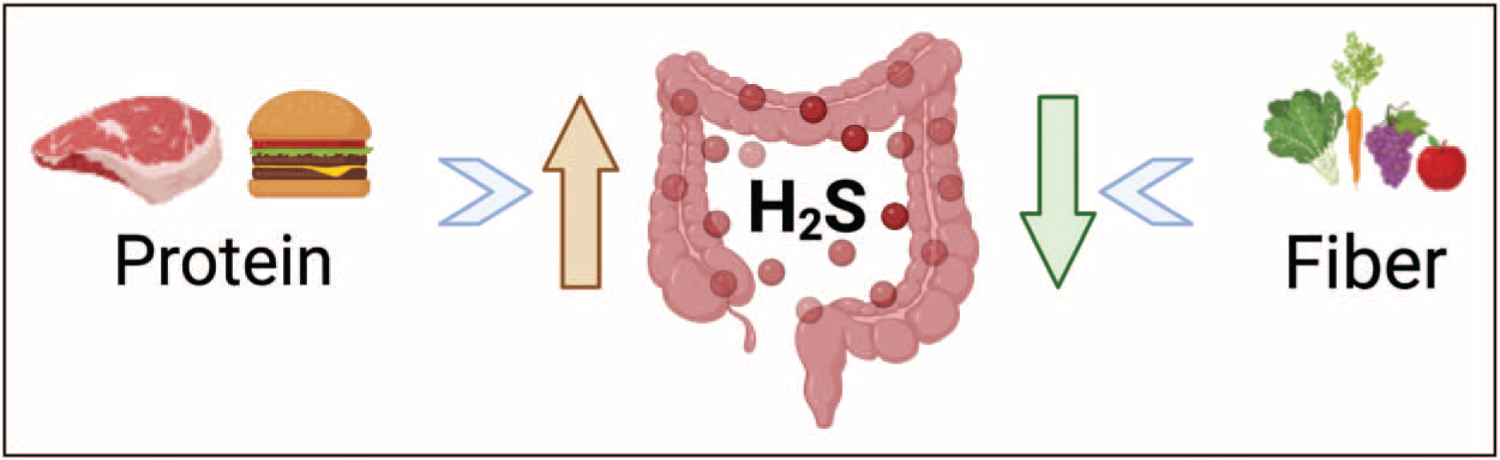
Recent findings: Recent studies support a positive relationship between dietary protein intake and H 2 S production. However, protein rarely exists in isolation in the diet, and dietary fiber intake could reduce H 2 S production in humans and animals, even with ∼30% of calories derived from protein.
Summary: These findings suggest that increased fiber intake may reduce H 2 S production irrespective of protein intake, enabling the ability to meet the metabolic demands of the illness while supporting gut health. Here we discuss two recent ulcerative colitis diet studies that illustrate this point.
Copyright © 2022 Wolters Kluwer Health, Inc. All rights reserved.
Conflict of interest statement
Conflicts of interest
There are no conflicts of interest.
Figures
References
-
- Pacitti D, Scotton CJ, Kumar V, et al. Gasping for sulfide: a critical appraisal of hydrogen sulfide in lung disease and accelerated aging. Antioxid Redox Signal 2021; 35:551–579. - PubMed
Publication types
MeSH terms
Substances
Grants and funding
LinkOut - more resources
Full Text Sources
Medical
Research Materials
