


Change in Health-Related Socioeconomic Risk Factors and Mental Health During the Early Phase of the COVID-19 Pandemic: A National Survey of U.S. Women
- PMID: 33818123
- PMCID: PMC8064961
- DOI: 10.1089/jwh.2020.8879
Change in Health-Related Socioeconomic Risk Factors and Mental Health During the Early Phase of the COVID-19 Pandemic: A National Survey of U.S. Women
Abstract
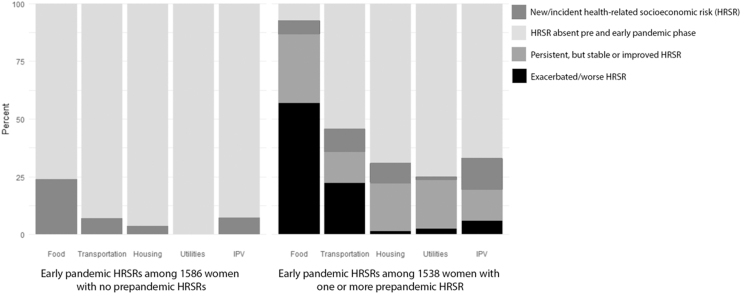
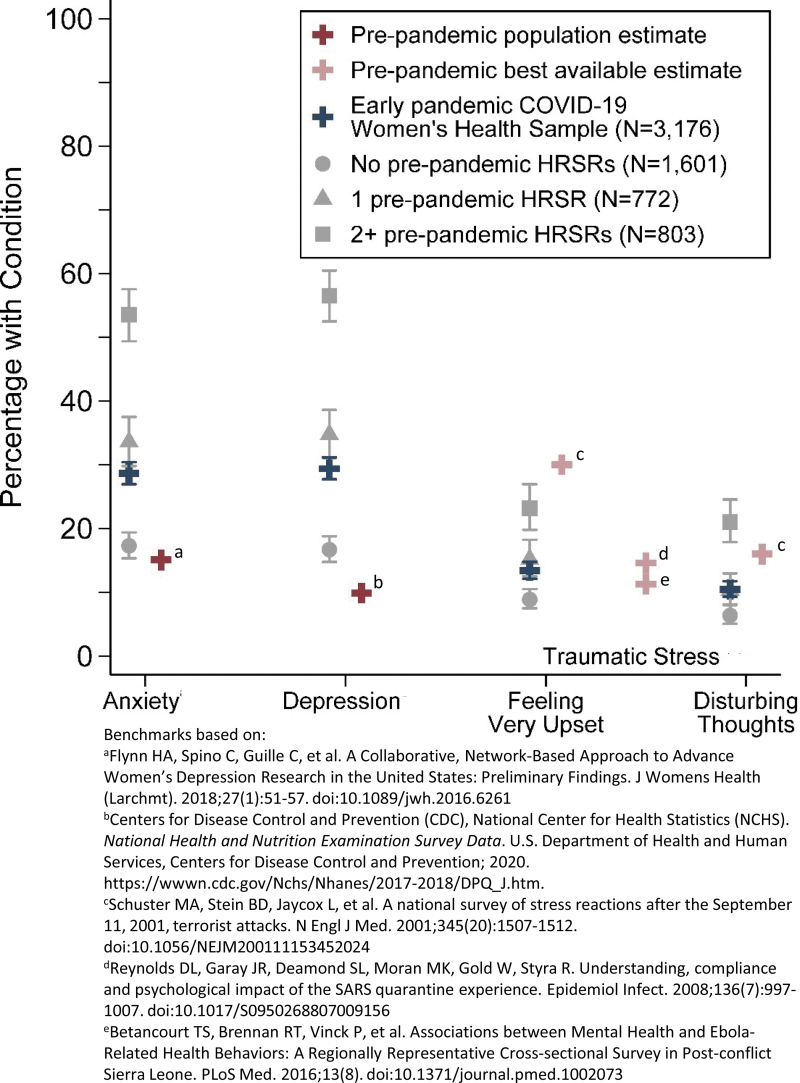
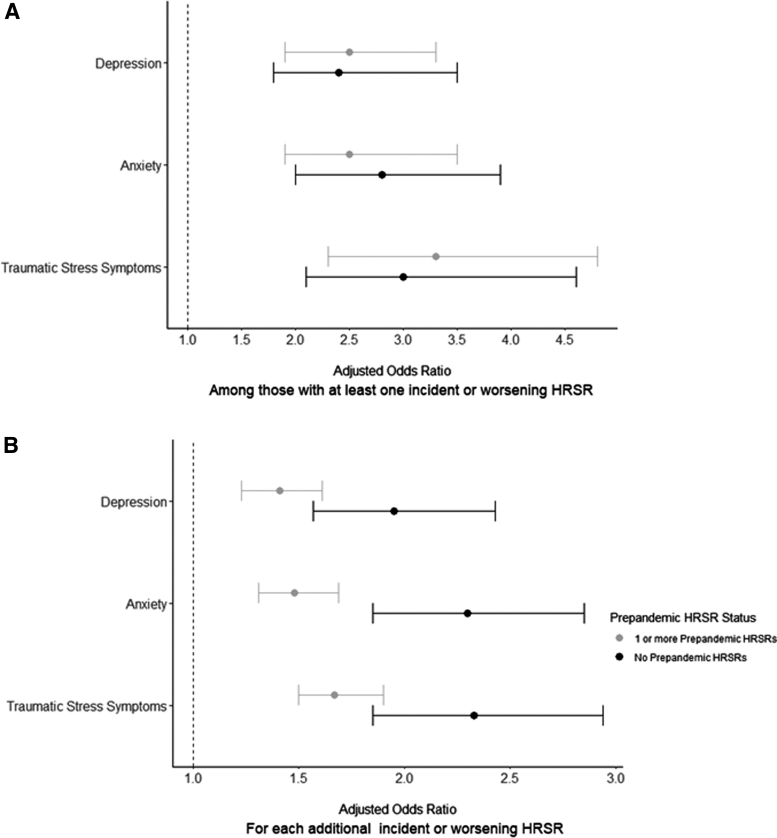
Background: During a pandemic, women may be especially vulnerable to secondary health problems driven by its social and economic effects. We examined the relationship between changes in health-related socioeconomic risks (HRSRs) and mental health. Materials and Methods: A cross-sectional survey of 3,200 women aged 18-90 years was conducted in April 2020 using a quota-based sample from a national panel (88% cooperation rate). Patterns of change in HRSRs (food insecurity, housing instability, interpersonal violence, and difficulties with utilities and transportation) were described. Weighted, multivariate logistic regression was used to model the odds of depression, anxiety, and traumatic stress symptoms among those with and without incident or worsening HRSRs. Results: More than 40% of women had one or more prepandemic HRSRs. In the early pandemic phase, 49% of all women, including 29% with no prepandemic HRSRs, had experienced incident or worsening HRSRs. By April 2020, the rates of depression and anxiety were twice that of prepandemic benchmarks (29%); 17% of women had symptoms of traumatic stress. The odds of depression, anxiety, and posttraumatic stress symptoms were two to three times higher among women who reported at least one incident or worsening HRSR; this finding was similar for women with and without prepandemic HRSRs. Conclusions: Increased health-related socioeconomic vulnerability among U.S. women early in the coronavirus disease 2019 (COVID-19) pandemic was prevalent and associated with alarmingly high rates of mental health problems. Pandemic-related mental health needs are likely to be much greater than currently available resources, especially for vulnerable women.
Keywords: COVID-19; disparities; health behaviors; mental health; social determinants of health.
Conflict of interest statement
S.T.L. is founder and co-owner of NowPow, LLC. Neither the University of Chicago nor the University of Chicago Medicine is endorsing or promoting NowPow or its business, products, or services. S.T.L. and her spouse own equity in Glenbervie Health, LLC, and health care-related stocks and mutual funds managed by third parties. E.L. receives research funding from AbbVie and Arsenal Bio to perform translational ovarian cancer research that is completely unrelated to this study. All other authors report no disclosures.
Figures
References
-
- Wenham C, Smith J, Davies SE, et al. Women are most affected by pandemics—Lessons from past outbreaks. Nature 2020;583:194–198 - PubMed
-
- Noursi S. COVID-19 and Women's Health. National Institutes of Health: Office of Research on Women's Health. Available at: https://orwh.od.nih.gov/about/director/messages/guest-blog-covid-19-and-... Accessed October1, 2020
Publication types
MeSH terms
Grants and funding
LinkOut - more resources
Full Text Sources
Other Literature Sources
Medical
Miscellaneous
