


Changes in Young Adults' Alcohol and Marijuana Use, Norms, and Motives From Before to During the COVID-19 Pandemic
- PMID: 33781471
- PMCID: PMC8345007
- DOI: 10.1016/j.jadohealth.2021.01.008
Changes in Young Adults' Alcohol and Marijuana Use, Norms, and Motives From Before to During the COVID-19 Pandemic
Abstract
Purpose: Alongside the SARS-CoV-2 virus, the COVID-19 pandemic is associated with several secondary health effects. There is concern for increased substance use motivated by coping with stress, anxiety, depression, and boredom-all of which may be elevated during the pandemic. The current study examined intraindividual changes (from pre-COVID to during COVID) in young adults' alcohol and marijuana use, perceptions of peers' use (i.e., norms), and motives for use.
Methods: A community sample of young adults (N = 572; Mage= 25.14; 60.8% women) was recruited in Washington State. By using a repeated-measures design, data were collected prior to the COVID-19 pandemic (January 2020) and again during the initial acute phase of the pandemic (April/May of 2020).
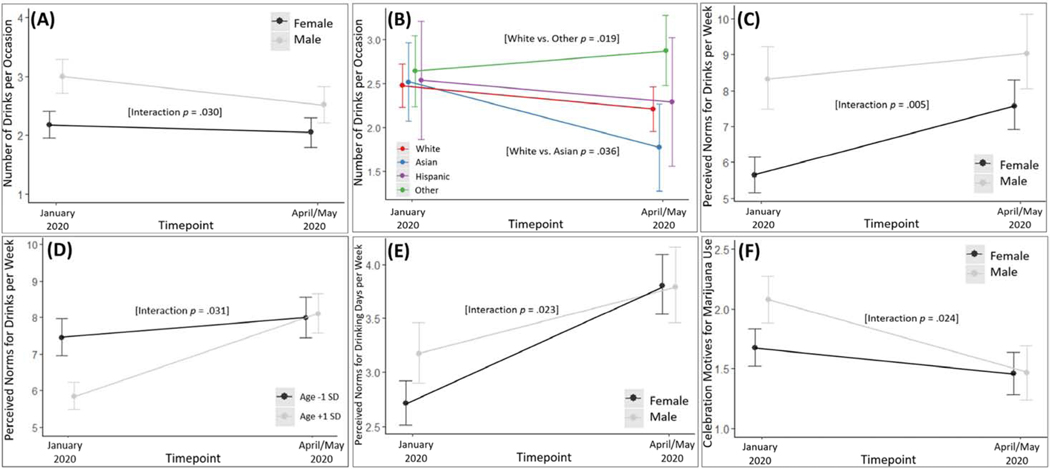
Results: Young adults, on average, increased alcohol use frequency but decreased the amount consumed per drinking occasion. No changes in marijuana use were identified. Young adults (on average) perceived that peers had increased the frequency and total amount of alcohol use and perceived that peers were engaging in heavier marijuana use than prior to COVID-19. For alcohol use motives, there was a significant increase in depression coping motives and significant decreases in social, enhancement, and conformity motives. Boredom motives for marijuana use significantly increased, while celebration motives decreased.
Conclusions: Using a prospective design with a sample initially recruited in Washington State, these data indicate that (a) young adults' patterns of alcohol use may have changed, (b) young adults tend to think that peers are engaging in heavier alcohol/marijuana use than before the pandemic, and (c) motives for using alcohol/marijuana may have changed during the pandemic.
Keywords: Cannabis; Drinking; SARS-CoV-2; Social distancing; Social norms; Substance use.
Copyright © 2021 Society for Adolescent Health and Medicine. Published by Elsevier Inc. All rights reserved.
Figures
References
-
- CDC. Implementation of mitigation strategies for communities with local COVID-19 transmission. Atlanta, GA US Dep Heal Hum Serv CDC. Published online 2020:https://www.cdc.gov/coronavirus/2019-ncov/communit.
-
- Lee CM, Graupensperger SA, Cadigan JM, Einberger C. Multi-faceted COVID-19 related concerns and stressors among young adults and the association with mental health, perceived health, and substance sse. Manuscr Submitt PEER Rev.
Publication types
MeSH terms
Grants and funding
LinkOut - more resources
Full Text Sources
Other Literature Sources
Medical
Miscellaneous
