


Assessing international alcohol consumption patterns during isolation from the COVID-19 pandemic using an online survey: highlighting negative emotionality mechanisms
- PMID: 33243820
- PMCID: PMC7692002
- DOI: 10.1136/bmjopen-2020-044276
Assessing international alcohol consumption patterns during isolation from the COVID-19 pandemic using an online survey: highlighting negative emotionality mechanisms
Abstract
Objectives: The COVID-19 pandemic has required drastic safety measures to control virus spread, including an extended self-isolation period. Stressful situations increase alcohol craving and consumption in alcohol use disorder (AUD) and non-AUD drinkers. Thus, we assessed how COVID-19 related stress may have affected drinking behaviours in the general population.
Design: We developed an online cross-sectional survey, Habit Tracker (HabiT), which measured changes in drinking behaviours before and during COVID-19 quarantine. We also assessed psychiatric factors such as anxiety, depression (Hospital Anxiety and Depression Scale) and impulsivity (Short-Impulsive Behavior Scale). Lastly, we related drinking behaviours to COVID-19 specific stress factors.
Setting: HabiT was released internationally, with individuals from 83 countries participating.
Participants: Participants were included if they were 18 years of age or older and confirmed they were proficient in English. The survey was completed by 2873 adults with 1346 usable data (46.9% accurately completed).
Primary outcome measures: Primary outcome measures were change in amount and severity of drinking behaviours before and during quarantine, and current drinking severity during quarantine.
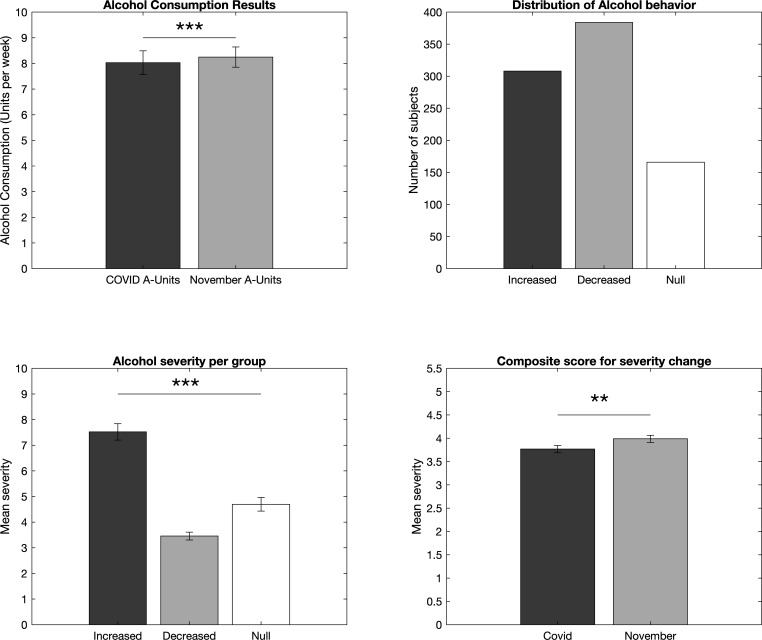
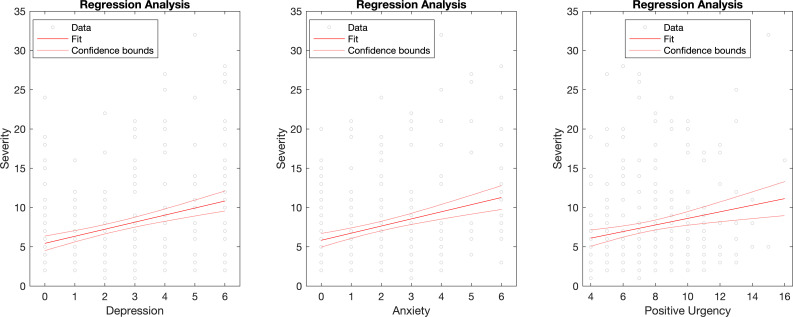
Results: Although drinking behaviours decreased overall during quarantine, 36% reported an increase in alcohol use. Those who increased alcohol use during quarantine were older individuals (95% CI 0.04 to 0.1, p<0.0001), essential workers (95% CI -0.58 to -0.1, p=0.01), individuals with children (95% CI -12.46 to 0.0, p=0.003), those with a personal relationship with someone severely ill from COVID-19 (95% CI -2 to -0.38, p=0.01) and those with higher depression (95% CI 0.67 to 1.45, p<0.0001), anxiety (95% CI 0.61 to 1.5, p=0.0002), and positive urgency impulsivity (95% CI 0.16 to 0.72, p=0.009). Furthermore, country-level subsample analyses indicated that drinking amount (95% CI 9.36 to 13.13, p=0.003) increased in the UK during quarantine.
Conclusions: Our findings highlight a role for identifying those vulnerable for alcohol misuse during periods of self-isolation and underscore the theoretical mechanism of negative emotionality underlying drinking behaviours driven by stress. Limitations include a large degree of study dropout (n=1515). Future studies should assess the long-term effects of isolation on drinking behaviours.
Keywords: COVID-19; depression & mood disorders; psychiatry; public health; substance misuse.
© Author(s) (or their employer(s)) 2020. Re-use permitted under CC BY. Published by BMJ.
Conflict of interest statement
Competing interests: None declared.
Figures
References
Publication types
MeSH terms
Grants and funding
LinkOut - more resources
Full Text Sources
Medical
