


Human Health, Economic and Environmental Assessment of Onsite Non-Potable Water Reuse Systems for a Large, Mixed-Use Urban Building
- PMID: 32944297
- PMCID: PMC7490829
- DOI: 10.3390/su12135459
Human Health, Economic and Environmental Assessment of Onsite Non-Potable Water Reuse Systems for a Large, Mixed-Use Urban Building
Abstract
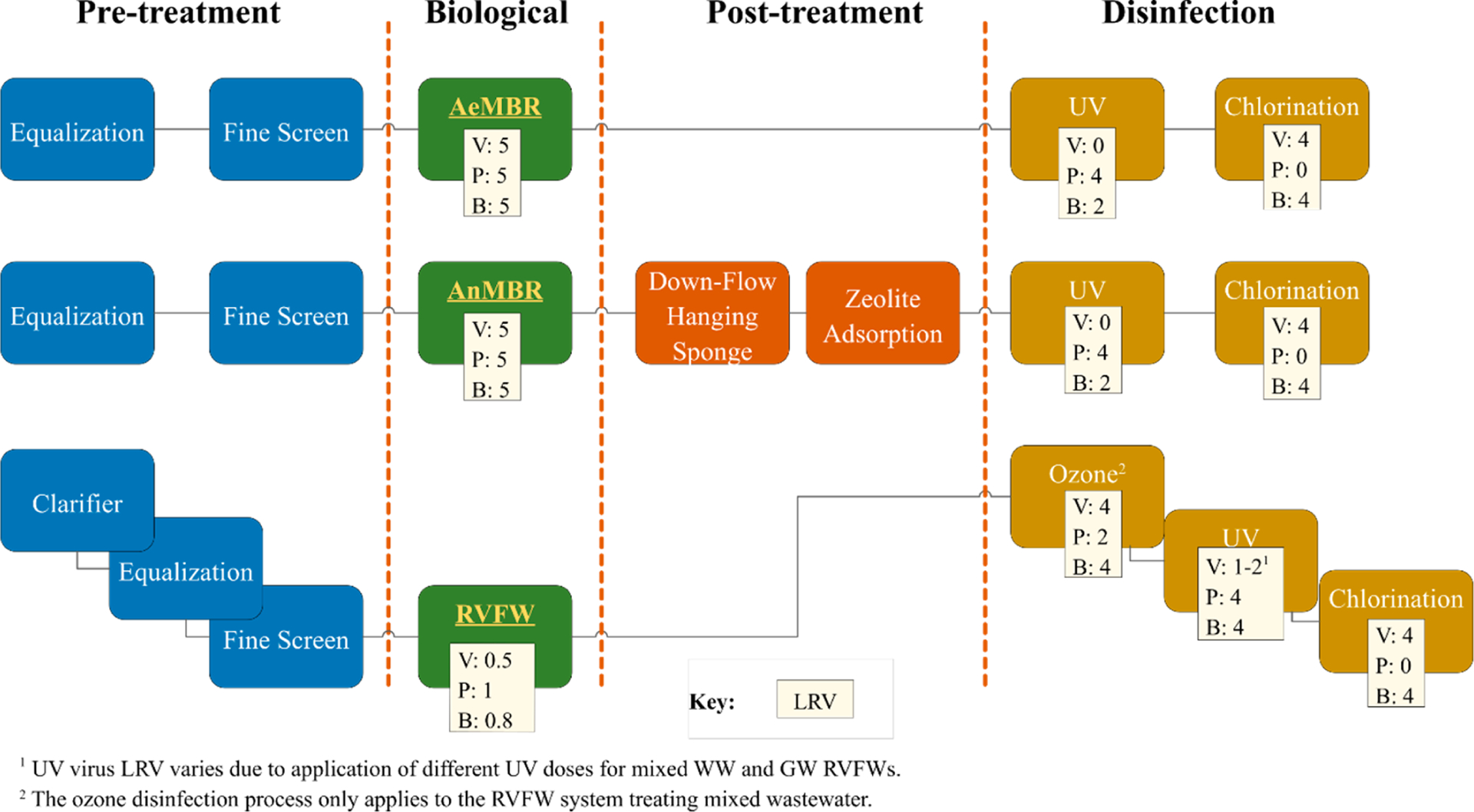
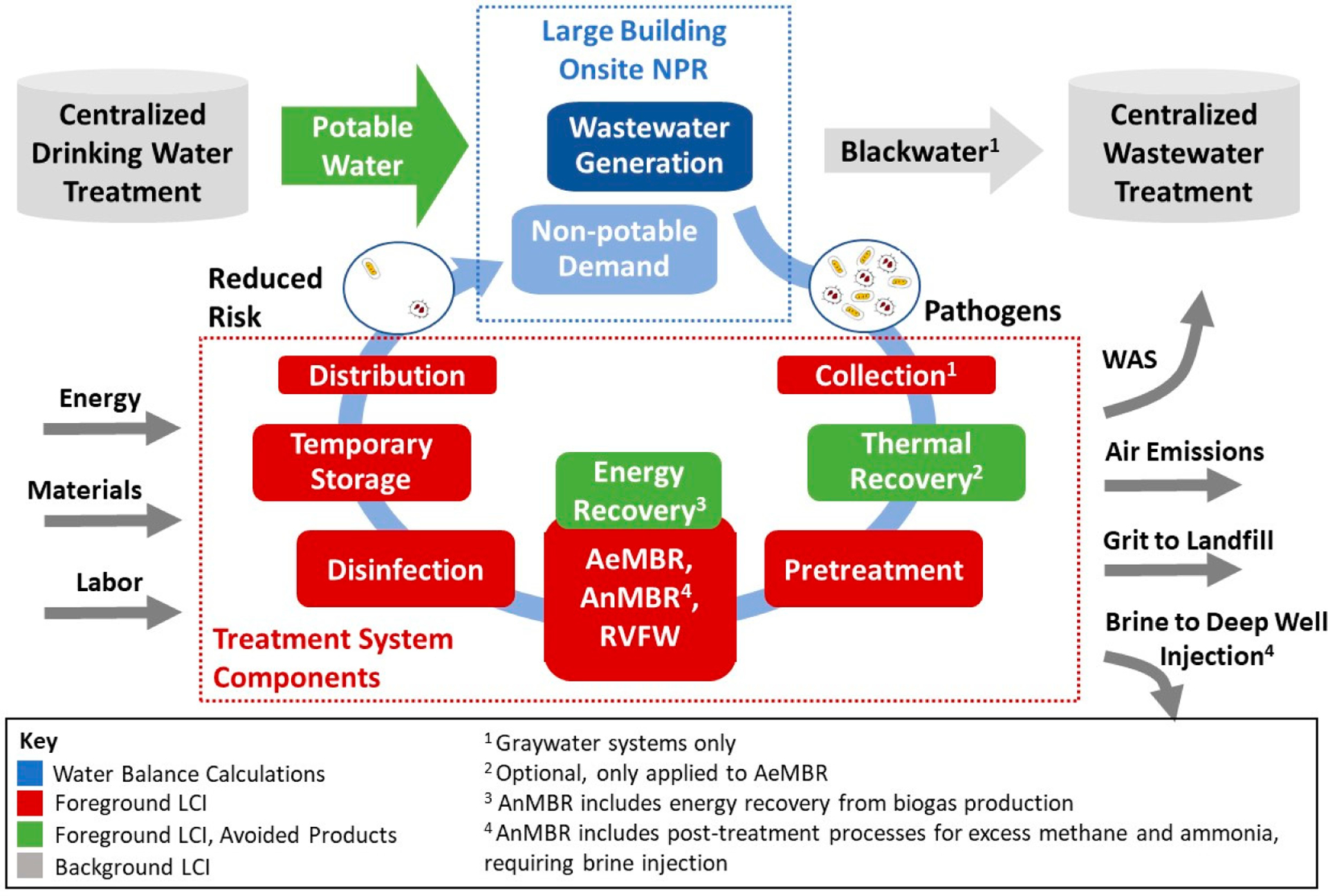
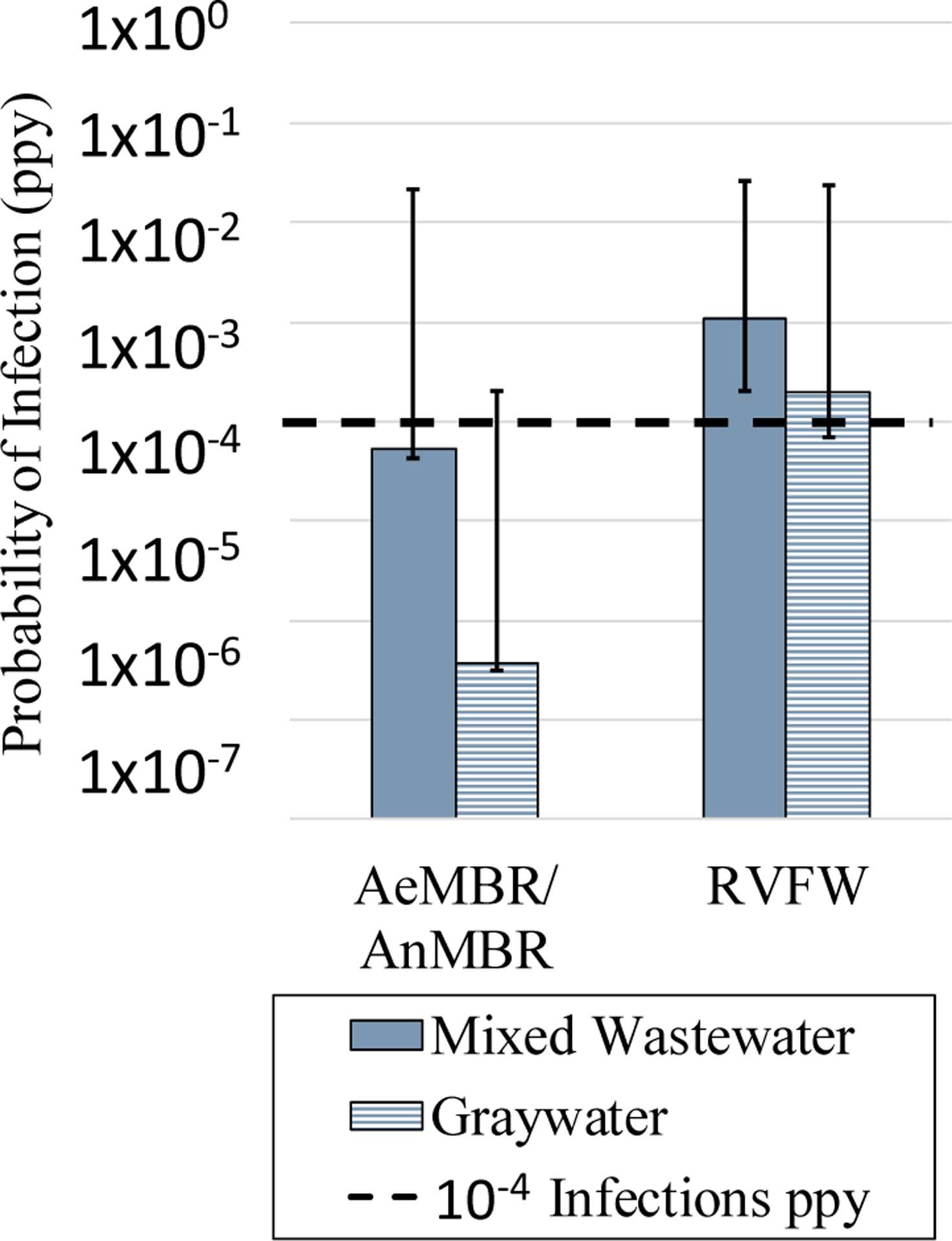
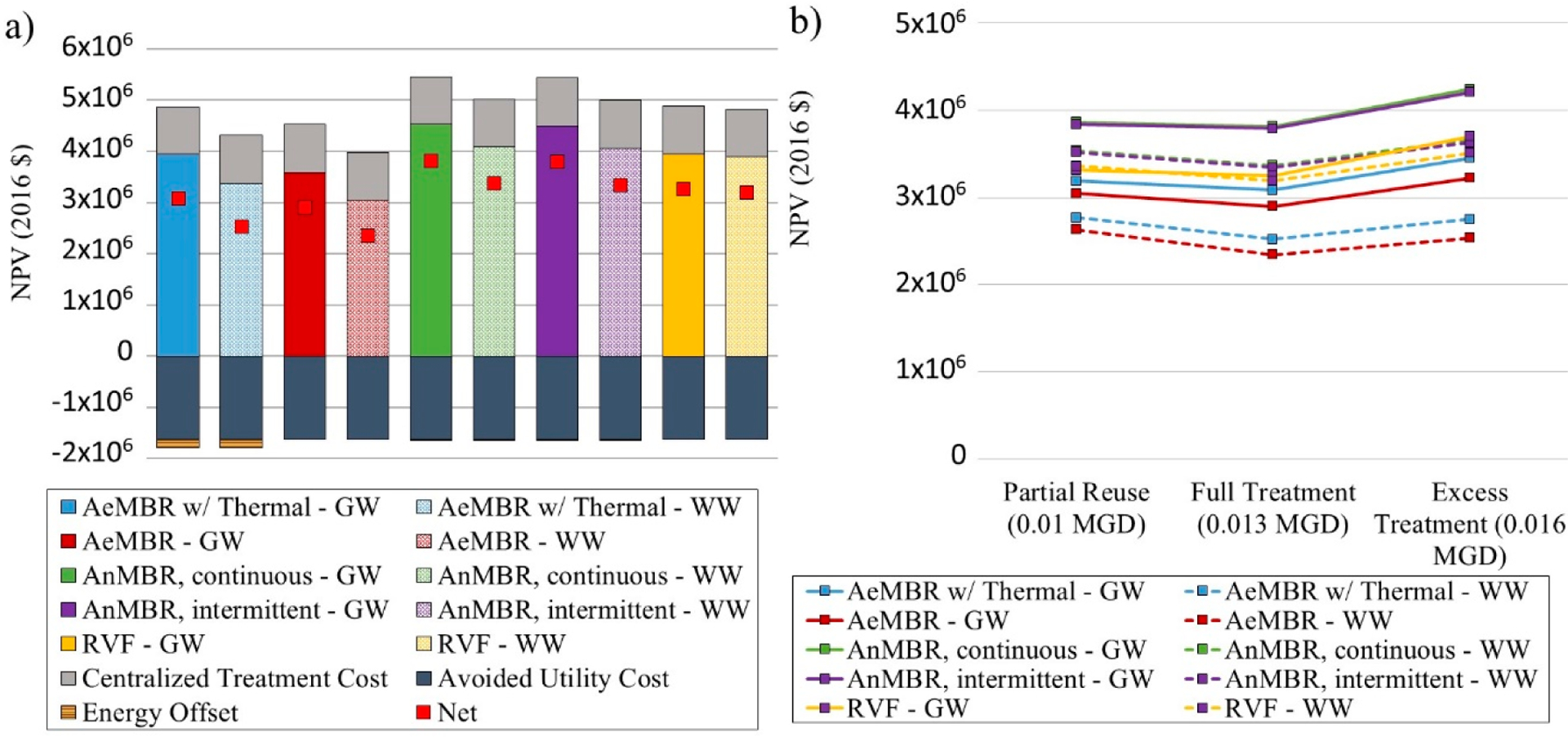
Onsite non-potable reuse (NPR) is being increasingly considered as a viable option to address water scarcity and infrastructure challenges, particularly at the building scale. However, there are a range of possible treatment technologies, source water options, and treatment system sizes, each with its unique costs and benefits. While demonstration projects are proving that these systems can be technologically feasible and protective of public health, little guidance exists for identifying systems that balance public health protection with environmental and economic performance. This study uses quantitative microbial risk assessment, life cycle assessment and life cycle cost analysis to characterize the human health, environmental and economic aspects of onsite NPR systems. Treatment trains for both mixed wastewater and source-separated graywater were modeled using a core biological process-an aerobic membrane bioreactor (AeMBR), an anaerobic membrane bioreactor (AnMBR) or recirculating vertical flow wetland (RVFW)-and additional treatment and disinfection unit processes sufficient to meet current health-based NPR guidelines. Results show that the graywater AeMBR system designed to provide 100% of onsite non-potable demand results in the lowest impacts across most environmental and human health metrics considered but costs more than the mixed-wastewater version due to the need for a separate collection system. The use of multiple metrics also allows for identification of weaknesses in systems that lead to burden shifting. For example, although the RVFW process requires less energy than the AeMBR process, the RVFW system is more environmentally impactful and costly when considering the additional unit processes required to protect human health. Similarly, we show that incorporation of thermal recovery units to reduce hot water energy consumption can offset some environmental impacts but result in increases to others, including cumulative energy demand. Results demonstrate the need for additional data on the pathogen treatment performance of NPR systems to inform NPR health guidance.
Keywords: decentralized treatment; life cycle assessment; life cycle cost assessment; membrane bioreactor; non-potable reuse; quantitative microbial risk assessment.
Conflict of interest statement
Conflicts of Interest: There is no conflict of interest.
Figures
References
-
- U.S. EPA Water Reuse Action Plan; EPA-820-R-20–001; Environmental Protection Agency: Washington, DC, USA, 2019.
-
- Morelli B; Cashman S; Ma X; Garland J; Bless D; Jahne M Life Cycle Assessment and Cost Analysis of Distributed Mixed Wastewater and Graywater Treatment for Water Recycling in the Context of an Urban Case Study (No. EPA/600/R-18/280); U.S. Environmental Protection Agency: Cincinnati, OH, USA, 2019.
-
- U.S. EPA Onsite Non-Potable Water Reuse Research. Available online: https://www.epa.gov/water-research/onsite-non-potable-water-reuse-resear... (accessed on 21 May 2020).
-
- NBRC. Making the Utility Case for Onsite Non-potable Water Systems; National Blue Ribbon Commission for Onsite Non-potable Water Systems, 2018; Available online: http://uswateralliance.org/sites/uswateralliance.org/files/publications/... (accessed on 3 July 2020).
-
- Kehoe P; Chang T Public Health and Utility Leaders Collaborate to Advance Onsite Reuse 2019 In Proceedings of the 34th Annual WateReuse Symposium, San Diego, CA, USA, 10 September 2019.
Grants and funding
LinkOut - more resources
Full Text Sources