


Trends in U.S. women's binge drinking in middle adulthood by socioeconomic status, 2006-2018
- PMID: 32408139
- PMCID: PMC7293936
- DOI: 10.1016/j.drugalcdep.2020.108026
Trends in U.S. women's binge drinking in middle adulthood by socioeconomic status, 2006-2018
Abstract
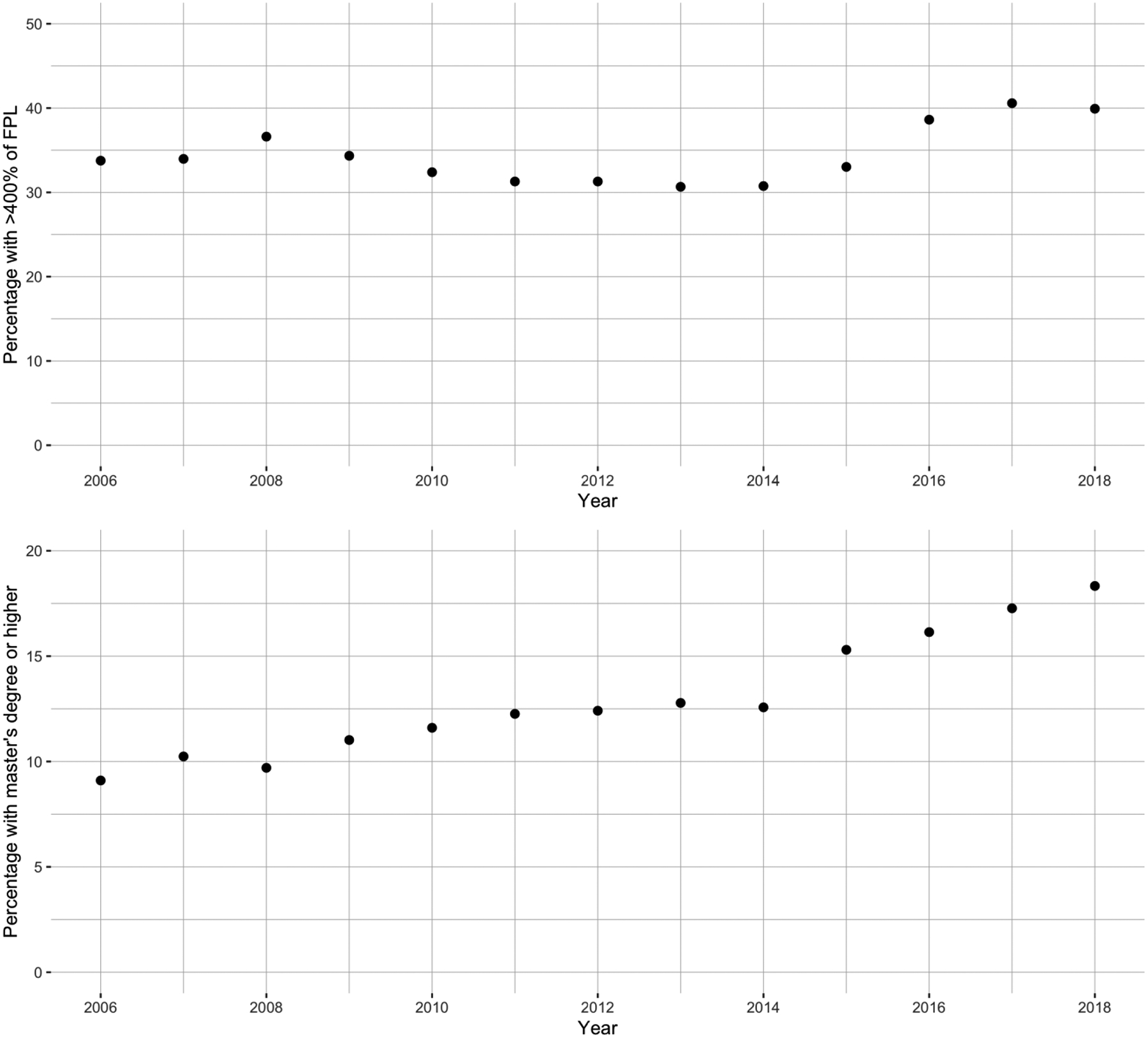
Background: Binge drinking causes injury and illness. Prevalence of binge drinking doubled in 2006-2018 for women in middle adulthood (ages 30 s and 40 s); these are the first cohorts for whom attaining higher education and income (both associated with increased alcohol use) are highly prevalent. It is unknown whether recent trends in binge drinking among US women aged 30-49 differ by socio-economic status (SES).
Methods: We examined trends in binge drinking using nationally-representative National Health Interview Surveys (2006-2018) for women age 30-49 (N = 63,426), by education (<high school, high school, some college, college, >college) and family income (<100 %, 100-199 %, 200-399 %, and >400 % of poverty line), controlling for age and race.
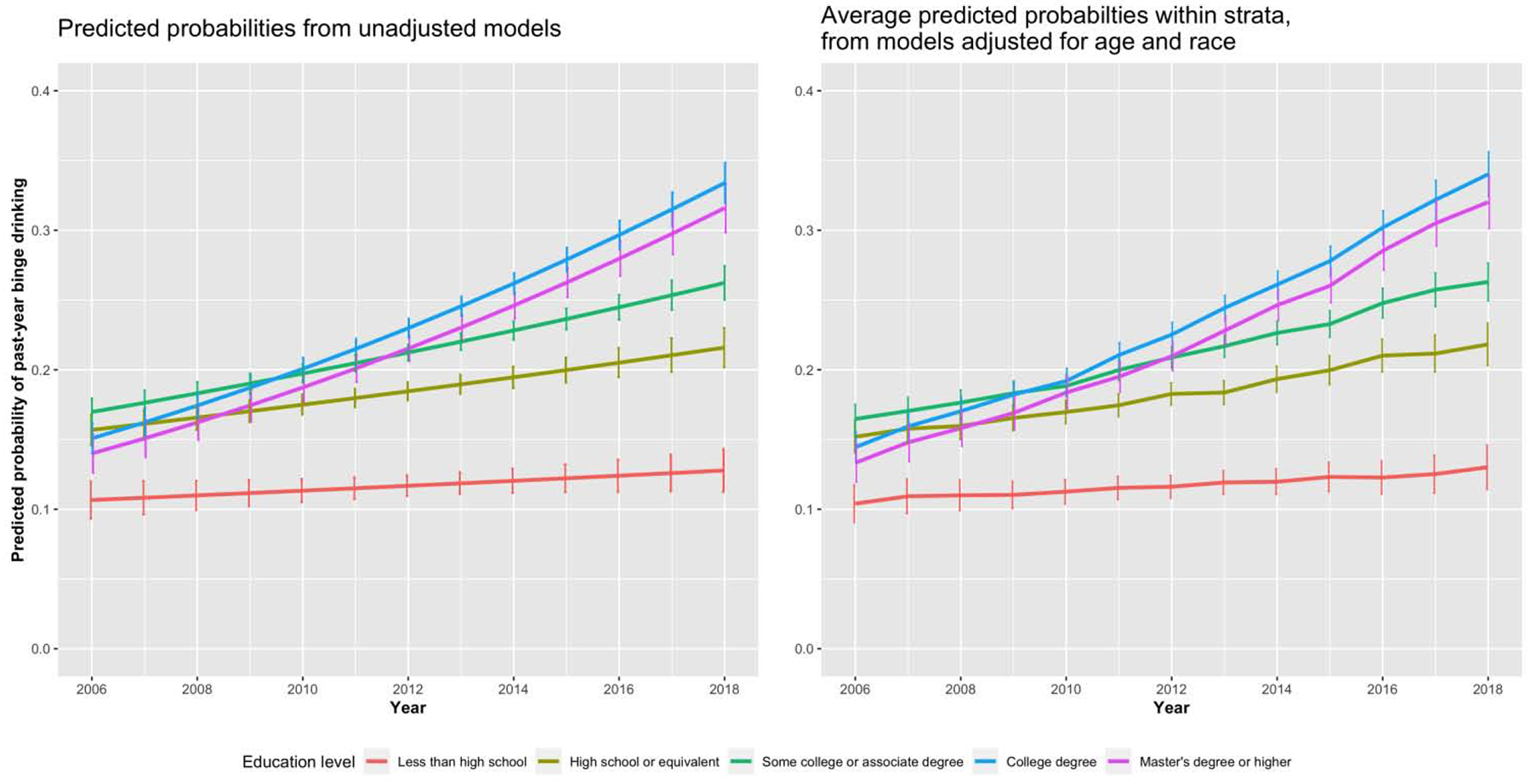
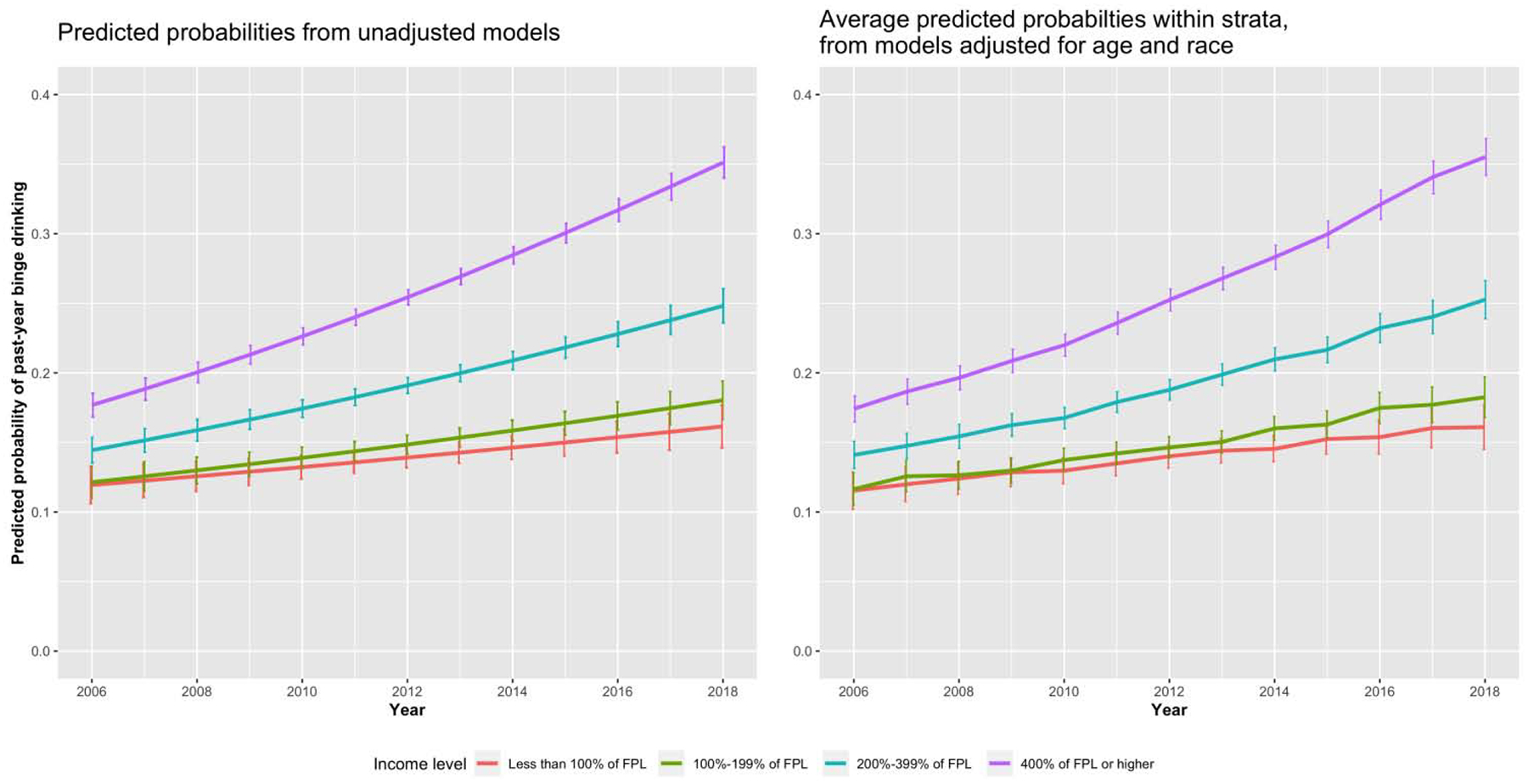
Results: The odds of binge drinking increased among all women approximately 7 % annually from 2006 to 2018. The magnitude of the change increased with education; the predicted probability of binge drinking among women at lowest levels of education increased from 10 % to 13 % from 2006 to 2018 (adjusted OR [AOR] 1.02, 95 % CI 0.99, 1.04), and those with the highest education from 13%-32% (AOR 1.10, 95 % CI 1.08-1.12). Women at the lowest income increased binge drinking from 12 % to 16 % (AOR 1.03, 95 % CI 1.01-1.05) and highest income from 17 % to 36 % (AOR 1.09, 95 % CI 1.07-1.10). Interactions between education (F8554, p < 0.001) and income (F8573, p < 0.001) with time confirmed slope differences.
Conclusions: Nationally, women at all levels of SES increased binge drinking, but increases were most pronounced among high SES women.
Keywords: Alcohol; Binge drinking; Socio-economic status; Substance abuse; Women’s health.
Copyright © 2020 Elsevier B.V. All rights reserved.
Conflict of interest statement
Declaration of Competing Interest The authors have no conflicts of interest to report.
Figures
References
-
- Bobilev R, Boschini A, Roine J, 2019. Women in the Top of the Income Distribution: What Can We Learn From LIS-Data? Ital. Econ. J 10.1007/s40797-019-00108-w - DOI
Publication types
MeSH terms
Grants and funding
LinkOut - more resources
Full Text Sources
