


Effects of 6-Week Use of Very Low Nicotine Content Cigarettes in Smokers With Serious Mental Illness
- PMID: 31867650
- PMCID: PMC6939771
- DOI: 10.1093/ntr/ntz133
Effects of 6-Week Use of Very Low Nicotine Content Cigarettes in Smokers With Serious Mental Illness
Abstract
Introduction: The US Food and Drug Administration is considering implementing a reduced-nicotine standard for cigarettes. Given the high rate of smoking among people with serious mental illness (SMI), it is important to examine the responses of these smokers to very low nicotine content (VLNC) cigarettes.
Methods: This trial compared the effects of VLNC (0.4 mg nicotine/g tobacco) and normal nicotine content cigarettes (15.8 mg/g) over a 6-week period in non-treatment-seeking smokers with schizophrenia, schizoaffective disorder, or bipolar disorder (n = 58). Linear regression was used to examine the effects of cigarette condition on cigarettes per day, subjective responses, nicotine and tobacco toxicant exposure, craving, withdrawal symptoms, and psychiatric symptoms.
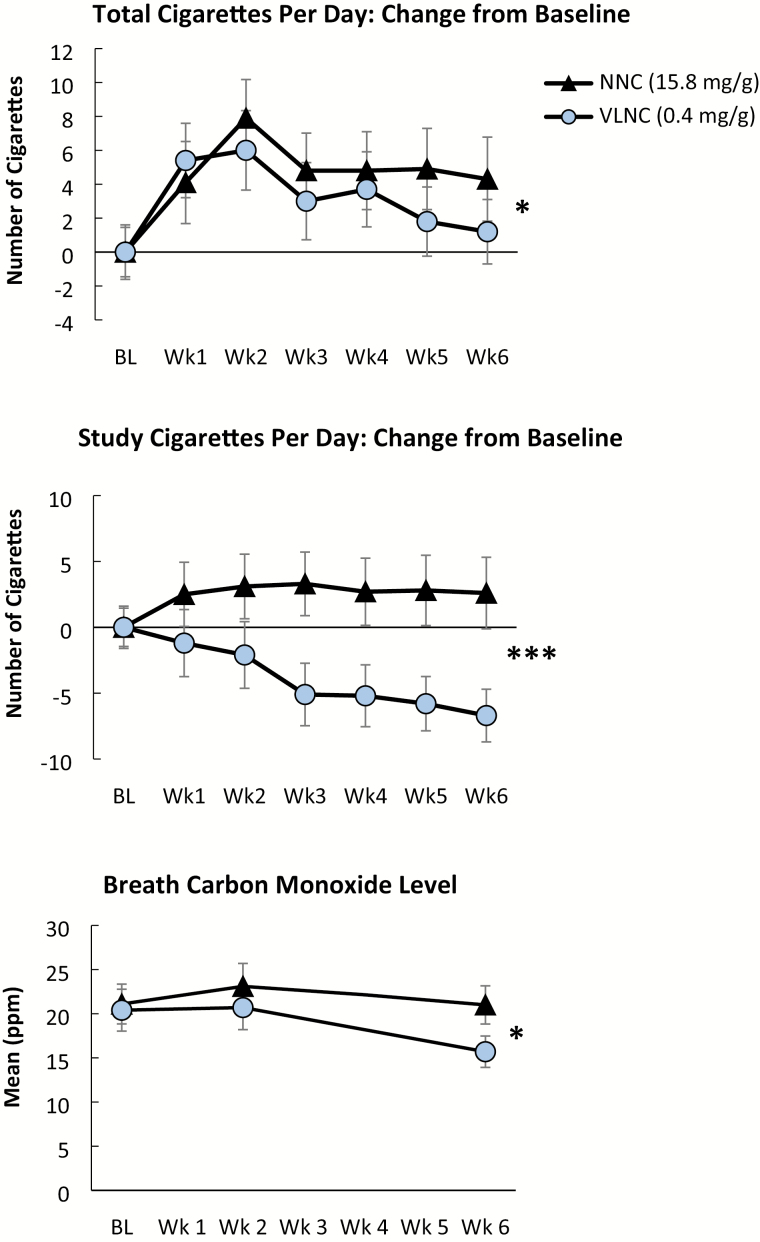
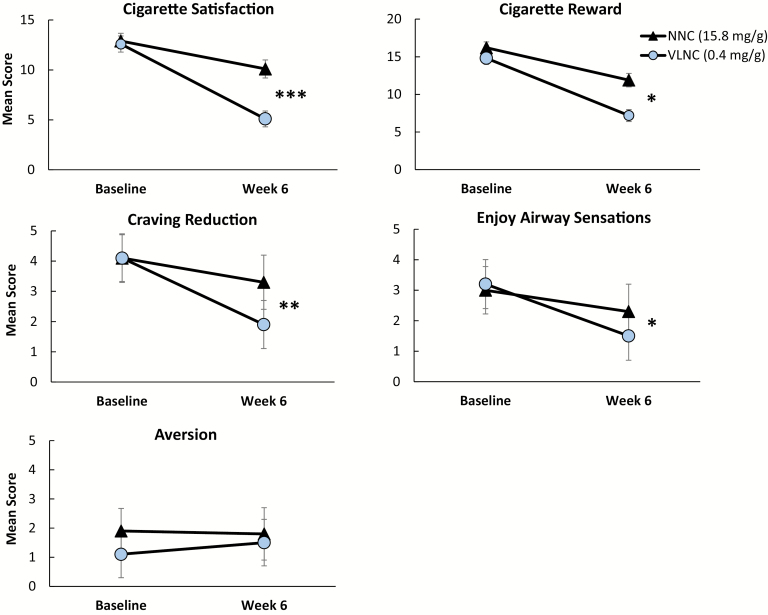
Results: At week 6, participants in the VLNC condition smoked fewer cigarettes per day, had lower breath carbon monoxide levels, lower craving scores, and rated their study cigarettes lower in satisfaction, reward, enjoyment, and craving reduction than those in the normal nicotine content condition (ps < .05). Week 6 psychiatric and extrapyramidal symptoms did not differ by condition, except for scores on a measure of parkinsonism, which were lower in the VLNC condition (p < .05). There were no differences across conditions on total nicotine exposure, 4-(methylnitrosamino)-1-(3-pyridyl)-1-butanol, withdrawal symptoms, or responses to abstinence.
Conclusions: These results suggest that a reduced-nicotine standard for cigarettes would reduce smoking among smokers with SMI. However, the lack of effect on total nicotine exposure indicates VLNC noncompliance, suggesting that smokers with SMI may respond to a reduced-nicotine standard by substituting alternative forms of nicotine.
Implications: Results from this trial suggest that a reduced-nicotine standard for cigarettes would reduce smoking rates and smoke exposure in smokers with SMI, without increasing psychiatric symptoms. However, noncompliance with VLNC cigarettes was observed, suggesting that these smokers might respond to a reduced-nicotine standard by substituting alternative forms of nicotine.
© The Author(s) 2019. Published by Oxford University Press on behalf of the Society for Research on Nicotine and Tobacco.
Figures
References
-
- Callaghan RC, Veldhuizen S, Jeysingh T, et al. Patterns of tobacco-related mortality among individuals diagnosed with schizophrenia, bipolar disorder, or depression. J Psychiatr Res. 2014;48(1):102–110. - PubMed
Publication types
MeSH terms
Substances
Grants and funding
LinkOut - more resources
Full Text Sources
Medical
