Review
. 2018 Oct 30;10(11):1590.
doi: 10.3390/nu10111590.

The Microbiotic Highway to Health-New Perspective on Food Structure, Gut Microbiota, and Host Inflammation

Affiliations
Review

The Microbiotic Highway to Health-New Perspective on Food Structure, Gut Microbiota, and Host Inflammation

Nina Wærling Hansen et al. Nutrients. .

Abstract

This review provides evidence that not only the content of nutrients but indeed the structural organization of nutrients is a major determinant of human health. The gut microbiota provides nutrients for the host by digesting food structures otherwise indigestible by human enzymes, thereby simultaneously harvesting energy and delivering nutrients and metabolites for the nutritional and biological benefit of the host. Microbiota-derived nutrients, metabolites, and antigens promote the development and function of the host immune system both directly by activating cells of the adaptive and innate immune system and indirectly by sustaining release of monosaccharides, stimulating intestinal receptors and secreting gut hormones. Multiple indirect microbiota-dependent biological responses contribute to glucose homeostasis, which prevents hyperglycemia-induced inflammatory conditions. The composition and function of the gut microbiota vary between individuals and whereas dietary habits influence the gut microbiota, the gut microbiota influences both the nutritional and biological homeostasis of the host. A healthy gut microbiota requires the presence of beneficial microbiotic species as well as vital food structures to ensure appropriate feeding of the microbiota. This review focuses on the impact of plant-based food structures, the "fiber-encapsulated nutrient formulation", and on the direct and indirect mechanisms by which the gut microbiota participate in host immune function.

Keywords: carbohydrates; fiber; food structure; formulation; inflammation; metabolism; microbiota; nutrition guidelines; plant.


Conflict of interest statement

The authors declare no conflict of interest.

Figures
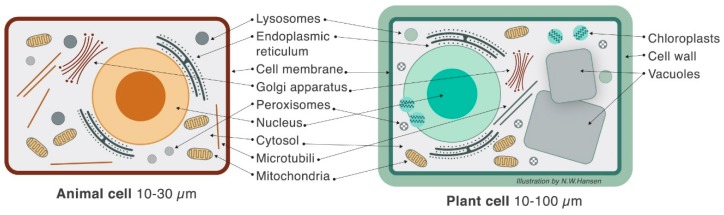
Figure 1
Figure 1
Schematic illustration of an animal and a plant cell. The cell wall (mainly complex carbohydrates), vacuoles (usually starch or lipid storage, depending on cell type), and chloroplasts are plant-cell specific structures that serve as nutrients for the microbiota, whereas the cellular content serves as signal molecules for host metabolic and immune regulation as well as nutrients for both host and microbiota. An intact plant cell is defined as unrefined food whereas the degree of structural disruption (and the supplementation of additives) defines the degree of refinement.
Figure 2
Figure 2
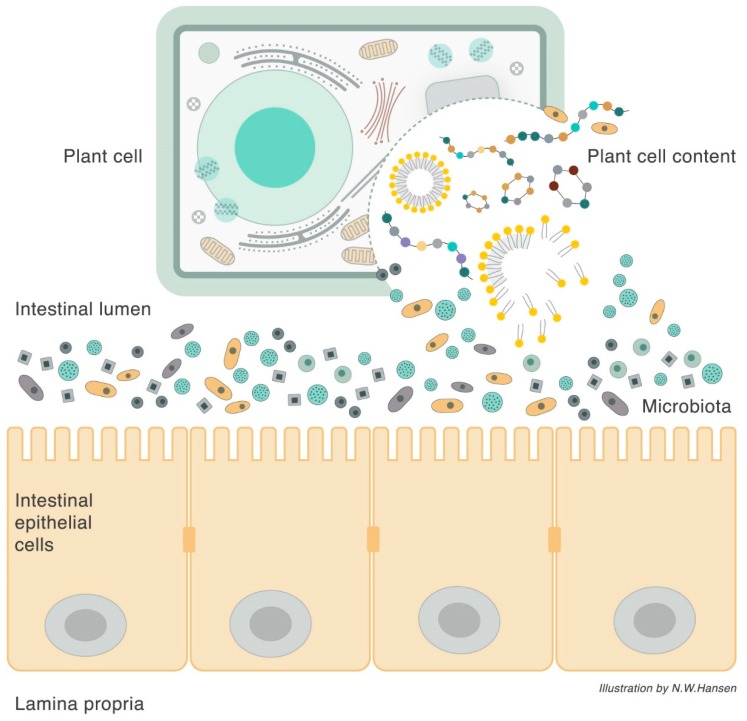
Illustration of interactions between plant cells, microbiota, and the host epithelium. Plant cells are encapsulated by the fibrous cell wall, which is a microbiota-selective nutrient. The cell wall also serves as a transport vehicle for the additional plant cell contents as well as a vehicle for nutrients to be shared between the microbiota and the host upon release from its plant cell structure. The microbiota secretes glycosidases, peptidases, and lipases, thereby releasing molecular nutrients for transport into epithelial or bacterial cells.
Figure 3
Figure 3
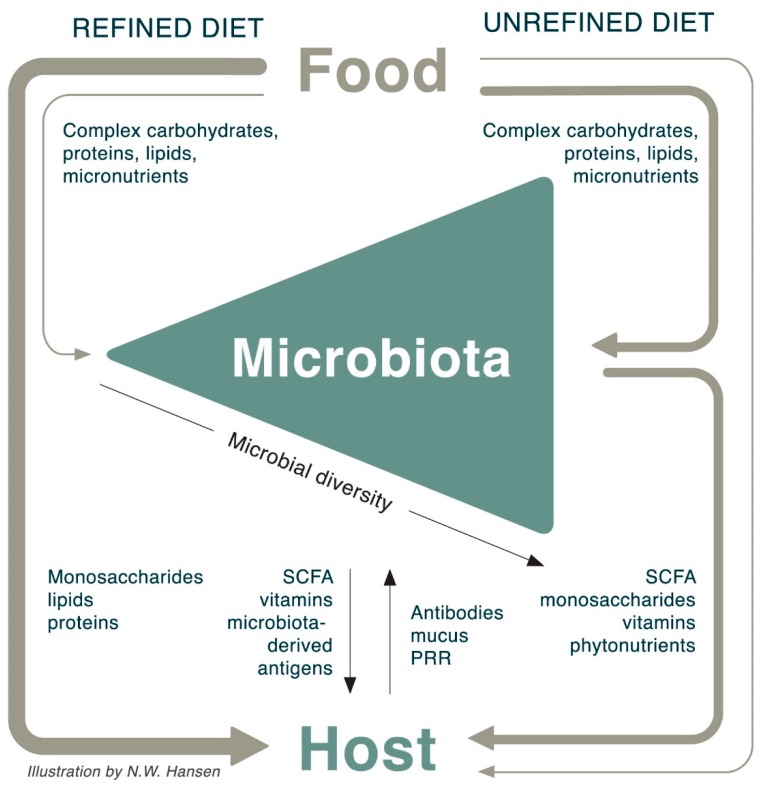
Schematic overview of interactions between food, microbiota, and host. Most of a refined diet bypasses the microbiota, providing a high nutrient bioavailability for the host. In contrast, unrefined, plant-based food structures provide a lower nutrient bioavailability for the host, using the difference to develop and maintain a healthy microbiota. The healthy microbiota provides short chain fatty acids (SCFA), antioxidants, and vitamins for the host along with direct immunomodulatory effects. The high monosaccharide bioavailability in refined foods introduces a risk of hyperglycemia, which cause numerous direct and indirect pro-inflammatory actions [26] (not shown in figure).
Figure 4
Figure 4
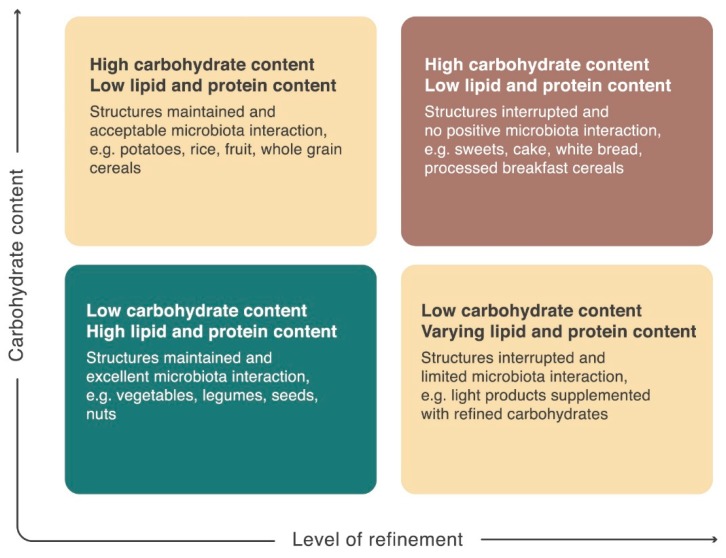
Novel classification of plant-based foods. Plant-based nutrition classified by microbiotic interaction potential and by the potential to induce hyperglycemia. The illustration classifies plant-based foods by the level of refinement and carbohydrate content. The green box represents basic foods for the habitual diet, interacting with our gut microbiota and providing both nutrients and bioactive molecules to microbiota and host. Foods from the green box are health promoting through interaction with the microbiota, and these foods introduce no risk of hyperglycemia. Foods from the green box should be combined to meet the needs for protein and lipid. Food from the yellow boxes can induce hyperglycemia in insulin resistant individuals or be consumed as energy supplementation for children and physically active individuals with a higher energy demand and a low risk of insulin resistance. The yellow square to the left positively interacts with the microbiota whereas the yellow square to the right only have limited microbiota interaction. The red box contains foods, which are high in carbohydrate content and highly refined, introducing the risk of high blood glucose to most people, not only insulin resistant individuals. The contents in the red box should be considered comfort foods with no health promoting effects and with a potential to compromise health.

References

    1. Francino M.P. Birth Mode-Related Differences in Gut Microbiota Colonization and Immune System Development. Ann. Nutr. Metab. 2018;73:12–16. doi: 10.1159/000490842. - DOI - PubMed
    1. Gill S.R., Pop M., DeBoy R.T., Eckburg P.B., Turnbaugh P.J., Samuel B.S., Gordon J.I., Relman D.A., Fraser-Liggett C.M., Nelson K.E. Metagenomic Analysis of the Human Distal Gut Microbiome. Science. 2006;312:1355–1359. doi: 10.1126/science.1124234. - DOI - PMC - PubMed
    1. Morrison D.J., Preston T. Formation of short chain fatty acids by the gut microbiota and their impact on human metabolism. Gut Microbes. 2016;7:189–200. doi: 10.1080/19490976.2015.1134082. - DOI - PMC - PubMed
    1. Ivanov I.I., Atarashi K., Manel N., Brodie E.L., Shima T., Karaoz U., Wei D., Goldfarb K.C., Santee C.A., Lynch S.V., et al. Induction of Intestinal Th17 Cells by Segmented Filamentous Bacteria. Cell. 2009;139:485–498. doi: 10.1016/j.cell.2009.09.033. - DOI - PMC - PubMed
    1. Ivanov I.I., Frutos Rde L., Manel N., Yoshinaga K., Rifkin D.B., Sartor R.B., Finlay B.B., Littman D.R. Specific microbiota direct the differentiation of IL-17-producing T-helper cells in the mucosa of the small intestine. Cell. Host Microbe. 2008;4:337–349. doi: 10.1016/j.chom.2008.09.009. - DOI - PMC - PubMed