


Colorectal Cancer and Alcohol Consumption-Populations to Molecules
- PMID: 29385712
- PMCID: PMC5836070
- DOI: 10.3390/cancers10020038
Colorectal Cancer and Alcohol Consumption-Populations to Molecules
Erratum in
-
Correction: Rossi et al. Colorectal Cancer and Alcohol Consumption-Populations to Molecules. Cancers 2018, 10, 38.Cancers (Basel). 2024 Nov 29;16(23):3999. doi: 10.3390/cancers16233999. Cancers (Basel). 2024. PMID: 39682311 Free PMC article.
Abstract
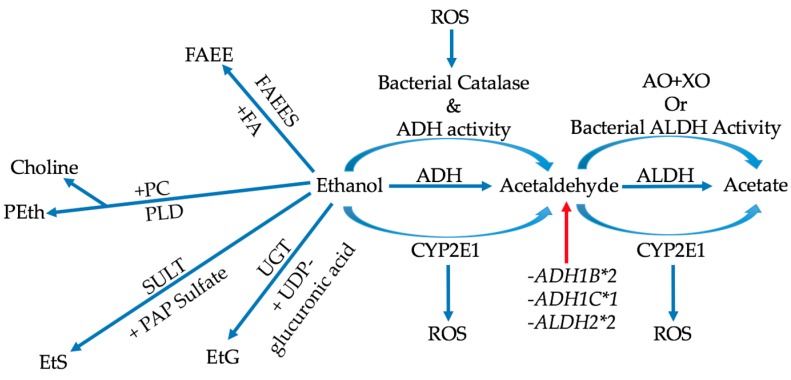
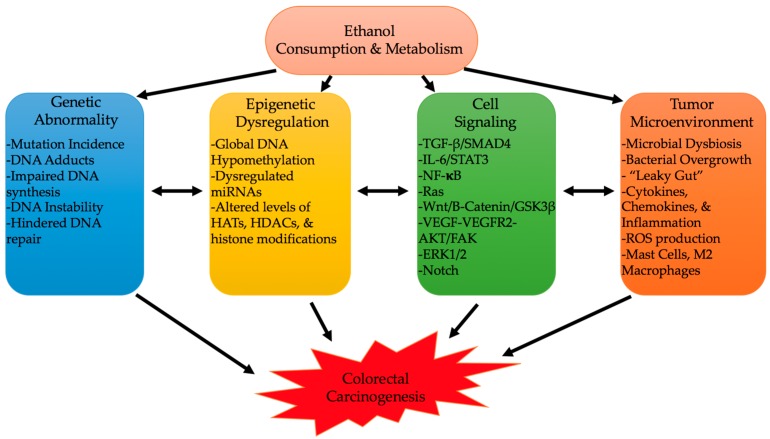
Colorectal cancer (CRC) is a major cause of morbidity and mortality, being the third most common cancer diagnosed in both men and women in the world. Several environmental and habitual factors have been associated with the CRC risk. Alcohol intake, a common and rising habit of modern society, is one of the major risk factors for development of CRC. Here, we will summarize the evidence linking alcohol with colon carcinogenesis and possible underlying mechanisms. Some epidemiologic studies suggest that even moderate drinking increases the CRC risk. Metabolism of alcohol involves ethanol conversion to its metabolites that could exert carcinogenic effects in the colon. Production of ethanol metabolites can be affected by the colon microbiota, another recently recognized mediating factor to colon carcinogenesis. The generation of acetaldehyde and alcohol's other metabolites leads to activation of cancer promoting cascades, such as DNA-adduct formation, oxidative stress and lipid peroxidation, epigenetic alterations, epithelial barrier dysfunction, and immune modulatory effects. Not only does alcohol induce its toxic effect through carcinogenic metabolites, but alcoholics themselves are predisposed to a poor diet, low in folate and fiber, and circadian disruption, which could further augment alcohol-induced colon carcinogenesis.
Keywords: CRC; alcohol; epigenetics; immunity; metabolism; polyposis.
Conflict of interest statement
The authors declare no conflicts of interest.
Figures

References
-
- Bishehsari F., Mahdavinia M., Vacca M., Malekzadeh R., Mariani-Costantini R. Epidemiological transition of colorectal cancer in developing countries: Environmental factors, molecular pathways, and opportunities for prevention. World J. Gastroenterol. 2014;20:6055–6072. doi: 10.3748/wjg.v20.i20.6055. - DOI - PMC - PubMed
Publication types
Grants and funding
LinkOut - more resources
Full Text Sources
Other Literature Sources
