


Effectiveness of Mass Media Campaigns to Reduce Alcohol Consumption and Harm: A Systematic Review
- PMID: 29329359
- PMCID: PMC5913684
- DOI: 10.1093/alcalc/agx094
Effectiveness of Mass Media Campaigns to Reduce Alcohol Consumption and Harm: A Systematic Review
Abstract
Aims: To assess the effectiveness of mass media messages to reduce alcohol consumption and related harms using a systematic literature review.
Methods: Eight databases were searched along with reference lists of eligible studies. Studies of any design in any country were included, provided that they evaluated a mass media intervention targeting alcohol consumption or related behavioural, social cognitive or clinical outcomes. Drink driving interventions and college campus campaigns were ineligible. Studies quality were assessed, data were extracted and a narrative synthesis conducted.
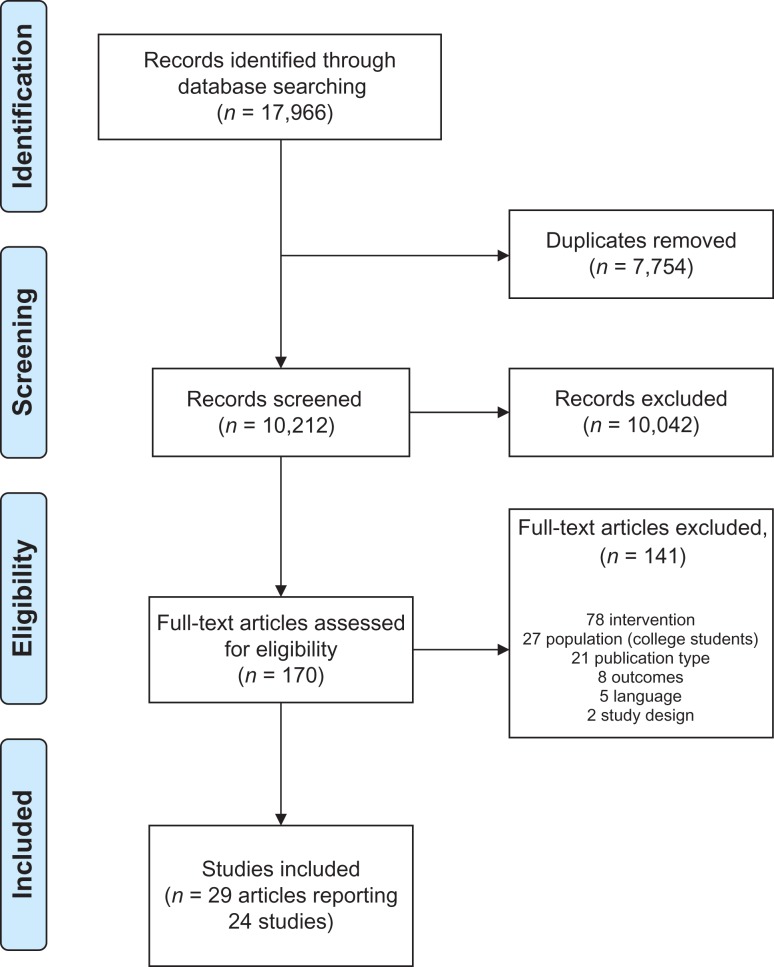
Results: Searches produced 10,212 results and 24 studies were included in the review. Most campaigns used TV or radio in combination with other media channels were conducted in developed countries and were of weak quality. There was little evidence of reductions in alcohol consumption associated with exposure to campaigns based on 13 studies which measured consumption, although most did not state this as a specific aim of the campaign. There were some increases in treatment seeking and information seeking and mixed evidence of changes in intentions, motivation, beliefs and attitudes about alcohol. Campaigns were associated with increases in knowledge about alcohol consumption, especially where levels had initially been low. Recall of campaigns was high.
Conclusion: Mass media health campaigns about alcohol are often recalled by individuals, have achieved changes in knowledge, attitudes and beliefs about alcohol but there is little evidence of reductions in alcohol consumption.
Short summary: There is little evidence that mass media campaigns have reduced alcohol consumption although most did not state that they aimed to do so. Studies show recall of campaigns is high and that they can have an impact on knowledge, attitudes and beliefs about alcohol consumption.
References
-
- Allamani A, Forni E, Ammannati P, et al. (2000) Alcohol carousel and children’s school drawings as part of a community educational strategy. Subst Use Misuse 35:125–39. - PubMed
-
- Allamani A, Beccaria F, Einstein S (2017) A commentary on the limits of alcoholic beverage policies. Alcohol Alcohol https://doi.org/10.1093/alcalc/agx048. - DOI - PubMed
-
- Anderson P, Chisholm D, Fuhr DC (2009) Effectiveness and cost-effectiveness of policies and programmes to reduce the harm caused by alcohol. Lancet 373:2234–46. - PubMed
-
- Atkinson AM, Sumnall H, Measham F (2011) Depictions of alcohol use in a UK Government partnered online social marketing campaign: Hollyoaks ‘The Morning after the night before’. Drugs 18:454–67.
Publication types
MeSH terms
Grants and funding
LinkOut - more resources
Full Text Sources
Other Literature Sources
Medical
Molecular Biology Databases
