


The Effects of Physical Exercise on Fatty Liver Disease
- PMID: 29212576
- PMCID: PMC5954622
- DOI: 10.3727/105221617X15124844266408
The Effects of Physical Exercise on Fatty Liver Disease
Abstract
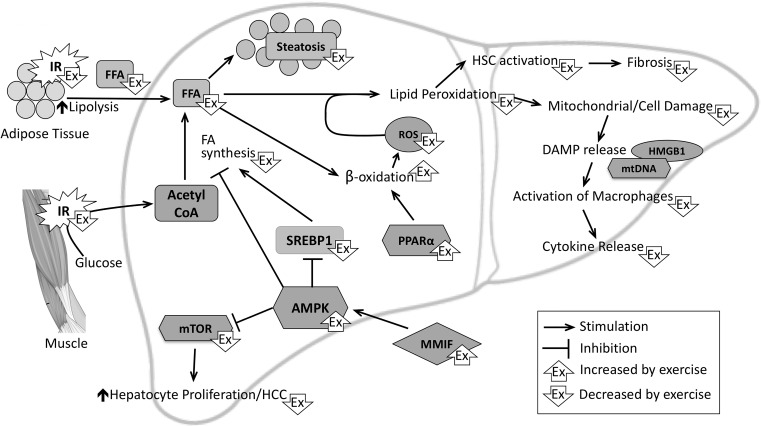
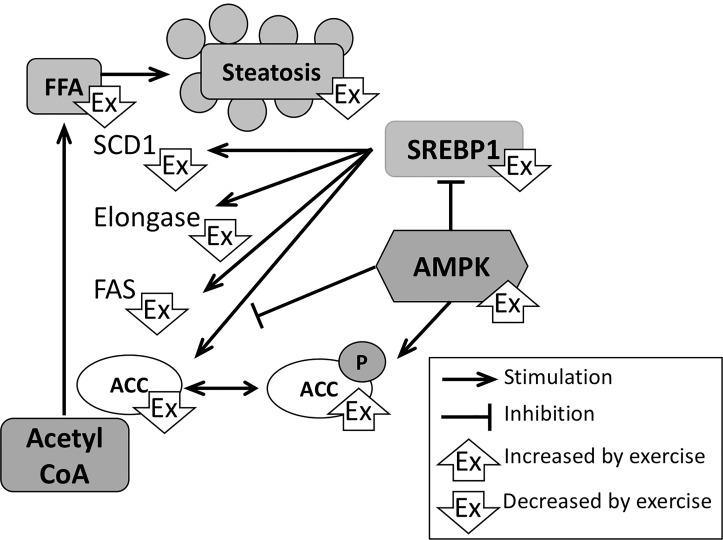
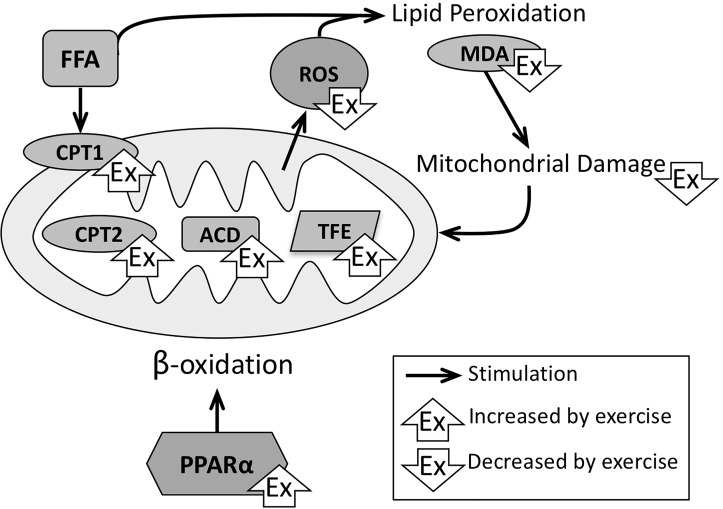
The increasing prevalence of obesity has made nonalcoholic fatty liver disease (NAFLD) the most common chronic liver disease. As a consequence, NAFLD and especially its inflammatory form nonalcoholic steatohepatitis (NASH) are the fastest increasing etiology of end-stage liver disease and hepatocellular carcinoma. Physical inactivity is related to the severity of fatty liver disease irrespective of body weight, supporting the hypothesis that increasing physical activity through exercise can improve fatty liver disease. This review summarizes the evidence for the effects of physical exercise on NAFLD and NASH. Several clinical trials have shown that both aerobic and resistance exercise reduce the hepatic fat content. From clinical and basic scientific studies, it is evident that exercise affects fatty liver disease through various pathways. Improved peripheral insulin resistance reduces the excess delivery of free fatty acids and glucose for free fatty acid synthesis to the liver. In the liver, exercise increases fatty acid oxidation, decreases fatty acid synthesis, and prevents mitochondrial and hepatocellular damage through a reduction of the release of damage-associated molecular patterns. In conclusion, physical exercise is a proven therapeutic strategy to improve fatty liver disease.
Figures
References
-
- Armstrong MJ, Houlihan DD, Bentham L, Shaw JC, Cramb R, Olliff S, Gill PS, Neuberger JM, Lilford RJ, Newsome PN. Presence and severity of non-alcoholic fatty liver disease in a large prospective primary care cohort. J Hepatol. 2012;56(1):234–40. - PubMed
-
- Williams CD, Stengel J, Asike MI, Torres DM, Shaw J, Contreras M, Landt CL, Harrison SA. Prevalence of nonalcoholic fatty liver disease and nonalcoholic steatohepatitis among a largely middle-aged population utilizing ultrasound and liver biopsy: A prospective study. Gastroenterology 2011;140(1):124–31. - PubMed
-
- Younossi ZM, Stepanova M, Afendy M, Fang Y, Younossi Y, Mir H, Srishord M. Changes in the prevalence of the most common causes of chronic liver diseases in the United States from 1988 to 2008. Clin Gastroenterol Hepatol. 2011;9(6):524–30.e1; quiz e60. - PubMed
-
- Michelotti GA, Machado MV, Diehl AM. NAFLD, NASH and liver cancer. Nat Rev Gastroenterol Hepatol. 2013;10(11):656–65. - PubMed
-
- Mittal S, El-Serag HB, Sada YH, Kanwal F, Duan Z, Temple S, May SB, Kramer JR, Richardson PA, Davila JA. Hepatocellular carcinoma in the absence of cirrhosis in United States veterans is associated with nonalcoholic fatty liver disease. Clin Gastroenterol Hepatol. 2016;14(1):124–31 e1. - PMC - PubMed
Publication types
MeSH terms
Substances
Grants and funding
LinkOut - more resources
Full Text Sources
Other Literature Sources
Medical
Research Materials