


Hookah smoking behavior initiation in the context of Millennials
- PMID: 27003670
- PMCID: PMC4983476
- DOI: 10.1016/j.puhe.2016.02.013
Hookah smoking behavior initiation in the context of Millennials
Abstract
Objectives: This study aims to examine current hookah users' perceptions, attitudes, and normative beliefs regarding hookah smoking to further elucidate the rise in hookah smoking prevalence among young adults (aged 18-24 years) and reveal why hookah smoking is perceived as less harmful than other forms of tobacco consumption.
Study design: Qualitative.
Methods: Data from six focus group interviews with hookah smokers aged between 18 and 24 years were analyzed using a grounded theory approach. Focus groups were evenly split between frequent and infrequent hookah users, and were predominantly composed of college students, with two groups of hookah users consisting of 18-24 year olds of non-student status.
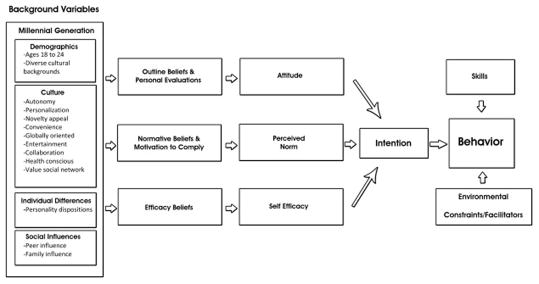
Results: Hookah users shared a much larger set of positive hookah smoking behavioral beliefs as opposed to negative behavioral beliefs. Generational traits served as the overarching commonality among the behavior performance initiation determinants observed. The most notable generational trends observed were within the cultural category, which included the following millennial characteristics: autonomy, personalization, novelty appeal, convenience, globally oriented, entertainment, collaboration, health conscious, and valuing their social network.
Conclusions: Millennial hookah users revealed mindfulness regarding both potential negative and positive reasons stemming from continued hookah use; however, behavioral beliefs were primarily fixated on the perception that hookah smoking was a healthier alternative to cigarette smoking. Future implications for this study's findings include generating more positive ways to express these traits for young adults; policy implications include raising hookah bar age limits, implementing indoor smoking restrictions, and limiting the ease of accessibility for purchasing hookah supplies.
Keywords: Hookah; Qualitative research; Young adult tobacco use.
Copyright © 2016 The Royal Society for Public Health. Published by Elsevier Ltd. All rights reserved.
Conflict of interest statement
None declared.
Figures
References
-
- Shihadeh A, Saleh R. Polycyclic aromatic hydrocarbons, carbon monoxide, "tar", and nicotine in the mainstream smoke aerosol of the narghile water pipe. [Accessed August 4, 2014];Food Chem Toxicol. 2005 43(5):655–61. http://www.ncbi.nlm.nih.gov/pubmed/15778004. - PubMed
MeSH terms
Grants and funding
LinkOut - more resources
Full Text Sources
Other Literature Sources
Medical
