


The alcohol harm paradox: using a national survey to explore how alcohol may disproportionately impact health in deprived individuals
- PMID: 26888538
- PMCID: PMC4758164
- DOI: 10.1186/s12889-016-2766-x
The alcohol harm paradox: using a national survey to explore how alcohol may disproportionately impact health in deprived individuals
Abstract
Background: Internationally, studies show that similar levels of alcohol consumption in deprived communities (vs. more affluent) result in higher levels of alcohol-related ill health. Hypotheses to explain this alcohol harm paradox include deprived drinkers: suffering greater combined health challenges (e.g. smoking, obesity) which exacerbate effects of alcohol harms; exhibiting more harmful consumption patterns (e.g. bingeing); having a history of more harmful consumption; and disproportionately under-reporting consumption. We use a bespoke national survey to assess each of these hypotheses.
Methods: A national telephone survey designed to test this alcohol harm paradox was undertaken (May 2013 to April 2014) with English adults (n = 6015). Deprivation was assigned by area of residence. Questions examined factors including: current and historic drinking patterns; combined health challenges (smoking, diet, exercise and body mass); and under-reported consumption (enhanced questioning on atypical/special occasion drinking). For each factor, analyses examined differences between deprived and more affluent individuals controlled for total alcohol consumption.
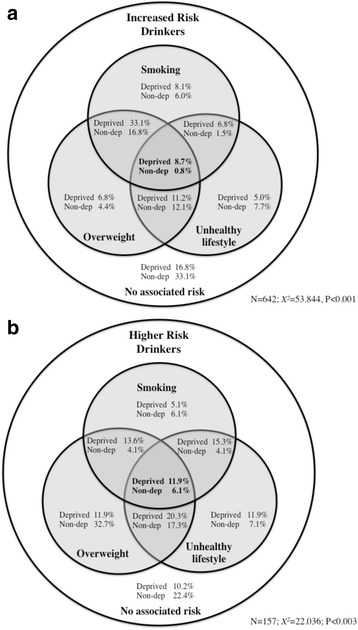
Results: Independent of total consumption, deprived drinkers were more likely to smoke, be overweight and report poor diet and exercise. Consequently, deprived increased risk drinkers (male >168-400 g, female >112-280 g alcohol/week) were >10 times more likely than non-deprived counterparts to drink in a behavioural syndrome combining smoking, excess weight and poor diet/exercise. Differences by deprivation were significant but less marked in higher risk drinkers (male >400 g, female >280 g alcohol/week). Current binge drinking was associated with deprivation independently of total consumption and a history of bingeing was also associated with deprivation in lower and increased risk drinkers.
Conclusions: Deprived increased/higher drinkers are more likely than affluent counterparts to consume alcohol as part of a suite of health challenging behaviours including smoking, excess weight and poor diet/exercise. Together these can have multiplicative effects on risks of wholly (e.g. alcoholic liver disease) and partly (e.g. cancers) alcohol-related conditions. More binge drinking in deprived individuals will also increase risks of injury and heart disease despite total alcohol consumption not differing from affluent counterparts. Public health messages on how smoking, poor diet/exercise and bingeing escalate health risks associated with alcohol are needed, especially in deprived communities, as their absence will contribute to health inequalities.
Figures
References
-
- World Health Organization . Global status report on alcohol and health 2014. Geneva: World Health Organization; 2014.
Publication types
MeSH terms
Grants and funding
LinkOut - more resources
Full Text Sources
Other Literature Sources
Medical
Miscellaneous
