


Concurrent and aerobic exercise training promote similar benefits in body composition and metabolic profiles in obese adolescents
- PMID: 26611872
- PMCID: PMC4660803
- DOI: 10.1186/s12944-015-0152-9
Concurrent and aerobic exercise training promote similar benefits in body composition and metabolic profiles in obese adolescents
Abstract
Background: The prevalence of obesity in pediatric population is increasing at an accelerated rate in many countries, and has become a major public health concern. Physical activity, particularly exercise training, remains to be a cornerstone of pediatric obesity interventions. The purpose of our current randomized intervention trial was to compare the effects of two types of training matched for training volume, aerobic and concurrent, on body composition and metabolic profile in obese adolescents. Thus the aim of the study was compare the effects of two types of training matched for training volume, aerobic and concurrent, on body composition and metabolic profile in obese adolescents.
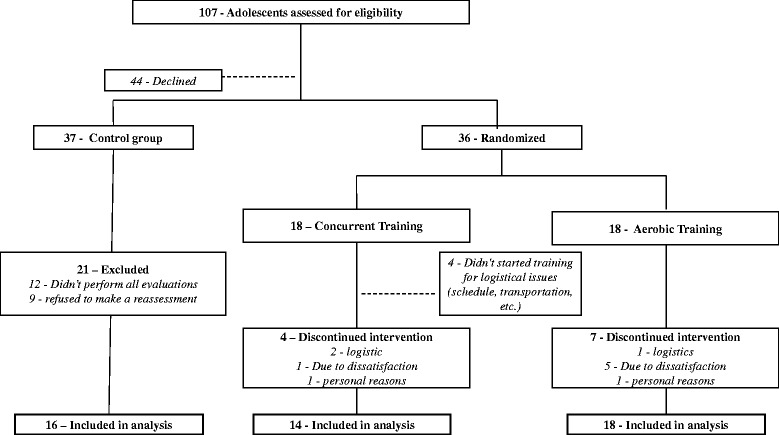
Methods: 32 obese adolescents participated in two randomized training groups, concurrent or aerobic, for 20 weeks (50 mins x 3 per week, supervised), and were compared to a 16-subject control group. We measured the percentage body fat (%BF, primary outcome), fat-free mass, percentage of android fat by dual energy x-ray absorptiometry, and others metabolic profiles at baseline and after interventions, and compared them between groups using the Intent-to-treat design.
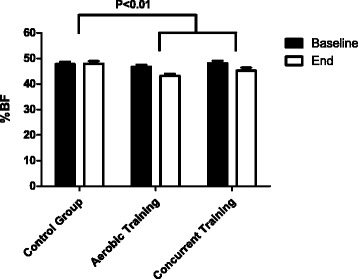
Results: In 20 weeks, both exercise training groups significantly reduced %BF by 2.9-3.6% as compare to no change in the control group (p = 0.042). There were also positive changes in lipid levels in exercise groups. No noticeable changes were found between aerobic and concurrent training groups.
Conclusions: The benefits of exercise in reducing body fat and metabolic risk profiles can be achieved by performing either type of training in obese adolescents.
Registration number: RBR-4HN597.
Figures
References
-
- Lyra A, Bonfitto AJ, Barbosa VLP, Bezerra AC, Longui CA, Monte O, et al. Comparison of Methods for the Measurement of Body Composition in Overweight and Obese Brazilian Children and Adolescents before and after a Lifestyle Modification Program. Ann Nutr Metab. 2015;66:26–30. doi: 10.1159/000369359. - DOI - PubMed
-
- Inoue DS, De Mello MT, Foschini D, Lira FS, De Piano GA, Da Silveira Campos RM, et al. Linear and undulating periodized strength plus aerobic training promote similar benefits and lead to improvement of insulin resistance on obese adolescents. J Diabetes Complications. 2015;29:258–64. doi: 10.1016/j.jdiacomp.2014.11.002. - DOI - PubMed
-
- IBGE POF: Medidas Antropométricas de Crianças e Adolescentes 2008/2009. 2010; Available from http://www.ibge.gov.br/ (updated 2011; cited).
Publication types
MeSH terms
Substances
Associated data
LinkOut - more resources
Full Text Sources
Other Literature Sources
Medical
Miscellaneous
