It only takes once: The absent-exempt heuristic and reactions to comparison-based sexual risk information
- PMID: 26098587
- PMCID: PMC4477276
- DOI: 10.1037/a0039277
It only takes once: The absent-exempt heuristic and reactions to comparison-based sexual risk information
Abstract
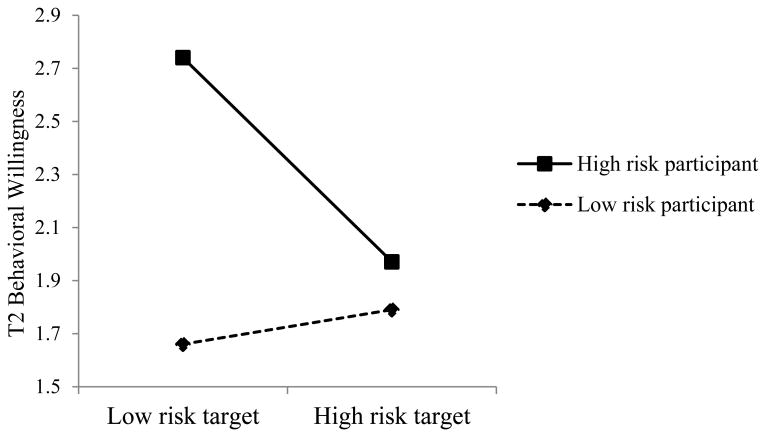
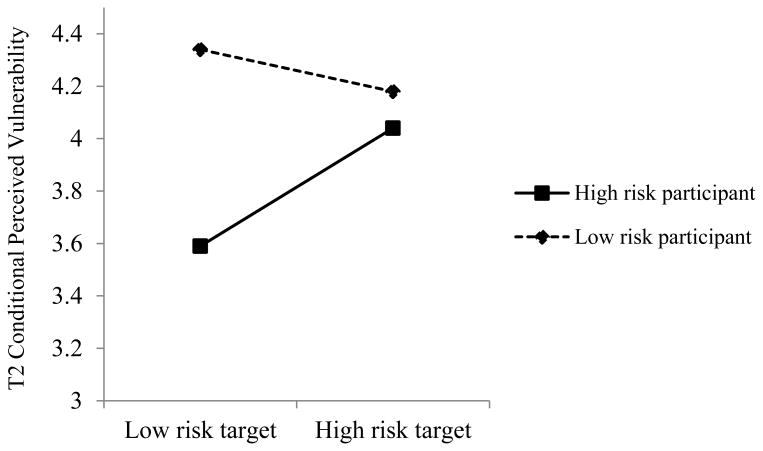
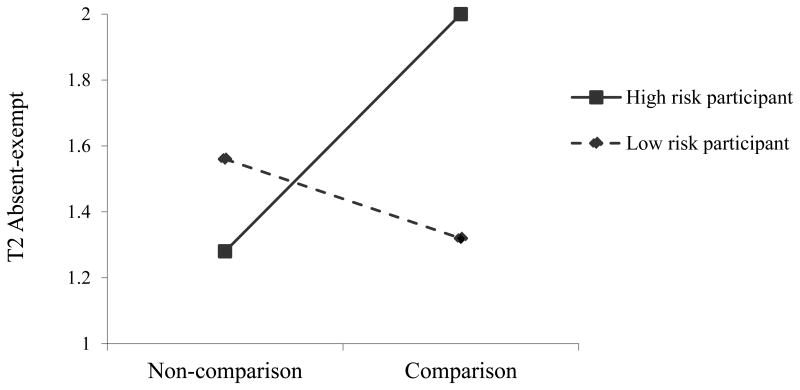
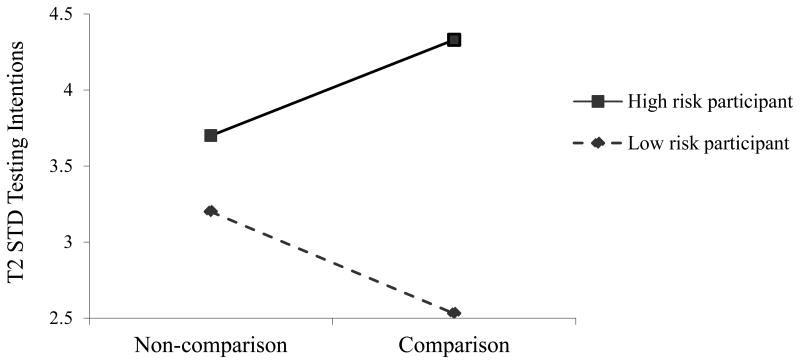
Three studies (N = 545) investigated the effects of social comparison on the "absent-exempt" (AE) heuristic (feeling exempt from future risk). Study 1 examined how comparison with an infected peer (comparison target) who was similar or nonsimilar in terms of sexual risk (number of partners, lack of condom use), influenced willingness and intentions to engage in sex without a condom, and conditional perceived vulnerability to an STD. Participants generally reported lower willingness and higher conditional vulnerability if they compared with a similar-risk level target. However, high-risk students who compared with a low-risk target engaged in what appeared to be AE thinking, reporting the highest willingness and lowest conditional vulnerability. Intentions to have sex without a condom were not influenced. Study 2 included a direct measure of AE thinking and compared the impact of a low-risk comparison target with a Public Service Announcement (PSA) stating that negative outcomes (STDs) can happen even to low-risk targets. Among high-risk participants, comparing with the low-risk target increased AE thinking. The effects in Studies 1 and 2 were strongest among participants high in tendencies to socially compare. Study 3 explored whether AE thinking could be decreased by encouraging more reasoned processing. Results indicated that asking participants to think about the illogicality of AE thinking reduces AE endorsement and increases STD testing intentions. Findings suggest that comparison-based information can have a stronger influence on health cognitions than analytic-based information (e.g., most PSAs). Implications for dual-processing models of decision-making and their applicability to health messages are discussed.
(c) 2015 APA, all rights reserved).
Figures
References
-
- Aiken LS, West SG. Multiple regression: Testing and interpreting interactions. Newbury Park, CA: Sage Publications; 1991.
-
- Ajzen I. The theory of planned behavior. Organizational Behavior and Human Decision Processes. 1991;50(2):179–211. doi: 10.1080/08870446.2011.613995. - DOI
-
- Albert D, Steinberg L. Judgment and decision making in adolescence. Journal of Research on Adolescence. 2011;21(1):211–224. doi: 10.1111/j.1532-7795.2010.00724.x. - DOI
-
- Blanton H, VandenEijnden RJ, Buunk BP, Gibbons FX, Gerrard M, Bakker A. Accentuate the Negative: Social Images in the Prediction and Promotion of Condom Use. Journal of Applied Social Psychology. 2001;31(2):274–295. doi: 10.1111/j.1559-1816.2001.tb00197.x. - DOI
Publication types
MeSH terms
Grants and funding
LinkOut - more resources
Full Text Sources
Other Literature Sources
Research Materials
Miscellaneous