. 2015 Mar 9;10(3):e0119462.
doi: 10.1371/journal.pone.0119462. eCollection 2015.

Quantitative profiling of colorectal cancer-associated bacteria reveals associations between fusobacterium spp., enterotoxigenic Bacteroides fragilis (ETBF) and clinicopathological features of colorectal cancer

Affiliations

Quantitative profiling of colorectal cancer-associated bacteria reveals associations between fusobacterium spp., enterotoxigenic Bacteroides fragilis (ETBF) and clinicopathological features of colorectal cancer

Katie S Viljoen et al. PLoS One. .

Abstract

Various studies have presented clinical or in vitro evidence linking bacteria to colorectal cancer, but these bacteria have not previously been concurrently quantified by qPCR in a single cohort. We quantify these bacteria (Fusobacterium spp., Streptococcus gallolyticus, Enterococcus faecalis, Enterotoxigenic Bacteroides fragilis (ETBF), Enteropathogenic Escherichia coli (EPEC), and afaC- or pks-positive E. coli) in paired tumour and normal tissue samples from 55 colorectal cancer patients. We further investigate the relationship between a) the presence and b) the level of colonisation of each bacterial species with site and stage of disease, age, gender, ethnicity and MSI-status. With the exception of S. gallolyticus, we detected all bacteria profiled here in both tumour and normal samples at varying frequencies. ETBF (FDR = 0.001 and 0.002 for normal and tumour samples) and afaC-positive E. coli (FDR = 0.03, normal samples) were significantly enriched in the colon compared to the rectum. ETBF (FDR = 0.04 and 0.002 for normal and tumour samples, respectively) and Fusobacterium spp. (FDR = 0.03 tumour samples) levels were significantly higher in late stage (III/IV) colorectal cancers. Fusobacterium was by far the most common bacteria detected, occurring in 82% and 81% of paired tumour and normal samples. Fusobacterium was also the only bacterium that was significantly higher in tumour compared to normal samples (p = 6e-5). We also identified significant associations between high-level colonisation by Fusobacterium and MSI-H (FDR = 0.05), age (FDR = 0.03) or pks-positive E. coli (FDR = 0.01). Furthermore, we exclusively identified atypical EPEC in our cohort, which has not been previously reported in association with colorectal cancer. By quantifying colorectal cancer-associated bacteria across a single cohort, we uncovered inter- and intra-individual patterns of colonization not previously recognized, as well as important associations with clinicopathological features, especially in the case of Fusobacterium and ETBF.


Conflict of interest statement

Competing Interests: The authors have declared that no competing interests exist.

Figures

Fig 1
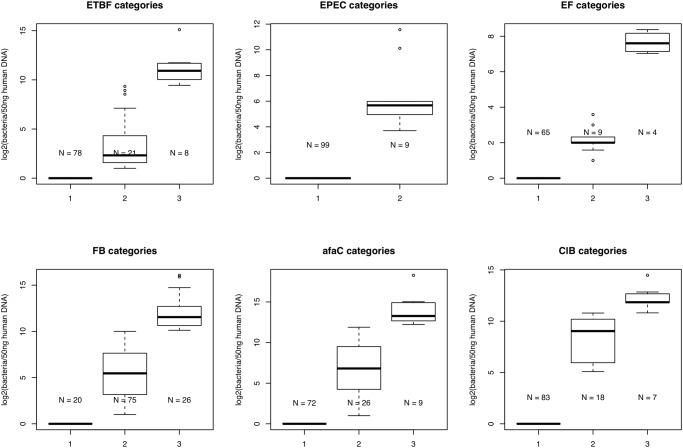
Fig 1. Levels of colonization by each bacterium/gene were categorized using the third quartile (taken across colonisation-positive samples) as a cutoff for high- or low-level colonisation.
Categories: 1 (No colonisation), 2 (low colonisation), 3 (high colonisation). In the case of EPEC, because there were so few EPEC-positive patients (N = 6), samples were analysed as positive or negative only. EF: E. faecalis; FB: Fusobacterium.
Fig 2
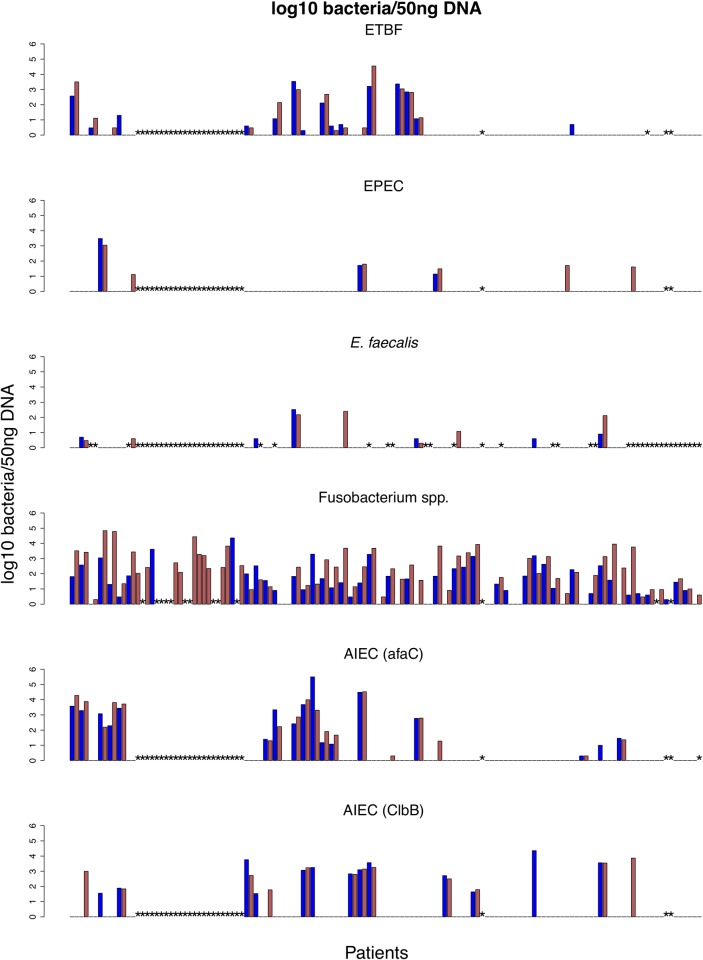
Fig 2. qPCR quantification of bacteria in paired patient samples, expressed as log10 bacteria/50ng of patient DNA.
Each bar represents one samples (either tumour or normal) and the order of samples are the same for each bacterium. Red (tumour); blue (normal); *(Not determined).
Fig 3
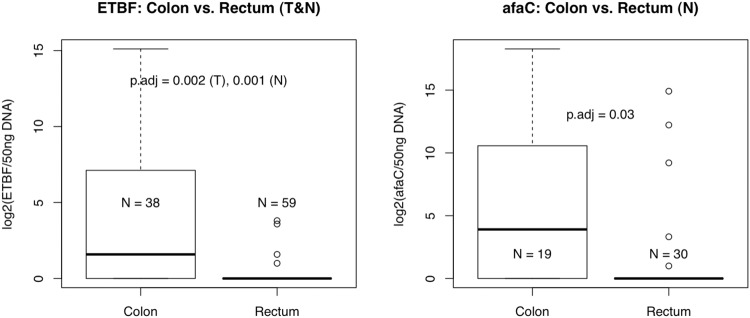
Fig 3. ETBF and afaC+ E. coli are significantly more prevalent in colon vs. rectal cancers.
This applies to both tumour and normal tissue in the case of ETBF (FDR = 0.002, 0.001, respectively) and normal tissue only in the case of afaC (FDR = 0.03).
Fig 4
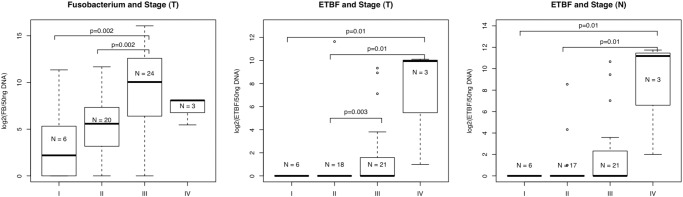
Fig 4. ETBF and Fusobacterium are found at significantly higher levels in late stage (III/IV) cancers.
For Fusobacterium, individual stages were compared in a pairwise manner using Dunn’s test. For ETBF, individual stages were compared in a pairwise manner using Fisher’s exact test. Fusobacterium is found at significantly higher levels in stage III CRCs compared to stage I or II CRCs. ETBF is found more frequently in stage III or IV CRCs compared to stage I or II CRCs; and in the corresponding normal mucosa of stage IV CRCs compared to stage I CRCs.
Fig 5
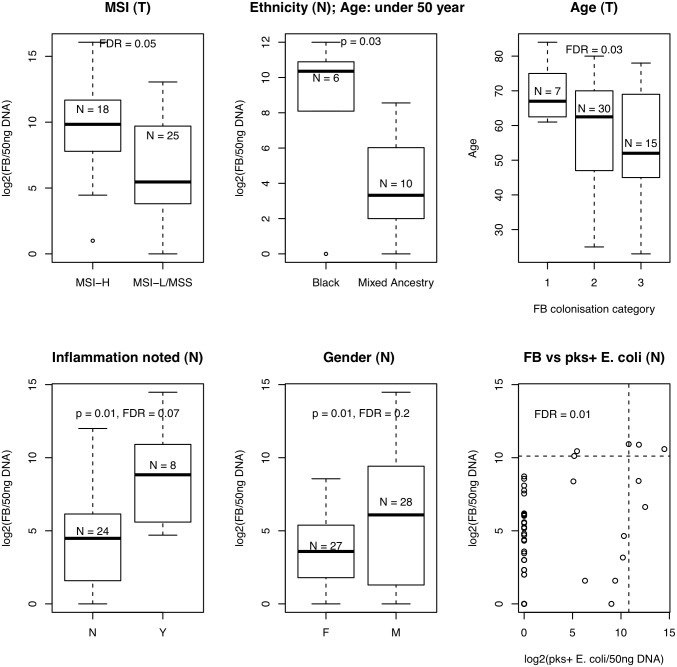
Fig 5. Fusobacterium clinicopathological associations.
High-level colonisation by Fusobacterium is significantly more prevalent in younger patients, males and patients of Black ethnicity. Due to the disproportionately high number of young, black patients seen in our cohort the relationship between ethnicity and levels of colonisation by Fusobacterium was assessed using the subset of patients ≤ 50 years. A borderline significant relationship was seen between high-level colonisation by Fusobacterium and MSI-H compared to MSS/MSI-L (In our cohort three MSI-L cases were included with the MSS cohort). The vertical and horizontal dotted lines in the bottom right Fig. represent the cutoff for high-level colonisation by pks+ E. coli and Fusobacterium, respectively (see methods for further detail). FB: Fusobacterium; B: Black; C: Caucasian; I: Indian; M: Mixed Ancestry; N: normal tissue; F: Female; M: Male.

References

    1. Schiff M, Castle PE, Jeronimo J, Rodriguez AC, Wacholder S. Human papillomavirus and cervical cancer. Lancet. 2007;370: 890–907. - PubMed
    1. Manuel A, Machado D, Figueiredo C, Seruca R, Juel L. Helicobacter pylori infection generates genetic instability in gastric cells. Biochim Biophys Acta. Elsevier B.V.; 2010; 10.1016/j.bbcan.2010.01.007 - DOI - PubMed
    1. Vogelmann R, Amieva MR. The role of bacterial pathogens in cancer. Curr Opin Microbiol. 2007;10: 76–81. 10.1016/j.mib.2006.12.004 - DOI - PubMed
    1. McCoy WC, JMM 3rd. Enterococcal endocarditis associated with carcinoma of the sigmoid; report of a case. Journal Med Assoc State Alabama. 1951;21. - PubMed
    1. Warren L, Freeman JD, Dreolini L, Castellarin M, Krzywinski M, Strauss J, et al. Fusobacterium nucleatum infection is prevalent in human colorectal carcinoma. Genome Res. 2012;22: 299–306. 10.1101/gr.126516.111 - DOI - PMC - PubMed

Publication types

MeSH terms