


Adolescent alcohol use: Social comparison orientation moderates the impact of friend and sibling behaviour
- PMID: 25243814
- PMCID: PMC4368503
- DOI: 10.1111/bjhp.12118
Adolescent alcohol use: Social comparison orientation moderates the impact of friend and sibling behaviour
Abstract
Objectives: Research has indicated that both peers and siblings influence adolescents' alcohol use (e.g., Windle, 2000, Appl. Dev. Sci., 4, 98). The present two studies examined whether social comparison orientation (SCO) moderates the effects of perceived friend and sibling alcohol use on adolescents' alcohol use cognitions and behaviours.
Design and methods: Two studies examined the role of SCO as a moderator of social influence (perceived friend alcohol use in Study 1 and both perceived friend use and sibling-reported alcohol use in Study 2) on prototype perceptions and willingness to drink alcohol (Studies 1 and 2) as well as actual alcohol consumption (Study 2) among early adolescents.
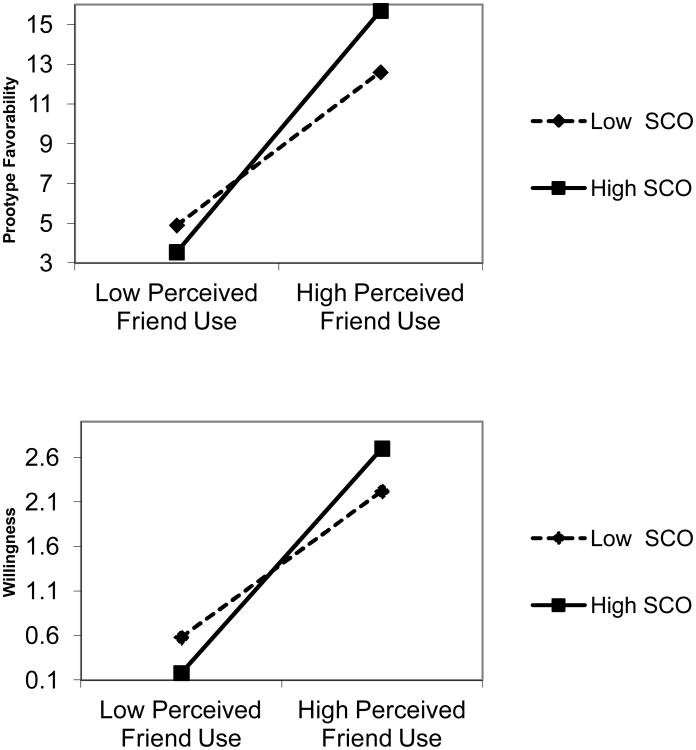
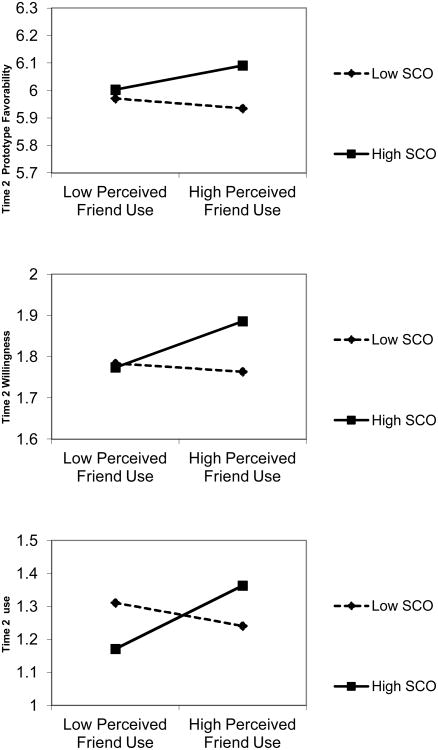
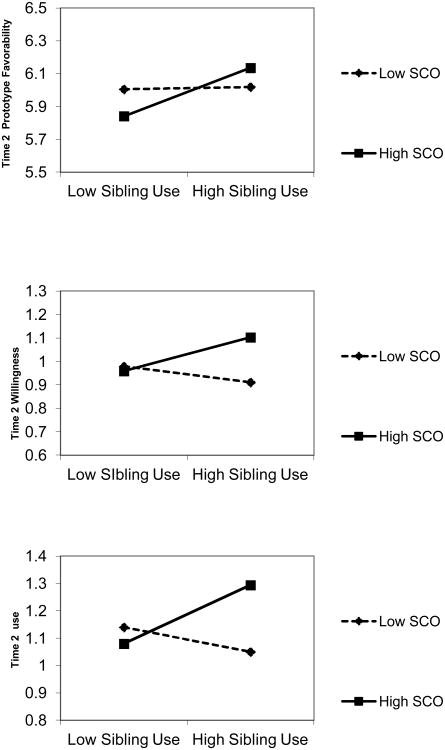
Results: In Study 1, cross-sectional results indicated that SCO moderated the effect of perceived friend alcohol use on favourable images of drinkers and willingness to drink. Study 2 found that SCO moderated the effects of perceived friend use and sibling use on favourable images of alcohol users, willingness to use alcohol, and change in alcohol use over 3 years such that adolescents who reported engaging in social comparison more often reported greater willingness, more favourable images, and increases in alcohol use when perceived friend use or sibling use was high.
Conclusions: These studies highlight the importance of SCO as a moderator of susceptibility to the social influences of friends and siblings and may hold important implications for adolescent alcohol use prevention programmes and models of health risk behaviour.
Keywords: adolescent; alcohol use; cognitions; social comparison.
© 2014 The British Psychological Society.
Figures
References
-
- Aiken LS, West SG. Multiple Regression: Testing and interpreting interactions. Newbury Park, CA: Sage; 1991.
-
- Ary D, Tildesley E, Hops H, et al. The influence of parent, sibling, and peer modeling and attitudes on adolescent use of alcohol. International Journal of the Addictions. 1993;28:853–880. - PubMed
-
- Bandura A. Social Learning Theory. Oxford, England: Prentice Hall; 1977.
-
- Barnes GM, Hoffman JH, Welte JW, Farrell MP, Dintcheff BA. Effects of parental monitoring and peer deviance on substance use and delinquency. Journal of Marriage and Family. 2006;68:1084–1104.
Publication types
MeSH terms
Grants and funding
LinkOut - more resources
Full Text Sources
Other Literature Sources
