


The effectiveness of electronic screening and brief intervention for reducing levels of alcohol consumption: a systematic review and meta-analysis
- PMID: 24892426
- PMCID: PMC4060043
- DOI: 10.2196/jmir.3193
The effectiveness of electronic screening and brief intervention for reducing levels of alcohol consumption: a systematic review and meta-analysis
Abstract
Background: Electronic screening and brief intervention (eSBI) has been shown to reduce alcohol consumption, but its effectiveness over time has not been subject to meta-analysis.
Objective: The current study aims to conduct a systematic review and meta-analysis of the available literature to determine the effectiveness of eSBI over time in nontreatment-seeking hazardous/harmful drinkers.
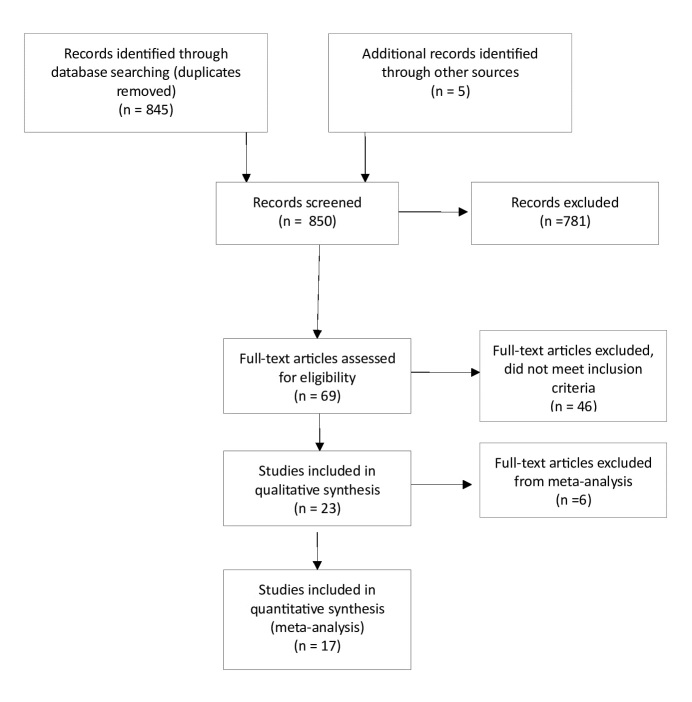
Methods: A systematic review and meta-analysis of relevant studies identified through searching the electronic databases PsychINFO, Medline, and EMBASE in May 2013. Two members of the study team independently screened studies for inclusion criteria and extracted data. Studies reporting data that could be transformed into grams of ethanol per week were included in the meta-analysis. The mean difference in grams of ethanol per week between eSBI and control groups was weighted using the random-effects method based on the inverse-variance approach to control for differences in sample size between studies.
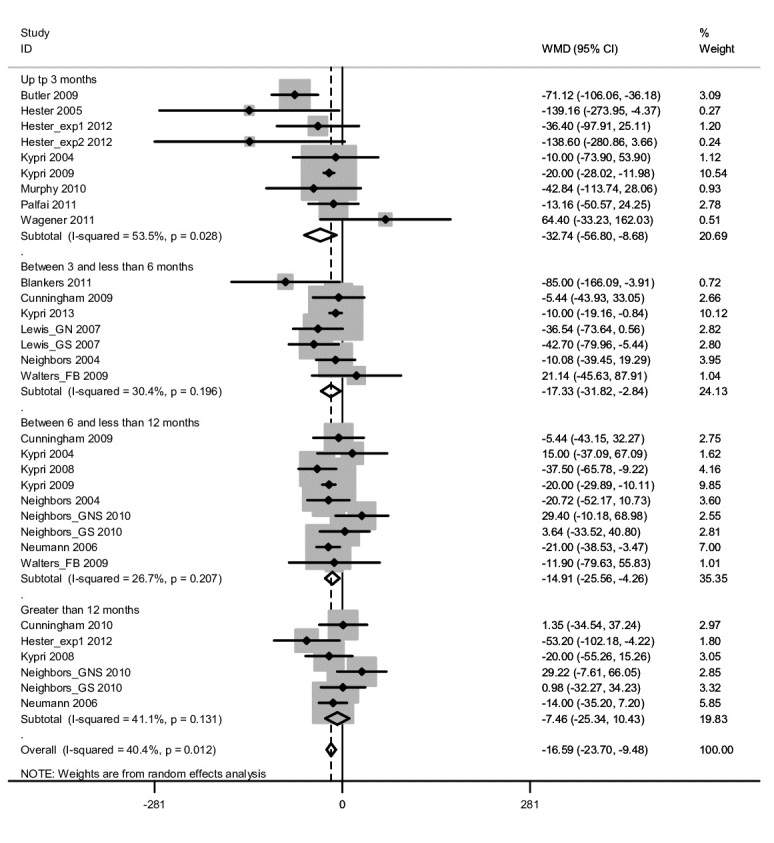
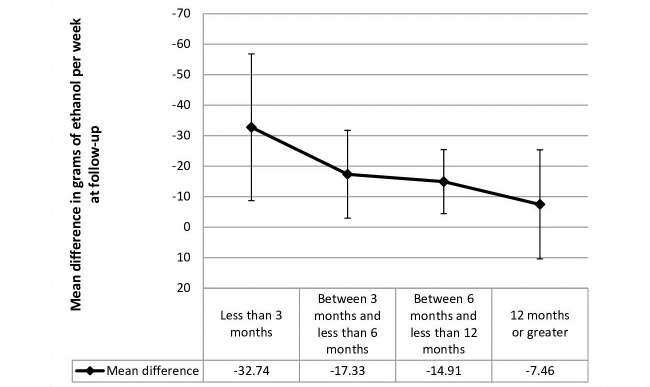
Results: There was a statistically significant mean difference in grams of ethanol consumed per week between those receiving an eSBI versus controls at up to 3 months (mean difference -32.74, 95% CI -56.80 to -8.68, z=2.67, P=.01), 3 to less than 6 months (mean difference -17.33, 95% CI -31.82 to -2.84, z=2.34, P=.02), and from 6 months to less than 12 months follow-up (mean difference -14.91, 95% CI -25.56 to -4.26, z=2.74, P=.01). No statistically significant difference was found at a follow-up period of 12 months or greater (mean difference -7.46, 95% CI -25.34 to 10.43, z=0.82, P=.41).
Conclusions: A significant reduction in weekly alcohol consumption between intervention and control conditions was demonstrated between 3 months and less than 12 months follow-up indicating eSBI is an effective intervention.
Keywords: Internet; alcohol drinking; computers; intervention studies; meta-analysis.
Conflict of interest statement
Conflicts of Interest: None declared.
Figures
References
-
- Cunningham JA, Breslin FC. Only one in three people with alcohol abuse or dependence ever seek treatment. Addict Behav. 2004 Jan;29(1):221–3. - PubMed
-
- Drummond C, Oyefeso A, Phillips T, Cheeta S, Deluca P, Perryman K, Winfield H, Jenner J, Cobain K, Galea S. Alcohol needs assessment research project (ANARP): the 2004 national alcohol needs assessment for England. London: Department of Health; 2005. [2013-12-08]. http://www.alcohollearningcentre.org.uk/_library/Resources/ALC/OtherOrga....
-
- Kaner EF, Beyer F, Dickinson HO, Pienaar E, Campbell F, Schlesinger C, Heather N, Saunders J, Burnand B. Effectiveness of brief alcohol interventions in primary care populations. Cochrane Database Syst Rev. 2007;(2):CD004148. doi: 10.1002/14651858.CD004148.pub3. http://www.uvm.edu/~satc/psyc380/readings%232/reading_11a.pdf - DOI - PubMed
-
- Kaner E, Bland M, Cassidy P, Coulton S, Dale V, Deluca P, Gilvarry E, Godfrey C, Heather N, Myles J, Newbury-Birch D, Oyefeso A, Parrott S, Perryman K, Phillips T, Shepherd J, Drummond C. Effectiveness of screening and brief alcohol intervention in primary care (SIPS trial): pragmatic cluster randomised controlled trial. BMJ. 2013;346:e8501. http://www.bmj.com/content/346/bmj.e8501 - PMC - PubMed
Publication types
MeSH terms
Grants and funding
LinkOut - more resources
Full Text Sources
Other Literature Sources
Medical
