


Screening, brief intervention, and referral to treatment (SBIRT) for substance use in a school-based program: services and outcomes
- PMID: 23786511
- PMCID: PMC3703893
- DOI: 10.1111/j.1521-0391.2012.00299.x
Screening, brief intervention, and referral to treatment (SBIRT) for substance use in a school-based program: services and outcomes
Abstract
Background: Despite the advantages of using high schools for conducting school-based Screening, Brief Intervention, and Referral to Treatment (SBIRT) programs for adolescent substance misuse, there have been very few studies of Brief Interventions (BIs) in these settings.
Objectives: This multi-site, repeated measures study examined outcomes of adolescents who received SBIRT services and compared the extent of change in substance use based on the intensity of intervention received.
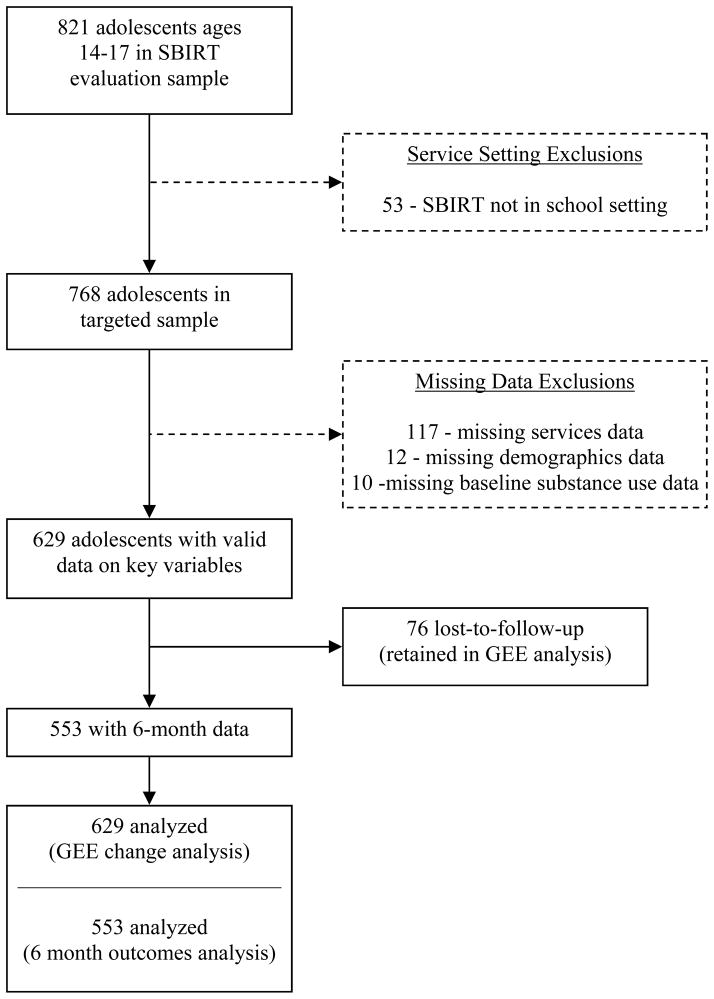
Methods: Participants consisted of 629 adolescents, ages 14-17, who received SBIRT services across 13 participating high schools in New Mexico. The level of service received and number of sessions were collected through administrative records, while the number of self-reported days in the past month of drinking; drinking to intoxication; and drug use were gathered at baseline and 6-month follow-up.
Results: BI was provided to 85.1% of adolescents, while 14.9% received brief treatment or referral to treatment (BT/RT). Participants receiving any intervention reported significant reductions in frequency of drinking to intoxication (p < .05) and drug use (p < .001), but not alcohol use, from baseline to 6-month follow-up. The magnitude of these reductions did not differ based on service variables. Controlling for baseline frequency of use, a BT/RT service level was associated with more days of drinking at 6-month follow-up (p < .05), but was no longer significant when controlling for number of service sessions received.
Conclusions and scientific significance: These findings support school-based SBIRT for adolescents, but more research is needed on this promising approach.
Copyright © American Academy of Addiction Psychiatry.
Conflict of interest statement
The authors report no conflicts of interest. The authors alone are responsible for the content and writing of this paper.
References
-
- Marsden J, Stillwell G, Barlow H, et al. An evaluation of a brief motivational intervention among young ecstasy and cocaine users: no effect on substance and alcohol use outcomes. Addiction. 2006;101:1014–1026. - PubMed
-
- McCambridge J, Strang J. The efficacy of single-session motivational interviewing in reducing drug consumption and perceptions of drug-related risk and harm among young people: results from a multi-site cluster randomized trial. Addiction. 2004;99:39–52. - PubMed
-
- United Nations Office on Drugs and Crime (UNODC) Analysis. Vol. 1. Vienna: UNODC; 2005. World Drug Report.
-
- Substance Abuse and Mental Health Services Administration. NSDUH Series H-39, HHS Publication No SMA 10–4609. Rockville, MD: Center for Behavioral Health Statistics and Quality; 2010. Results from the 2009 National Survey on Drug Use and Health: Mental Health Findings.
-
- Duncan S, Salter A, Duncan T, Hops H. Adolescent alcohol use development and young adult outcome. Drug and Alcohol Dependence. 1997;49:39–48. - PubMed
Publication types
MeSH terms
Grants and funding
LinkOut - more resources
Full Text Sources
Medical
Miscellaneous
