


Gender differences in lifetime alcohol dependence: results from the national epidemiologic survey on alcohol and related conditions
- PMID: 23763329
- PMCID: PMC3796956
- DOI: 10.1111/acer.12158
Gender differences in lifetime alcohol dependence: results from the national epidemiologic survey on alcohol and related conditions
Abstract
Background: An extensive clinical literature has noted gender differences in the etiology and clinical characteristics of individuals with alcohol dependence (AD). Despite this knowledge, many important questions remain.
Methods: Using the 2001 to 2002 National Epidemiologic Survey on Alcohol and Related Conditions (n = 43,093), we examined differences in sociodemographic characteristics, psychiatric and medical comorbidities, clinical correlates, risk factors, and treatment-utilization patterns of men (N = 2,974) and women (N = 1,807) with lifetime AD.
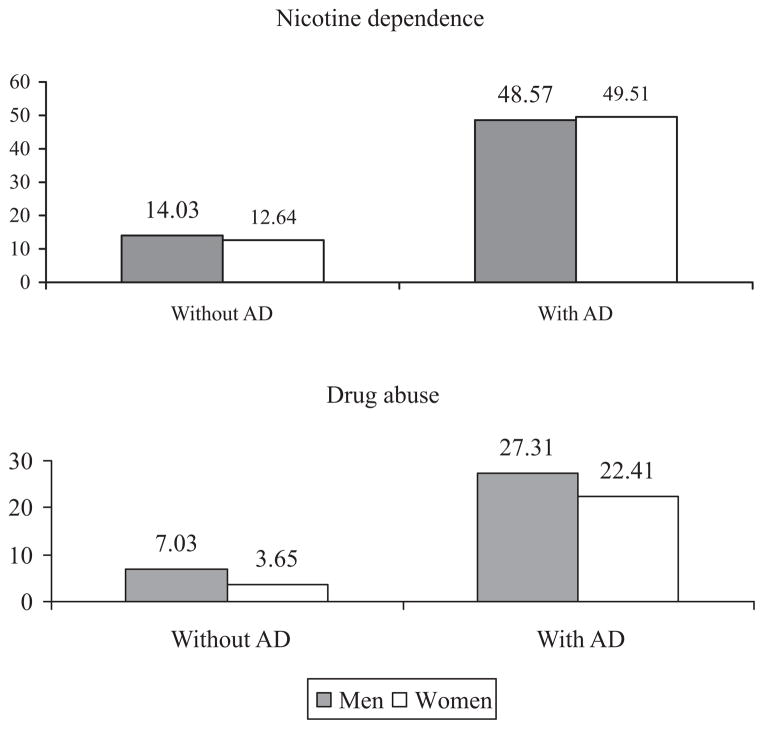
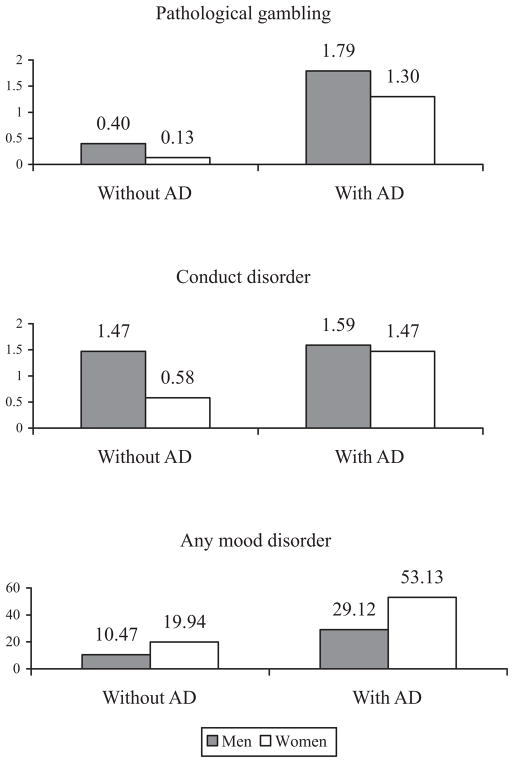
Results: Men with lifetime AD were more likely than women to be diagnosed with any substance use disorder and antisocial personality disorder, whereas women were more likely to have mood and anxiety disorders. After adjusting for sociodemographic characteristics and gender differences in psychiatric comorbidity in the general population, AD was associated with externalizing disorders and any mood disorder among women only. Men with AD met more criteria, had longer episodes, and were younger at the age of first drink. There were no gender differences in remission rates. Women with AD were more likely to have a family and a spouse with history of alcohol use disorders. Treatment rates were low for both genders, and women were more likely to report social stigmatization as a treatment barrier.
Conclusions: There are important gender differences in the psychiatric comorbidities, risk factors, clinical characteristics, and treatment-utilization patterns among individuals with lifetime AD.
Keywords: Alcohol Dependence; Epidemiology; Gender Differences; NESARC.
Copyright © 2013 by the Research Society on Alcoholism.
Figures
References
-
- Beckman LJ, Amaro H. Personal and social difficulties faced by women and men entering alcoholism treatment. J Stud Alcohol. 1986;47:135–145. - PubMed
-
- Chen CM, Yi H, Williams GD, Faden VB. Surveillance Report #86—Trends in Underage Drinking in the United States, 1991–2007. National Institutes of Health; Bethesda, MD: 2009.
Publication types
MeSH terms
Grants and funding
- MH076051/MH/NIMH NIH HHS/United States
- U01 AA018111/AA/NIAAA NIH HHS/United States
- R01 CA133050/CA/NCI NIH HHS/United States
- CA133050/CA/NCI NIH HHS/United States
- DA023200/DA/NIDA NIH HHS/United States
- R01 DA020783/DA/NIDA NIH HHS/United States
- MH082773/MH/NIMH NIH HHS/United States
- R01 DA019606/DA/NIDA NIH HHS/United States
- R01 MH082773/MH/NIMH NIH HHS/United States
- R01 DA023973/DA/NIDA NIH HHS/United States
- DA019606-S3/DA/NIDA NIH HHS/United States
- K02 DA023200/DA/NIDA NIH HHS/United States
- AA018111/AA/NIAAA NIH HHS/United States
- R01 MH076051/MH/NIMH NIH HHS/United States
- DA019606/DA/NIDA NIH HHS/United States
- AA014223/AA/NIAAA NIH HHS/United States
- DA020783-S4/DA/NIDA NIH HHS/United States
- DA023973/DA/NIDA NIH HHS/United States
- K05 AA014223/AA/NIAAA NIH HHS/United States
- DA020783/DA/NIDA NIH HHS/United States
LinkOut - more resources
Full Text Sources
Other Literature Sources
Miscellaneous
