T cell replicative senescence in human aging
- PMID: 23061726
- PMCID: PMC3749774
- DOI: 10.2174/138161213805219711
T cell replicative senescence in human aging
Abstract
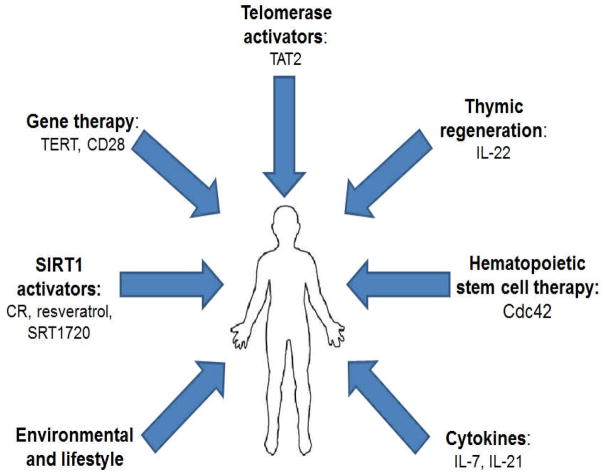
The decline of the immune system appears to be an intractable consequence of aging, leading to increased susceptibility to infections, reduced effectiveness of vaccination and higher incidences of many diseases including osteoporosis and cancer in the elderly. These outcomes can be attributed, at least in part, to a phenomenon known as T cell replicative senescence, a terminal state characterized by dysregulated immune function, loss of the CD28 costimulatory molecule, shortened telomeres and elevated production of proinflammatory cytokines. Senescent CD8 T cells, which accumulate in the elderly, have been shown to frequently bear antigen specificity against cytomegalovirus (CMV), suggesting that this common and persistent infection may drive immune senescence and result in functional and phenotypic changes to the T cell repertoire. Senescent T cells have also been identified in patients with certain cancers, autoimmune diseases and chronic infections, such as HIV. This review discusses the in vivo and in vitro evidence for the contribution of CD8 T cell replicative senescence to a plethora of age-related pathologies and a few possible therapeutic avenues to delay or prevent this differentiative end-state in T cells. The age-associated remodeling of the immune system, through accumulation of senescent T cells has farreaching consequences on the individual and society alike, for the current healthcare system needs to meet the urgent demands of the increasing proportions of the elderly in the US and abroad.
Figures
References
-
- Oeppen J, Vaupel JW. Broken Limits to Life Expectancy. Science. 2002 May 10;296(5570):1029–31. - PubMed
-
- Hakim FT, Gress RE. Immunosenescence: deficits in adaptive immunity in the elderly. Tissue Antigens. 2007 Sep;70(3):179–89. - PubMed
-
- Ostan R, Bucci L, Capri M, Salvioli S, Scurti M, Pini E, et al. Immunosenescence and immunogenetics of human longevity. Neuroimmunomodulation. 2008;15(4–6):224–40. - PubMed
-
- Candore G, Colonna-Romano G, Balistreri CR, Di Carlo D, Grimaldi MP, Listi F, et al. Biology of longevity: role of the innate immune system. Rejuvenation Res. 2006 Spring;9(1):143–8. - PubMed
Publication types
MeSH terms
Grants and funding
LinkOut - more resources
Full Text Sources
Other Literature Sources
Medical
Research Materials