


Intervention against excessive alcohol consumption in primary health care: a survey of GPs' attitudes and practices in England 10 years on
- PMID: 21690169
- PMCID: PMC3156887
- DOI: 10.1093/alcalc/agr067
Intervention against excessive alcohol consumption in primary health care: a survey of GPs' attitudes and practices in England 10 years on
Abstract
Aims: To ascertain the views of general practitioners (GPs) regarding the prevention and management of alcohol-related problems in practice, together with perceived barriers and incentives for this work; to compare our findings with a comparable survey conducted 10 years earlier.
Methods: In total, 282 (73%) of 419 GPs surveyed in East Midlands, UK, completed a postal questionnaire, measuring practices and attitudes, including the Shortened Alcohol and Alcohol Problems Perception Questionnaire (SAAPPQ).
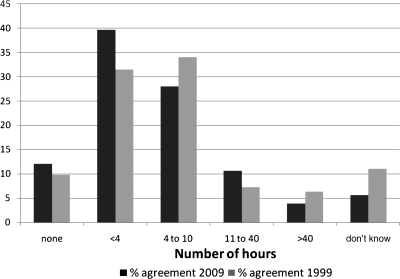
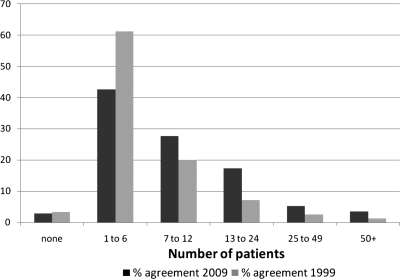
Results: GPs reported lower levels of post-graduate education or training on alcohol-related issues (<4 h for the majority) than in 1999 but not significantly so (P = 0.031). In the last year, GPs had most commonly requested more than 12 blood tests and managed 1-6 patients for alcohol. Reports of these preventive practices were significantly increased from 1999 (P < 0.001). Most felt that problem or dependent drinkers' alcohol issues could be legitimately (88%, 87%) and adequately (78%, 69%) addressed by GPs. However, they had low levels of motivation (42%, 35%), task-related self-esteem (53%, 49%) and job satisfaction (15%, 12%) for this. Busyness (63%) and lack of training (57%) or contractual incentives (48%) were key barriers. Endorsement for government policies on alcohol was very low.
Conclusion: Among GPs, there still appears to be a gap between actual practice and potential for preventive work relating to alcohol problems; they report little specific training and a lack of support. Translational work on understanding the evidence-base supporting screening and brief intervention could incentivize intervention against excessive drinking and embedding it into everyday primary care practice.
Figures

References
-
- Aalto M, Pekuri P, Seppä K. Obstacles to carrying out brief intervention for heavy drinkers in primary health care: a focus group study. Drug Alcohol Rev. 2003;22:169–73. doi:10.1080/09595230100100606. - DOI - PubMed
-
- Anderson P. Managing alcohol problems in general practice. BMJ. 1985;290:1873–5. doi:10.1136/bmj.290.6485.1873. - DOI - PMC - PubMed
-
- Anderson P. Alcohol and Primary Health Care. Copenhagen: WHO Regional Office for Europe; 1996. - PubMed
-
- Anderson P, Clement S. The AAPPQ Revisited: the measurement of general practitioners' attitudes to alcohol problems. Addiction. 1987;82:753–9. doi:10.1111/j.1360-0443.1987.tb01542.x. - DOI - PubMed
Publication types
MeSH terms
Grants and funding
LinkOut - more resources
Full Text Sources
Medical
Molecular Biology Databases
Miscellaneous
