. 2010 Dec;34(12):2126-36.
doi: 10.1111/j.1530-0277.2010.01309.x. Epub 2010 Sep 22.

Autoimmune hepatitis induced by syngeneic liver cytosolic proteins biotransformed by alcohol metabolites

Affiliations

Autoimmune hepatitis induced by syngeneic liver cytosolic proteins biotransformed by alcohol metabolites

Geoffrey M Thiele et al. Alcohol Clin Exp Res. 2010 Dec.

Abstract

Background and aims: Aldehydes that are produced following the breakdown of ethanol (acetaldehyde) and lipid peroxidation of membranes (malondialdehyde) have been shown to bind (adduct) proteins. Additionally, these two aldehydes can combine (MAA) on nonsyngeneic and syngeneic proteins to initiate numerous immune responses to the unmodified part of the protein in the absence of an adjuvant. Therefore, these studies provide a potential mechanism for the development of antigen-specific immune responses resulting in liver damage should syngeneic liver proteins be adducted with MAA.

Methods: This study sought to test whether MAA-modified syngeneic liver cytosolic proteins administered daily in the absence of adjuvant into C57BL/6 mice abrogates tolerance to initiate a MAA-induced autoimmune-like hepatitis.

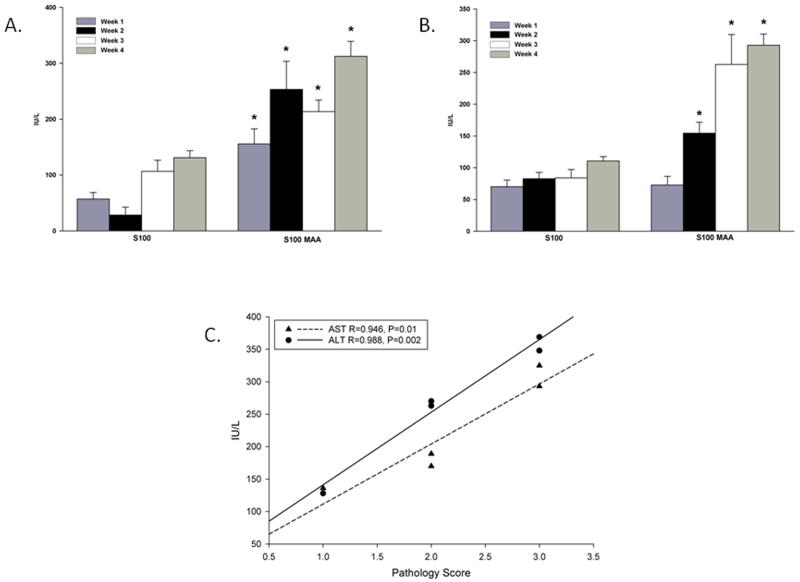
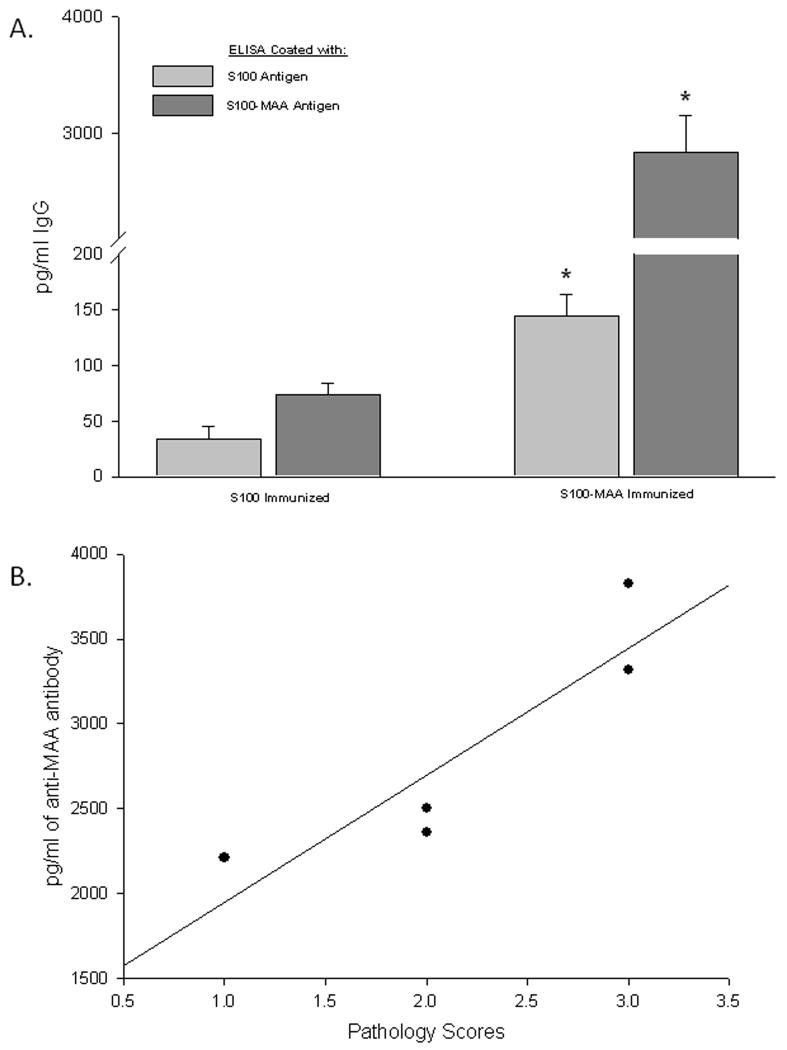
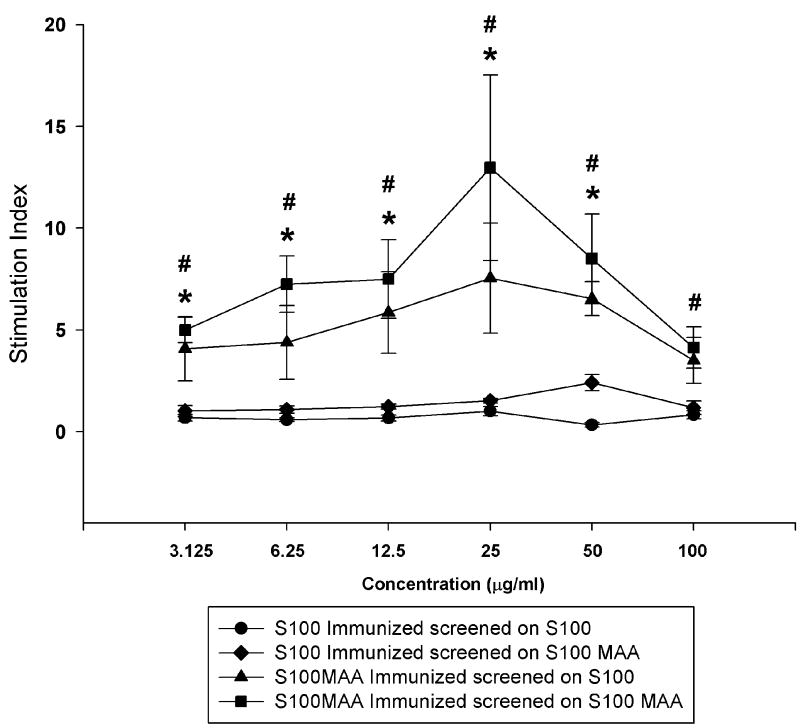
Results: In mice immunized with MAA-modified cytosols, there was an increase in liver damage as assessed by aspartate aminotransferase/alanine aminotransferase levels that correlated with liver pathology scores and the presence of the pro-fibrotic factors, smooth muscle actin, TGF-β, and collagen. IgG antibodies and T-cell proliferative responses specific for cytosolic proteins were also detected. Pro-inflammatory cytokines were produced in the livers of animals exposed to MAA-modified cytosols. Finally, transfer of immunized T cells to naïve animals caused biochemical and histological evidence of liver damage.

Conclusions: These data demonstrate that a disease with an autoimmune-like pathophysiology can be generated in this animal model using soluble MAA-modified syngeneic liver cytosols as the immunogen. These studies provide insight into potential mechanism(s) that the metabolites of alcohol may play in contributing to the onset of an autoimmune-like disease in patients with alcoholic liver disease.


Conflict of interest statement

Conflict of Interests/disclosures: There are no conflicts of interest to disclose for any of the authors in this manuscript.

Figures

Figure 1
Figure 1
H & E stains and pathology scores of livers from MIAH mice. C57/Bl6 mice were injected with PB, 100μg S100 or 100μg S100-MAA as described in Materials and Methods. Livers were removed, fixed, sectioned, and stained with H & E. Panel (A) PB injected mouse liver, (B) S100 injected mouse liver, (C) S100-MAA injected mouse liver, (D) pathology scores. H & E sections are representative of 5 slides from separate mouse livers in each group (Magnification 200X). Slides were scored by a blinded pathologist using the Ludwig and Batts scale of liver damage. Data are expressed as the mean ± S.E.M. of five separate animals. Significantly different from S100 immunized control animals *P ≤ 0.04.
Figure 2
Figure 2
AST/ALT levels in the serum from immunized mice. C57/Bl6 mice were immunized with PB, 100μg S100 or 100μg S100-MAA as described in the Materials and Methods. Serum was tested weekly for the presence of AST (Panel (A) and Panel (B)) ALT enzyme levels as an indication of liver damage. Background levels of hemolysis have been subtracted out using serum from PB injected mice. Data are expressed as the mean ± S.E.M. of five separate animals. Significantly different from S100 immunized animals, *P ≤ 0.01 for AST and * P ≤ 0.006 for ALT. (Panel C) Correlation of AST/ALT levels to the pathology score. Data generated from pathology scores and AST/ALT enzymes were compared using Pearson Product Moment Correlation test. Correlation Coefficient and P values are reported as; AST (R=0.946, P=0.01), ALT (R=0.988, P=0.002).
Figure 3
Figure 3
Serum antibody concentrations to S100 following immunization with MAA haptenated S100 (S100-MAA). C57/Bl6 mice were immunized with PB, 100μg S100 or 100μg S100-MAA as described in the Materials and Methods. (Panel A) Serum was screened against the antigens S100 or S100-MAA followed by subtraction of the values from the serum of PB injected mice. Data are expressed as the mean ± S.E.M. of five separate animals. Significantly different from S100 immunized animals, *P <0.001. (Panel B) Correlation of Anti-MAA Antibodies to Pathology scores. Data generated from antibody titers and pathology scores were compared using Pearson Product Moment Correlation test. Correlation Coefficient and P values are the following: (R=0.898, P=0.04).
Figure 4
Figure 4
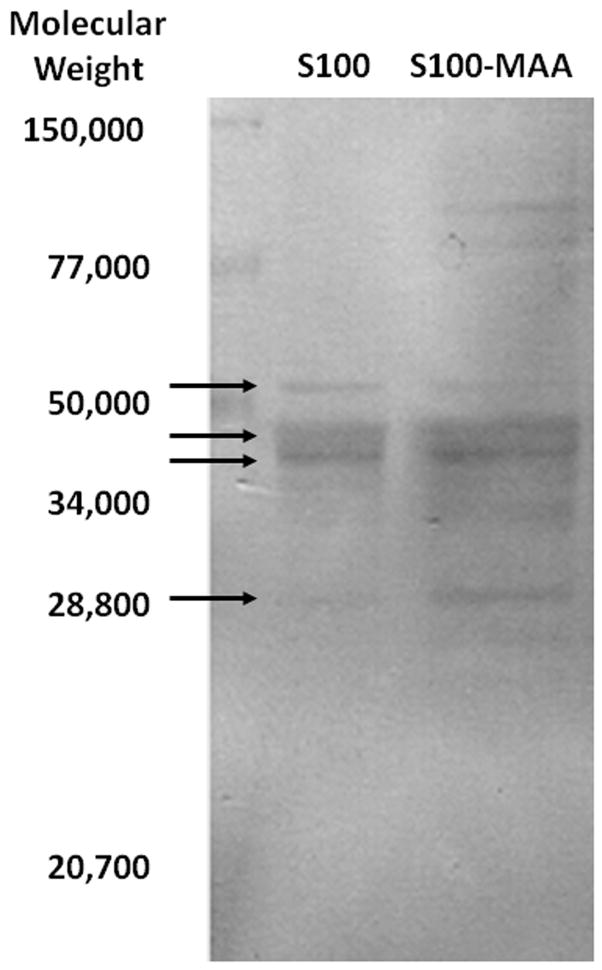
Western blot analysis indicating potential self proteins to antibodies from MIAH mice. Serum collected from C57/Bl6 mice immunized with 100μg of S100-MAA was incubated with S100 or S100-MAA antigens. Representative of five separate animals indicating bands between 60 and 28 kd. PB and S100 immunized mice showed no reactivity and thus are not depicted.
Figure 5
Figure 5
T-cell proliferation in MIAH mice. Spleens from C57/Bl6 mice immunized with PB, 100μg S100 or 100μg S100-MAA as described in the Materials and Methods were collected and incubated with S100 or S100 MAA to determine T-cell proliferation. Data are expressed as the mean ± S.E.M. of the stimulation index (SI) of five separate animals compared to normal animal T-cell proliferation as indicated in the Materials and Methods section. Significantly different from S100 immunized animals, *P ≤ 0.01.
Figure 6
Figure 6
Release of inflammatory cytokines in liver homogenates from MIAH mice. Liver homogenates from C57/Bl6 mice immunized with PB, 100μg S100 or 100μg S100-MAA as described in the Materials and Methods were collected and analyzed for cytokine release. Serum levels from PB immunized mice were subtracted from the values for S100 or S100 MAA injected mice. Cytokines evaluated were IL-1β, TNF-α, and IFN-γ. Data are expressed as the mean ± S.E.M. of five separate animals. Significantly different from S100 immunized animals, *P ≤ 0.001.
Figure 7
Figure 7
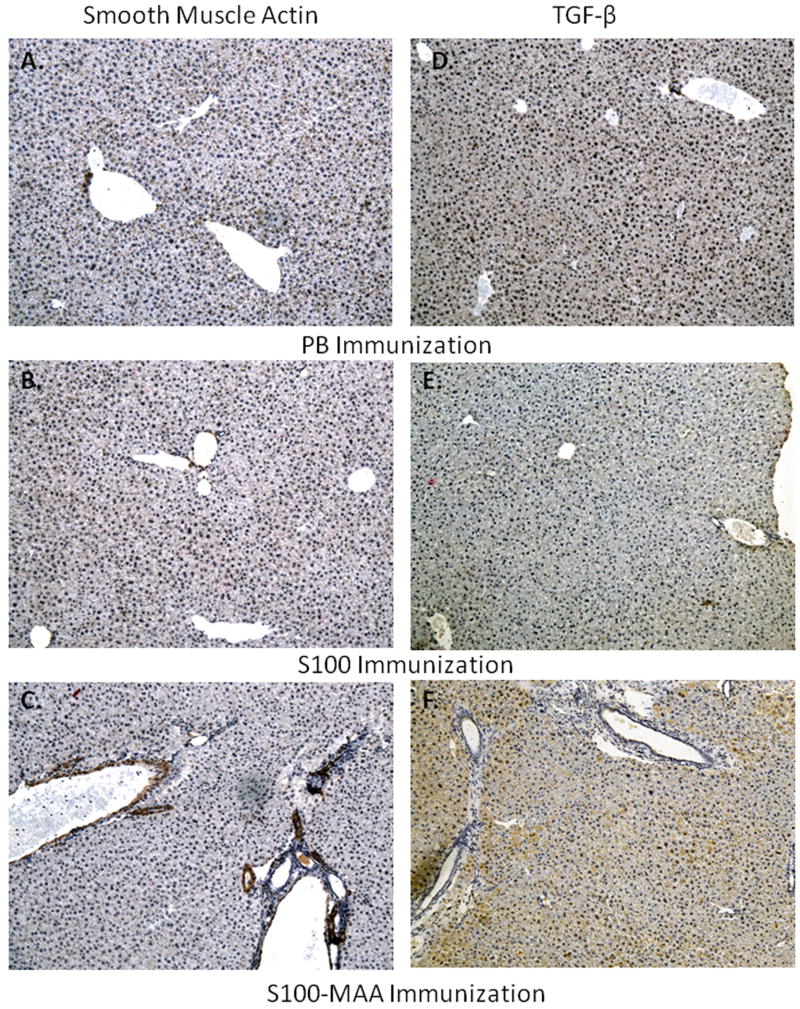
Smooth muscle actin (SMA) or TGF-β staining of livers from MIAH mice. C57/Bl6 mice were injected with PB, 100μg S100 or 100μg S100-MAA. Liver tissue was sectioned and stained for the presence of SMA or TGF-β and evaluated using a 200x power objective. (Panel A and D) normal mouse liver tissue. (Panel B and E) S100 immunized mice. (Panel C and F) S100-MAA immunized mice. Data is a representative of five separate animals.
Figure 8
Figure 8
Sirius Red staining of livers from MIAH mice. C57/Bl6 mice were injected with PB, 100μg S100 or 100μg S100-MAA. Liver tissue was sectioned and stained for the presence collagen using Sirius red and fast green and evaluated using a 200x objective. Data is a representative of four separate animals.

References

    1. Abraham R, Choudhury A, Basu SK, Bal V, Rath S. Disruption of T cell tolerance by directing a self antigen to macrophage-specific scavenger receptors. J Immunol. 1997;158:4029–4035. - PubMed
    1. Abraham R, Singh N, Mukhopadhyay A, Basu SK, Bal V, Rath S. Modulation of immunogenicity and antigenicity of proteins by maleylation to target scavenger receptors on macrophages. J Immunol. 1995;154:1–8. - PubMed
    1. Basu S, Binder RJ, Suto R, Anderson KM, Srivastava PK. Necrotic but not apoptotic cell death releases heat shock proteins, which deliver a partial maturation signal to dendritic cells and activate the NF-kappa B pathway. Int Immunol. 2000;12:1539–1546. - PubMed
    1. Batts KP, Ludwig J. Chronic hepatitis. An update on terminology and reporting. Am J Surg Pathol. 1995;19:1409–1417. - PubMed
    1. Carbone DL, Doorn JA, Kiebler Z, Ickes BR, Petersen DR. Modification of heat shock protein 90 by 4-hydroxynonenal in a rat model of chronic alcoholic liver disease. J Pharmacol Exp Ther. 2005;315:8–15. - PubMed

Publication types

MeSH terms