


Alcoholic liver disease and hepatitis C: a frequently underestimated combination
- PMID: 19630099
- PMCID: PMC2715970
- DOI: 10.3748/wjg.15.3462
Alcoholic liver disease and hepatitis C: a frequently underestimated combination
Abstract
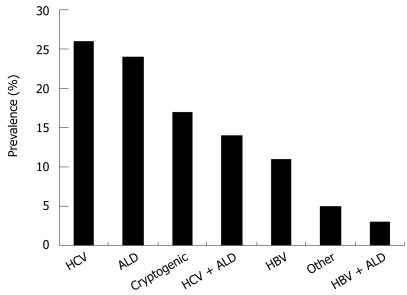
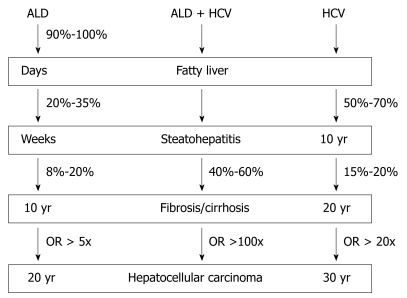
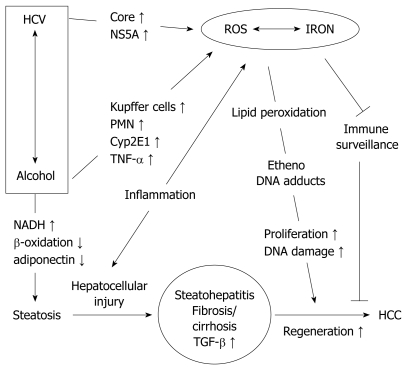
Alcoholic liver disease (ALD) and hepatitis C virus (HCV) infection represent, either alone or in combination, more than two thirds of all patients with liver disease in the Western world. This review discusses the epidemiology and combined impact of ALD and HCV on the progression of liver disease. ALD and HCV affect the progression of liver disease to liver cirrhosis and hepatocellular carcinoma (HCC) in a synergistic manner. Thus, the risk for HCC increases five times with a daily alcohol consumption of 80 g; in the presence of HCV it is increased 20-fold, and a combination of both risk factors leads to a more than 100-fold risk for HCC development. Alcohol consumption also decreases the response to interferon treatment which is probably due to a lack of compliance than a direct effect on HCV replication. Several molecular mechanisms are discussed that could explain the synergistic interaction of alcohol and HCV on disease progression. They include modulation of the immune response and apoptosis, increased oxidative stress via induction of CYP2E1 and the hepatic accumulation of iron. Thus, both HCV and alcohol independently cause hepatic iron accumulation in > 50% of patients probably due to suppression of the liver-secreted systemic iron hormone hepcidin. A better understanding of hepcidin regulation could help in developing novel therapeutic approaches to treat the chronic disease in the future. For now, it can be generally concluded that HCV-infected patients should abstain from alcohol and alcoholics should be encouraged to participate in detoxification programs.
Figures
References
-
- McCullough AJ, O’Connor JF. Alcoholic liver disease: proposed recommendations for the American College of Gastroenterology. Am J Gastroenterol. 1998;93:2022–2036. - PubMed
-
- Maher JJ. Alcoholic liver disease. In: M Feldman, LS Friedman, MH Sleisenger., editors. Gastrointestinal and Liver Disease Vol II. Saunders: Philadelphia; 2002. pp. 1375–1391.
-
- Cochrane J, Chen H, Conigrave KM, Hao W. Alcohol use in China. Alcohol Alcohol. 2003;38:537–542. - PubMed
-
- Drinking in the United States: Main findings from the 1992 national longitudinal alcohol epidemiologic survey (NLAES). NIH Publication No 99-3519. 1998.
-
- Jahrbuch Sucht 2007. Geesthacht: Neuland Verlagsgesellschaft mbH. 2007.
Publication types
MeSH terms
Substances
LinkOut - more resources
Full Text Sources
Medical
