Effects of a prekindergarten educational intervention on adult health: 37-year follow-up results of a randomized controlled trial
- PMID: 19542034
- PMCID: PMC2707464
- DOI: 10.2105/AJPH.2008.148353
Effects of a prekindergarten educational intervention on adult health: 37-year follow-up results of a randomized controlled trial
Abstract
Objectives: We used 37 years of follow-up data from a randomized controlled trial to explore the linkage between an early educational intervention and adult health.
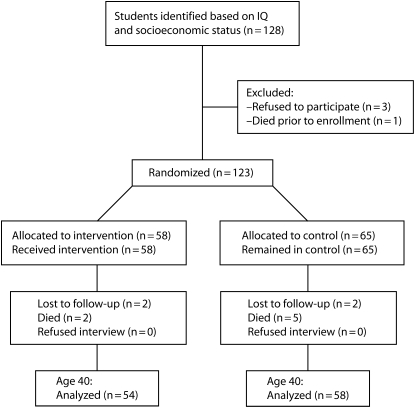
Methods: We analyzed data from the High/Scope Perry Preschool Program (PPP), an early school-based intervention in which 123 children were randomized to a prekindergarten education group or a control group. In addition to exploring the effects of the program on health behavioral risk factors and health outcomes, we examined the extent to which educational attainment, income, family environment, and health insurance access mediated the relationship between randomization to PPP and behavioral and health outcomes.
Results: The PPP led to improvements in educational attainment, health insurance, income, and family environment Improvements in these domains, in turn, lead to improvements in an array of behavioral risk factors and health (P = .01). However, despite these reductions in behavioral risk factors, participants did not exhibit any overall improvement in physical health outcomes by the age of 40 years.
Conclusions: Early education reduces health behavioral risk factors by enhancing educational attainment, health insurance coverage, income, and family environments. Further follow-up will be needed to determine the long-term health effects of PPP.
Figures
References
-
- Noble KG, McCandliss BD, Farah MJ. Socioeconomic gradients predict individual differences in neurocognitive abilities. Dev Sci 2007;10:464–480 - PubMed
-
- Hart B, Risley TR. Meaningful Differences in the Everyday Experience of Young American Children. Baltimore, MD: Paul H Brookes Publishing Co; 1995
-
- Gormley W, Gayer T, Phillips D, Dawson B. The effects of universal pre-K on cognitive development. Dev Psychol 2005;41:872–884 - PubMed
-
- Belfield CR, Nores M, Barnett WS, Schweinhart L. The High/Scope Perry Preschool Program: Cost-benefit analysis using data from the age-40 followup. J Hum Resour 2006;41:162–190
Publication types
MeSH terms
Grants and funding
LinkOut - more resources
Full Text Sources
Medical