


The role of GABA(A) receptors in the acute and chronic effects of ethanol: a decade of progress
- PMID: 19455309
- PMCID: PMC2814770
- DOI: 10.1007/s00213-009-1562-z
The role of GABA(A) receptors in the acute and chronic effects of ethanol: a decade of progress
Abstract
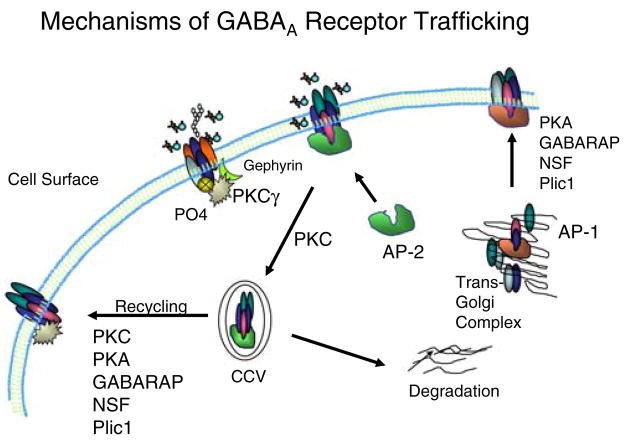
The past decade has brought many advances in our understanding of GABA(A) receptor-mediated ethanol action in the central nervous system. We now know that specific GABA(A) receptor subtypes are sensitive to ethanol at doses attained during social drinking while other subtypes respond to ethanol at doses attained by severe intoxication. Furthermore, ethanol increases GABAergic neurotransmission through indirect effects, including the elevation of endogenous GABAergic neuroactive steroids, presynaptic release of GABA, and dephosphorylation of GABA(A) receptors promoting increases in GABA sensitivity. Ethanol's effects on intracellular signaling also influence GABAergic transmission in multiple ways that vary across brain regions and cell types. The effects of chronic ethanol administration are influenced by adaptations in GABA(A) receptor function, expression, trafficking, and subcellular localization that contribute to ethanol tolerance, dependence, and withdrawal hyperexcitability. Adolescents exhibit altered sensitivity to ethanol actions, the tendency for higher drinking and longer lasting GABAergic adaptations to chronic ethanol administration. The elucidation of the mechanisms that underlie adaptations to ethanol exposure are leading to a better understanding of the regulation of inhibitory transmission and new targets for therapies to support recovery from ethanol withdrawal and alcoholism.
Figures
References
-
- Abi-Dargham A, Krystal JH, Anjilvel S, Scanley BE, Zoghbi S, Baldwin RM, Rajeevan N, Ellis S, Petrakis IL, Seibyl JP, Charney DS, Laruelle M, Innis RB. Alterations of benzodiazepine receptors in type II alcoholic subjects measured with SPECT and [123I]iomazenil. Am J Psychiatry. 1998;155:1550–1555. - PubMed
-
- Acheson SK, Richardson R, Swartzwelder HS. Developmental changes in seizure susceptibility during ethanol withdrawal. Alcohol. 1999;18:23–26. - PubMed
-
- Acheson SK, Ross EL, Swartzwelder HS. Age-independent and dose–response effects of ethanol on spatial memory in rats. Alcohol. 2001;23:167–175. - PubMed
-
- Agrawal A, Edenberg HJ, Foroud T, Bierut LJ, Dunne G, Hinrichs AL, Nurnberger JI, Crowe R, Kuperman S, Schuckit MA, Begleiter H, Porjesz B, Dick DM. Association of GABRA2 with drug dependence in the collaborative study of the genetics of alcoholism sample. Behav Genet. 2006;36:640–650. - PubMed
-
- Allan AM, Harris RA. Acute and chronic ethanol treatments alter GABA receptor-operated chloride channels. Pharmacol Biochem Behav. 1987;27:665–670. - PubMed
Publication types
MeSH terms
Substances
Grants and funding
LinkOut - more resources
Full Text Sources
Miscellaneous
