Mood variability and cigarette smoking escalation among adolescents
- PMID: 19071975
- PMCID: PMC2605639
- DOI: 10.1037/0893-164X.22.4.504
Mood variability and cigarette smoking escalation among adolescents
Abstract
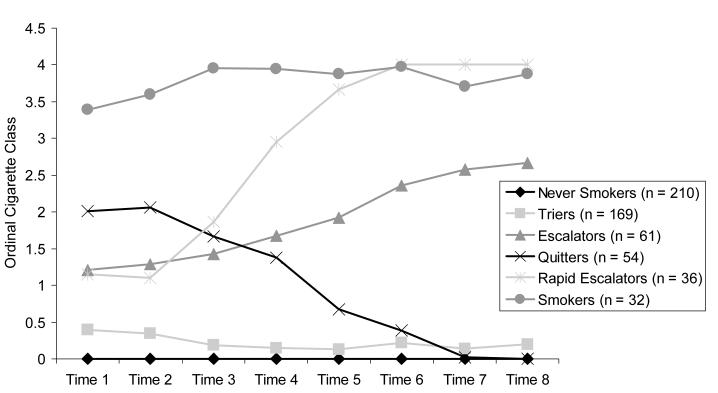
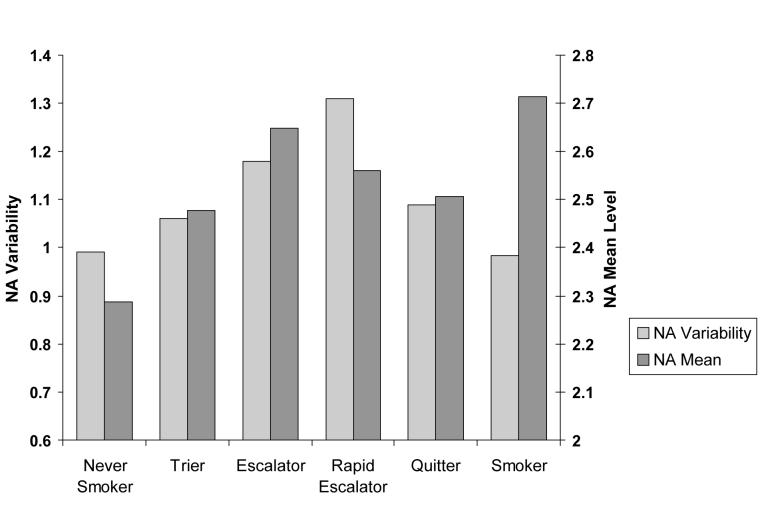
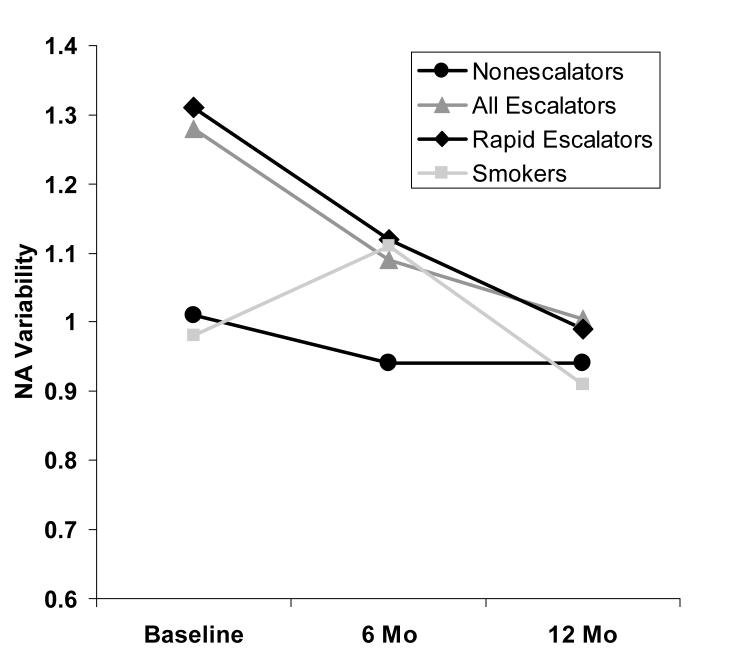
The current study examined how affect dysregulation, as indexed via within-person negative mood variability, related to longitudinal patterns of smoking among adolescents. Students in the 8th and 10th grades (N = 517, 56% girls) provided data on cigarette use at baseline, 6-, and 12-month waves and provided ecological momentary assessments of negative moods via palmtop computers for 1 week at each wave. Mood variability was examined via the intraindividual standard deviations of negative mood reports at each wave. As predicted, high levels of negative mood variability at baseline significantly differentiated participants who escalated in their smoking behavior over time from participants who never progressed beyond low levels of experimentation during the course of the study. Mixed-effects regression models revealed that participants who escalated in their smoking experienced a reduction in mood variability as smoking increased, whereas participants with consistently high or low levels of cigarette use had more stable mood variability levels. Results suggest that high negative mood variability is a risk factor for future smoking escalation and that mood-stabilizing effects may reinforce and maintain daily cigarette use among youths.
2008 APA, all rights reserved
Figures
References
-
- American Psychiatric Association . Diagnostic and statistical manual of mental disorders. (4th ed). American Psychiatric Association; Washington, DC: 1994.
-
- Baker TB, Piper ME, McCarthy DE, Majeskie MR, Fiore MC. Addiction motivation reformulated: An affective processing model of negative reinforcement. Psychological Review. 2004;111:33–51. - PubMed
-
- Choi WS, Patten CA, Gillin JC, Kaplan RM, Pierce JP. Cigarette smoking predicts development of depressive symptoms among U.S. adolescents. Annals of Behavioral Medicine. 1997;19:42–50. - PubMed
Publication types
MeSH terms
Grants and funding
LinkOut - more resources
Full Text Sources
Medical
Research Materials