. 2009 Jan 1;124(1):36-45.
doi: 10.1002/ijc.23894.

Nicotine induces cell proliferation, invasion and epithelial-mesenchymal transition in a variety of human cancer cell lines

Affiliations

Nicotine induces cell proliferation, invasion and epithelial-mesenchymal transition in a variety of human cancer cell lines

Piyali Dasgupta et al. Int J Cancer. .

Abstract

Cigarette smoking is strongly correlated with the onset of nonsmall cell lung cancer (NSCLC). Nicotine, an active component of cigarettes, has been found to induce proliferation of lung cancer cell lines. In addition, nicotine can induce angiogenesis and confer resistance to apoptosis. All these events are mediated through the nicotinic acetylcholine receptors (nAChRs) on lung cancer cells. In this study, we demonstrate that nicotine can promote anchorage-independent growth in NSCLCs. In addition, nicotine also induces morphological changes characteristic of a migratory, invasive phenotype in NSCLCs on collagen gel. These morphological changes were similar to those induced by the promigratory growth factor VEGF. The proinvasive effects of nicotine were mediated by alpha7-nAChRs on NSCLCs. RT-PCR analysis showed that the alpha7-nAChRs were also expressed on human breast cancer and pancreatic cancer cell lines. Nicotine was found to promote proliferation and invasion in human breast cancer. The proinvasive effects of nicotine were mediated via a nAChR, Src and calcium-dependent signaling pathway in breast cancer cells. In a similar fashion, nicotine could also induce proliferation and invasion of Aspc1 pancreatic cancer cells. Most importantly, nicotine could induce changes in gene expression consistent with epithelial to mesenchymal transition (EMT), characterized by reduction of epithelial markers like E-cadherin expression, ZO-1 staining and concomitant increase in levels of mesenchymal proteins like vimentin and fibronectin in human breast and lung cancer cells. Therefore, it is probable that the ability of nicotine to induce invasion and EMT may contribute to the progression of breast and lung cancers.


Figures
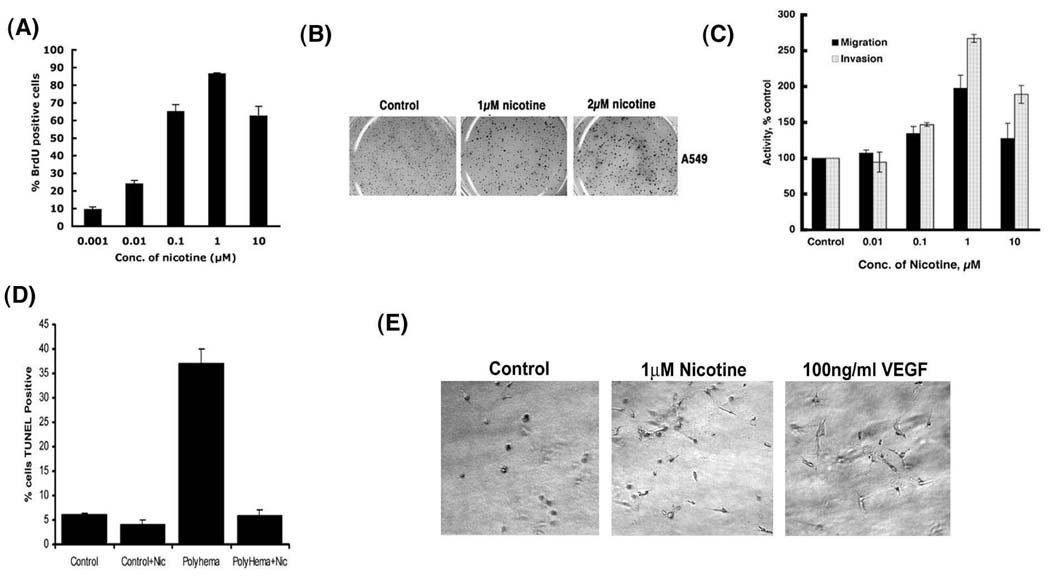
Figure 1
Figure 1
Nicotine can promote proliferation, invasion and survival pathways in A549 NSCLC cells. (A) Nicotine can induce S-phase entry in A549 NSCLC cells in a dose-dependent manner, as measured by BrdU assays. (B) Nicotine can induce anchorage-independent growth of A549 cells in soft-agar assay. Nicotine increased the size of the individual colonies but had little effect on the total number of colonies. (C) Nicotine can promote migration and invasion of A549 cells in Boyden Chamber assays, in a dose dependent manner, the maximal effect being observed at 1µM nicotine. (D) Nicotine can confer resistance to anoikis of SAECs. SAECs were treated with 1µM nicotine and plated on polyhema coated slides. Apoptosis was measured by TUNEL assays. (E) Treatment of A549 cells with 1µM nicotine caused morphological changes, similar to VEGF on 3D collagen gel assays.
Figure 2
Figure 2
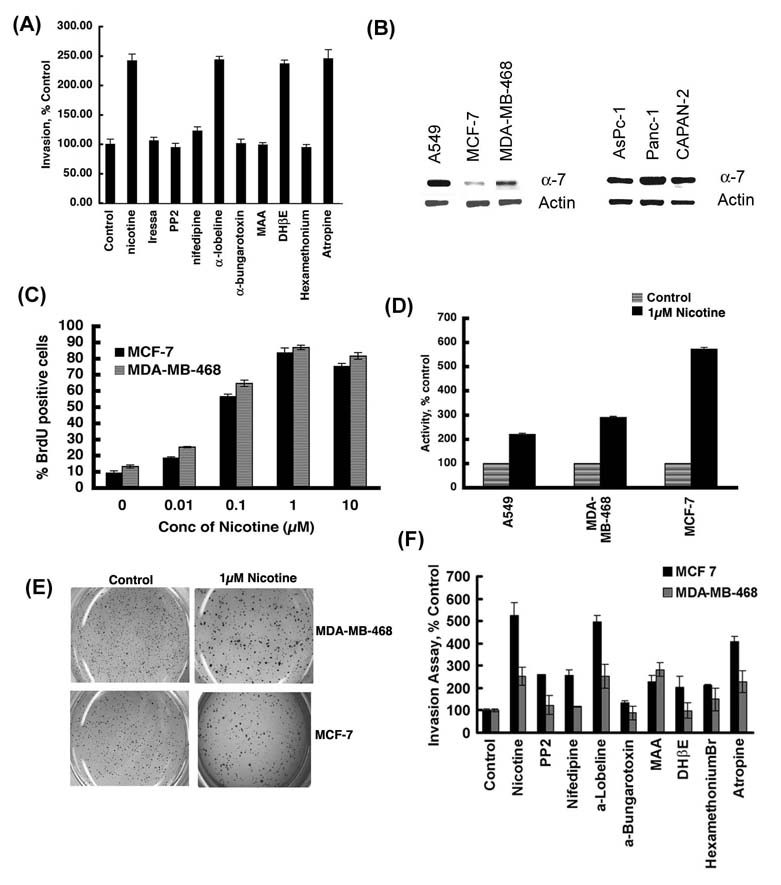
Nicotine induces proliferation and invasion in human lung cancer and breast cancer cells. (A) The pro-invasive effects of nicotine require α7-nAChR, Src activity, EGFR and intracellular calcium, in A549 cells as seen in a Boyden Chamber assay. The pro-invasive effects of nicotine were reversed by the general nAChR antagonist hexamethonium, the α7-nAChR antagonists α-bungarotoxin and MAA, the Src inhibitor PP2, calcium channel blocker nifedipine and the EGFR inhibitor Iressa (gefitinib). (B) The α7-nAChR subunit is expressed by multiple human cancer cell lines including breast cancer cell lines MCF-7, MDA-MB-468 and pancreatic cancer cell lines Aspc-1, Panc-1 and CAPAN-2, as examined by RT-PCR. RT-PCR for actin was used as the control. (C) BrdU assays show that nicotine induces dose-dependent proliferation of human breast cancer cell lines MCF-7 and MDA-MB-468, the maximal effect being observed at 1µM. (D) Nicotine promotes invasion of MCF-7 and MDA-MB-468 breast cancer cells at a concentration of 1µM, as measured by Boyden chamber assays. A549 NSCLC cells were used as the positive control for the assay. (E) Nicotine stimulates the anchorage-independent growth of MCF-7 and MDA-MB-468 human breast cancer cells in soft agar assays. MCF-7 and MDA-MB-468 cells treated with 1µM nicotine formed larger colonies in soft agar relative to untreated controls. (F) Nicotine-mediated invasion of MCF-7 and MDA-MB-468 human breast cancer cells is dependent on Src activity and intracellular calcium pathways. The pro-invasive effects on nicotine in these breast cancer cells were mediated by both α7-nAChR and DhβE-sensitive nAChRs.
Figure 3
Figure 3
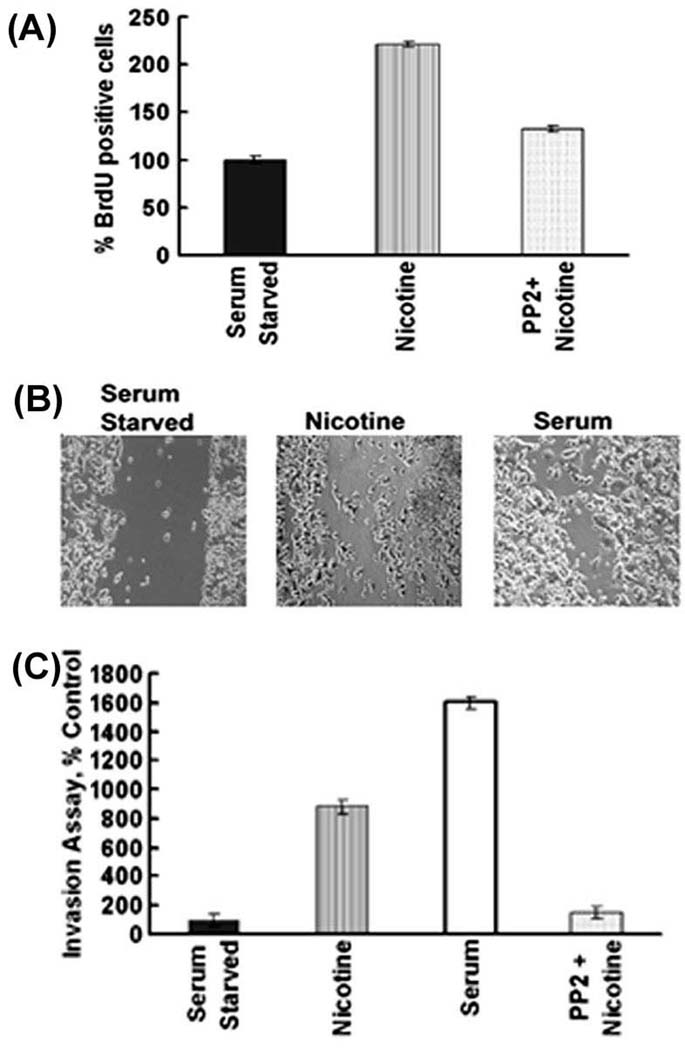
Nicotine induces proliferation and invasion of pancreatic cancer cells. (A). Quiescent Aspc1 cells were stimulated with 1µM nicotine for 18 hours and S-phase entry was measured by BrdU assays. The proliferative effects of nicotine in Aspc1 cells were abrogated in the presence of 1µM of Src inhibitor PP2, indicating that Src function is required for the proliferative effects of nicotine. (B) Wound healing assays show that 1µM nicotine can promote migration and invasion of Aspc1 cells. Cells treated with media containing 10% FBS were used as the positive control for the assay. (C) Nicotine was able to potently promote invasion of Aspc1 pancreatic cancer cells at a concentration of 1µM as seen in a Boyden-chamber assay. The pro-invasive activity of nicotine was abrogated by PP2 demonstrating a requirement for Src function.
Figure 4
Figure 4
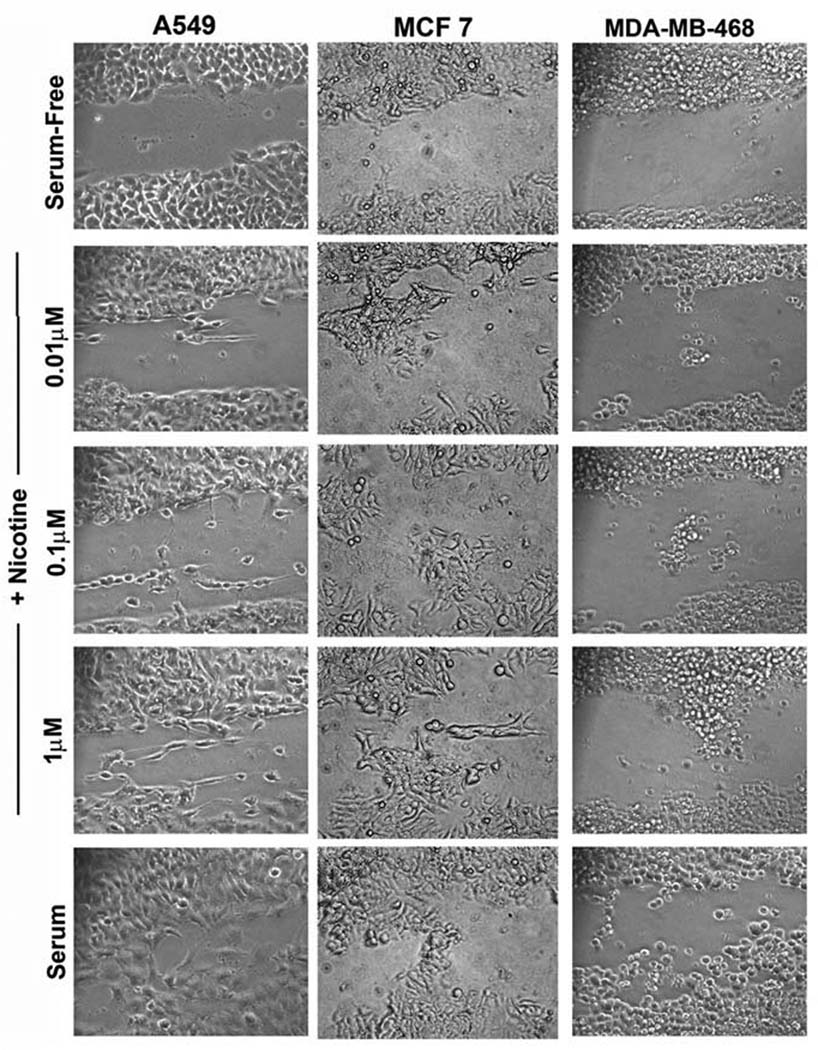
Nicotine can promote invasion of A549, MCF-7 and MDA-MB-468 cells as seen in a wound healing assay. Cells were scratched and treated with the indicated amounts of nicotine; cells treated with 10% serum were used as the positive control. Nicotine induced the migration of the cells in a dose-dependent manner.
Figure 5
Figure 5
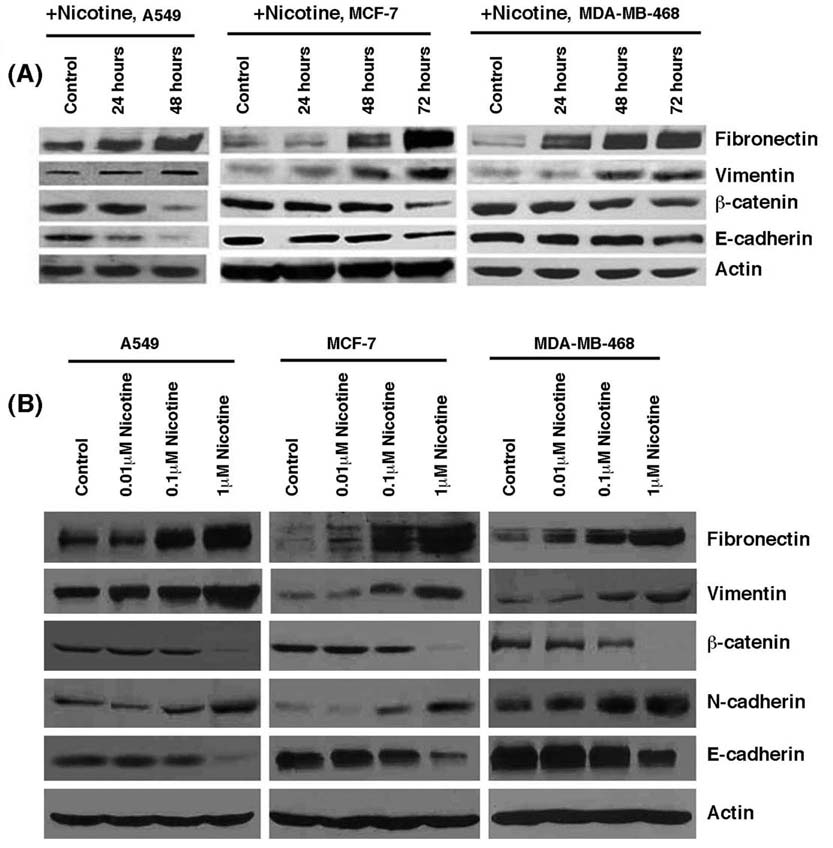
Nicotine induced epithelial to mesenchymal transition in human lung cancer cells and breast cancer cells. (A) Treatment with 1µM nicotine induced downregulation of epithelial markers E-cadherin and β-catenin, whereas it caused concomitant increase of mesenchymal proteins fibronectin and vimentin in A549 human NSCLC as well as MCF-7 and MDA-MB-468 human breast cancer cells. Quiescent cells were treated with 1µM nicotine for the indicated time-points and the expression of epithelial and mesenchymal markers was examined by immunoblotting. Western blotting for β-actin was used as the control for the assay. (B) Induction of EMT by nicotine in a dose-dependent manner. Quiescent cells were treated with the indicated amounts of nicotine for 72 hours and EMT markers examined by western blotting.
Figure 6
Figure 6
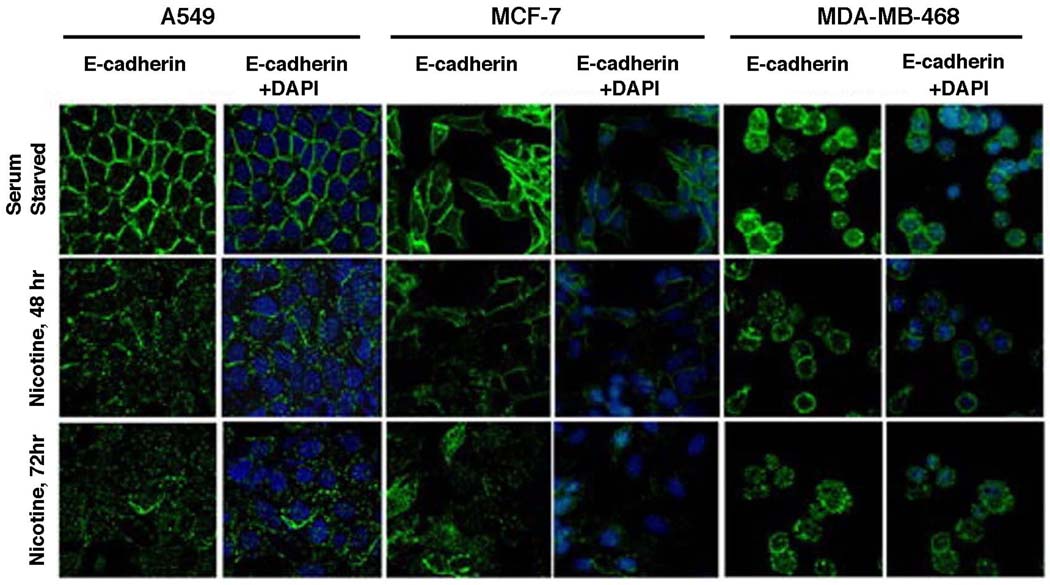
Nicotine treatment reduces the expression of E-cadherin as seen in immunofluorescence assays. Treatment with 1µM nicotine causes the downregulation and translocation of epithelial marker E-cadherin from the cell membrane in A549 (NSCLC), MCF-7 and MDA-MB-468 (breast cancer) cells in a time dependent manner. DAPI was used to visualize the nuclei.
Figure 7
Figure 7
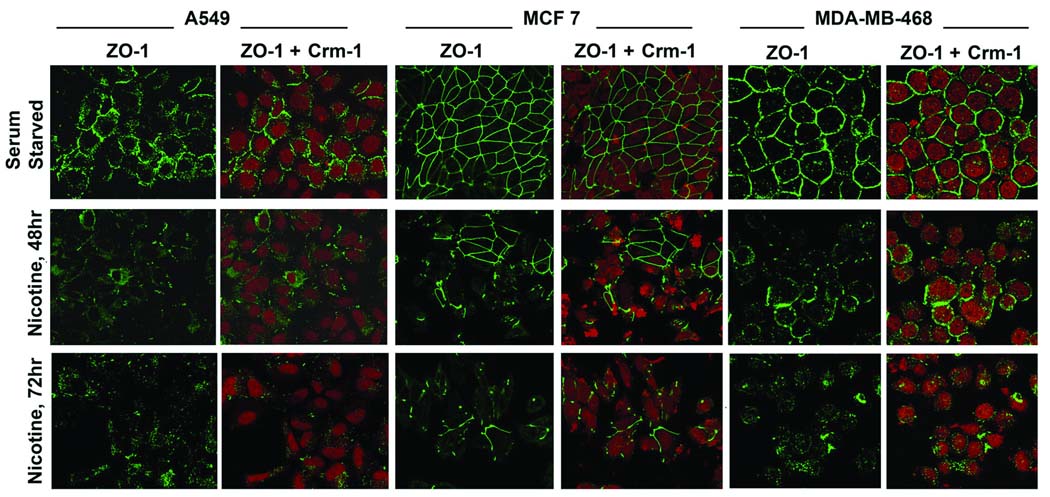
Nicotine induces disruption of tight junctions to facilitate EMT and invasion. (A) Nicotine downregulates the membrane localization of the tight junction protein ZO-1 in human A549 lung cancer cells and MCF-7, MDA-MB-468 breast cancer cells. Quiescent cells were treated with 1µM nicotine for the indicated time-points. Immunofluorescence analysis demonstrates the reduction in membrane localization of ZO-1 upon nicotine treatment, indicating that nicotine reduces the presence of membrane-bound ZO-1.

References

    1. ACS. Cancer facts and figures. American Cancer Society. 2002
    1. Hecht SS. Cigarette smoking and lung cancer: chemical mechanisms and approaches to prevention. Lancet Oncol. 2002;3(8):461–469. Available from http://www.ncbi.nlm.nih.gov/entrez/query.fcgi?cmd=Retrieve&db=PubMed&dop.... - PubMed
    1. Hecht SS, Abbaspour A, Hoffman D. A study of tobacco carcinogenesis. XLII. Bioassay in A/J mice of some structural analogues of tobacco-specific nitrosamines. Cancer Lett. 1988;42(1–2):141–145. Available from http://www.ncbi.nlm.nih.gov/entrez/query.fcgi?cmd=Retrieve&db=PubMed&dop.... - PubMed
    1. Sekido Y, Fong KM, Minna JD. Molecular genetics of lung cancer. Annu Rev Med. 2003;54:73–87. - PubMed
    1. Arredondo J, Chernyavsky AI, Grando SA. Nicotinic receptors mediate tumorigenic action of tobacco-derived nitrosamines on immortalized oral epithelial cells. Cancer Biol Ther. 2006;5(5):511–517. Available from http://www.ncbi.nlm.nih.gov/entrez/query.fcgi?cmd=Retrieve&db=PubMed&dop.... - PubMed

Publication types

LinkOut - more resources