


Adverse effects of chronic circadian desynchronization in animals in a "challenging" environment
- PMID: 18843092
- PMCID: PMC2685296
- DOI: 10.1152/ajpregu.00118.2008
Adverse effects of chronic circadian desynchronization in animals in a "challenging" environment
Abstract
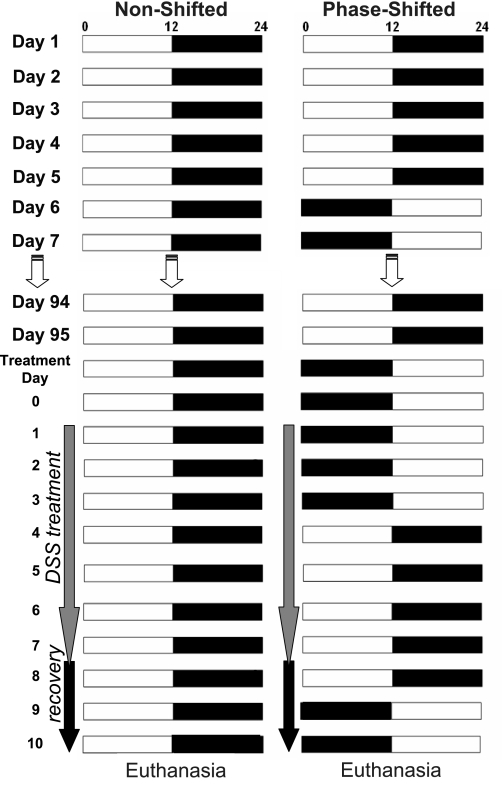
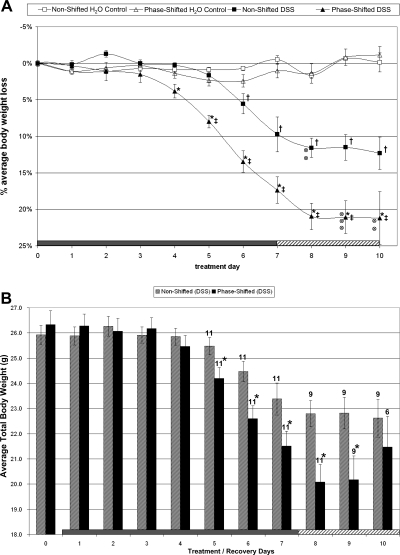
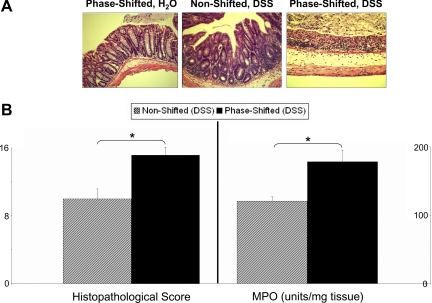
Continuous disruption of circadian rhythms, as seen in human shift workers, has been associated with the development of a number of adverse mental and physiological conditions. However, scientific evidence linking circadian disruption to overall health, particularly in animal models, is not well documented. In this study, we have demonstrated that exposing C57BL/6J mice to 12-h phase shifts every 5 days for 3 mo had no effect on body weight or intestinal physiology. However, when animals were further challenged with dextran sodium sulfate to induce colitis, chronic shifting of the light-dark cycle led to a dramatic increase in the progression of the colitis as indicated by reduced body weight, abnormal intestinal histopathology, and an exacerbated inflammatory response. These data indicate that circadian disruption is an important predisposing factor that may provoke the onset or worsening of various disease states such as inflammatory disorders. This study provides further evidence for continued investigations using animal models of circadian disruption to examine the consequences of circadian disruption on health when organisms are faced with a "challenging" environment.
Figures
References
-
- Bradley PP, Priebat DA, Christensen RD, Rothstein G. Measurement of cutaneous inflammation: estimation of neutrophil content with an enzyme marker. J Invest Dermatol 78: 206–209, 1982. - PubMed
-
- Costa G Shift work and occupational medicine: an overview. Occup Med (Lond) 53: 83–88, 2003. - PubMed
-
- Haus E, Smolensky M. Biological clocks and shift work: circadian dysregulation and potential long-term effects. Cancer Causes Control 17: 489–500, 2006. - PubMed
-
- Hayashi M, Shimba S, Tezuka M. Characterization of the molecular clock in mouse peritoneal macrophages. Biol Pharm Bull 30: 621–626, 2007. - PubMed
Publication types
MeSH terms
Substances
Grants and funding
LinkOut - more resources
Full Text Sources
Other Literature Sources
Medical
