EP0871486B1 - Diphtheria toxin epitopes - Google Patents
Diphtheria toxin epitopes Download PDFInfo
- Publication number
- EP0871486B1 EP0871486B1 EP96944738A EP96944738A EP0871486B1 EP 0871486 B1 EP0871486 B1 EP 0871486B1 EP 96944738 A EP96944738 A EP 96944738A EP 96944738 A EP96944738 A EP 96944738A EP 0871486 B1 EP0871486 B1 EP 0871486B1
- Authority
- EP
- European Patent Office
- Prior art keywords
- seq
- peptide
- type
- sequence
- amino acid
- Prior art date
- Legal status (The legal status is an assumption and is not a legal conclusion. Google has not performed a legal analysis and makes no representation as to the accuracy of the status listed.)
- Expired - Lifetime
Links
- 102000016607 Diphtheria Toxin Human genes 0.000 title description 78
- 108010053187 Diphtheria Toxin Proteins 0.000 title description 78
- 108090000765 processed proteins & peptides Proteins 0.000 claims abstract description 208
- 239000012634 fragment Substances 0.000 claims description 102
- 229960003983 diphtheria toxoid Drugs 0.000 claims description 30
- 229960005486 vaccine Drugs 0.000 claims description 23
- 230000002163 immunogen Effects 0.000 claims description 11
- 241000124008 Mammalia Species 0.000 claims description 6
- 241000186227 Corynebacterium diphtheriae Species 0.000 claims description 5
- 239000000203 mixture Substances 0.000 claims description 5
- 239000003814 drug Substances 0.000 claims description 4
- 239000007788 liquid Substances 0.000 claims description 3
- 231100000252 nontoxic Toxicity 0.000 claims description 3
- 230000003000 nontoxic effect Effects 0.000 claims description 3
- FWMNVWWHGCHHJJ-SKKKGAJSSA-N 4-amino-1-[(2r)-6-amino-2-[[(2r)-2-[[(2r)-2-[[(2r)-2-amino-3-phenylpropanoyl]amino]-3-phenylpropanoyl]amino]-4-methylpentanoyl]amino]hexanoyl]piperidine-4-carboxylic acid Chemical compound C([C@H](C(=O)N[C@H](CC(C)C)C(=O)N[C@H](CCCCN)C(=O)N1CCC(N)(CC1)C(O)=O)NC(=O)[C@H](N)CC=1C=CC=CC=1)C1=CC=CC=C1 FWMNVWWHGCHHJJ-SKKKGAJSSA-N 0.000 claims 1
- 230000009851 immunogenic response Effects 0.000 claims 1
- 102000004196 processed proteins & peptides Human genes 0.000 abstract description 57
- 108091007433 antigens Proteins 0.000 abstract description 30
- 102000036639 antigens Human genes 0.000 abstract description 30
- 239000000427 antigen Substances 0.000 abstract description 29
- 108090000623 proteins and genes Proteins 0.000 abstract description 8
- 238000000034 method Methods 0.000 abstract description 6
- 230000005875 antibody response Effects 0.000 abstract description 5
- 230000028993 immune response Effects 0.000 abstract description 5
- 208000015181 infectious disease Diseases 0.000 abstract description 2
- 230000001594 aberrant effect Effects 0.000 abstract 1
- 208000037908 antibody-mediated disorder Diseases 0.000 abstract 1
- 230000002458 infectious effect Effects 0.000 abstract 1
- 238000009256 replacement therapy Methods 0.000 abstract 1
- 239000013603 viral vector Substances 0.000 abstract 1
- 150000001413 amino acids Chemical class 0.000 description 166
- 230000000692 anti-sense effect Effects 0.000 description 78
- 210000004027 cell Anatomy 0.000 description 78
- 210000003819 peripheral blood mononuclear cell Anatomy 0.000 description 29
- 230000004044 response Effects 0.000 description 26
- 230000027455 binding Effects 0.000 description 24
- 210000001744 T-lymphocyte Anatomy 0.000 description 19
- 238000001210 attenuated total reflectance infrared spectroscopy Methods 0.000 description 19
- 238000001516 cell proliferation assay Methods 0.000 description 16
- 230000000694 effects Effects 0.000 description 14
- 108010047620 Phytohemagglutinins Proteins 0.000 description 11
- 230000001885 phytohemagglutinin Effects 0.000 description 11
- 102000000588 Interleukin-2 Human genes 0.000 description 10
- 108010002350 Interleukin-2 Proteins 0.000 description 10
- 210000000612 antigen-presenting cell Anatomy 0.000 description 10
- 210000003719 b-lymphocyte Anatomy 0.000 description 10
- 238000002474 experimental method Methods 0.000 description 10
- 102000054766 genetic haplotypes Human genes 0.000 description 10
- 239000003795 chemical substances by application Substances 0.000 description 9
- 230000035755 proliferation Effects 0.000 description 7
- 102000004169 proteins and genes Human genes 0.000 description 7
- 230000000638 stimulation Effects 0.000 description 7
- 108700028369 Alleles Proteins 0.000 description 6
- 230000002209 hydrophobic effect Effects 0.000 description 6
- 102000005962 receptors Human genes 0.000 description 6
- 108020003175 receptors Proteins 0.000 description 6
- 102000043131 MHC class II family Human genes 0.000 description 5
- 108091054438 MHC class II family Proteins 0.000 description 5
- 108010055044 Tetanus Toxin Proteins 0.000 description 5
- 125000003178 carboxy group Chemical group [H]OC(*)=O 0.000 description 5
- 206010013023 diphtheria Diseases 0.000 description 5
- 229960005097 diphtheria vaccines Drugs 0.000 description 5
- 230000003993 interaction Effects 0.000 description 5
- 125000002924 primary amino group Chemical group [H]N([H])* 0.000 description 5
- 238000012545 processing Methods 0.000 description 5
- 238000012360 testing method Methods 0.000 description 5
- 229940118376 tetanus toxin Drugs 0.000 description 5
- 108700018351 Major Histocompatibility Complex Proteins 0.000 description 4
- 125000000539 amino acid group Chemical group 0.000 description 4
- 238000006243 chemical reaction Methods 0.000 description 4
- 239000002945 hormonotoxin Substances 0.000 description 4
- 239000002596 immunotoxin Substances 0.000 description 4
- 238000000338 in vitro Methods 0.000 description 4
- 238000002360 preparation method Methods 0.000 description 4
- 239000002904 solvent Substances 0.000 description 4
- 230000020382 suppression by virus of host antigen processing and presentation of peptide antigen via MHC class I Effects 0.000 description 4
- 238000010600 3H thymidine incorporation assay Methods 0.000 description 3
- 108010009685 Cholinergic Receptors Proteins 0.000 description 3
- 101100005713 Homo sapiens CD4 gene Proteins 0.000 description 3
- 206010070834 Sensitisation Diseases 0.000 description 3
- 102000034337 acetylcholine receptors Human genes 0.000 description 3
- 230000001580 bacterial effect Effects 0.000 description 3
- 230000015572 biosynthetic process Effects 0.000 description 3
- 230000003197 catalytic effect Effects 0.000 description 3
- 230000004663 cell proliferation Effects 0.000 description 3
- 239000012636 effector Substances 0.000 description 3
- 230000008073 immune recognition Effects 0.000 description 3
- 230000001939 inductive effect Effects 0.000 description 3
- 238000004519 manufacturing process Methods 0.000 description 3
- 239000000463 material Substances 0.000 description 3
- 210000005087 mononuclear cell Anatomy 0.000 description 3
- 229940023041 peptide vaccine Drugs 0.000 description 3
- 230000001681 protective effect Effects 0.000 description 3
- 230000008313 sensitization Effects 0.000 description 3
- 239000003053 toxin Substances 0.000 description 3
- 231100000765 toxin Toxicity 0.000 description 3
- 108700012359 toxins Proteins 0.000 description 3
- 230000005730 ADP ribosylation Effects 0.000 description 2
- 241000282412 Homo Species 0.000 description 2
- 102000008072 Lymphokines Human genes 0.000 description 2
- 108010074338 Lymphokines Proteins 0.000 description 2
- IQFYYKKMVGJFEH-XLPZGREQSA-N Thymidine Chemical compound O=C1NC(=O)C(C)=CN1[C@@H]1O[C@H](CO)[C@@H](O)C1 IQFYYKKMVGJFEH-XLPZGREQSA-N 0.000 description 2
- 230000000890 antigenic effect Effects 0.000 description 2
- 230000008901 benefit Effects 0.000 description 2
- 210000004899 c-terminal region Anatomy 0.000 description 2
- 230000036755 cellular response Effects 0.000 description 2
- 230000036039 immunity Effects 0.000 description 2
- 230000003053 immunization Effects 0.000 description 2
- 238000002649 immunization Methods 0.000 description 2
- 229940127121 immunoconjugate Drugs 0.000 description 2
- 230000016784 immunoglobulin production Effects 0.000 description 2
- 210000004698 lymphocyte Anatomy 0.000 description 2
- 210000002540 macrophage Anatomy 0.000 description 2
- QKFJKGMPGYROCL-UHFFFAOYSA-N phenyl isothiocyanate Chemical compound S=C=NC1=CC=CC=C1 QKFJKGMPGYROCL-UHFFFAOYSA-N 0.000 description 2
- 230000003389 potentiating effect Effects 0.000 description 2
- 230000002062 proliferating effect Effects 0.000 description 2
- 230000000644 propagated effect Effects 0.000 description 2
- 230000009257 reactivity Effects 0.000 description 2
- 230000009467 reduction Effects 0.000 description 2
- 230000002829 reductive effect Effects 0.000 description 2
- 210000000130 stem cell Anatomy 0.000 description 2
- UCSJYZPVAKXKNQ-HZYVHMACSA-N streptomycin Chemical compound CN[C@H]1[C@H](O)[C@@H](O)[C@H](CO)O[C@H]1O[C@@H]1[C@](C=O)(O)[C@H](C)O[C@H]1O[C@@H]1[C@@H](NC(N)=N)[C@H](O)[C@@H](NC(N)=N)[C@H](O)[C@H]1O UCSJYZPVAKXKNQ-HZYVHMACSA-N 0.000 description 2
- 238000006467 substitution reaction Methods 0.000 description 2
- 210000001519 tissue Anatomy 0.000 description 2
- 230000003612 virological effect Effects 0.000 description 2
- 230000003442 weekly effect Effects 0.000 description 2
- OTLLEIBWKHEHGU-UHFFFAOYSA-N 2-[5-[[5-(6-aminopurin-9-yl)-3,4-dihydroxyoxolan-2-yl]methoxy]-3,4-dihydroxy-6-(hydroxymethyl)oxan-2-yl]oxy-3,5-dihydroxy-4-phosphonooxyhexanedioic acid Chemical compound C1=NC=2C(N)=NC=NC=2N1C(C(C1O)O)OC1COC1C(CO)OC(OC(C(O)C(OP(O)(O)=O)C(O)C(O)=O)C(O)=O)C(O)C1O OTLLEIBWKHEHGU-UHFFFAOYSA-N 0.000 description 1
- 102000019260 B-Cell Antigen Receptors Human genes 0.000 description 1
- 108010012919 B-Cell Antigen Receptors Proteins 0.000 description 1
- 108010077805 Bacterial Proteins Proteins 0.000 description 1
- 208000014644 Brain disease Diseases 0.000 description 1
- 101100205088 Caenorhabditis elegans iars-1 gene Proteins 0.000 description 1
- 206010010904 Convulsion Diseases 0.000 description 1
- 241000186216 Corynebacterium Species 0.000 description 1
- 206010011469 Crying Diseases 0.000 description 1
- 102100031334 Elongation factor 2 Human genes 0.000 description 1
- 208000032274 Encephalopathy Diseases 0.000 description 1
- 102000004190 Enzymes Human genes 0.000 description 1
- 108090000790 Enzymes Proteins 0.000 description 1
- 241000233866 Fungi Species 0.000 description 1
- 101001100327 Homo sapiens RNA-binding protein 45 Proteins 0.000 description 1
- 206010020751 Hypersensitivity Diseases 0.000 description 1
- 101150030450 IRS1 gene Proteins 0.000 description 1
- 102000015696 Interleukins Human genes 0.000 description 1
- 108010063738 Interleukins Proteins 0.000 description 1
- ZDXPYRJPNDTMRX-VKHMYHEASA-N L-glutamine Chemical compound OC(=O)[C@@H](N)CCC(N)=O ZDXPYRJPNDTMRX-VKHMYHEASA-N 0.000 description 1
- 229930182816 L-glutamine Natural products 0.000 description 1
- 102000043129 MHC class I family Human genes 0.000 description 1
- 108091054437 MHC class I family Proteins 0.000 description 1
- 241001529936 Murinae Species 0.000 description 1
- 206010028980 Neoplasm Diseases 0.000 description 1
- 102000019315 Nicotinic acetylcholine receptors Human genes 0.000 description 1
- 108050006807 Nicotinic acetylcholine receptors Proteins 0.000 description 1
- 108091034117 Oligonucleotide Proteins 0.000 description 1
- 208000002193 Pain Diseases 0.000 description 1
- 229930182555 Penicillin Natural products 0.000 description 1
- JGSARLDLIJGVTE-MBNYWOFBSA-N Penicillin G Chemical compound N([C@H]1[C@H]2SC([C@@H](N2C1=O)C(O)=O)(C)C)C(=O)CC1=CC=CC=C1 JGSARLDLIJGVTE-MBNYWOFBSA-N 0.000 description 1
- 102000035195 Peptidases Human genes 0.000 description 1
- 108091005804 Peptidases Proteins 0.000 description 1
- 108010077519 Peptide Elongation Factor 2 Proteins 0.000 description 1
- 102000007079 Peptide Fragments Human genes 0.000 description 1
- 108010033276 Peptide Fragments Proteins 0.000 description 1
- 108010004729 Phycoerythrin Proteins 0.000 description 1
- 206010037660 Pyrexia Diseases 0.000 description 1
- 102100038823 RNA-binding protein 45 Human genes 0.000 description 1
- 238000000692 Student's t-test Methods 0.000 description 1
- 206010042674 Swelling Diseases 0.000 description 1
- 230000024932 T cell mediated immunity Effects 0.000 description 1
- 238000002441 X-ray diffraction Methods 0.000 description 1
- 238000005903 acid hydrolysis reaction Methods 0.000 description 1
- 230000004913 activation Effects 0.000 description 1
- 230000001154 acute effect Effects 0.000 description 1
- 208000026935 allergic disease Diseases 0.000 description 1
- 230000007815 allergy Effects 0.000 description 1
- 238000004458 analytical method Methods 0.000 description 1
- 208000003455 anaphylaxis Diseases 0.000 description 1
- 238000010171 animal model Methods 0.000 description 1
- 230000000845 anti-microbial effect Effects 0.000 description 1
- 230000001147 anti-toxic effect Effects 0.000 description 1
- 239000011324 bead Substances 0.000 description 1
- 239000011230 binding agent Substances 0.000 description 1
- 230000004071 biological effect Effects 0.000 description 1
- 210000004369 blood Anatomy 0.000 description 1
- 239000008280 blood Substances 0.000 description 1
- 201000011510 cancer Diseases 0.000 description 1
- 230000005859 cell recognition Effects 0.000 description 1
- 238000012512 characterization method Methods 0.000 description 1
- 230000000052 comparative effect Effects 0.000 description 1
- 230000000295 complement effect Effects 0.000 description 1
- 239000000356 contaminant Substances 0.000 description 1
- 229940028617 conventional vaccine Drugs 0.000 description 1
- 230000036461 convulsion Effects 0.000 description 1
- 239000012792 core layer Substances 0.000 description 1
- 238000012866 crystallographic experiment Methods 0.000 description 1
- 210000004748 cultured cell Anatomy 0.000 description 1
- 238000012258 culturing Methods 0.000 description 1
- 210000000805 cytoplasm Anatomy 0.000 description 1
- 231100000433 cytotoxic Toxicity 0.000 description 1
- 230000001472 cytotoxic effect Effects 0.000 description 1
- 230000003247 decreasing effect Effects 0.000 description 1
- 230000007123 defense Effects 0.000 description 1
- 238000004925 denaturation Methods 0.000 description 1
- 230000036425 denaturation Effects 0.000 description 1
- 210000004443 dendritic cell Anatomy 0.000 description 1
- 238000001212 derivatisation Methods 0.000 description 1
- 238000013461 design Methods 0.000 description 1
- 238000011161 development Methods 0.000 description 1
- 238000010790 dilution Methods 0.000 description 1
- 239000012895 dilution Substances 0.000 description 1
- FOOBQHKMWYGHCE-UHFFFAOYSA-N diphthamide Chemical compound C[N+](C)(C)C(C(N)=O)CCC1=NC=C(CC(N)C([O-])=O)N1 FOOBQHKMWYGHCE-UHFFFAOYSA-N 0.000 description 1
- 229960001188 diphtheria antitoxin Drugs 0.000 description 1
- 231100000676 disease causative agent Toxicity 0.000 description 1
- 229940079593 drug Drugs 0.000 description 1
- 230000002500 effect on skin Effects 0.000 description 1
- 229940088598 enzyme Drugs 0.000 description 1
- 231100000776 exotoxin Toxicity 0.000 description 1
- 239000002095 exotoxin Substances 0.000 description 1
- 210000002950 fibroblast Anatomy 0.000 description 1
- 238000000684 flow cytometry Methods 0.000 description 1
- MHMNJMPURVTYEJ-UHFFFAOYSA-N fluorescein-5-isothiocyanate Chemical compound O1C(=O)C2=CC(N=C=S)=CC=C2C21C1=CC=C(O)C=C1OC1=CC(O)=CC=C21 MHMNJMPURVTYEJ-UHFFFAOYSA-N 0.000 description 1
- 230000006870 function Effects 0.000 description 1
- 230000002008 hemorrhagic effect Effects 0.000 description 1
- 125000000487 histidyl group Chemical group [H]N([H])C(C(=O)O*)C([H])([H])C1=C([H])N([H])C([H])=N1 0.000 description 1
- 239000005556 hormone Substances 0.000 description 1
- 229940088597 hormone Drugs 0.000 description 1
- 230000000521 hyperimmunizing effect Effects 0.000 description 1
- UGQQAJOWXNCOPY-VBCJEVMVSA-N i1osj03h46 Chemical compound C([C@H]12)C[C@H]3[C@@](C4(Cl)Cl)(Cl)C(Cl)=C(Cl)[C@@]4(Cl)[C@H]3CC[C@@H]1[C@]1(Cl)C(Cl)=C(Cl)[C@@]2(Cl)C1(Cl)Cl UGQQAJOWXNCOPY-VBCJEVMVSA-N 0.000 description 1
- 230000001900 immune effect Effects 0.000 description 1
- 230000005847 immunogenicity Effects 0.000 description 1
- 238000009169 immunotherapy Methods 0.000 description 1
- 230000002637 immunotoxin Effects 0.000 description 1
- 229940051026 immunotoxin Drugs 0.000 description 1
- 231100000608 immunotoxin Toxicity 0.000 description 1
- 239000012535 impurity Substances 0.000 description 1
- 230000002779 inactivation Effects 0.000 description 1
- 230000005764 inhibitory process Effects 0.000 description 1
- 238000002347 injection Methods 0.000 description 1
- 239000007924 injection Substances 0.000 description 1
- 229940047122 interleukins Drugs 0.000 description 1
- 238000010255 intramuscular injection Methods 0.000 description 1
- 239000007927 intramuscular injection Substances 0.000 description 1
- 230000002147 killing effect Effects 0.000 description 1
- 210000002664 langerhans' cell Anatomy 0.000 description 1
- 239000010410 layer Substances 0.000 description 1
- 230000000670 limiting effect Effects 0.000 description 1
- 230000007774 longterm Effects 0.000 description 1
- 210000003738 lymphoid progenitor cell Anatomy 0.000 description 1
- 238000004949 mass spectrometry Methods 0.000 description 1
- 238000012768 mass vaccination Methods 0.000 description 1
- 230000007246 mechanism Effects 0.000 description 1
- 230000001404 mediated effect Effects 0.000 description 1
- 239000002609 medium Substances 0.000 description 1
- 230000004048 modification Effects 0.000 description 1
- 238000012986 modification Methods 0.000 description 1
- 210000003205 muscle Anatomy 0.000 description 1
- 206010028417 myasthenia gravis Diseases 0.000 description 1
- 230000001538 myasthenic effect Effects 0.000 description 1
- 210000004897 n-terminal region Anatomy 0.000 description 1
- 230000001338 necrotic effect Effects 0.000 description 1
- 239000013642 negative control Substances 0.000 description 1
- 230000000926 neurological effect Effects 0.000 description 1
- 230000005298 paramagnetic effect Effects 0.000 description 1
- 230000001717 pathogenic effect Effects 0.000 description 1
- 230000001575 pathological effect Effects 0.000 description 1
- 229940049954 penicillin Drugs 0.000 description 1
- 238000010647 peptide synthesis reaction Methods 0.000 description 1
- 125000001151 peptidyl group Chemical group 0.000 description 1
- 230000000737 periodic effect Effects 0.000 description 1
- 210000005259 peripheral blood Anatomy 0.000 description 1
- 239000011886 peripheral blood Substances 0.000 description 1
- 238000002823 phage display Methods 0.000 description 1
- 229940117953 phenylisothiocyanate Drugs 0.000 description 1
- 230000009696 proliferative response Effects 0.000 description 1
- 238000001243 protein synthesis Methods 0.000 description 1
- 229940024999 proteolytic enzymes for treatment of wounds and ulcers Drugs 0.000 description 1
- 230000004043 responsiveness Effects 0.000 description 1
- 230000000284 resting effect Effects 0.000 description 1
- 238000007894 restriction fragment length polymorphism technique Methods 0.000 description 1
- 238000004007 reversed phase HPLC Methods 0.000 description 1
- 238000000926 separation method Methods 0.000 description 1
- 238000002864 sequence alignment Methods 0.000 description 1
- 210000002966 serum Anatomy 0.000 description 1
- 238000001228 spectrum Methods 0.000 description 1
- 230000004936 stimulating effect Effects 0.000 description 1
- 229960005322 streptomycin Drugs 0.000 description 1
- 238000007920 subcutaneous administration Methods 0.000 description 1
- 239000000758 substrate Substances 0.000 description 1
- 230000008961 swelling Effects 0.000 description 1
- 238000003786 synthesis reaction Methods 0.000 description 1
- 239000003104 tissue culture media Substances 0.000 description 1
- 231100000331 toxic Toxicity 0.000 description 1
- 230000002588 toxic effect Effects 0.000 description 1
- 231100000419 toxicity Toxicity 0.000 description 1
- 230000001988 toxicity Effects 0.000 description 1
- 230000007888 toxin activity Effects 0.000 description 1
- 230000024033 toxin binding Effects 0.000 description 1
- 230000014616 translation Effects 0.000 description 1
- 230000002476 tumorcidal effect Effects 0.000 description 1
- 238000002255 vaccination Methods 0.000 description 1
- 239000012646 vaccine adjuvant Substances 0.000 description 1
Images

Classifications
-
- C—CHEMISTRY; METALLURGY
- C07—ORGANIC CHEMISTRY
- C07K—PEPTIDES
- C07K14/00—Peptides having more than 20 amino acids; Gastrins; Somatostatins; Melanotropins; Derivatives thereof
- C07K14/195—Peptides having more than 20 amino acids; Gastrins; Somatostatins; Melanotropins; Derivatives thereof from bacteria
- C07K14/34—Peptides having more than 20 amino acids; Gastrins; Somatostatins; Melanotropins; Derivatives thereof from bacteria from Corynebacterium (G)
-
- A—HUMAN NECESSITIES
- A61—MEDICAL OR VETERINARY SCIENCE; HYGIENE
- A61K—PREPARATIONS FOR MEDICAL, DENTAL OR TOILETRY PURPOSES
- A61K47/00—Medicinal preparations characterised by the non-active ingredients used, e.g. carriers or inert additives; Targeting or modifying agents chemically bound to the active ingredient
- A61K47/50—Medicinal preparations characterised by the non-active ingredients used, e.g. carriers or inert additives; Targeting or modifying agents chemically bound to the active ingredient the non-active ingredient being chemically bound to the active ingredient, e.g. polymer-drug conjugates
- A61K47/51—Medicinal preparations characterised by the non-active ingredients used, e.g. carriers or inert additives; Targeting or modifying agents chemically bound to the active ingredient the non-active ingredient being chemically bound to the active ingredient, e.g. polymer-drug conjugates the non-active ingredient being a modifying agent
- A61K47/62—Medicinal preparations characterised by the non-active ingredients used, e.g. carriers or inert additives; Targeting or modifying agents chemically bound to the active ingredient the non-active ingredient being chemically bound to the active ingredient, e.g. polymer-drug conjugates the non-active ingredient being a modifying agent the modifying agent being a protein, peptide or polyamino acid
- A61K47/64—Drug-peptide, drug-protein or drug-polyamino acid conjugates, i.e. the modifying agent being a peptide, protein or polyamino acid which is covalently bonded or complexed to a therapeutically active agent
- A61K47/646—Drug-peptide, drug-protein or drug-polyamino acid conjugates, i.e. the modifying agent being a peptide, protein or polyamino acid which is covalently bonded or complexed to a therapeutically active agent the entire peptide or protein drug conjugate elicits an immune response, e.g. conjugate vaccines
-
- A—HUMAN NECESSITIES
- A61—MEDICAL OR VETERINARY SCIENCE; HYGIENE
- A61K—PREPARATIONS FOR MEDICAL, DENTAL OR TOILETRY PURPOSES
- A61K38/00—Medicinal preparations containing peptides
-
- A—HUMAN NECESSITIES
- A61—MEDICAL OR VETERINARY SCIENCE; HYGIENE
- A61K—PREPARATIONS FOR MEDICAL, DENTAL OR TOILETRY PURPOSES
- A61K39/00—Medicinal preparations containing antigens or antibodies
Definitions
- Diphtheria toxin is a catalytic protein secreted by Corynebacterium diphtheriae, the causative agent of diphtheria (Collier et al., Bacteriol. Rev., 39 , 54 (1975)). This protein is a potent exotoxin that is transported in the blood of an infected organism to remote tissues, causing hemorrhagic and necrotic damage to those tissues in susceptible organisms.
- DTX is a single chain of 535 amino acids (Greenfield et al., PLVAS USA , 80 , 6853 (1983)), which, upon mild trypsinization and reduction in vitro breaks into fragments A (21 kDa) and B (37 kDa) (Collier et al., J. Biol. Chem. , 246, 1496 (1971); Moskaug et al., J. Biol. Chem. , 264 , 15709 (1989)).
- the A fragment catalyses ADP-ribosylation of a translationally modified histidine residue (diphthamide) on elongation factor-2, leading to the arrest of protein synthesis (Collier et al., In: ADP Ribosylation Reactions: Biology and Medicine , Academic Press, Inc., NY, p. 573 (1982)).
- DTX is quite immunogenic, only anti-DTX IgG can inactivate the biologic activity of DTX. Inactivation depends on the antibody having a greater affinity for the toxin than the toxin has for its substrate. Thus, only high affinity hyperimmune IgG can achieve anti-toxin activity.
- the production of high affinity IgG requires, in the vast majority of cases, and specifically in the case of DTX, interaction of B cells with antigen-specific T helper (CD4 + ) cells.
- diphtheria toxoid a partially denatured, non-toxic form of DTX.
- Mass vaccination against diphtheria is carried out in virtually every country and entails several injections of vaccine to establish a good level of immunity, followed by periodic boosts at 10 or more years apart, during adult life.
- Ags protein antigens
- AChR muscle nicotinic acetylcholine receptor
- TTX tetanus toxin
- WO93/21769 relates to the receptor binding domain of diphtheria toxin, which may be used as an immunogen.
- WO89/06974 concerns T-cell epitopes identified in a number of bacterial proteins, including the diphtheria toxin. The identified epitopes may be used to prepare conjugates between the epitopes and other antigens to aid the generation of antibody responses.
- the present invention provides an isolated and purified peptide comprising an immunodominant region sequence which peptide consists of (a) Pro-Val-Phe-Ala-Gly-Ala-Asn-Tyr-Ala-Ala-Trp-Ala-Val-Asn-Val-Ala-Gln-Val-Ile (SEQ ID NO:2) or a fragment thereof of at least seven residues having an immunodominant region sequence.
- the present invention further provides a synthetic peptide consisting essentially of the following amino acid sequence The following peptides are also fragments of the diphtheria toxin:
- peptides are depicted conventionally, from the amino terminus (left end) to the carboxyl terminus (right end), and formally represent amino acid residues 271-290 (1); 321-340 (2); 331-350 (3); 352-370 (4); 411-430 (5); and 431-450 (6) of the diphtheria toxin secreted by Corynebacterium diphtheriae (SEQ ID NO: 1, Greenfield et al., PNAS USA , 80 , 6853 (1993)).
- peptides each can stimulate the proliferation of anti-diphtheria toxoid (DTP) CD4 + T cell lines or anti-DTD PBMC from many or all individuals, irrespective of the HLA-haplotype of the individual, as determined by the proliferation assays described hereinbelow.
- DTP diphtheria toxoid
- PBMC anti-DTD PBMC from many or all individuals, irrespective of the HLA-haplotype of the individual, as determined by the proliferation assays described hereinbelow.
- These peptides can be prepared in large quantities and in high purity by chemical syntheses and thus are much less expensive and more readily obtained than a pure DTX-derived antigen.
- T cell epitopes can vary in size, and a portion of the claimed peptides, as small as seven consecutive amino acid residues, may stimulate the proliferation of anti-DTD or anti DTX CD4 + cells.
- immunogenic fragments or subunits of the claimed peptide are also within the scope of the present invention.
- Identification of an IRS can facilitate the design of peptide-based or peptide-enhanced vaccines for immunoprophylaxis of diphtheria.
- immunoconjugates of DTX have been used for targeted killing of cells, such as cancerous and HIV-infected cells (Vitetta et al., Trends Pharmacol. Sci. , 14 , 148 (1993); Siegall, Cancer , 74 , 1006 (1994); Ramakrshran et al., Ann Rev. Pharmacol. Toxicol. , 32,579 (1992)).
- CD4' epitopes are within fragment B of DTX, as described below, while fragment A, which bears the toxic catalytic domain and is the active part of DTX immunoconjugates, is poorly recognized by CD4 + cells. Therefore, better DTX immunotoxins and hormonotoxins should contain fragment A only, thus minimizing undesirable CD4 + responses and optimizing the long-term efficacy of the conjugate.
- the vaccine comprises an immunogenit amount of the peptide containing an immunodominant region sequence consisting of Pro-Val-Phe-Ala-Gly-Ala-Asn-Tyr-Ala-Ala-Trp-Ala-Val-Asn-Val-Ala-Gln-Val-Ile (SEQ ID NO:2) or a fragment thereof of at least seven residues having an immunodominant region sequence.
- the peptide is combined with a physiologically acceptable, non-toxic liquid vehicle, optionally comprising conventional vaccine adjuvants.
- the amount of peptide administered is effective to immunize a susceptible mammal against Corynebacterium diphtheriae.
- a preferred embodiment of the invention employs a vaccine which further comprises diphtheria toxoid.
- the composition comprises the peptide containing an immunodominant region sequence consisting of Pro-Val-Phe-Ala-Gly-Ala-Asn-Tyr-Ala-Ala-Trp-Ala-Val-Asn-Val-Ala-Gln-Val-Ile (SEQ ID NO:2) or a fragment thereof of at least seven residues having an immunodominant region sequence coupled to a non- or poorly immunogenic molecule.
- the term "immunogenic" with respect to an agent means that the agent can induce peripheral blood mononuclear cells (PBMC) or other lymphoid cells to proliferate when those cells are exposed to the agents relative to cells not exposed to the agent.
- PBMC peripheral blood mononuclear cells
- immunodominant epitope or “immunodominant domain” is an amino acid sequence containing the smallest number of contiguous amino acid residues necessary and sufficient to induce the proliferation of a CD4 + cell regardless of the HLA class II haplotype of that cell.
- IRS immunodominant region sequence
- the term "consisting essentially of" with respect to a claimed peptide sequence is defined to mean that at least a majority, i.e., 51%, of the amino acid sequence of the peptide comprises an IRS.
- the non-IRS sequences preferably are no more than about 10-20 peptidyl residues in toto, and either do not affect the immunogenic activity of the peptide or on not reduce the activity by more than 10-20%.
- the term "consisting essentially of with respect to an immuno- or hormono-toxin is defined to mean that the immuno- or hormono-toxin can contain, in addition to fragment A of diphtheria toxin coupled or linked to an antibody or hormone molecule, or a portion thereof which confers binding activity, other agents which do not reduce or impair either the binding or toxin activity of the immuno- or hormono-toxin.
- CD8 + depleted or “CD4 + enriched” with respect to a cell population, means that after depletion, the population has fewer CD8 + cells than prior to depletion and/or contains at least about 40-60% of the total number of cells present prior to depletion.
- homologous with respect to a diphtheria toxin-specific peptide or protein sequence means that the amino acid sequence has at least 80%, preferably at least 90%, identity with SEQ ID NO:1.
- DTX is a good antigen to use to study immune recognition in humans, because most individuals are immunized against this antigen, and the three dimensional structure of DTX is known (Chol et al., Nature , 357 , 216 (1992); Bennett et al., Protein Sci. , 3 , (1994); Bennett et al., Protein Sci. , 3 , 1464 (1994)).
- existing anti-diphtheria vaccines frequently produce undesirable side effects of differing severity, especially in adults. While these side effects are reduced when a low dose is used, a single low dose is not effective in inducing protective antibody titers.
- DTX-specific peptides which contain an IRS can induce an immune response in many, if not all, individuals, regardless of HLA haplotype.
- vaccines will not produce the undesirable side effects associated with the contaminants present in the anti-diphtheria vaccines currently in use because the vaccines lack material currently employed in diphtheria vaccines, i.e., they are peptide-based vaccines, or only contain these materials in low amounts, i.e., they are peptide-enhanced vaccines.
- At least one DTX-specific peptide containing an IRS can be administered as the active component of an anti-DTX vaccine.
- a more preferred embodiment of the invention is the administration of a vaccine comprising a plurality of DTX-specific peptides each containing an IRS, wherein each peptide is of sufficient length to trigger a B cell response.
- peptides would be synthesized or otherwise obtained and then lyophilized and stabilized. The peptide can then be adjusted to the appropriate concentration, and optionally combined with other agents.
- the absolute weight of a given peptide included in a unit dose of a vaccine can vary widely. For example, 0.5-10 mg, preferably 1-5 mg, of at least one DTX-specific peptide, and preferably a plurality of DTX-specific peptides, containing an IRS, can be administered. The dose administered can depend upon factors such as the weight, age, and physical condition of the mammal to be immunized. Such factors can be readily determined by the clinician employing animal models or other test systems which are well known to the art.
- a unit dose of the vaccine is preferably administered parenterally, e.g., by subcutaneous or by intramuscular injection.
- a preferred embodiment of the invention is an enhanced DTX-specific peptide-based vaccine which comprises at least one DTX-specific peptide containing an IRS and an amount of DTD which is sufficient to induce an antibody response.
- Administration of synthetic peptides of a given protein antigen containing CD4 + T cell epitopes can potentiate the immune response to the antigen, i.e., DTD, given concomitantly or subsequently to the synthetic peptide epitope.
- the concomitant administration of a low dose of DTD with at least one DTX-specific peptide containing an IRS results in minimal undesirable side effects while stimulating both B and CD4 + cells to produce an effective immune response.
- such an enhanced peptide-based vaccine can include 1 unit of DTD plus 0.5-10 mg, preferably 1-5 mg, of at least one, preferably a plurality of, DTX-specific peptide containing an IRS.
- a vaccine would follow the customary dosing schedule.
- a single dose of the enhanced vaccine may be needed every 3-5 years.
- Either of these two embodiments produce a vaccine that is equally inexpensive and efficacious as the vaccines currently in use, but reduce or eliminate the side effects associated with the currently employed vaccines.
- T lymphocytes the effector agent in cell-mediated immunity
- B lymphocytes the primary effector of antibody-mediated, or humoral, immunity.
- the stimulus for B cell antibody production is the attachment of an Ag to B cell surface immunoglobulin.
- B cell populations are largely responsible for specific antibody production in the host.
- B cells require the cooperation of antigen-specific T helper (CD4 + ) cells for effective production of high affinity antibodies.
- CD4 + antigen-specific T helper
- T helper (Th) or CD4+ cells are antigen-specific cells that are involved in primary immune recognition and host defense reactions against bacterial, viral, fungi and other antigens.
- CD4 + cells are necessary to trigger high affinity IgG production from B cells for the vast majority of antigens, DTX being such an antigen.
- the T cytotoxic (Tc) cells are antigen-specific effector cells which can kill target cells following their infection by pathologic agents.
- CD4+ cells are antigen-specific, they cannot recognize free antigen.
- the antigen For recognition and subsequent CD4 + activation and proliferation to occur, the antigen must be processed by suitable cells (antigen presenting cells, APC).
- APC fragment the antigen molecule and associate the fragments with major histocompatibility complex (MHC) class II products present on the APC cell surface.
- MHC major histocompatibility complex
- Tc cells recognize Ag in association with MHC class I products.
- CD4 + cells In the case of CD4 + cells, this antigen presenting function is performed by a limited number of APC. It is now well established that CD4 + cells recognize peptides derived from processed soluble antigen in association with class II MHC product, expressed on the surface of macrophages. Recently, other cell types such as resting and activated B cells, dendritic cells, epidermal Langerhans' cells, and human dermal fibroblasts have also been shown to present antigen to CD4 + T cells.
- a given CD4+ cell If a given CD4+ cell possesses receptors or a receptor complex which enable it to recognize a given MHC class II product-antigen complex, it becomes activated, proliferates and generates lymphokines, such as interleukin 2 (IL-2).
- lymphokines such as interleukin 2 (IL-2).
- the lymphokines in turn cause the proliferation of several types of "killer" cells, including Tc cells and macrophages, which can exhibit antimicrobial and tumoricidal activity. After stimulation subsides, survivors of the expanded CD4 + cells remain as member cells in the body, and can expand rapidly again when the same antigen is presented.
- Overlapping synthetic peptides spanning the entire DTX sequence were employed to identify sequence regions recognized by CD4 + cells of seven healthy humans with different HLA haplotypes.
- Subjects Table 1 summarizes some salient features of the seven subjects studied. These patients had been immunized with DTD, and boosted either immediately prior to this study or in the recent past.
- Subject # Age Sex HI.A-DR, DQ haplotype 1. 33, M DR8(w8), DQw7(w3) DR6(w11), DRw52c, DQw5(w1) 2. 44, F DR5(w11), DRw52, DQw2 DR4, DRw53, DQw7(w3) 3. 31, M DR4, DRw53, DQw5(w1) DR10(w10), DQw4 4.
- the length of the peptides was chosen because, although class II restricted epitopes are only 13-17 residues in length, the presence of extra residues does not interfere with epitope presentation, as the binding; groove of DR molecules is open-ended on both sides (Stem et al., Nature , 368 , 215 (1994)).
- the sequence overlap is close to the length of class II restricted T epitopes so as to reduce the chance of missing epitopes "broken" between peptides.
- Each peptide is numerically designated with a code which includes two numbers, referring to the position on the DTX sequence of the first and the last peptide residues.
- CD8+ T cell depletion and proliferation assay CD8 + T cells can inhibit the in vitro response of human CD4 + cells to Ags (Protti et al., J . Immunol. , 144 , 1276 (1990); Manfredi et al., J.Clin. Invest. , 92 , 1055 (1993)). Thus, the results of proliferation assays carried out with populations containing both CD4 + and CD8 + cells may be difficult to interpret.
- PBMC peripheral blood cells were depleted of CD8 + cells by paramagnetic beads. Yields of the CD8 + depleted, CD4 + enriched cell population (referred to as either CD4 + enriched or CD8 + depleted cells) were consistently 45-55% of the starting PBMC population.
- CD4+ enriched cells diluted to 1 x 10 6 /ml in 1640 (Gibco, Grand island, NY) with 10% heat inactivated AB human serum, 2 mM L-glutamine, 100 U/ml penicillin and 50 ⁇ g/ml streptomycin (Tissue Culture Medium, TCM), were plated in triplicate in 96 round bottom well plates, and stimulated with each one of the following: phytohemagglutinin (PHA, 10 ⁇ g/ml, Wellcome, London, UK), interleukin 2 (IL-2, Lymphocult, Biotest Diagnostic Inc., Dreieich, Germany; final concentration of 10 U/ml), DTD (Wyeth Laboratories, Inc., PA; 10 ⁇ g/ml), or an individual synthetic peptide.
- PHA phytohemagglutinin
- IL-2 interleukin 2
- IL-2 interleukin 2
- Biotest Diagnostic Inc. Dreieich, Germany
- Basal growth rate was determined from triplicate wells containing CD4 + enriched cells cultivated without any stimulus. After five days, the cultures were pulsed for 16 hours with 3 H-thymidine (1 ⁇ Ci per well, specific activity 6.7 Ci/mmol, Amersham, Arlington Heights, IL), collected with a Titertek multiple harvester (Skatron Inc., Sterling, VA), and the 3H-thymidine incorporation was measured by liquid scintillation. Propagation of CD4+ cell lines specific for DTD and proliferation assay. PBMC were suspended (1-2 x 10⁶ cells/ml) in TCM containing 10 ⁇ g/ml DTD, and cultivated in T25 flasks (Costar, Cambridge, MA) for 1 week.
- TCM T-cell growth factor
- Proliferation assays were carried out with CD4 + lines, using 2x10 4 cells/well, irradiated autologous PBMC (2x10 5 cells/well) as APC, and the Ags described above for CD4+ enriched PBMC.
- Basal growth rate (Blank) was determined from triplicate wells containing CD4+ cell lines cultivated without any stimulus. After one day, the cultured cells were pulsed for 16 hours with 3H-thymidine, collected, and the 3 H-thymidine incorporation measured as described above for CD4 + enriched PBMC. Flow cytometry .
- the phenotype of the T cell lines and of the CD4+ enriched PBMC was determined using a FACStar R cell sorter (Becton Dickinson and Co., Mountain View, CA) and phycoerythrin-conjugated Leu 4 (anti-CD3), and FITC-conjugated Leu 2 (anti-CD8) and Leu 3 (anti-CD4) antibodies (Becton Dickinson, San Jose, CA), as described by Mojola et al., J. Clin. Invest. , 93 , 1020 (1994)). HLA class II restriction of CD4+ recognition of DTX IRSs.
- the DR, DP, or DQ restriction of the IRSs recognized by the anti-DTD CD4 + lines was investigated for all the lines in inhibition experiments, using commercially available purified anti-DR, anti-DP and anti-DQ mAbs (Becton Dickinson, San Jose, CA), as described by Mojola et al. ( J . Immunol. , 1521 , 4686 (1994)).
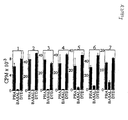
- Anti-DID T cell lines were successfully obtained from all the subjects tested. The lines were considered sufficiently enriched in anti-DTD T cells when their response to DTD in proliferation assays was comparable to, or better than, that of PHA. This occurred after 3-4 cycles of stimulation with DTD. The lines were predominantly or exclusively CD3+, CD4 + , CD8 - (Table 2). The results of one representative experiment for each line, testing the response to PHA and DTD, are shown in Figure 2.
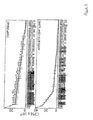
- Figure 3 illustrates the results obtained in one such comparative experiment, using subject #4.
- CD4 + lines were used for the following studies. Sequence segments of DTX recognized by anti-DTD T cell lines . The DTX epitopes recognized by the CD4 + cell lines were identified in proliferation assays using individual synthetic DTX-specific peptides.
- the lines were tested for reactivity to individual synthetic peptides as soon as a satisfactory enrichment in reactivity to DTD was obtained, i.e., when the response of the lines to DTD in a proliferation assay was comparable to that of PHA, usually after 3-4 weeks of culture. The consistency of the recognition was verified by repeating the test 1-2 weeks later. For all lines, very similar or identical patterns of peptide recognition were observed in both experiments.
- peptide sequences can bind different DR alleles. Nonetheless, the ability of a given Ag sequence to bind most or all DR molecules does not suffice for a peptide to be an IRS (for example, see Manfredi et al., J. Immunol ., 152 , 4165 (1994); Reece et al., J. Immunol, 151 , 6175 (1993)).
- Factor(s) that are important for an Ag sequence region to be an IRS for CD4 + cell sensitization include a structural property which gives the IRS an advantage during Ag processing, causing its preferential release from the Ag molecule, and/or availability for class II binding and presentation.
- DTX has three distinct domains (Choe et al., supra): the C or catalytic domain (residues 1-193), which is formed by fragment A, the T or transmembrane domain (residues 205-378), and the R or receptor binding domain (residues 386-535).
- the T and the R domains form fragment B.
- All IRSs described above are within fragment B: residues 411-430 and 431-450 are part of the R domain, the others are part of the T domain.
- the T domain includes nine ⁇ helices (TH1-TH9), arranged in three antiparallel layers. Helices TH8 and TH9 are unusually apolar and constitute the central core layer.
- the R domain consists of nine ⁇ strands (RB1-RB9). These secondary structure elements are connected by loops. All IRSs include one or more of the ⁇ helixes or ⁇ sheets described above.
- IRSs that may give them an advantage during DTX processing, are that they all include, or are flanked by, both at the amino and carboxyl terminal ends, sequence regions forming relatively unstructured loops fully exposed to the solvent. These loops may be easily accessible targets for the proteolytic enzymes involved in Ag processing, even in the absence of any substantial denaturation of the Ag.
- IRS peptide 271-290 includes the ⁇ helix TH5 (residues 275-288), one face of which is exposed to the solvent.
- TH5 is flanked on its amino terminal end by an exposed loop formed by residues 271-274, and at its carboxyl terminal end by another exposed loop, formed by residues 289-296.
- the overlapping IRS peptides 321-340 (SEQ. ID NO:3 and 331-350 (SEQ ID NO:4) (sequence 321-350) include the helix TH8 (residues 326-347), which, although contained in the core of the native DTX molecule, is flanked at both its amino and carboxyl terminal ends by solvent-exposed loops, formed by residues 322-327 and 348-357, respectively.
- These two overlapping IRS peptides might include only one epitope, within the sequence region forming TH8, which includes the overlap between peptides 321-340 and 331-350 (residues 331-340). In the native DTX molecule, this epitope is flanked by fully exposed loops at either end.
- IRS peptide 351-370 includes the majority of the ⁇ helix TH9 (residues 358-376), which, although mostly buried in the core of the DTX molecule (it has only one exposed residue), is flanked at both ends by fully exposed loops, namely, the coil regions formed by residue 348-357, between helices TH8 and TH9, and 377-388.
- IRS peptide 411-430 (SEQ ID NO:6) includes the ⁇ strand RB3 (residues 413-422), several residues of which (423-426) are fully exposed to the solvent.
- RB3 is preceded, on its amino terminal side, by an exposed loop formed by residues 408-412. Also, at the carboxyl terminal end of IRS 411-430, residues 423-431 form an exposed loop connecting RB3 to RB4.
- IRS peptide 431-450 includes the ⁇ strand RB4 (431-443). RB4 is followed by an exposed loop (residues 444-448) and is preceded in the DTX molecule by a small exposed loop between RB3 and RB4 (423-431).
- sequence segments "hidden” in the hydrophobic core of a protein Ag might also be important targets of immune recognition by CD4 + cells, because helices TH8 and TH9, which correspond to IRS 321-340, 331-350, and 351-370, are deep in the core of the DTX molecule. This underscores the importance of flanking exposed loops for IRS formation. These exposed loops would make an easy target for processing enzymes, resulting in the fast release of sequence segments embedded in the hydrophobic core of the Ag molecule.
- the IRSs are recognized in association with different class II alleles and isotypes, their sequence must have characteristics compatible with binding to a large number of different class II molecules.
- X-ray diffraction studies of the DR1 molecule indicated that several residues involved in formation of the peptide binding site are conserved in most or all class II isotypes, suggesting that all class II molecules bind peptides with similar mechanisms (Stern et al., Nature , 368 , 215 (1994); Brown et al., Nature , 364 , 33 (1993). In agreement with that prediction, the DTX IRSs were frequently recognized in association with different class II isotypes.
- Peptides bind to DR molecules in an extended conformation, which allows extensive hydrophobic interactions between the peptide backbone and the binding groove of the DR molecules, thus providing a mode of peptide binding independent of the peptide sequence (Stern et al., supra; Jardetzky et al., EMBO , 9 , 1797 (1990)).
- Peptide specificity is due to interactions between pockets on the DR molecule, whose surface have shape and charges characteristic for a given DR allele, and to anchor residues of suitable size, hydropathic properties and charge (Stern et al., supra; Hammer et al., supra).
- anchor residues are frequently uncharged or hydrophobic, both positively and negatively charged anchor residues have been identified for peptide binding to individual DR alleles, fitting in pockets, on the DR molecule, lined by residues of complementary charge. When the lining of DR binding pockets may have charges, the presence of the wrong charge on a peptide residue aligned with that pocket may de-stabilize peptide- DR binding.
Landscapes
- Health & Medical Sciences (AREA)
- Life Sciences & Earth Sciences (AREA)
- Chemical & Material Sciences (AREA)
- Molecular Biology (AREA)
- Bioinformatics & Cheminformatics (AREA)
- Engineering & Computer Science (AREA)
- Proteomics, Peptides & Aminoacids (AREA)
- General Health & Medical Sciences (AREA)
- Organic Chemistry (AREA)
- Medicinal Chemistry (AREA)
- Pharmacology & Pharmacy (AREA)
- Epidemiology (AREA)
- Biochemistry (AREA)
- Gastroenterology & Hepatology (AREA)
- Immunology (AREA)
- Virology (AREA)
- Genetics & Genomics (AREA)
- Biophysics (AREA)
- Animal Behavior & Ethology (AREA)
- Public Health (AREA)
- Veterinary Medicine (AREA)
- Medicines That Contain Protein Lipid Enzymes And Other Medicines (AREA)
- Peptides Or Proteins (AREA)
- Medicines Containing Antibodies Or Antigens For Use As Internal Diagnostic Agents (AREA)
Abstract
Description
WO95/26365 describes the use of synthetic peptide based immunogens for the treatment of allergy. Two peptide fragments of the diphtheria toxin that are T-helper epitopes are suggested as being of use to improve the immunogenicity of the CH4 decapeptide of IgE. WO93/21769 relates to the receptor binding domain of diphtheria toxin, which may be used as an immunogen.
WO89/06974 concerns T-cell epitopes identified in a number of bacterial proteins, including the diphtheria toxin. The identified epitopes may be used to prepare conjugates between the epitopes and other antigens to aid the generation of antibody responses.


| Subject # | Age, Sex | HI.A-DR, DQ haplotype |
| 1. | 33, M | DR8(w8), DQw7(w3) DR6(w11), DRw52c, DQw5(w1) |
| 2. | 44, F | DR5(w11), DRw52, DQw2 DR4, DRw53, DQw7(w3) |
| 3. | 31, M | DR4, DRw53, DQw5(w1) DR10(w10), DQw4 |
| 4. | 27, M | DK4(Dw10), DRw53, DQw8(w3) DR2(w15), Dw2, DRw51. DQw6(w1) |
| 5. | 27, M | DR4, DRw53, DQw7(w3) DR5(w12), |
| 6. | 25, F | DR1 DQw5(w1) DR2(w15), DRw51(Dw2), DQw6(w1) |
| 7. | 27, M | DR5(w12), DRw52c, DQw8(w3) DR6(w13), DRw52, DQw6(w1) |
| a Determined by restriction fragment length polymorphism (Noreen et al., Transp. Proc., 21, 2968 (1989)) and/or oligonucleotide typing (Kumura et al., In: Proceedings of the Eleventh International Histocompatibility Workshop and Conference: HLA, Oxford University Press, p. 397 (1992)). |
CD8+ T cell depletion and proliferation assay. CD8+ T cells can inhibit the in vitro response of human CD4+ cells to Ags (Protti et al., J. Immunol., 144, 1276 (1990); Manfredi et al., J.Clin. Invest., 92, 1055 (1993)). Thus, the results of proliferation assays carried out with populations containing both CD4+ and CD8+ cells may be difficult to interpret. To identify a DTX peptide sequence recognized by CD4+ T cells in the peripheral blood, PBMC were depleted of CD8+ cells by paramagnetic beads. Yields of the CD8+ depleted, CD4+ enriched cell population (referred to as either CD4+ enriched or CD8+ depleted cells) were consistently 45-55% of the starting PBMC population.
Propagation of CD4+ cell lines specific for DTD and proliferation assay. PBMC were suspended (1-2 x 10⁶ cells/ml) in TCM containing 10 µg/ml DTD, and cultivated in T25 flasks (Costar, Cambridge, MA) for 1 week. The reactive lymphoblasts were isolated on Percoll gradients, expanded in TCM containing T-cell growth factor (TCGF, Lymphocult, Biotest Diagnostic, Dreieich, Germany, at a final concentration of IL-2 of 10 units/ml), and enriched in DTD-specific cells by weekly stimulations with the same amount of DTD plus irradiated (4,000 rads: 1 rad=0.01 Gy) autologous PBMC as APC. The response to DTD and PHA of the T cell lines obtained was tested weekly.
Proliferation assays with CD4+ cell lines for DTD. Proliferation assays were carried out with CD4+ lines, using 2x10⁴ cells/well, irradiated autologous PBMC (2x10⁵ cells/well) as APC, and the Ags described above for CD4+ enriched PBMC. Basal growth rate (Blank) was determined from triplicate wells containing CD4+ cell lines cultivated without any stimulus. After one day, the cultured cells were pulsed for 16 hours with 3H-thymidine, collected, and the 3H-thymidine incorporation measured as described above for CD4+ enriched PBMC.
Flow cytometry. The phenotype of the T cell lines and of the CD4+ enriched PBMC was determined using a FACStarR cell sorter (Becton Dickinson and Co., Mountain View, CA) and phycoerythrin-conjugated Leu 4 (anti-CD3), and FITC-conjugated Leu 2 (anti-CD8) and Leu 3 (anti-CD4) antibodies (Becton Dickinson, San Jose, CA), as described by Mojola et al., J. Clin. Invest., 93, 1020 (1994)).
HLA class II restriction of CD4+ recognition of DTX IRSs. The DR, DP, or DQ restriction of the IRSs recognized by the anti-DTD CD4+ lines was investigated for all the lines in inhibition experiments, using commercially available purified anti-DR, anti-DP and anti-DQ mAbs (Becton Dickinson, San Jose, CA), as described by Mojola et al. (J. Immunol., 1521, 4686 (1994)).
| T cell line (Subject #) | CD3+ cells (%) | CD3+ CD4+ cells (%) | CD3+ CD8+ cells (%) |
| 1 | 91 | 84.3 | 0.8 |
| 2 | 94.7 | 78.2 | 4.5 |
| 3 | 98.3 | 89.3 | 2.1 |
| 4 | 96.9 | 80.2 | 5.8 |
| 5 | 96.8 | 90.7 | 0.5 |
| 6 | 92.8 | 82.3 | 0.7 |
| 7 | 95.6 | 88.6 | 3.2 |
HLA class II restriction.The class II restriction of each IRS was studied in six of the seven subjects, by determining if mAbs against the different class II isotypes affected the response of epitope-specific CD4+ lines to the relevant peptides. As a control for mAb toxicity, the effect of the mAb on the proliferative response induced by IL-2 was determined. As a negative control, triplicate cultures were cultured in the presence of a 20-residue synthetic sequence unrelated to the sequence of peptides with an IRS (residues 1-20 of the TTX light chain sequence).
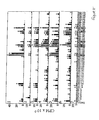
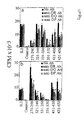
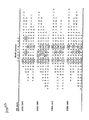
Discussion . Thus, a number of DTX sequence regions are recognized by human CD4+ cells in different subjects. Most CD4+ epitopes are clustered in fragment B of DTX. Although each person had a characteristic pattern of peptide recognition (Figure 4), six DTX peptide sequences, peptides with residues 271-290 (SEQ. ID NO:2), 321-340 (SEQ. ID NO:3), 331-350 (SEQ. ID NO:4),351-370 (SEQ. ID NO:5), 411-430 (SEQ. ID NO:6), and 431-450 (SEQ. ID NO:7), were recognized by every individual, irrespective of the class II haplotype. Recognition of an IRS accounted for a substantial fraction of the total response of the CD4+ line to DTX sequences (28-57%, see Table 3). In the two subjects where the CD4+ enriched PBMC response to DTX sequences was investigated, all the IRSs were strongly recognized, at levels comparable to the response induced by DTD, in spite of the overall low level of the response of CD4+ enriched PBMC (Figure 3). The IRS containing peptides were frequently presented by more than one class II isotype (Figure 5).
| Subject # | % of the total response due to the IRS |
| 1 | 57 |
| 2 | 51 |
| 3 | 42 |
| 4 | 37 |
| 5 | 43 |
| 6 | 31 |
| 7 | 28 |


Claims (6)
- An isolated and purified peptide comprising an immunodominant region sequence which peptide consists of (a) Pro-Val-Phe-Ala-Gly-Ala-Asn-Tyr-Ala-Ala-Trp-Ala-Val-Asn-Val-Ala-Gln-Val-Ile (SEQ ID NO: 2) or (b)a fragment thereof of at least seven residues having an immunodominant region sequence,
- An immunogenic composition comprising the peptide of claim 1 linked to a non- or poorly immunogenic molecule.
- A vaccine comprising an immunogenic amount of the peptide according to claim 1, wherein the peptide is combined with a physiologically acceptable, non-toxic liquid vehicle, which amount is effective to immunize a susceptible mammal against Corynebacterium diphtheriae.
- Use of an isolated and purified peptide according to claim 1 to prepare a medicament effective to immunize a susceptible mammal against Corynebacterium diphtheriae.
- The use of claim 4 wherein the medicament further comprises an amount of diphtheria toxoid effective to increase the immunogenic response of the mammal to the medicament.
- The use of claim 4 wherein the mammal is a human.
Applications Claiming Priority (3)
| Application Number | Priority Date | Filing Date | Title |
|---|---|---|---|
| US08/564,972 US5843462A (en) | 1995-11-30 | 1995-11-30 | Diphtheria toxin epitopes |
| US564972 | 1995-11-30 | ||
| PCT/US1996/019004 WO1997019698A1 (en) | 1995-11-30 | 1996-11-27 | Diphtheria toxin epitopes |
Publications (3)
| Publication Number | Publication Date |
|---|---|
| EP0871486A1 EP0871486A1 (en) | 1998-10-21 |
| EP0871486A4 EP0871486A4 (en) | 2000-08-09 |
| EP0871486B1 true EP0871486B1 (en) | 2005-01-26 |
Family
ID=24256674
Family Applications (1)
| Application Number | Title | Priority Date | Filing Date |
|---|---|---|---|
| EP96944738A Expired - Lifetime EP0871486B1 (en) | 1995-11-30 | 1996-11-27 | Diphtheria toxin epitopes |
Country Status (7)
| Country | Link |
|---|---|
| US (2) | US5843462A (en) |
| EP (1) | EP0871486B1 (en) |
| JP (1) | JP2000502327A (en) |
| AT (1) | ATE287729T1 (en) |
| CA (1) | CA2239012A1 (en) |
| DE (1) | DE69634266D1 (en) |
| WO (1) | WO1997019698A1 (en) |
Families Citing this family (28)
| Publication number | Priority date | Publication date | Assignee | Title |
|---|---|---|---|---|
| US5843462A (en) | 1995-11-30 | 1998-12-01 | Regents Of The University Of Minnesota | Diphtheria toxin epitopes |
| EP1037663A2 (en) | 1997-12-16 | 2000-09-27 | Regents Of The University Of Minnesota | Methods to treat undesirable immune responses |
| CA2343934A1 (en) * | 1998-09-25 | 2000-04-06 | The Children's Medical Center Corporation | Short peptides which selectively modulate the activity of protein kinases |
| WO2000032626A1 (en) * | 1998-11-25 | 2000-06-08 | Regents Of The University Of Minnesota | Methods of using epitope peptides of human pathogens |
| WO2000074688A1 (en) * | 1999-06-08 | 2000-12-14 | The Children's Hospital Of Philadelphia | Methods for preventing formation of inhibitory antibodies in the setting of gene therapy |
| US20020177614A1 (en) * | 2001-03-23 | 2002-11-28 | Merril Carl R. | Methods for treating nuerodegenerative diseases including alzheimer's |
| WO2005014798A2 (en) * | 2003-03-31 | 2005-02-17 | Boston Medical Center Corporation | Novel compositions and methods for promoting, inhibiting, and detecting protein entry into cells |
| US7517667B2 (en) * | 2003-03-31 | 2009-04-14 | Boston Medical Center Corporation | Methods for promoting, inhibiting and detecting toxin entry into cells |
| EP1687016A4 (en) * | 2003-11-25 | 2009-07-29 | Anjin Corp | Diphtheria toxin variant |
| CA2621285C (en) * | 2005-09-06 | 2013-05-14 | Ferenc Foglein | Demucilaged flax sprouts and their by-product as well as production and application thereof |
| US20090181078A1 (en) | 2006-09-26 | 2009-07-16 | Infectious Disease Research Institute | Vaccine composition containing synthetic adjuvant |
| PT2468300T (en) | 2006-09-26 | 2018-01-30 | Infectious Disease Res Inst | Vaccine composition containing synthetic adjuvant |
| JP2010530895A (en) * | 2007-06-21 | 2010-09-16 | アンジェリカ セラピューティックス,インク. | Modified toxin |
| EP2268297A4 (en) * | 2008-02-29 | 2011-11-16 | Angelica Therapeutics Inc | MODIFIED TOXINS |
| CN102481312B (en) | 2009-06-05 | 2015-07-15 | 传染性疾病研究院 | Synthetic Glucopyranosyl Lipid Adjuvants |
| WO2012141984A1 (en) | 2011-04-08 | 2012-10-18 | Immune Design Corp. | Immunogenic compositions and methods of using the compositions for inducing humoral and cellular immune responses |
| WO2013119715A1 (en) * | 2012-02-07 | 2013-08-15 | Saint Louis University | Determination of immunogenic peptides in lysosomal enzymes and induction of oral tolerance |
| PL2811981T3 (en) | 2012-02-07 | 2019-09-30 | Infectious Disease Research Institute | Improved adjuvant formulations comprising tlr4 agonists and methods of using the same |
| KR102136433B1 (en) | 2012-05-16 | 2020-07-22 | 이뮨 디자인 코포레이션 | Vaccines for hsv-2 |
| US11529397B2 (en) | 2018-01-22 | 2022-12-20 | Saint Louis University | Method of treating mucopolysaccharidosis type IVA |
| EP2968450A4 (en) | 2013-03-15 | 2016-10-26 | Angelica Therapeutics Inc | Modified toxins |
| EP2986303B1 (en) | 2013-04-18 | 2020-02-26 | Immune Design Corp. | Gla monotherapy for use in cancer treatment |
| US9463198B2 (en) | 2013-06-04 | 2016-10-11 | Infectious Disease Research Institute | Compositions and methods for reducing or preventing metastasis |
| IL310015B2 (en) | 2013-12-31 | 2026-02-01 | Access To Advanced Health Inst | Single vial vaccine formulations |
| US10472615B2 (en) | 2016-01-21 | 2019-11-12 | Saint Louis University | Reduced immunogenic proteins for lysosomal storage disorders |
| AU2017273650B2 (en) | 2016-06-01 | 2022-08-18 | Access To Advanced Health Institute | Nanoalum particles containing a sizing agent |
| CA3078223A1 (en) | 2017-09-08 | 2019-03-14 | Infectious Disease Research Institute | Liposomal formulations comprising saponin and methods of use |
| EP3976092A1 (en) | 2019-05-25 | 2022-04-06 | Infectious Disease Research Institute | Composition and method for spray drying an adjuvant vaccine emulsion |
Family Cites Families (32)
| Publication number | Priority date | Publication date | Assignee | Title |
|---|---|---|---|---|
| US4649132A (en) | 1983-03-31 | 1987-03-10 | Scripps Clinic And Research Foundation | Treatment of Factor VIII inhibitors |
| US4830962A (en) * | 1984-02-09 | 1989-05-16 | Cetus Corporation | Recombinant diphtheria toxin fragments |
| US4822606A (en) | 1986-04-07 | 1989-04-18 | Duke University | Immunosuppressive synthetic peptides and analogs thereof based on retroviral envelope sequences |
| US4962091A (en) | 1986-05-23 | 1990-10-09 | Syntex (U.S.A.) Inc. | Controlled release of macromolecular polypeptides |
| US4950740A (en) * | 1987-03-17 | 1990-08-21 | Cetus Corporation | Recombinant diphtheria vaccines |
| US5645820A (en) | 1987-06-24 | 1997-07-08 | Autoimmune, Inc. | Treatment of autoimmune diseases by aerosol administration of autoantigens |
| US5641474A (en) | 1987-06-24 | 1997-06-24 | Autoimmune, Inc. | Prevention of autoimmune diseases by aerosol administration of autoantigens |
| US5571500A (en) | 1987-06-24 | 1996-11-05 | Autoimmune, Inc. | Treatment of autoimmune diseases through administration by inhalation of autoantigens |
| EP0359783B2 (en) | 1987-06-24 | 2002-04-17 | Autoimmune, Inc. | Treatment of autoimmune diseases by oral administration of autoantigens |
| US5571499A (en) | 1987-06-24 | 1996-11-05 | Autoimmune, Inc. | Treatment of autoimmune diseases by aerosol administration of autoantigens |
| US5785973A (en) | 1988-02-01 | 1998-07-28 | Praxis Biologics, Inc. | Synthetic peptides representing a T-cell epitope as a carrier molecule for conjugate vaccines |
| ATE109008T1 (en) * | 1988-02-01 | 1994-08-15 | Praxis Biolog Inc | T-CELL EPITOPES AS CARRIERS FOR A CONJUGATED VACCINE. |
| IL85746A (en) | 1988-03-15 | 1994-05-30 | Yeda Res & Dev | Preparations comprising t-lymphocyte cells treated with 8-methoxypsoralen or cell membranes separated therefrom for preventing or treating autoimmune diseases |
| NZ229004A (en) | 1988-05-19 | 1993-09-27 | Immunobiology Res Inst Inc | Tetrapeptides having t cell helper acitivity |
| EP0378881B1 (en) | 1989-01-17 | 1993-06-09 | ENIRICERCHE S.p.A. | Synthetic peptides and their use as universal carriers for the preparation of immunogenic conjugates suitable for the development of synthetic vaccines |
| WO1990010015A1 (en) * | 1989-02-23 | 1990-09-07 | Seragen, Inc. | Chimeric toxin |
| US5585362A (en) | 1989-08-22 | 1996-12-17 | The Regents Of The University Of Michigan | Adenovirus vectors for gene therapy |
| US5858980A (en) * | 1990-03-30 | 1999-01-12 | Autoimmune, Inc. | Peptide fragments of myelin basic protein |
| US5614396A (en) | 1990-06-14 | 1997-03-25 | Baylor College Of Medicine | Methods for the genetic modification of endogenous genes in animal cells by homologous recombination |
| US5158884A (en) * | 1990-09-10 | 1992-10-27 | Regents Of The University Of Minnesota | Immunodominant acetylcholine receptor peptides useful for T-helper cell sensitization |
| WO1992006117A1 (en) * | 1990-09-28 | 1992-04-16 | Seragen, Inc. | Inhibiting unwanted immune responses |
| US7288256B1 (en) * | 1991-10-16 | 2007-10-30 | Merck Patent Gmbh | T cell epitopes of the major allergens from dermatophagoides (house dust mite) |
| US5578496A (en) | 1991-12-19 | 1996-11-26 | Board Of Regents, Baylor College Of Medicine | Detection of autoantibodies associated with the disease myasthenia gravis |
| EP0643559B1 (en) * | 1992-05-06 | 1999-04-14 | The President And Fellows Of Harvard College | Diphtheria toxin receptor-binding region |
| CA2138137C (en) * | 1992-06-18 | 2004-11-09 | R. John Collier | Diphtheria toxin vaccines |
| DK0646016T3 (en) * | 1992-06-18 | 2000-03-20 | Yeda Res & Dev | Synthetic peptides for the treatment of myasthenia gravis |
| AU687805B2 (en) | 1993-04-27 | 1998-03-05 | United Biomedical Inc. | Immunogenic LHRH peptide constructs and synthetic universal immune stimulators for vaccines |
| US5681571A (en) | 1993-10-08 | 1997-10-28 | Duotol Ab | Immunological tolerance-inducing agent |
| US5817308A (en) * | 1994-02-14 | 1998-10-06 | University Of Rochester | Tolerogenic fusion proteins of immunoglobulins and methods for inducing and maintaining tolerance |
| EP0811016A1 (en) * | 1994-03-28 | 1997-12-10 | United Biomedical, Inc. | Synthetic peptide based immunogens for the treatment of allergy |
| US5843462A (en) | 1995-11-30 | 1998-12-01 | Regents Of The University Of Minnesota | Diphtheria toxin epitopes |
| US5804201A (en) * | 1996-03-11 | 1998-09-08 | The Rockefeller University | Immunomodulatory peptides of vespid antigen 5 |
-
1995
- 1995-11-30 US US08/564,972 patent/US5843462A/en not_active Expired - Lifetime
-
1996
- 1996-11-27 DE DE69634266T patent/DE69634266D1/en not_active Expired - Lifetime
- 1996-11-27 JP JP09520662A patent/JP2000502327A/en active Pending
- 1996-11-27 CA CA002239012A patent/CA2239012A1/en not_active Abandoned
- 1996-11-27 AT AT96944738T patent/ATE287729T1/en not_active IP Right Cessation
- 1996-11-27 EP EP96944738A patent/EP0871486B1/en not_active Expired - Lifetime
- 1996-11-27 WO PCT/US1996/019004 patent/WO1997019698A1/en not_active Ceased
-
1997
- 1997-12-16 US US08/991,143 patent/US6929796B1/en not_active Expired - Fee Related
Also Published As
| Publication number | Publication date |
|---|---|
| EP0871486A1 (en) | 1998-10-21 |
| ATE287729T1 (en) | 2005-02-15 |
| EP0871486A4 (en) | 2000-08-09 |
| DE69634266D1 (en) | 2005-03-03 |
| JP2000502327A (en) | 2000-02-29 |
| WO1997019698A1 (en) | 1997-06-05 |
| US6929796B1 (en) | 2005-08-16 |
| US5843462A (en) | 1998-12-01 |
| CA2239012A1 (en) | 1997-06-05 |
Similar Documents
| Publication | Publication Date | Title |
|---|---|---|
| EP0871486B1 (en) | Diphtheria toxin epitopes | |
| EP0529023B1 (en) | Therapeutically useful peptides and peptides fragments | |
| AU744885B2 (en) | Compounds, compositions and methods for the endocytic presentation of immunosuppressive factors | |
| Zhu et al. | Lipopeptide epitopes extended by an Nϵ‐palmitoyl‐lysine moiety increase uptake and maturation of dendritic cells through a Toll‐like receptor‐2 pathway and trigger a Th1‐dependent protective immunity | |
| CA2793087C (en) | Peptides, conjugates and method for increasing immunogenicity of a vaccine | |
| JP2633881B2 (en) | Immunomodulatory compositions and their use | |
| CA1340012C (en) | Peptide determinant associated with immunity | |
| TW202039587A (en) | Artificial promiscuous t helper cell epitopes as immune stimulators for synthetic peptide immunogens | |
| AU4438900A (en) | Ras oncogen p21 peptide vaccines | |
| EP1317282B1 (en) | Vectors for molecule delivery to cd11b expressing cells | |
| KR19990067653A (en) | Tumor vaccines and methods of making the same | |
| Raju et al. | Epitopes for human CD4+ cells on diphtheria toxin: structural features of sequence segments forming epitopes recognized by most subjects | |
| Diethelm-Okita et al. | Epitope repertoire of human CD4+ T cells on tetanus toxin: identification of immunodominant sequence segments | |
| Mohapatra et al. | Immunotherapy for allergies and asthma: present and future | |
| JP2024095743A (en) | Artificial promiscuous T helper cell epitopes to promote targeted antibody production with limited T cell inflammatory responses | |
| Min et al. | Neonatal exposure to a self-peptide–immunoglobulin chimera circumvents the use of adjuvant and confers resistance to autoimmune disease by a novel mechanism involving interleukin 4 lymph node deviation and interferon γ–mediated splenic anergy | |
| EP0667908B1 (en) | Soluble t-cell receptor alpha chain and derivatives used as prophylactic and therapeutic agents for autoimmune diseases | |
| Robinson et al. | Palmitic acid conjugation of a protein antigen enhances major histocompatibility complex class II-restricted presentation to T cells | |
| US5000952A (en) | Polypeptide pertussis toxin vaccine | |
| CS131891A3 (en) | Vaccine | |
| US20080241177A1 (en) | Idiotypic vaccine | |
| WO1991008773A1 (en) | Tolerogenic immunoglobulin-protein conjugates | |
| AU716806B2 (en) | Induction and enhancement of the immune response to polysaccharides with bacterial lipoproteins | |
| WO1996010423A1 (en) | COMPOSITIONS CONTAINING A p53 DERIVED PROTEIN OR PEPTIDE, AN ADJUVANT, AND INTERLEUKIN-12 AND USES THEREOF | |
| Sivolapenko et al. | Enhanced in vivo immunogenicity induced by an antibody to the IL‐4 receptor‐associated gp200‐MR6 molecule |
Legal Events
| Date | Code | Title | Description |
|---|---|---|---|
| PUAI | Public reference made under article 153(3) epc to a published international application that has entered the european phase |
Free format text: ORIGINAL CODE: 0009012 |
|
| 17P | Request for examination filed |
Effective date: 19980630 |
|
| AK | Designated contracting states |
Kind code of ref document: A1 Designated state(s): AT BE CH DE DK ES FI FR GB GR IE IT LI LU MC NL PT SE |
|
| RIC1 | Information provided on ipc code assigned before grant |
Free format text: 7A 61K 39/44 A, 7A 61K 39/42 B, 7A 61K 39/395 B, 7A 61K 39/40 B, 7A 61K 39/38 B, 7A 61K 38/00 B, 7A 61K 39/00 B, 7C 07K 14/34 B |
|
| A4 | Supplementary search report drawn up and despatched |
Effective date: 20000626 |
|
| AK | Designated contracting states |
Kind code of ref document: A4 Designated state(s): AT BE CH DE DK ES FI FR GB GR IE IT LI LU MC NL PT SE |
|
| 17Q | First examination report despatched |
Effective date: 20020307 |
|
| GRAP | Despatch of communication of intention to grant a patent |
Free format text: ORIGINAL CODE: EPIDOSNIGR1 |
|
| GRAS | Grant fee paid |
Free format text: ORIGINAL CODE: EPIDOSNIGR3 |
|
| GRAA | (expected) grant |
Free format text: ORIGINAL CODE: 0009210 |
|
| AK | Designated contracting states |
Kind code of ref document: B1 Designated state(s): AT BE CH DE DK ES FI FR GB GR IE IT LI LU MC NL PT SE |
|
| PG25 | Lapsed in a contracting state [announced via postgrant information from national office to epo] |
Ref country code: NL Free format text: LAPSE BECAUSE OF FAILURE TO SUBMIT A TRANSLATION OF THE DESCRIPTION OR TO PAY THE FEE WITHIN THE PRESCRIBED TIME-LIMIT Effective date: 20050126 Ref country code: LI Free format text: LAPSE BECAUSE OF FAILURE TO SUBMIT A TRANSLATION OF THE DESCRIPTION OR TO PAY THE FEE WITHIN THE PRESCRIBED TIME-LIMIT Effective date: 20050126 Ref country code: IT Free format text: LAPSE BECAUSE OF FAILURE TO SUBMIT A TRANSLATION OF THE DESCRIPTION OR TO PAY THE FEE WITHIN THE PRESCRIBED TIME-LIMIT;WARNING: LAPSES OF ITALIAN PATENTS WITH EFFECTIVE DATE BEFORE 2007 MAY HAVE OCCURRED AT ANY TIME BEFORE 2007. THE CORRECT EFFECTIVE DATE MAY BE DIFFERENT FROM THE ONE RECORDED. Effective date: 20050126 Ref country code: FR Free format text: LAPSE BECAUSE OF FAILURE TO SUBMIT A TRANSLATION OF THE DESCRIPTION OR TO PAY THE FEE WITHIN THE PRESCRIBED TIME-LIMIT Effective date: 20050126 Ref country code: FI Free format text: LAPSE BECAUSE OF FAILURE TO SUBMIT A TRANSLATION OF THE DESCRIPTION OR TO PAY THE FEE WITHIN THE PRESCRIBED TIME-LIMIT Effective date: 20050126 Ref country code: CH Free format text: LAPSE BECAUSE OF FAILURE TO SUBMIT A TRANSLATION OF THE DESCRIPTION OR TO PAY THE FEE WITHIN THE PRESCRIBED TIME-LIMIT Effective date: 20050126 Ref country code: BE Free format text: LAPSE BECAUSE OF FAILURE TO SUBMIT A TRANSLATION OF THE DESCRIPTION OR TO PAY THE FEE WITHIN THE PRESCRIBED TIME-LIMIT Effective date: 20050126 Ref country code: AT Free format text: LAPSE BECAUSE OF FAILURE TO SUBMIT A TRANSLATION OF THE DESCRIPTION OR TO PAY THE FEE WITHIN THE PRESCRIBED TIME-LIMIT Effective date: 20050126 |
|
| REG | Reference to a national code |
Ref country code: GB Ref legal event code: FG4D |
|
| REG | Reference to a national code |
Ref country code: CH Ref legal event code: EP |
|
| REG | Reference to a national code |
Ref country code: IE Ref legal event code: FG4D |
|
| REF | Corresponds to: |
Ref document number: 69634266 Country of ref document: DE Date of ref document: 20050303 Kind code of ref document: P |
|
| PG25 | Lapsed in a contracting state [announced via postgrant information from national office to epo] |
Ref country code: SE Free format text: LAPSE BECAUSE OF FAILURE TO SUBMIT A TRANSLATION OF THE DESCRIPTION OR TO PAY THE FEE WITHIN THE PRESCRIBED TIME-LIMIT Effective date: 20050426 Ref country code: GR Free format text: LAPSE BECAUSE OF FAILURE TO SUBMIT A TRANSLATION OF THE DESCRIPTION OR TO PAY THE FEE WITHIN THE PRESCRIBED TIME-LIMIT Effective date: 20050426 Ref country code: DK Free format text: LAPSE BECAUSE OF FAILURE TO SUBMIT A TRANSLATION OF THE DESCRIPTION OR TO PAY THE FEE WITHIN THE PRESCRIBED TIME-LIMIT Effective date: 20050426 |
|
| PG25 | Lapsed in a contracting state [announced via postgrant information from national office to epo] |
Ref country code: DE Free format text: LAPSE BECAUSE OF FAILURE TO SUBMIT A TRANSLATION OF THE DESCRIPTION OR TO PAY THE FEE WITHIN THE PRESCRIBED TIME-LIMIT Effective date: 20050427 |
|
| PG25 | Lapsed in a contracting state [announced via postgrant information from national office to epo] |
Ref country code: ES Free format text: LAPSE BECAUSE OF FAILURE TO SUBMIT A TRANSLATION OF THE DESCRIPTION OR TO PAY THE FEE WITHIN THE PRESCRIBED TIME-LIMIT Effective date: 20050507 |
|
| NLV1 | Nl: lapsed or annulled due to failure to fulfill the requirements of art. 29p and 29m of the patents act | ||
| REG | Reference to a national code |
Ref country code: CH Ref legal event code: PL |
|
| PG25 | Lapsed in a contracting state [announced via postgrant information from national office to epo] |
Ref country code: GB Free format text: LAPSE BECAUSE OF NON-PAYMENT OF DUE FEES Effective date: 20051127 |
|
| PG25 | Lapsed in a contracting state [announced via postgrant information from national office to epo] |
Ref country code: IE Free format text: LAPSE BECAUSE OF NON-PAYMENT OF DUE FEES Effective date: 20051128 |
|
| PG25 | Lapsed in a contracting state [announced via postgrant information from national office to epo] |
Ref country code: MC Free format text: LAPSE BECAUSE OF NON-PAYMENT OF DUE FEES Effective date: 20051130 Ref country code: LU Free format text: LAPSE BECAUSE OF NON-PAYMENT OF DUE FEES Effective date: 20051130 |
|
| PLBE | No opposition filed within time limit |
Free format text: ORIGINAL CODE: 0009261 |
|
| STAA | Information on the status of an ep patent application or granted ep patent |
Free format text: STATUS: NO OPPOSITION FILED WITHIN TIME LIMIT |
|
| 26N | No opposition filed |
Effective date: 20051027 |
|
| EN | Fr: translation not filed | ||
| GBPC | Gb: european patent ceased through non-payment of renewal fee |
Effective date: 20051127 |
|
| REG | Reference to a national code |
Ref country code: IE Ref legal event code: MM4A |
|
| PG25 | Lapsed in a contracting state [announced via postgrant information from national office to epo] |
Ref country code: PT Free format text: LAPSE BECAUSE OF NON-PAYMENT OF DUE FEES Effective date: 20050626 |