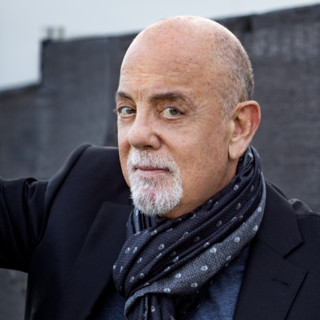
Billy Joel
33,058,715 monthly listeners
Popular


Piano Man
1,190,150,641
Vienna
956,959,591
Uptown Girl
1,307,989,274
She's Always a Woman
568,550,050
We Didn't Start the Fire
666,871,295
Popular releases

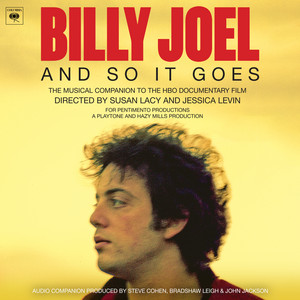
And So It GoesLatest Release • Album
The Stranger (Legacy Edition)1977 • Album
Piano Man (Legacy Edition)1973 • Album
An Innocent Man1983 • Album

52nd Street1978 • Album
Storm Front1989 • Album
Albums




Singles and EPs


Compilations





Featuring Billy Joel







On tour





Appears On







Artist Playlists




About
33,058,715 monthly listeners
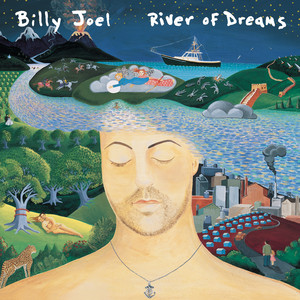
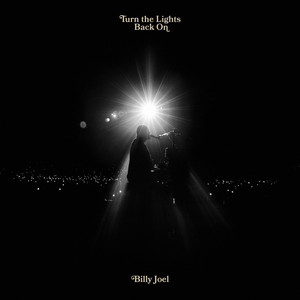
Billy Joel is a New York icon who became one of the most successful singer/songwriters of the late 20th century. He first rose to success in the mid-'70s with a melodic piano-led pop sound that merged Beatlesque hooks with elements of rock, jazz, Tin Pan Alley, and even Broadway. A Long Island native with a powerful voice and knack for storytelling, Joel first made the pop charts with "Piano Man," a rousing barroom singalong with a bittersweet old-timey feel that became his signature song. Released in 1977, his fifth album, The Stranger, launched him into superstardom, yielding four Top 40 hits including "Only the Good Die Young" and the Grammy Award-winning soft rock ballad "Just the Way You Are." By the end of the '70s, Joel was a major concert draw and one of the top American pop artists with a string of massive hits to his credit including "Movin' Out," "My Life," and "She's Always a Woman." His success continued into the '80s with albums like Glass Houses and An Innocent Man, the latter of which helped usher him into the MTV era with its "Uptown Girl" video starring supermodel Christie Brinkley. Released in 1985, Joel's double-disc Greatest Hits, Vols. 1 & 2 became a ubiquitous chart presence, eventually earning Diamond certification. His popularity extended well beyond the U.S., and he even reached across the Iron Curtain, doing a high-profile tour of the Soviet Union in the late '80s. Joel ended the decade on top with 1989's Storm Front and its smash hit "We Didn't Start the Fire." Four years later, River of Dreams proved to be Joel's last release of pop material and, aside from a 2001 album of original classical material, he shifted into legacy mode in the 21st century. Joel has remained a significant concert draw, touring frequently throughout the 2000s and 2010s, occasionally as part of a popular package with Elton John. Among the many honors that have been bestowed upon him are an induction into the Rock & Roll Hall of Fame, Kennedy Center Honors, and the only retired number by a non-athlete at New York's Madison Square Garden arena where he began a monthly residency gig in 2014. After the residency was interrupted by the COVID-19 pandemic, Joel made a grand return to his hometown arena in late 2021. In early 2024, he released the comback single, "Turn the Lights Back On." It was his first new pop song in decades.
Born on May 9, 1949, in the Bronx, Joel was raised in the Long Island suburb of Hicksville, where he learned to play piano as a child. As he approached his adolescence, Joel started to rebel, joining teenage street gangs and boxing as welterweight. He fought a total of 22 fights as a teenager, and during one of the fights, he broke his nose. For the early years of his adolescence, he divided his time between studying piano and fighting. Upon seeing the Beatles on The Ed Sullivan Show in 1964, Joel decided to pursue a full-time musical career and set about finding a local Long Island band to join. Eventually, he found the Echoes, a group that specialized in British Invasion covers. The Echoes became a popular New York attraction, convincing him to quit high school to become a professional musician.
In 1965, while still a member of the Echoes, Joel began working as a session musician.
Just 16 years old at the time, he played piano on several George "Shadow" Morton productions -- including the Shangri-Las' "Leader of the Pack" -- as well as several records released through Kama Sutra Productions. Meanwhile, the Echoes began playing more late-night shows and at the end of that year changed their name twice -- once to the Emeralds and finally to the Lost Souls. In 1967, after two years of gigging with the Lost Souls, Joel left the band to join the Hassles, a local Long Island rock & roll band that had signed a contract with United Artists Records. Over a two year period the Hassles released two albums and four singles, all of which failed commercially. After the Hassles disbanded in 1969 Joel and the band's drummer, Jon Small, formed the proto-metal organ-and-drums duo Attila and signed a deal with Epic. A peculiar left turn in Joel's career, Attila achieved a heavy, psychedelic hard rock sound through the use of numerous effects pedals on Joel's organ. Bearing a cover image of the two bandmembers dressed as barbarians, Attila's eponymous 1970 debut was an immediate bomb and the duo broke up. While the band's poor sales were a factor in this decision, it was Joel's affair with Small's wife Elizabeth -- whom he later married -- that effectively ended Attila's brief run.
Over the months that followed, Joel drifted between jobs, working briefly as a rock critic for a magazine called Changes and doing session work on commercial jingles before signing a deal with Family Productions as a solo artist in 1971. Under the terms of the contract, Joel signed to the label for life; the pianist was unaware of the clause at the time, but it would come back to haunt him -- even after he left the label Family Productions received royalties from every album sold until the late '80s. Making an about face from Attila's heavy rock Joel refashioned himself as a sensitive singer/songwriter for his debut album, Cold Spring Harbor, which was released in November of 1971. Due to an error in the mastering of the album, Cold Spring Harbor was released a couple of tape speeds too fast; the album remained in that bastardized form until 1984. Following its release, Joel went on a small live tour, opening shows for established bands like the Beach Boys and Badfinger. The tour received good reviews but Joel remained unhappy with the quality of his performance and, especially, the quality of the album. Furthermore, he lost a manager during this time and Family Productions was experiencing legal and financial difficulties, which prevented him from recording an immediate follow-up.
After moving to Los Angeles in early 1972, Joel adopted the pseudonym Bill Martin and spent half a year playing lounge piano at a bar called the Executive Room. Around this time, Philadelphia radio station WMMR-FM began playing a live version of Joel's song "Captain Jack" which began to gain traction on the East Coast. Label interest quickly followed and he eventually signed with Columbia Records later that year. Because of the deal Joel had previously signed with Family Productions, Columbia had to agree to pay Family Productions 25 cents for each album sold, plus display the Family and Remus logos on each record Joel released with them.
By the end of 1973, Billy Joel's first album for Columbia Records, Piano Man, had been released. The record slowly worked its way up the charts, peaking at number 27 in the spring of 1974. Based on his experiences singing at the Executive Room the title track made it to the Top 40, becoming Joel's first hit as well as his signature song. At the end of the summer, Joel assembled a touring band and undertook a national tour, opening for acts like the J. Geils Band and the Doobie Brothers. By the end of 1974, he had released his second album, Streetlife Serenade, which reached number 35 early in 1975 and yielded the cynical, but catchy hit "The Entertainer." After its success, Joel signed a contract with James William Guercio and Larry Fitzgerald's management company, Caribou, and moved from California back to New York. Through songs like "Say Goodbye to Hollywood" and "New York State of Mind," Joel celebrated the return to his hometown 1976's. Turnstiles. The sessions for Turnstiles were long and filled with tension, culminating with Joel firing the album's original producer, Guercio, and producing the album himself. Once he fired Guercio, Joel also left Caribou, and hired his wife Elizabeth as his
7,559,108
Followers