
MIT researchers tackle the economic realities of fusion power
Their new study aims to give budding industry a framework for understanding how fusion can be profitable.
Their new study aims to give budding industry a framework for understanding how fusion can be profitable.

Nicholas de Monchaux reflects on guiding the MIT Department of Architecture through a period of dramatic change for the profession.
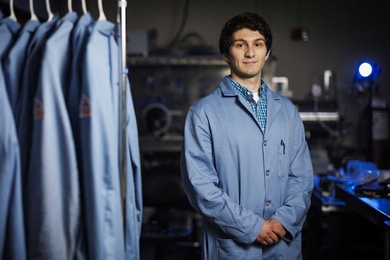
PhD student Hugh Smith works to develop sodium-ion batteries, whose components are more abundant and accessible than those of conventional lithium-ion technology.

Melt it, spin it, use it again. This new recyclable yarn is as strong and stretchy as spandex-based yarns.
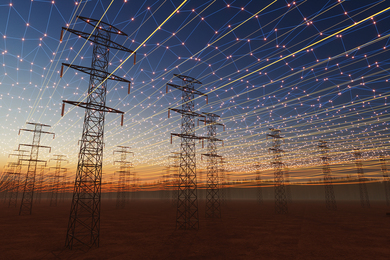
MIT researchers find that where new energy projects are built could be key to avoiding blackouts in a future with hotter weather and other challenges.
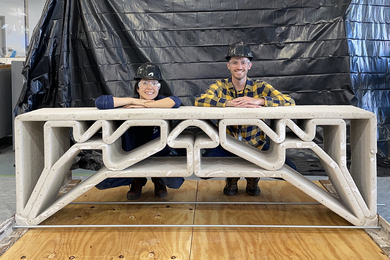
MIT researchers developed a framework that folds a printer’s real-world limits into the optimization, while revealing that better hardware could sharply reduce material use.
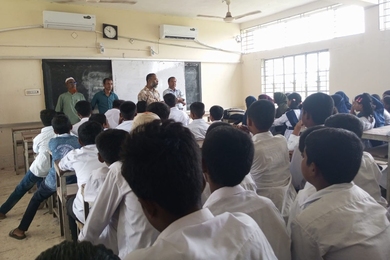
The Jameel Observatory-CREWSnet project opens a solar-powered “adaptation fortress” in Satkhira, a region facing severe and growing climate threats.

An extensive study of U.S. cities identifies walkable neighborhoods, urban greenery, and access to amenities as key contributors to residents’ health.
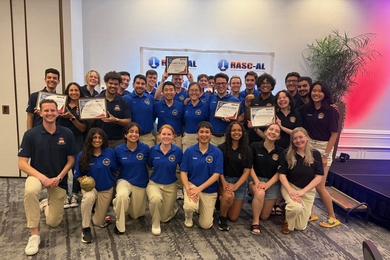
Three MIT teams took five top awards in the 2026 NASA RASC-AL Competition for designing critical elements for the moon base and future missions to Mars.

The FUTUR-IC research program integrates electronics and photonics in microchip systems.

Using modern tools, they also determined that carbon tetrachloride, used as a dry-cleaning and degreasing agent as early as the 1930s, was at the root of early ozone loss.

A new study suggests flexibility in the timing of electricity consumption could lower consumer costs.

A new system, known as Murakkab, optimizes the design and deployment of multistep workflows that power AI applications.
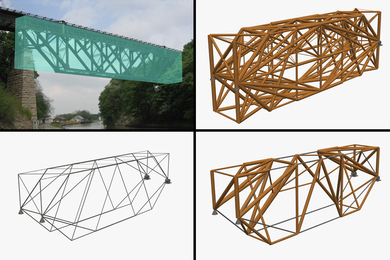
MIT researchers developed an approach for generating more buildable structures, bridging the gap between optimized design and real-world construction.

The MIT professor’s groundbreaking work on atmospheric chemistry helped lay steps towards recovery of the ozone layer and demonstrated the lasting impacts of carbon emissions on Earth’s climate.