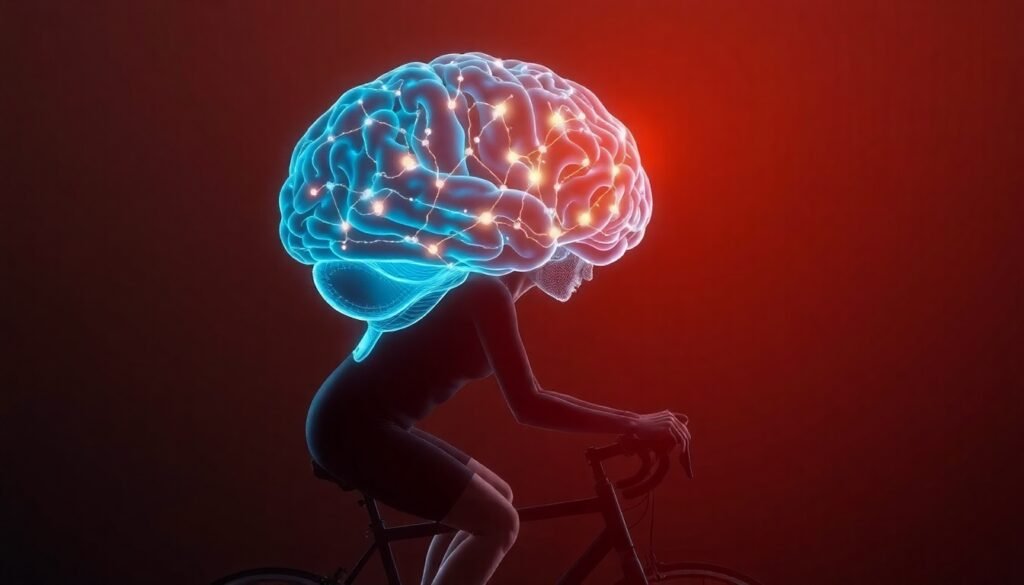
How Recurring Neural Circuits in the Hippocampus Enable Smarter Navigation
The hippocampus has long been hailed as the brain’s internal GPS—a structure central to creating cognitive maps that let animals, including humans, navigate the world around them. But what makes these maps so robust and adaptable? A recent study published in Nature Communications by Pedamonti, Mohinta, and colleagues explores this question, revealing the essential role of recurring circuit architecture—recurrence—in the hippocampus for goal-directed navigation, especially under real-world, unpredictable conditions.
Mapping the Mind: Why the Hippocampus Matters
Before diving into the study’s specifics, it’s worth understanding why the hippocampus garners so much attention in neuroscience. This curved structure in the temporal lobe is critical not just for spatial navigation, but also for memory formation and context learning. The hippocampus doesn’t work alone—it interacts with a vast neural network, but its internal circuitry, especially how neurons connect and influence each other over time, is central to its function.
The Experiment: Navigating the Unknown
Pedamonti, Mohinta, and team set out to unravel how different neural architectures handle navigation when environments present the kind of complexity found in the real world. To do this, they trained both biological subjects (rats) and artificial agents using reinforcement learning (RL)—a computational framework inspired by how animals learn from rewards and consequences—on a suite of spatial navigation tasks, each with varying conditions.
The artificial RL agents were divided into two main categories: those built with recurrent networks and those with feedforward networks. Here’s the distinction:
- Feedforward Networks: Process information in a one-way flow—input enters, output leaves, with no internal feedback loops. Information is handled in isolated snapshots rather than as continuous streams.
- Recurrent Networks: Include feedback loops, letting information cycle and persist over time. This architecture allows the network to retain a “memory” of previous inputs, more closely mirroring biological brain function.
What Happens When the Going Gets Tough?
At first, all agents—biological and artificial—performed well when the environment was fully visible and predictable. Under these ideal circumstances, both feedforward and recurrent RL agents could use visible cues to chart efficient paths, reflecting the hippocampus’s established role in spatial learning.
But life, and experimental arenas, rarely stay simple. The researchers introduced partial observability—scenarios where visibility is limited, cues are missing, or misleading distractions are present.
- Feedforward agents often developed rigid policies. They committed to navigation plans too early, failing to adapt when circumstances unexpectedly shifted.
- Recurrent agents, by contrast, were much more flexible. Thanks to their architecture, these agents could integrate information over time, generalizing strategies across different navigation tasks and adapting to sudden changes in environment—just as real rats did.
This difference proved especially striking when environmental cues were suddenly removed or when the mazes introduced distractor cues. Only recurrent agents continued to perform like the rats: reacting to unexpected changes, remembering past experience, and adjusting on the fly.
Parallels in the Brain: From Artificial to Biological Intelligence
The study didn’t stop at performance metrics. The team also analyzed the neural population dynamics in a region of the hippocampus known as CA1, a key player in memory and spatial coding. Remarkably, only the recurrent RL agents showed internal patterns of activity resembling those of actual rat hippocampal neurons, affirming that the biological hippocampus relies heavily on recurrence for flexible, adaptive behavior.
Recurrence: More Than Memory
Recurrence has long been theorized as a mechanism for generalization—a way for neural circuits to move beyond rote memorization and toward true understanding and adaptability. By comparing rats and artificial agents, this study not only confirms this role for hippocampal recurrence but also showcases how artificial intelligence can be used to elucidate the inner workings of biological brains.
The findings suggest that the hippocampus’s ability to support naturalistic exploration—navigating amid uncertainty, ambiguity, and noise—relies fundamentally on circuitry designed for ongoing, dynamic information processing. In a world where conditions constantly change, it’s this persistence and adaptability, made possible by recurrent connections, that sets biological intelligence apart.
The Broader Impact: Learning from the Brain
These insights have broader implications for both neuroscience and artificial intelligence. For neuroscientists, they highlight why the structure of brain circuits matters, pointing to recurrence as a key enabler of flexible, context-dependent cognition. For AI researchers, the findings reinforce the value of recurrent architectures in designing agents that can tackle real-world challenges, from robotics to autonomous navigation—domains where the unexpected is the norm rather than the exception.
By bridging biological and artificial systems, studies like this not only reveal the secrets of natural intelligence but also offer blueprints for building better, more adaptable intelligent machines.
Reference:
Pedamonti, S., Mohinta, P., et al. (2025). Recurrence has it covered. Nature Neuroscience, 28, 2406. https://doi.org/10.1038/s41593-025-02178-9