Papers by Makumba C Temba

Acrylic Polymers in Healthcare
Acrylamide (ACR) is a possible human carcinogen, with neurotoxic properties. It is a heatgenerate... more Acrylamide (ACR) is a possible human carcinogen, with neurotoxic properties. It is a heatgenerated food toxicant particularly found in carbohydrate-rich foods. Its occurrence is of global concern and constitutes a major challenge to food safety, due to its presence in several thermally processed foods worldwide. Since its discovery, ACR has been recognized as one of the most widely investigated heat-induced food contaminant, and several reports on its formation and occurrence since its discovery have been reported. However, information on the extent of ACR occurrence in foods consumed in different parts of Africa is rather too limited. This is particularly a concern considering that most carbohydrate-based foods, subjected to varying degrees of thermal processing, are consumed as staple diets almost on daily basis in the continent. As such, African populations may be exposed to high levels of ACR daily. Thus, this chapter covers the formation, occurrence and health impact of ACR in foods. It further summarizes previous studies looking at ACR reduction and mitigation strategies, especially those that may be applicable in the continent. Adequate sensitization of the populace about the prevention of ACR as a food contaminant is essential to ensure the safety of heat-processed carbohydrate-rich foods in the continent.

Storage stability of maize-groundnut composite flours and an assessment of aflatoxin B1 and ochratoxin A contamination in flours and porridges
Food Control, 2017
Abstract Defatting of groundnut flour used for composite development can not only improve nutriti... more Abstract Defatting of groundnut flour used for composite development can not only improve nutritional quality of its products but also the storage stability. Maize, groundnut and their composite (full fat and defatted) flours were prepared and stored at room temperature over a period of 3 months. Storage stability of these products was assessed based on changes in water activity, peroxide value (PV), free fatty acids (FFA), thiobarbituric acid (TBA), microbiological profiling and levels of mycotoxins that included aflatoxin B1 (AFB1) and ochratoxin A (OTA). Overall results revealed that the rate of change of PV, FFA and TBA significantly (p ≤ 0.05) increased with increasing storage time, which was highest for full fat flours than in the defatted flours. For example, PV of the FFG and DFG were respectively, 0.88 and 0.40 mEq/kg, meanwhile TBA was 4.53 and 2.71 mg malonaldehyde/kg. There was a much higher rate of increase in FFA (%) with increasing storage time in full fat and composite flours when compared to that of their defatted counterparts. Generally, microbiological data demonstrated an increase in total microbial counts during storage in these foods possibly resulting in mycotoxins, AFB1 (range: 9.08–38.48 μg/kg) and OTA (range: 0.33–19.50 μg/kg) in all samples with groundnut and maize having the highest contamination levels. A 127.8% increase in OTA level was noted when maize flour inclusion level in the full fat composite increased from 55 to 85%, but only a 24.7% increase in OTA level was noted in defatted composites during storage. Reducing the inclusion level of groundnut flour, the main source of AFB1 as found, resulted in a drastic reduction in AFB1 level in full fat and defatted composite flours by 54.1 and 76.4%, respectively, during storage. The findings highlight that shelf life stability of composites can be maintained upon defatting during the fortification process. It can therefore, be inferred that monitoring quality and safety of the raw materials as well as that of the final products during storage is crucial.
The role of compositing cereals with legumes to alleviate protein energy malnutrition in Africa
International Journal of Food Science & Technology, 2016
Protein-energy malnutrition (PEM) is a problem in Africa and other developing nations of the worl... more Protein-energy malnutrition (PEM) is a problem in Africa and other developing nations of the world. Food Agriculture Organization's statistics reveal that in Africa, more than one in four people are undernourished. Cereals are a major staple in many African homes contributing significant amounts of energy, protein, but limiting in essential amino acid lysine, legumes on the other hand are protein and amino acid rich foods, but also lacking in sulphur-containing amino acids. Hence, a combination of cereals with legumes would improve the protein and nutrient density of the subsequent food products. Probably due to their high nutritional values, these food products are susceptible to deterioration and fungal contamination, accompanied by the production of mycotoxins. This review therefore, appraises various works in literature on the use of these crops to produce composite food products and their potential to address the obstinate problem of PEM, including, the problems that could arise during processing and storage of these protein-rich fractions.
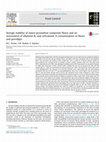
Defatting of groundnut flour used for composite development can not only improve nutritional qual... more Defatting of groundnut flour used for composite development can not only improve nutritional quality of its products but also the storage stability. Maize, groundnut and their composite (full fat and defatted) flours were prepared and stored at room temperature over a period of 3 months. Storage stability of these products was assessed based on changes in water activity, peroxide value (PV), free fatty acids (FFA), thiobarbituric acid (TBA), microbiological profiling and levels of mycotoxins that included aflatoxin B 1 (AFB 1) and ochratoxin A (OTA). Overall results revealed that the rate of change of PV, FFA and TBA significantly (p 0.05) increased with increasing storage time, which was highest for full fat flours than in the defatted flours. For example, PV of the FFG and DFG were respectively, 0.88 and 0.40 mEq/kg, meanwhile TBA was 4.53 and 2.71 mg malonaldehyde/kg. There was a much higher rate of increase in FFA (%) with increasing storage time in full fat and composite flours when compared to that of their defatted counterparts. Generally, microbiological data demonstrated an increase in total microbial counts during storage in these foods possibly resulting in mycotoxins, AFB 1 (range: 9.08e38.48 mg/kg) and OTA (range: 0.33e19.50 mg/kg) in all samples with groundnut and maize having the highest contamination levels. A 127.8% increase in OTA level was noted when maize flour inclusion level in the full fat composite increased from 55 to 85%, but only a 24.7% increase in OTA level was noted in defatted composites during storage. Reducing the inclusion level of groundnut flour, the main source of AFB 1 as found, resulted in a drastic reduction in AFB 1 level in full fat and defatted composite flours by 54.1 and 76.4%, respectively, during storage. The findings highlight that shelf life stability of composites can be maintained upon defatting during the fortification process. It can therefore, be inferred that monitoring quality and safety of the raw materials as well as that of the final products during storage is crucial.
Protein-energy malnutrition (PEM) is a problem in Africa and other developing nations of the worl... more Protein-energy malnutrition (PEM) is a problem in Africa and other developing nations of the world. Food Agriculture Organization's statistics reveal that in Africa, more than one in four people are undernourished. Cereals are a major staple in many African homes contributing significant amounts of energy, protein, but limiting in essential amino acid lysine, legumes on the other hand are protein and amino acid rich foods, but also lacking in sulphur-containing amino acids. Hence, a combination of cereals with legumes would improve the protein and nutrient density of the subsequent food products. Probably due to their high nutritional values, these food products are susceptible to deterioration and fungal contamination, accompanied by the production of mycotoxins. This review therefore, appraises various works in literature on the use of these crops to produce composite food products and their potential to address the obstinate problem of PEM, including, the problems that could arise during processing and storage of these protein-rich fractions.
Protein-energy malnutrition (PEM) is a problem in Africa and other developing nations of the worl... more Protein-energy malnutrition (PEM) is a problem in Africa and other developing nations of the world. Food Agriculture Organization's statistics reveal that in Africa, more than one in four people are undernourished. Cereals are a major staple in many African homes contributing significant amounts of energy, protein, but limiting in essential amino acid lysine, legumes on the other hand are protein and amino acid rich foods, but also lacking in sulphur-containing amino acids. Hence, a combination of cereals with legumes would improve the protein and nutrient density of the subsequent food products. Probably due to their high nutritional values, these food products are susceptible to deterioration and fungal contamination, accompanied by the production of mycotoxins. This review therefore, appraises various works in literature on the use of these crops to produce composite food products and their potential to address the obstinate problem of PEM, including, the problems that could arise during processing and storage of these protein-rich fractions.
Books by Makumba C Temba

Acrylamide (ACR) is a possible human carcinogen, with neurotoxic properties. It is a heatgenerate... more Acrylamide (ACR) is a possible human carcinogen, with neurotoxic properties. It is a heatgenerated food toxicant particularly found in carbohydrate-rich foods. Its occurrence is of global concern and constitutes a major challenge to food safety, due to its presence in several thermally processed foods worldwide. Since its discovery, ACR has been recognized as one of the most widely investigated heat-induced food contaminant, and several reports on its formation and occurrence since its discovery have been reported. However, information on the extent of ACR occurrence in foods consumed in different parts of Africa is rather too limited. This is particularly a concern considering that most carbohydrate-based foods, subjected to varying degrees of thermal processing, are consumed as staple diets almost on daily basis in the continent. As such, African populations may be exposed to high levels of ACR daily. Thus, this chapter covers the formation, occurrence and health impact of ACR in foods. It further summarizes previous studies looking at ACR reduction and mitigation strategies, especially those that may be applicable in the continent. Adequate sensitization of the populace about the prevention of ACR as a food contaminant is essential to ensure the safety of heat-processed carbohydrate-rich foods in the continent.


Uploads
Papers by Makumba C Temba
Books by Makumba C Temba